Narrative Overview and Character Foundations
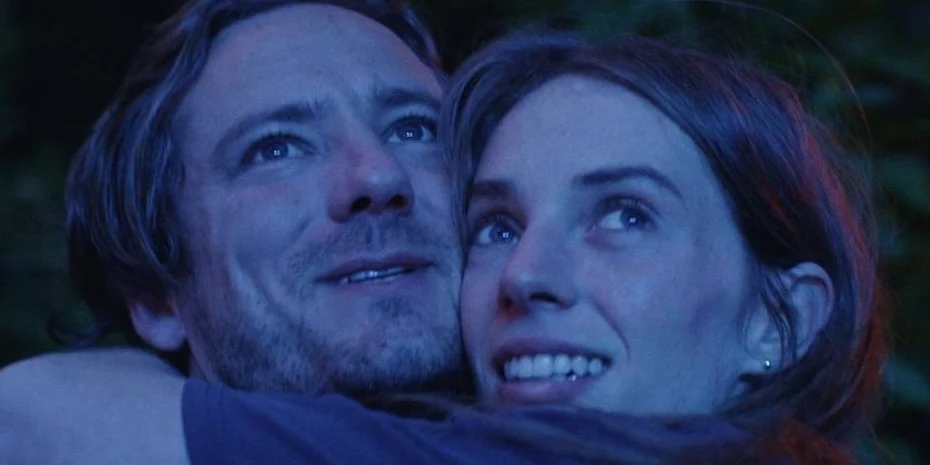
The story centers on Charlie, portrayed by Lewis Pullman, and Julie, played by Maya Hawke. The film opens with a stylistic montage that establishes the history of their relationship, oscillating between moments of profound intimacy and escalating domestic friction. Charlie is depicted as a musical artist whose temperament borders on the volatile, yet he possesses a charismatic, approachable quality often described as "golden-retriever-like." In contrast, Julie is a game developer whose professional ambitions are frequently overshadowed by the couple’s cyclical arguments.
The initial conflict is grounded in the mundane aspects of cohabitation. Viewers observe the couple debating trivialities, such as Julie’s failure to maintain their household plants or Charlie’s growing frustration over a deferred trip to Italy. These minor grievances serve as a precursor to deeper systemic issues, including Julie’s relapse into smoking and Charlie’s anxiety-driven outbursts. Despite numerous attempts to terminate the relationship, the pair remains trapped in a cycle of tearful reconciliations, suggesting a codependency that they are unable to break through conventional means.
The Supernatural Catalyst: The Wylden Twins Seminar
The narrative trajectory shifts significantly when Charlie and Julie attend a last-minute self-help seminar led by the Wylden Twins, portrayed by Kate Berlant. This event serves as the primary inciting incident, introducing the film’s central supernatural conceit: the power of manifestation. The seminar posits that internal emotional states can exert a physical influence on the external world, a theory that becomes a harrowing reality for the protagonists.
Following the seminar, the couple begins to observe that their surroundings mirror their internal feelings. When Charlie and Julie are in a state of harmony, the environment flourishes, reflecting a sense of cosmic alignment. Conversely, when tensions rise, their negative energy manifests as tangible disruptions in the world around them. This "supernatural ripple effect" transforms their private disagreements into public liabilities, forcing them to confront the weight of their words and feelings in a way few couples ever do.
Production Chronology and Technical Execution
The production of Wishful Thinking was centered in the state of Oregon, utilizing the region’s diverse natural beauty to ground the film’s more fantastical elements. Principal photography, led by cinematographer Christopher Ripley, utilized a handheld camera approach. This stylistic choice provides an intimate, documentary-like quality to the film, contrasting with the elaborate supernatural sequences. The handheld movement adds a sense of urgency and "immediacy," particularly during the couple’s more explosive arguments.
The film’s score, composed by Oliver Lewin, plays a critical role in maintaining the delicate tonal balance between comedy and drama. The music is described as possessing a "whimsical sensibility," which helps to soften the darker implications of the couple’s emotional curse. The technical team focused on creating a world that felt recognizable yet slightly skewed, ensuring that the supernatural manifestations felt like an extension of the characters’ psyches rather than external plot devices.
Thematic Analysis: Emotional Suppression and Manifestation
A core theme of Wishful Thinking is the danger of emotional suppression. Once Charlie and Julie realize that their negative emotions cause environmental damage, they attempt to artificially maintain a positive facade. This leads to performative gestures of affection, such as "sexy dancing" and forced cheerfulness, intended to keep the "curse" at bay. Parkes’ screenplay uses this as a metaphor for the way couples often hide their true feelings to avoid conflict, only to have those suppressed emotions manifest in more destructive ways later.
The film draws comparisons to the animated feature Inside Out, but with an adult-oriented focus on romantic dynamics. While Inside Out personified emotions to explain childhood development, Wishful Thinking weaponizes emotions to explore the accountability inherent in a partnership. The "manifestation" aspect serves as a critique of modern self-help culture, suggesting that the drive to "manifest" a perfect life can lead to a toxic denial of reality.
Cast Performance and Character Arcs
The success of the film is largely attributed to the chemistry between Maya Hawke and Lewis Pullman. Hawke, whose career has seen a steady ascent through roles in high-profile series and independent films, delivers what critics are calling a performance of notable emotional depth. Her portrayal of Julie captures the exhaustion of a woman trying to balance professional aspirations with a demanding emotional life.
Lewis Pullman’s Charlie provides a necessary counterpoint. Pullman navigates the character’s volatility without losing the audience’s sympathy. The screenplay allows both actors to oscillate between sharp, rhythmic comedy and grounded dramatic honesty. The supporting cast, including Randall Park, Jake Shane, Amita Rao, and Eric Rahill, rounds out the world, providing a grounded reality against which the central couple’s supernatural struggles are measured. A recurring comedic bit involving Jon Hamm is also noted for its consistent impact, providing levity throughout the 105-minute runtime.
Comparative Data and Genre Context
Wishful Thinking enters a competitive market for "high-concept" romantic dramedies. In recent years, films like Palm Springs and Eternal Sunshine of the Spotless Mind have successfully blended genre elements with relationship studies. Data from independent film festivals suggests a growing audience appetite for narratives that use "magical realism" to explore mental health and interpersonal ethics.
| Feature | Wishful Thinking | Inside Out (Comparison) |
|---|---|---|
| Primary Theme | Romantic Accountability | Emotional Development |
| Tone | Whimsical/Dramatic | Educational/Heartfelt |
| Target Audience | Adult/Cinephile | General/Family |
| Narrative Device | External Manifestation | Internal Personification |
| Setting | Oregon (Naturalistic) | The Human Mind (Abstract) |
The film’s focus on the "expectation versus reality" trope is a staple of the genre, though Parkes’ debut is praised for its inventive execution. While some early reviews suggest that the narrative trajectory follows a predictable path regarding the ultimate fate of the relationship, the journey is considered a fresh take on the "stagnant couple" archetype.
Official Responses and Critical Reception
While official box office data and wide-release metrics are still being compiled, early screenings have garnered a positive response for Graham Parkes’ direction. Industry analysts suggest that Parkes has established himself as a "director to watch," particularly regarding his ability to elicit nuanced performances from his cast. The film’s focus on the "power of manifestation" has also sparked discussions in lifestyle and psychological circles, where the concept of "toxic positivity" is a frequent topic of debate.
Inferred reactions from the production team suggest a high level of satisfaction with the film’s visual style. Christopher Ripley’s cinematography has been highlighted as a standout element, effectively capturing the lush, sometimes claustrophobic beauty of the Pacific Northwest. The film’s 105-minute length is considered optimal for the independent circuit, allowing for sufficient character development without overextending the supernatural conceit.
Broader Impact and Industry Implications
The release of Wishful Thinking comes at a time when independent cinema is increasingly leaning into genre-bending narratives to attract audiences back to theaters. By combining the star power of Maya Hawke and Lewis Pullman with a "high-concept" hook, the film is positioned to appeal to both mainstream viewers and indie enthusiasts.
Furthermore, the film’s exploration of how internal states affect the external world mirrors a broader cultural shift toward mindfulness and emotional intelligence. However, by framing these concepts through a "cosmic curse," Parkes offers a cautionary tale about the limits of control. The implication is that true manifestation requires more than just "wishful thinking"; it requires the difficult, often messy work of honest communication and the courage to face reality, even when it is not flourishing.
As a debut feature, Wishful Thinking serves as a robust calling card for Graham Parkes. It demonstrates a sophisticated understanding of how to use visual metaphors to enhance character-driven storytelling. For the lead actors, the film reinforces their status as versatile performers capable of carrying a complex, emotionally demanding narrative. Regardless of the film’s final narrative predictability, its contribution to the romantic dramedy genre lies in its willingness to take a literal approach to the "energy" we bring into our most intimate spaces.