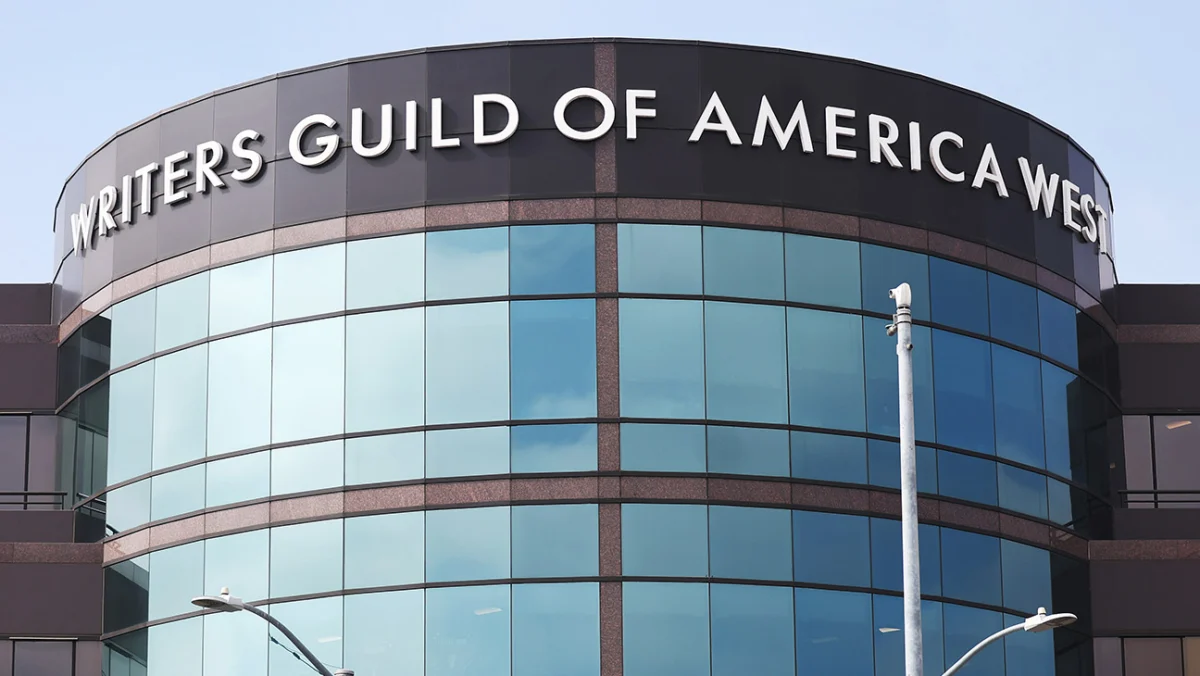
The Writers Guild of America (WGA) on Wednesday released the comprehensive terms of a tentative four-year contract with the Alliance of Motion Picture and Television Producers (AMPTP), marking a significant shift in labor relations following the industry-altering strikes of 2023. The proposed agreement, which was reached after an intensive three-week negotiation period, includes a massive $321 million infusion into the union’s health fund, double-digit minimum salary increases, and pioneering language regarding the licensing of writer-generated content for the training of artificial intelligence.
This deal is notable not only for its financial scale but for its duration. Breaking with decades of precedent where contracts were renewed every three years, this agreement spans four years, a move intended to provide the entertainment industry with a prolonged period of labor stability as it navigates a volatile transition from linear broadcasting to streaming dominance. The WGA West board and the WGA East council have both unanimously endorsed the package, which will now go before the general membership for a ratification vote scheduled between April 16 and April 24.
Strengthening the Financial Foundation of the WGA Health Plan
The centerpiece of the new agreement is a comprehensive rescue package for the WGA Health Plan. The fund had been under severe financial strain, recording a cumulative deficit of $122 million across 2023 and 2024. This downturn was attributed to a "perfect storm" of factors: the contraction of the traditional film and television production model, high levels of healthcare inflation, and the work stoppages associated with the 148-day strike in 2023, which temporarily halted the employer contributions that sustain the fund.
To address this, the studios and streamers have agreed to a $321 million injection over the life of the contract. According to sources familiar with the negotiations, this represents the largest single increase to a union benefit in the WGA’s history. A primary driver of this funding is a substantial increase in the "contribution caps"—the maximum amount of a writer’s earnings on a single project that is subject to health fund contributions. For screenwriters, this cap will jump from the current $250,000 to $400,000 by May 2, 2028. These caps had remained stagnant for several decades, failing to keep pace with inflation or the rising costs of medical care.
Furthermore, the agreement mandates an increase in the health fund contribution rate on all reported earnings. The rate will rise by 3.25 percent in the first year and an additional 0.5 percent in the second year, bringing the total contribution rate to 16.75 percent. In a strategic internal reallocation, the union will also transfer $25 million from its Paid Parental Leave fund to the health fund. Leadership assured members that the parental leave fund remains robust enough to fulfill all projected benefit obligations.
However, the revitalization of the fund necessitates some concessions from the membership. Starting in 2027, active plan participants—who previously paid no monthly premiums—will be required to pay a $75 monthly premium. Additionally, the earnings threshold required to qualify for health coverage will rise from the current $46,759 to $53,773. The deal also outlines increases in deductibles and out-of-pocket maximums, alongside adjustments to reimbursements for out-of-network behavioral healthcare.
Artificial Intelligence and the Training Data Frontier
As generative AI continues to reshape the technological landscape of Hollywood, the WGA sought to establish guardrails regarding how their intellectual property is used to "teach" large language models (LLMs). While the union did not secure the direct "trigger payments" for AI training that some members had advocated for, they successfully established a framework for transparency and future negotiation.
Under the new terms, production companies are now required to provide written notice to the Guild if they intend to license scripts—or projects derived from those scripts—to train commercial generative AI systems. This provision ensures that studios cannot quietly feed decades of human-written scripts into AI models without the union’s knowledge. More importantly, the union secured the right to demand formal discussions regarding compensation for any such licensing deals. This effectively creates a "placeholder" for future financial claims as the economic value of training data becomes more clearly defined.
Salary Increases and Enhanced Streaming Residuals
The tentative agreement addresses the erosion of writer pay in the streaming era through a multi-tiered increase in minimum compensation. Most "minimums" (the floor for what a writer can be paid for a specific task) will increase by 10.5 percent over the four-year term. The schedule is backloaded to ensure long-term growth: a 1.5 percent increase in the first year, followed by 3 percent increases in each of the subsequent three years.
Residuals—the secondary payments writers receive when their work is reused—also saw significant gains, particularly in the international market. The residual base for high-budget streaming projects (known as HBSVOD) in both domestic and foreign markets will increase by 2.5 percent in 2027 and another 2.5 percent in 2029.
The union also targeted the "Big Three" streamers—Netflix, Amazon, and Disney+—for specific increases in foreign residuals. These platforms will pay 6 percent more in foreign residuals in the first year of the contract. Furthermore, the "streaming success bonus," a performance-based metric introduced in the 2023 contract, has been enhanced. Starting in 2027, any title viewed by 20 percent or more of a streamer’s domestic subscriber base will trigger a bonus equal to 75 percent of its domestic and foreign residuals, a significant jump from the previous 50 percent bonus.
Targeted Gains for Screenwriters and Television Staff
The agreement introduces specific protections for screenwriters and television writers that address long-standing grievances regarding "free work" and exclusivity.
For screenwriters:
- Second-Step Payments: When a writer is hired to write a first draft of a screenplay, the "second-step" payment (often triggered upon delivery or a specific milestone) will increase from 200 percent of the applicable minimum to 225 percent.
- Page One Rewrites: The contract establishes a new, higher minimum payment for "page one" rewrites—situations where a writer is tasked with completely overhaulling an existing script—ensuring they are compensated for the scale of the labor involved rather than receiving a standard rewrite fee.
For television writers:
- Exclusivity Rules: Starting in 2027, "if/come" deals—where a writer is held exclusively by a studio while a project is in development—cannot be exclusive until the company has paid the writer an initial fee equivalent to the first step of a pilot. This prevents writers from being "locked up" and unable to take other work without being paid.
- Format Fees: Fees for the creation of television formats will see a substantial 42 percent increase.
- Span Protections: "Span" protections, which prevent a writer’s per-episode pay from being diluted when a production schedule stretches over a long period, will be expanded to cover a broader range of writers.
Chronology of the 2024 Negotiations
The path to this four-year deal was uncharacteristically swift, reflecting a mutual desire to avoid the protracted conflict of the previous year.
- September 2023: The WGA concludes a 148-day strike after reaching a three-year deal with the AMPTP.
- Early March 2024: Preliminary discussions begin regarding the 2026 contract cycle, with both sides acknowledging the financial instability of the union health plan.
- Mid-March 2024: Formal negotiations commence. The AMPTP proposes a four-year term to align labor cycles and ensure industry peace through late 2028.
- March 30, 2024: After three weeks of intensive talks, reports emerge that a tentative agreement has been reached.
- March 31, 2024: The WGA and AMPTP officially confirm the deal.
- April 2, 2024: The WGA West board and WGA East council meet and unanimously vote to recommend the deal to members.
- April 3, 2024: Detailed terms of the "Memorandum of Agreement" are released to the membership.
Strategic Implications and Industry Stability
The decision to move to a four-year contract is a calculated gamble for both the union and the studios. For the AMPTP, led by president Greg Hessinger, the extra year of labor peace is a valuable asset. It allows studios to plan long-term production slates without the looming threat of a 2026 strike. For the WGA, led by executive director Ellen Stutzman and negotiating chairs John August and Danielle Sanchez-Witzel, the fourth year was the leverage needed to secure the $321 million health fund infusion.
"We felt your support every day, and this outcome would not have been possible without the strength and solidarity this membership is known for," Guild leaders stated in their message to members.
Industry analysts suggest that this deal may set a template for upcoming negotiations with other Hollywood guilds, such as IATSE and Teamsters 399, whose contracts expire later this year. By addressing the health fund crisis and establishing early rules for AI training, the WGA has once again positioned itself at the forefront of labor trends in the digital age.
However, the deal also reflects the harsh reality of the "post-Peak TV" era. The requirement for writers to pay monthly premiums and the higher thresholds for health eligibility signal that even with record-breaking employer contributions, the era of "free" healthcare for all qualifying writers is coming to an end. As the industry continues to consolidate and streamers prioritize profitability over subscriber growth, this contract represents a stabilization effort designed to protect the most vulnerable aspects of the writing profession while conceding to the economic pressures of a shrinking marketplace.