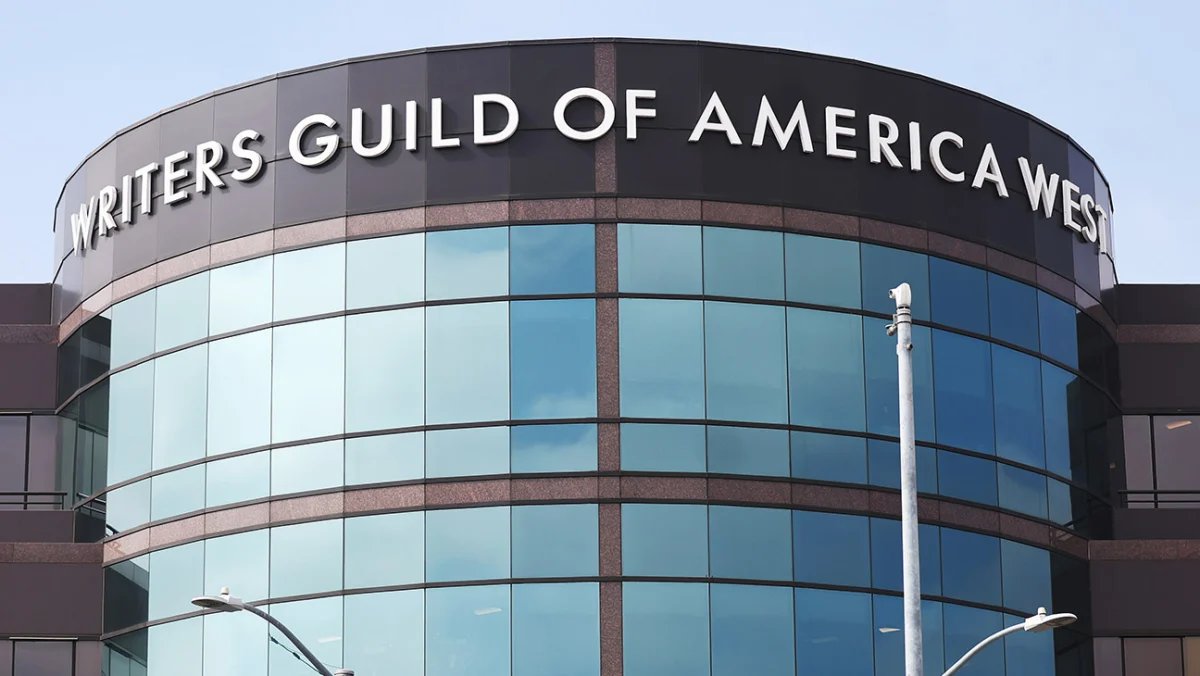
The Writers Guild of America (WGA) has reached a landmark tentative agreement on a new four-year contract with the Alliance of Motion Picture and Television Producers (AMPTP), the body representing major Hollywood studios and streaming giants. The agreement, which was first reported on Saturday by Puck and subsequently confirmed by industry sources, marks a significant departure from the standard three-year term typically seen in Hollywood labor negotiations. This extension to a four-year framework is viewed by industry analysts as a strategic move to provide a longer window of labor stability following the tumultuous industrial actions of 2023. According to preliminary details, the deal includes critical gains in health and pension fund contributions, increased residuals for Subscription Video on Demand (SVOD) platforms, and, perhaps most pivotally, new protections designed to police the licensing of guild-protected material for the training of artificial intelligence models.
While the agreement represents a major milestone in labor relations, it remains tentative until it undergoes a formal ratification vote by the WGA’s membership. The negotiation process was led by WGA chief negotiator Ellen Stutzman, alongside negotiating committee co-chairs John August and Danielle Sanchez-Witzel. On the opposing side, the AMPTP was represented by its new president, Gregory Hessinger, who took the helm from longtime lead negotiator Carol Lombardini earlier this year. This negotiation served as the first major test for Hessinger’s leadership and signaled a shift in the bargaining atmosphere as both sides sought to avoid a repeat of the prolonged work stoppages that paralyzed the entertainment industry just one year ago.
The Evolution of Artificial Intelligence Protections
The inclusion of specific language regarding the "policing" of licensing for AI training represents a significant expansion of the labor protections established during the 2023 strike. During the previous round of bargaining, the WGA successfully enshrined protections that prohibited studios from using generative AI to write or rewrite literary material, and ensured that AI-generated content would not be considered "source material" for the purposes of determining credits. However, as the technology has rapidly evolved, the focus has shifted from the output of AI to the input—specifically, how writers’ intellectual property is used to train Large Language Models (LLMs).
The new provisions aim to address the growing concern that studios might license vast archives of scripts to tech companies to "teach" AI systems how to replicate specific styles, structures, and narrative voices. By securing the right to police these licensing agreements, the WGA is asserting a level of control over the digital afterlife of its members’ work. This move is expected to set a precedent for other creative guilds, as the industry grapples with the ethical and financial implications of machine learning in the creative process.
Addressing the $122 Million Health Fund Deficit
A primary driver for the WGA during these talks was the precarious state of its health and pension plans. Recent tax filings and financial disclosures revealed that the WGA’s health fund suffered a cumulative loss of approximately $122 million across the 2023 and 2024 fiscal years. This deficit was precipitated by a "perfect storm" of economic factors: a sharp decline in Hollywood production levels, which reduced the employer contributions that fund the plan, and the persistent pressure of general healthcare inflation.
The tentative deal reportedly includes substantial increases in employer contribution rates to shore up these funds. For rank-and-file writers, the stability of the health plan is often a top-tier priority, as the intermittent nature of freelance writing makes guild-provided insurance a vital lifeline. By securing these increases, the WGA leadership aims to ensure that the fund remains solvent through the end of the decade, even if production levels do not immediately return to the heights of the "Peak TV" era.
Compensation Adjustments in the Streaming Age
Beyond the high-tech concerns of AI, the WGA remained focused on the core economic issue of compensation. The shift from linear television to streaming has fundamentally altered the way writers are paid, often resulting in "stagnant" wages despite the global reach of the content they create. The new deal addresses this through "SVOD bumps"—increases in the residuals paid when content is hosted on streaming platforms like Netflix, Disney+, and Max.
Furthermore, the guild sought and reportedly obtained improvements in minimum compensation rates for specific categories of work that have historically been undervalued. This includes "page one" rewrites—extensive overhauls of existing scripts that often require as much work as an original draft—and pay rates for writers involved in post-production. The union also made a concerted effort to improve terms for writers in the comedy/variety, quiz, and audience genres, sectors of the industry that have faced unique challenges as traditional network schedules shrink in favor of on-demand content.
A Chronology of Labor Unrest and Industry Contraction
The context of these negotiations cannot be overstated. The 2023 WGA strike lasted 148 days, becoming one of the longest and most impactful labor actions in the history of the guild. That strike, which focused heavily on the existential threat of AI and the erosion of the "middle class" writer, was eventually joined by SAG-AFTRA, marking the first dual strike of writers and actors since 1960. While the 2023 settlement was hailed as a victory for labor, the immediate aftermath has been characterized by a "painful contraction" across the entire entertainment sector.
According to the WGA’s own annual financial report, writer employment in 2024 was down 9.4 percent compared to 2023—a year in which employment was already artificially suppressed by the strike. More alarmingly, employment levels in 2024 sat 24.3 percent below the benchmarks set in 2022. This contraction is the result of several factors:
- Studio Consolidation: Mergers and acquisitions have led to fewer "buyers" in the marketplace.
- Cost-Cutting Measures: Major media companies are pivoting from a "growth at all costs" streaming model to a focus on profitability, leading to the cancellation of numerous series and a reduction in overall development budgets.
- The "Peak TV" Correction: The industry is retreating from the record-breaking volume of scripted series produced in the early 2020s.
Against this backdrop, the WGA’s decision to pursue a four-year deal suggests a desire for a longer period of predictability, allowing the industry time to find its new equilibrium without the looming threat of another contract expiration in the near term.
The Broader Impact on Hollywood Labor Relations
The WGA’s success in reaching a tentative deal stands in contrast to the current situation facing SAG-AFTRA. The performers’ union began its own negotiations with the AMPTP on February 9, but failed to reach an agreement before the high-profile window of the Academy Awards. On March 15, it was announced that SAG-AFTRA had not yet secured a new deal for its film and television contract, which is set to expire on June 30.
The WGA’s deal may serve as a blueprint or a point of leverage for SAG-AFTRA and other unions, such as IATSE (the International Alliance of Theatrical Stage Employees) and the Teamsters, both of which are entering their own critical bargaining cycles this year. The focus on AI training protections, in particular, is likely to be a major sticking point for actors, who are concerned about the unauthorized use of their digital likenesses and voices.
Analysis of Implications and Future Outlook
The tentative four-year deal between the WGA and the AMPTP represents a "peace treaty" of sorts for a battle-weary industry. For the studios, the agreement provides a fixed cost structure and labor peace through 2029, allowing them to focus on stabilizing their streaming businesses and navigating the integration of AI tools into their workflows. For the writers, the deal offers a defensive perimeter against the most disruptive aspects of technological change and a much-needed infusion of capital into their benefits programs.
However, the underlying economic reality remains challenging. Even with a favorable contract, the decline in overall employment remains a significant hurdle for the guild’s membership. A contract can set the "floor" for pay and working conditions, but it cannot mandate the "volume" of work available in a contracting market.
As the ratification process begins, guild members will likely scrutinize the specific language of the AI licensing protections. If the membership views these safeguards as insufficient to prevent the long-term displacement of human writers by machine learning, the ratification vote could become a contentious affair. Conversely, if the deal is seen as a robust defense of the craft in an era of unprecedented change, it could usher in a new period of relative stability for Hollywood’s creative workforce.
The coming weeks will be instrumental as the WGA leadership presents the full text of the agreement to its members. The industry at large—from agents and managers to crew members and studio executives—will be watching closely, as the outcome of this vote will dictate the trajectory of Hollywood production for the next four years. In a landscape defined by rapid technological shifts and economic uncertainty, this agreement attempts to draw a line in the sand, asserting that while the methods of distribution and production may change, the fundamental value of the writer remains a cornerstone of the cinematic and televisual arts.