In the heart of Athens, a striking new exhibition has emerged, transforming a space into a veritable temple dedicated to the artistic vision of acclaimed director Yorgos Lanthimos. Within the confines of Onassis Stegi, visitors are invited to step beyond the familiar cinematic landscapes of his critically lauded films and into the deeply personal world captured through Lanthimos’s lens. The exhibition, titled "Yorgos Lanthimos: Photographs," showcases a curated collection of his personal photography, offering a profound and often disquieting glimpse into Greece through the eyes of its most distinctive cinematic voice.
The exhibition’s design itself is an architectural nod to Lanthimos’s aesthetic, with tall white columns framing the entrance to the inner sanctum where his photographs are displayed. While not possessing the millennia-spanning gravitas of the nearby Parthenon, this contemporary structure houses a unique treasure: the candid, often surreal, visual diary of a filmmaker renowned for his absurdist narratives and unflinching explorations of human nature. These images, predominantly captured over the last few years as Lanthimos traversed his homeland, reveal a Greece seen through a lens that finds the profound in the peculiar and the unsettling in the everyday.
H2: A Glimpse Through an Absurdist Lens
The collection features striking juxtapositions that are hallmarks of Lanthimos’s directorial style. One photograph captures a coffin resting incongruously against a wall, a mop standing sentinel beside it, evoking a sense of dark humor and existential commentary. Another image presents horses with their heads artfully obscured by foregrounded trees, their truncated forms adding a layer of surrealism to the pastoral scene. Perhaps one of the most poignant and representative pieces is a roadside memorial positioned directly beneath a warning sign depicting a wiggly road. The sign’s upward trajectory seems to ominously suggest a literal path to the afterlife for the departed, a darkly witty and melancholic observation that encapsulates the complex emotional terrain Lanthimos’s work consistently navigates.

"How you view it depends on your mood," Lanthimos explained during an interview at Onassis Stegi, reflecting on the multifaceted nature of his photographic subjects. "You’ll see it one day and laugh, then see it another day and be like, ‘What happened here?’ It’s dark, it’s nuanced, it’s why I love that picture." This sentiment underscores the exhibition’s invitation to viewers: to engage with the images on a personal level, allowing their own perspectives and emotional states to shape their interpretation.
H2: Photography as an Extension and an Escape
Lanthimos’s engagement with photography is not a new endeavor, though his previous photographic works have often been intrinsically linked, albeit loosely, to his cinematic projects. The exhibition features some of these earlier pieces, displayed around the periphery of the main exhibition space. During the production of "Poor Things," Lanthimos created a series of lavish portraits of the film’s stars, including Emma Stone, Mark Ruffalo, and Jerrod Carmichael. Simultaneously, these images offered viewers an intimate look behind the curtain, revealing the often-unseen scaffolding, lighting rigs, and props that typically remain outside the film camera’s frame. For his more recent film, "Kinds of Kindness" (2024), Lanthimos produced a body of work that drew aesthetic parallels with American photographers like Lewis Baltz and Henry Wessel Jr., diverging from the visual language of the film itself. These images often featured subjects in unexpected ways, such as Willem Dafoe’s back of the head or Emma Stone’s shadow, further emphasizing his unique perspective.
Some photographs included in the exhibition also appear in his new book, "Viscin." While some were taken during the filming of "Bugonia" last year, Lanthimos maintains that the book has "virtually nothing" to do with the film. An example of this abstract connection is an image pairing a dome-shaped building with Emma Stone’s equally rounded head, a visual echo that plays on form and recognition. When questioned about the unconventional framing of his subjects, Lanthimos humorously dismissed the notion that industry professionals would question his artistic choices. "No, thankfully we had a great on-set photographer to do the promotional side," he stated, highlighting his deliberate departure from conventional filmmaking photography.
H3: The Darkroom as a Sanctuary
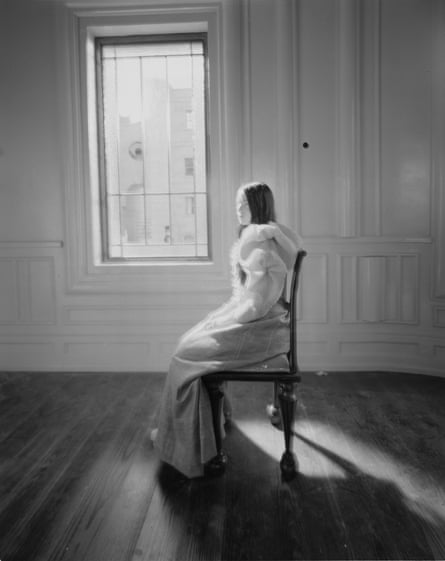
For Lanthimos, photography serves as a vital outlet, a means to decompress from the pressures of filmmaking rather than an extension of its narrative universes. This sentiment is echoed by Emma Stone, who has collaborated with Lanthimos on all his films since "The Favourite" (2018). Stone revealed that she joined Lanthimos each night after filming to process negatives in a makeshift darkroom set up in his hotel bathroom. "After all this tension on set all day, it became this thing that calmed and focused us," she recounted. "It was meditative." This shared ritual underscores the therapeutic and grounding power of the photographic process, offering a respite from the high-stakes environment of film production.
Stone also shared a humorous anecdote about her early experiences with Lanthimos’s darkroom. "She was very sensitive about that," Lanthimos recalled with a smile, referring to Stone’s concern about accidentally damaging a photograph. "She said, ‘This is someone else’s picture. I don’t want to ruin it!’ But it was just a scratch. No big deal! She never botched the processing of a negative or anything. I think she was hanging a photo from a wire with a clip and it scratched the edges. I said, ‘You won’t even see it when it’s cropped.’ But she was really stressed about it."
Lanthimos, however, embraces imperfections and happy accidents in his photographic work. He pointed to a minimalist image of a sea and horizon, punctuated by repetitive white marks slicing through the sky. While Stone was not responsible for these marks, Lanthimos selected the image precisely because of them. "It is a really simple and minimal image, and the scratches gave it a sense of texture and tactility," he explained, demonstrating his appreciation for unexpected elements that enhance the final composition.
H3: A Homage to Stillness
The influence of still imagery is palpable in a montage from "Bugonia," which features a series of people – including copulating lovers and mourners at gravestones – depicted in states of stillness and repose. This sequence has been noted for its potential homage to iconic photographic works such as Mark Steinmetz’s "Carey in Full Sun" or William Eggleston’s portrait of Marcia Hare. However, Lanthimos maintains that these associations were not intentional. "Originally the idea was to show people with their hearts exploding but I realised it would be a more powerful ending to have things still and silent," he stated. "I think it just naturally became photographic."

H2: Stepping Back, Looking Closer
Following a period of intense cinematic output, Lanthimos is currently taking a hiatus from filmmaking. "I made three films back to back," he shared. "No gap. I overdid it. So it might be a couple of weeks, it might be years. But I won’t make another film until I get the urge again." This pause marks a significant shift, allowing him to focus on more personal projects, including his photography.
The director candidly admits that he does not relish many aspects of the filmmaking process itself. The logistical complexities of large sets, the constant decision-making, the demands of press junkets, and the frenzy of awards ceremonies are all at odds with his inherently shy personality. Even the solitary pursuit of photography presents challenges due to what he terms "the shyness issue." Approaching strangers to ask for their photograph is a hurdle he still grapples with. "I’m hoping I can do that in future, maybe with the help of other people," he expressed. This vulnerability is particularly striking given the often provocative and boundary-pushing nature of his films, which tackle themes of incest, self-mutilation, and child sacrifice.
H3: The Expressive Power of the Partial View
In his series of photographs of Greece, titled "No Word for Blue," people are not always the primary focus, and when they appear, they are often captured from behind or at a distance. Limbs and bodies out of shot are a recurring motif, creating a sense of mystery and inviting the viewer to complete the narrative. A photograph of a woman’s bruised leg, for instance, resonates with the way his films often fetishize body parts, exploring their tactile and expressive qualities.
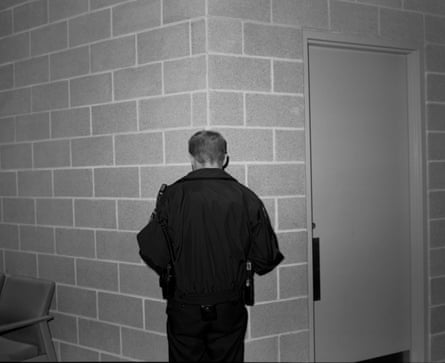
When asked about his fascination with such details, Lanthimos offered a thoughtful explanation. "I don’t know how to answer that," he began, before elaborating, "I think parts of the body are very expressive, especially with bruises or birthmarks or acne or whatever. They can be expressive in a different way to a face. I guess it goes back to telling stories. If you only show a part of something and not the whole thing, it urges you to imagine the rest." This approach aligns with his directorial philosophy, where ambiguity and suggestion often hold more power than explicit representation.
H3: Reinterpreting the Familiar
Lanthimos’s ability to imbue ordinary scenes with extraordinary meaning is evident in an image of a couple standing at the sea’s edge, the male figure with his head bowed. While a viewer might project a narrative of grief or loss onto this scene, Lanthimos revealed it was a simple depiction of his wife, actress Ariane Labed, and a friend preparing to test the cold water. He embraces these varied interpretations, seeing them as a testament to the evocative power of photography.
The path to his current artistic preoccupations is an intriguing one. Lanthimos was once on track for a career as a professional basketball player, following in the footsteps of his father, a former player for Pagrati and the Greek national team. Reflecting on his younger years, he suggests that his reserved and timid nature, rather than any specific artistic inclination at the time, contributed to his eventual departure from the sport. "I guess that’s why I quit basketball," he mused. "But actually it’s more that I’m reserved and timid – in any situation. I wasn’t doing sport and thinking, ‘Actually, I’m an artist.’ I think I’d feel the same way in any discipline."
H2: The Homecoming and a New Creative Phase
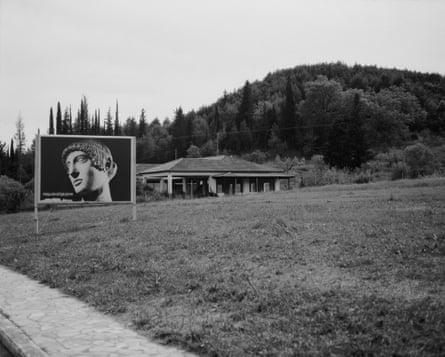
Lanthimos’s photographic journey began at the age of 19, shortly after he abandoned basketball, when he started shooting his peers at film school in Athens. Today, he possesses a substantial collection of film cameras – he eschews digital technology – which he admits can pose a logistical challenge when traveling. "It’s an issue when I have to go somewhere," he noted. "I try to take no more than two at a time."
His early career in Greece, marked by commercials and films like the critically acclaimed "Dogtooth" (2009), established him as a prominent figure in the country’s burgeoning "weird wave" of cinema – a term he openly dislikes. However, the financial crisis in Greece led to a significant reduction in film funding, prompting Lanthimos to relocate to London to continue his directorial pursuits. This period abroad, while creatively fruitful, also fostered a profound sense of nostalgia for his homeland.
The complexities introduced by Brexit, which Lanthimos described as "everything more complicated for no reason at all," served as a catalyst for his return to Greece. This homecoming signifies a deliberate recalibration of his life and career, a move towards a slower pace and a deeper reacquaintance with his roots. The "Yorgos Lanthimos: Photographs" exhibition at Onassis Stegi, alongside his book "Viscin," represents a significant step in this new, more intimate and personal artistic phase. Despite his ongoing struggles with shyness, the exhibition serves as an open invitation into Lanthimos’s world, allowing audiences to engage with his distinctive vision and the unique beauty he finds in the often-overlooked corners of Greece.
The exhibition "Yorgos Lanthimos: Photographs" runs at Onassis Stegi, Athens, until May 17th. His book, "Viscin," is currently available for pre-order via Mack Books.