A Master’s Return and a Genre’s Rejuvenation
Yuen Woo-ping, a name synonymous with some of the most iconic martial arts sequences in cinematic history, steps back into the directorial spotlight with Blades of the Guardians. His extensive career, spanning over five decades, includes choreographing groundbreaking fight scenes in films such as Drunken Master (1978), Once Upon a Time in China II (1992), and the global phenomenon Crouching Tiger, Hidden Dragon (2000), which earned him international acclaim, including a BAFTA Award nomination. Beyond wuxia, Yuen’s influence permeated Hollywood, notably through his work on The Matrix (1999) and Kill Bill: Vol. 1 (2003), where his unique blend of fluid movement, dynamic wirework, and intricate combat philosophy redefined action cinema for a global audience. His return to directing, particularly within the wuxia genre, is not merely a directorial comeback but a significant event for an art form he has profoundly shaped.
Blades of the Guardians is a deeply personal project for Yuen Woo-ping and its lead actor and producer, Wu Jing. The film is a big-budget adaptation of Xu Xianzhe’s acclaimed manhua, "Biao Ren" (also known as "Blades of the Guardians" in English-speaking markets), a graphic novel series celebrated for its intricate plot, compelling characters, and stunning artwork. The manhua has garnered a significant following in China and beyond, making its cinematic adaptation a highly anticipated event. Wu Jing, a powerhouse in contemporary Chinese cinema known for his roles in the Wolf Warrior franchise and The Wandering Earth, brings his considerable star power and martial arts prowess to the role, further elevating the film’s profile. His involvement as a producer underscores his commitment to the project’s vision and its potential to revitalize the wuxia genre for a new generation.
Chronology of Production and Release
The journey of Blades of the Guardians to the silver screen has been a meticulous process, reflecting the scale and ambition of the project. Development for the adaptation of "Biao Ren" began several years prior, with Yuen Woo-ping expressing a keen interest in the source material’s potential to bridge traditional wuxia themes with modern sensibilities. Principal photography commenced across the vast and visually striking landscapes of Xinjiang and the historical studio sets in Beijing, regions carefully chosen to authenticate the film’s late Sui dynasty setting and to capture the epic scale described in Xu Xianzhe’s manhua. The challenging physical demands of the production necessitated intensive physical training for the multi-generational cast, ensuring the precision and intensity required for Yuen’s signature choreography.
Following an extensive post-production phase that focused on refining its visual effects, sound design, and William Wu’s score, Blades of the Guardians was strategically released in China during the highly competitive 2026 Chinese New Year period. This release window is traditionally reserved for major blockbusters, indicating the producers’ confidence in the film’s commercial appeal. Its resounding success in China, where it quickly became the highest-grossing wuxia film of all time, validated this strategy and underscored the enduring appeal of the genre when executed with vision and craftsmanship. The upcoming UK and Irish premiere on April 17, facilitated by Trinity CineAsia, marks the film’s expansion into international markets, allowing European audiences to experience this cinematic spectacle. Trinity CineAsia, known for bringing diverse Asian cinema to Western audiences, has positioned Blades of the Guardians as a cornerstone of its 2026 release slate, highlighting its significance beyond domestic success.
A Tale of Duty and Survival in a Fractured Empire
The narrative of Blades of the Guardians is set against the tumultuous backdrop of the late Sui dynasty, a period of profound political corruption, widespread civil unrest, and societal upheaval that ultimately led to the dynasty’s collapse and the rise of the Tang dynasty. This historical epoch, rife with power struggles and moral ambiguities, provides a rich canvas for the film’s exploration of human resilience and the complexities of justice.
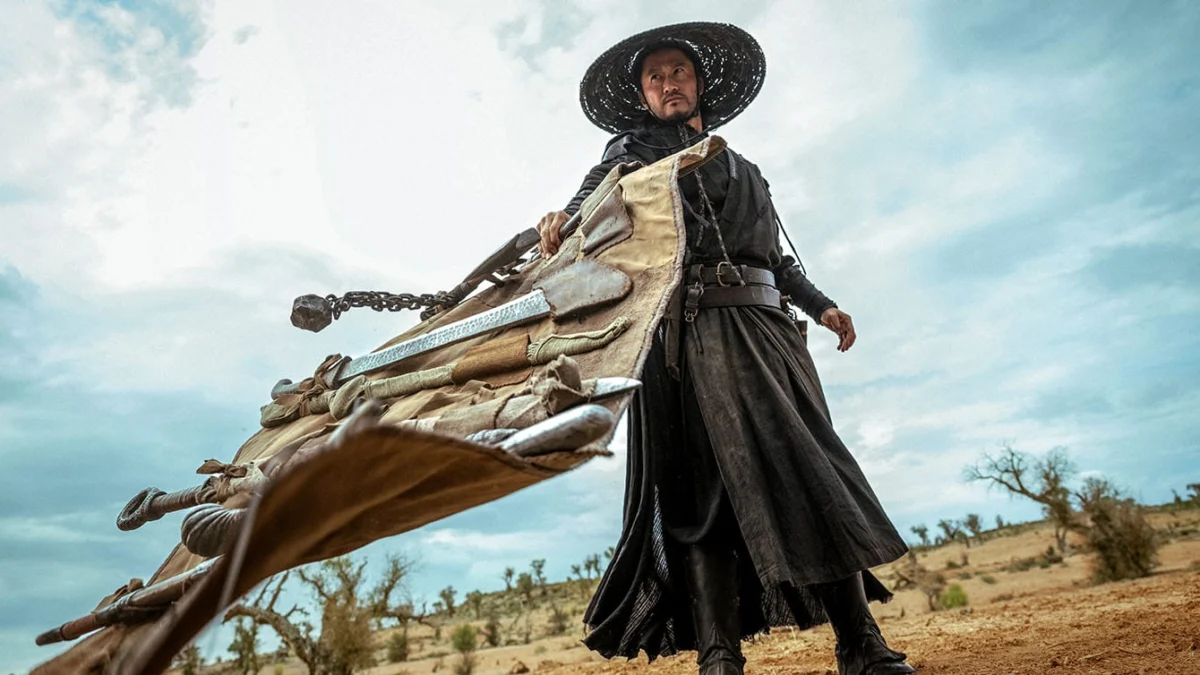
The story centers on Dao Ma, portrayed with a restrained yet deeply human performance by Wu Jing. Dao Ma is a former soldier, hardened by the conflicts of his time, who has transitioned into the precarious life of a bounty hunter. His journey begins in the perilous Western Regions, a vast and unforgiving desert landscape that becomes a character in itself, shaping the destiny of those who traverse it. Alongside a young orphan, a symbol of innocence and vulnerability in a brutal world, Dao Ma is tasked with a mission that initially appears straightforward: escorting Zhi Shilang, the empire’s most wanted fugitive, to the capital city of Chang’an.
However, the simplicity of the mission quickly dissolves as Dao Ma finds himself pursued by an escalating array of factions. Imperial forces, desperate to maintain control and enforce the Emperor’s will, clash with regional powers seeking to carve out their own territories amidst the chaos. Independent fighters, driven by their own motives of power, revenge, or the substantial reward offered for Zhi Shilang, add further layers of danger. What begins as a mere escort mission transforms into a high-stakes journey across the unforgiving desert, where alliances are fluid, loyalties are tested, and survival becomes an increasingly uncertain prospect. The narrative masterfully weaves together elements of political intrigue, desperate survival, and profound personal transformation, reflecting the era’s volatile nature.
The Essence of Wuxia Reimagined
Yuen Woo-ping approaches Blades of the Guardians not merely as an action spectacle but as a deliberate return to the essence of wuxia as a cinematic language. The film employs choreography not just for visual flair but as a powerful narrative tool, using movement and combat to express emotional depth, character dynamics, and the unspoken struggles of its protagonists. This approach harkens back to the golden age of wuxia, where martial arts sequences were integral to storytelling, revealing character and advancing plot rather than serving as mere intermissions between dialogue.
While the narrative follows a relatively classical structure, grounding it in the familiar tropes of epic journeys and moral quests, its execution reflects a decidedly modern sensibility. The film blends large-scale action with contemporary themes of rebellion against oppressive regimes, the inherent moral ambiguity of conflict, and the profound cost of violence on individuals and society. This thematic depth elevates Blades of the Guardians beyond a simple action film, inviting audiences to ponder questions of duty, loyalty, and redemption in a chaotic world.
The screenplay, carefully crafted to resonate with both traditionalists and new audiences, explores ideas of duty, loyalty, redemption, and the powerful concept of found family. These universal themes ground the film’s epic scope with a compelling emotional core, particularly centered on Dao Ma’s evolving relationships with his companions. The improvised alliance that forms among the protagonists – a disparate group united by circumstance – adds tension and complexity throughout their perilous journey. Yet, it is the bond that gradually forms between them, forged in shared hardship and mutual reliance, that provides moments of genuine poignancy amid the film’s gritty, realistic backdrop. This blend of brutal action and heartfelt emotional connection is a hallmark of the finest wuxia traditions, revitalized for a contemporary audience.
A Stellar Ensemble and Masterful Craftsmanship
The film boasts an impressive multi-generational cast, a testament to its ambition and the respect commanded by Yuen Woo-ping. Wu Jing leads the ensemble with a performance as Dao Ma that has been lauded for its restraint and profound humanity. Known for his explosive, charismatic roles, Wu Jing here delves into a more introspective character, showcasing a versatility that adds significant depth to the film. Nicholas Tse delivers a compelling turn as a relentless antagonist, driven by a personal vendetta that fuels much of the film’s conflict. Tse’s physical prowess and intensity make him a formidable foil to Wu Jing, creating memorable confrontational sequences.
The supporting cast further enriches the ensemble dynamic. Yosh Yu, Chen Lijun, and Cisha contribute layered performances as the companions who form Dao Ma’s reluctant alliance, each bringing their own motivations and vulnerabilities to the forefront. Tony Leung Ka-fai, a veteran actor known for his versatility and gravitas, adds significant weight to his role, delivering a performance that underscores the film’s dramatic intensity. Despite limited screen time, legendary figures such as Jet Li and Kara Wai leave a strong impression, their brief but impactful appearances underscoring the film’s bridging of generations within the martial arts genre. Li, a global icon, and Wai, an industry stalwart, lend an undeniable prestige and connection to wuxia’s rich history, signaling a passing of the torch while reaffirming the genre’s enduring appeal.
The technical craftsmanship of Blades of the Guardians is equally commendable. Production took place across the diverse terrains of Xinjiang and the intricate sets of Beijing. The choice of Xinjiang was particularly inspired, allowing cinematographer Tony Cheung to capture the vastness and stark beauty of the Western Chinese desert with striking imagery. The landscape itself becomes a character, its harshness mirroring the struggles of the protagonists, while the use of natural elements enhances both the film’s scale and its atmosphere. The results of the cast’s intensive physical training are evident throughout, as the choreography unfolds with precision and intensity, seamlessly integrated into the narrative rather than feeling like isolated set pieces. Complementing the powerful visuals, William Wu’s score reinforces the film’s emotional and dramatic tone, swelling during epic battles and providing poignant melodies during moments of quiet reflection.
Impact and Implications: A New Era for Wuxia?
The commercial success of Blades of the Guardians in China has been nothing short of phenomenal. Emerging as the highest-grossing wuxia film of all time in the country, it signals not only the enduring appeal of the genre but also the significant impact of Yuen Woo-ping’s triumphant return to form. This achievement is particularly noteworthy in a highly competitive market, often dominated by contemporary action blockbusters or romantic dramas. The film’s ability to resonate with both traditional wuxia aficionados and modern moviegoers suggests a successful revitalization of the genre, demonstrating that its core principles of honor, justice, and martial prowess can still captivate a broad audience when presented with innovation and high production values.
The implications of Blades of the Guardians‘ success extend beyond its impressive box office numbers. For the Chinese film industry, it provides a powerful affirmation of the global potential of culturally specific genres like wuxia. It may encourage further investment in historical epics and martial arts films, potentially sparking a new wave of productions that blend traditional storytelling with contemporary cinematic techniques. For international audiences, especially those in the UK and Ireland where Trinity CineAsia is spearheading its release, the film offers a sophisticated entry point into modern Chinese cinema, showcasing its technical prowess and narrative depth.
Furthermore, the film reaffirms Yuen Woo-ping’s legacy as a master filmmaker capable of evolving with the times while staying true to the essence of his craft. His blend of traditional wuxia elements with a modern sensibility sets a new benchmark for the genre, suggesting a pathway for its continued relevance in a rapidly changing global film landscape. The success of Blades of the Guardians underscores a broader trend of high-quality Chinese productions gaining international traction, contributing to a richer and more diverse global cinematic offering.
Blades of the Guardians is more than just a historical action epic; it is a cinematic event that bridges generations of filmmakers and audiences, honoring the rich legacy of wuxia while boldly charting its future. For fans of action, historical dramas, and martial arts cinema, it stands as a must-see, marking the return of a master operating at the height of his craft, delivering a film that is both a spectacle and a heartfelt narrative.