The upcoming HBO series Lanterns, poised to be a significant addition to the burgeoning DC Universe, is taking an ambitious approach to storytelling, weaving together a narrative that spans multiple temporal planes and explores the intricate lore of the Green Lantern Corps. While initial descriptions hinted at a grounded, almost procedural take on the cosmic law enforcement agency—envisioned as "cops who happen to have superpowers"—the confirmed inclusion of Nathan Fillion as the boisterous Guy Gardner has signaled a departure from a purely gritty aesthetic. This casting choice, coupled with revelations from showrunner Chris Mundy, illuminates a more nuanced and layered narrative structure for the series.
The presence of Guy Gardner, a character notoriously known for his irreverent humor, penchant for outlandish constructs like giant oven mitts, and his self-proclaimed "Justice Gang," immediately raises questions about how such a vibrant personality will integrate into a show initially presented with a more somber tone. The answer, as revealed by Mundy in a recent Entertainment Weekly feature, lies in the series’ deliberate exploration of dual timelines. This structural choice is not merely a narrative device but appears to be fundamental to understanding the characters, their motivations, and the unfolding mysteries within the DC Universe.
The Rushville Incident and its Echoes
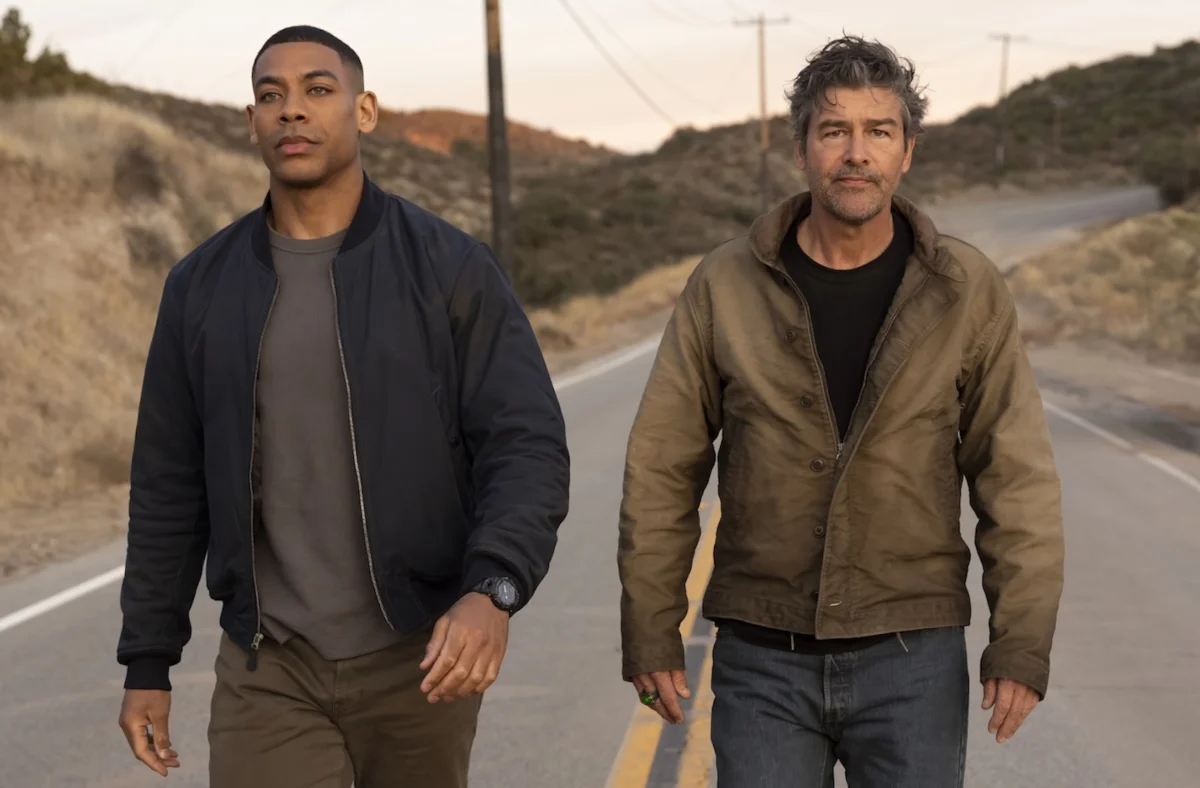
Lanterns will reportedly commence in 2016, immediately following a deeply unsettling shooting incident in Rushville, Nebraska. This event serves as the catalyst for the series’ primary investigation, drawing in Hal Jordan, portrayed by Kyle Chandler, who is convinced that extraterrestrial involvement is at play. His conviction stands in stark contrast to the pragmatic skepticism of the local sheriff, a role filled by Kelly Macdonald, who favors a more terrestrial explanation. This initial dichotomy sets the stage for the series’ exploration of the unknown and the challenges of discerning truth when faced with the extraordinary.
The choice of 2016 as a starting point is significant. It places the series in a relatively recent past, allowing for a contemporary resonance while still providing a historical anchor. The implications of a mass shooting, particularly one with potential extraterrestrial undertones, would have undoubtedly sent ripples through local communities and potentially garnered national attention, even if the extraterrestrial aspect remained speculative. The series seems poised to leverage this real-world context to ground its fantastical elements.
A Decade Apart: The Mysteries of 2026
The narrative’s temporal complexity deepens with the introduction of a second timeline set in 2026. Showrunner Chris Mundy has remained deliberately coy about the specifics of this future setting, referring to it as a "second mystery." This deliberate ambiguity fuels anticipation, suggesting that the events of 2016 have far-reaching consequences that will manifest a decade later. The placement of the film Superman—directed by James Gunn and starring David Corenswet—between these two timelines is a crucial piece of information. This suggests a deliberate effort to integrate the television series into the broader cinematic continuity, with Superman acting as a bridge or a pivotal event that shapes the future landscape for the Lanterns.
The inclusion of Guy Gardner across these different time periods is particularly intriguing. Mundy’s assertion that Fillion’s character will "be in the show a few different times" implies that Guy Gardner is not confined to a single era, suggesting his involvement might span the entire narrative arc or that his appearances are strategically placed to comment on the evolving mysteries. This could mean that Gardner’s less serious demeanor is a product of his experiences in one timeline, or perhaps his presence in another timeline offers a different perspective on the unfolding events.
Mentorship, Legacy, and the Seeds of Corruption
Beyond the temporal mechanics and character introductions, Lanterns delves into the thematic core of mentorship and its inherent complexities. Hal Jordan, a seasoned Lantern, finds himself reluctantly guiding John Stewart, a new recruit played by Aaron Pierre. What sets Stewart’s induction apart is his selection not by the traditional Green Lantern ring, but directly by the Guardians of the Universe, the enigmatic founders of the Corps. This deviation from the norm suggests a specific purpose or imperative behind Stewart’s recruitment, a "just cause" as hinted by EW.
The narrative tension is further amplified by the shadow of Hal Jordan’s own past mentorship. His former mentor, Thaal Sinestro, famously devolved into a tyrannical figure, becoming one of the most formidable adversaries of the Green Lanterns. Mundy’s contemplation of "programming and parenting and training" in relation to this dynamic highlights the show’s intention to explore the psychological underpinnings of heroism and villainy. The question of what positive or negative influences Jordan absorbed from Sinestro promises to be a compelling subplot, raising anxieties about the potential for corruption within the Lanterns themselves. This exploration of inherited traits and the struggle against one’s own darker impulses is a recurring theme in superhero narratives, but Lanterns appears poised to give it a specific, character-driven focus.
The Broader Context of the Green Lantern Corps
The Green Lantern Corps, a vast intergalactic peacekeeping force, has a rich and often convoluted history within DC Comics. Established by the Guardians of the Universe on the planet Oa, the Corps draws its power from the emotional spectrum, with Green Lanterns wielding willpower to manifest their constructs. The mythology encompasses various Corps, each aligned with a different emotion—Red for rage, Yellow for fear, Blue for hope, Violet for love, and Indigo for compassion. The introduction of a "space cops" drama, even with a grounded initial premise, opens the door to exploring this expansive cosmology.
The Guardians themselves are ancient, highly intelligent beings who have overseen the universe for eons. Their decisions, often inscrutable to mortal minds, have shaped the fate of countless civilizations. Their direct intervention in choosing John Stewart suggests a matter of cosmic urgency or a perceived imbalance that requires a specific, perhaps unconventional, solution. The series could potentially explore the philosophical underpinnings of the Guardians’ authority and the ethical implications of their interventions.
Chronological Framework of the DC Universe Narrative
The current DC Universe, as spearheaded by James Gunn and Peter Safran, aims to create a cohesive and interconnected slate of films, television shows, and animated projects. The announcement of Lanterns as a key component of this new era underscores the importance of the Green Lantern mythology. The timeline established by the series—2016 and 2026—along with the placement of Superman between these points, suggests a deliberate mapping of events.
- 2016: The initial investigation into the Rushville shooting begins, introducing Hal Jordan and the local sheriff. This period may also see the initial formation or re-establishment of certain Lantern activities on Earth.
- Between 2016 and 2026: The events of James Gunn’s Superman film unfold. This critical juncture likely involves significant cosmic or Earth-based events that impact the wider DC Universe, potentially shaping the landscape for the Lanterns in the subsequent timeline.
- 2026: The "second mystery" unfolds, presumably dealing with the fallout or evolution of the events from the earlier timeline. This is likely where the more established, perhaps more varied, roster of Lanterns, including Guy Gardner, will be prominently featured.
This temporal scaffolding allows for a natural progression of character development and world-building. It also provides opportunities for Easter eggs and callbacks, enriching the viewing experience for dedicated fans of the DC lore.
Data and Supporting Information
While specific data points for a fictional universe are not directly applicable in the real-world sense, the narrative structure itself can be analyzed for its strategic data integration. The choice of a specific year like 2016 allows the series to tap into existing cultural and political contexts, even if subtly. The "shooting in Rushville, Nebraska" is presented as a concrete event, providing a focal point for the investigation. The concept of the Green Lantern Corps draws from decades of comic book history, with millions of published pages detailing their adventures and lore, providing a vast reservoir of background material.
Inferred Statements and Reactions
While no direct quotes from related parties outside the announced cast and crew have been provided, the narrative setup allows for logical inferences about potential reactions. The scientific community and government agencies, if confronted with credible evidence of extraterrestrial activity, would likely engage in rigorous investigation and possibly containment protocols. Public reaction could range from widespread fear and panic to widespread fascination and belief. Within the DC Universe, other heroes and organizations might be aware of or indirectly affected by the Lanterns’ activities, leading to potential crossovers or collaborations. For instance, the Justice League, a cornerstone of the DC Universe, would likely be briefed on significant cosmic threats.
Analysis of Implications
The multi-timeline approach of Lanterns offers several significant implications for the future of the DC Universe:
- Character Depth: By exploring characters across different time periods, the series can showcase their evolution, growth, and the impact of their experiences. This is particularly relevant for characters like Hal Jordan and Sinestro, whose arcs are defined by major transformations.
- World-Building: The dual timelines provide a richer tapestry for establishing the DC Universe. The 2016 timeline can explore the nascent stages of the Green Lanterns’ presence on Earth, while the 2026 timeline can depict a more established and integrated force, potentially dealing with more complex intergalactic issues.
- Narrative Complexity: The interconnectedness of the timelines, especially with Superman acting as a bridge, suggests a carefully crafted narrative that rewards attentive viewers. Mysteries introduced in one era may find their resolutions or consequences in another.
- Guy Gardner’s Role: The inclusion of Guy Gardner is a strategic move. It injects much-needed levity and a different kind of heroism into the universe, showcasing that not all Green Lanterns operate with the same gravitas as Hal Jordan or John Stewart. His presence can also serve as a commentator on the more serious aspects of the narrative.
- Thematic Exploration: The series’ focus on mentorship, legacy, and the struggle against corruption offers profound thematic resonance. It allows for an examination of how individuals are shaped by their influences and the choices they make in the face of adversity, both personal and cosmic.
Lanterns is scheduled to premiere on August 16th on HBO and HBO Max. This highly anticipated series promises to be more than just another superhero show; it’s an ambitious exploration of time, character, and the enduring power of willpower across the vast expanse of the DC Universe.