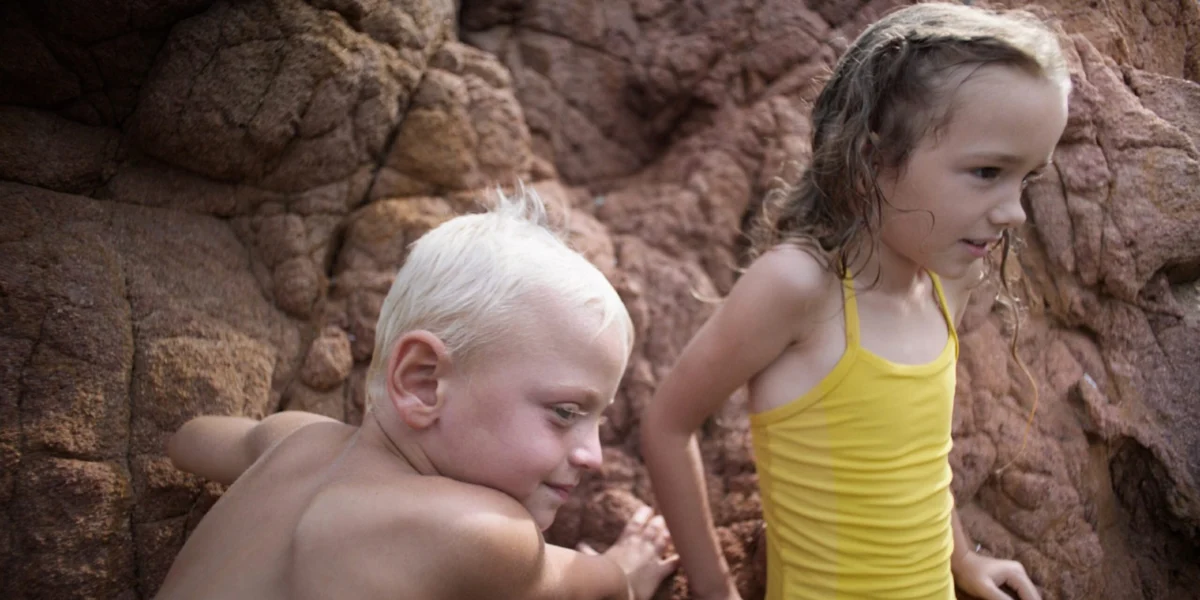
The 77th Cannes Film Festival has served as the backdrop for the world premiere of Red Rocks, the latest cinematic endeavor from acclaimed French auteur Bruno Dumont. Known for his unflinching explorations of human nature in films such as Humanity and The Life of Jesus, Dumont has pivoted toward a seemingly lighter, yet equally profound, subject: the intricate social hierarchies and emotional lives of five-year-olds. Set against the sun-drenched, rugged beauty of the French Riviera, the 91-minute feature has emerged as a significant talking point for critics and industry professionals alike, notably for its decision to transpose the high-stakes tropes of teenage dramas onto a cast of non-professional child actors.
A Narrative of Rivalry and Pre-Adolescent Romance
The plot of Red Rocks follows a summer in the lives of a group of very young children whose playground consists of the perilous cliffs and coastal towns of the Mediterranean coast. The central figure is Geo, portrayed by Kaylon Lancel, a blond, blue-eyed five-year-old whose daily routine involves activities usually reserved for much older protagonists: mini-quad-biking, breaking into parked vehicles, and engaging in high-altitude cliff-jumping competitions. Geo is flanked by his loyal companions, Manon (Louise Podolski) and Rouben (Mohamed Coly).
The stability of this trio is disrupted by the arrival of a rival faction consisting of three other children: B (Alessandro Piquera), Eve (Kelsie Verdeilles), and Do (Meryl Pires). The initial encounter between the two groups quickly escalates into a series of challenges. The primary conflict manifests as a "game of chicken" on the cliffs, where Geo and B compete to jump from increasingly dangerous heights into the sea below. This physical rivalry is complicated by a budding, albeit innocent, romantic entanglement. When Geo and Eve begin to express affection through holding hands and hugging, it triggers a ripple effect of jealousy. Eve is nominally considered B’s girlfriend, while Geo had previously shared a similar bond with Manon. The resulting tension mimics the structural complexity of a Shakespearean drama, specifically echoing themes found in Romeo and Juliet, but filtered through the lens of early childhood.
Technical Execution and the Role of Non-Professional Actors
One of the most discussed aspects of Red Rocks is Dumont’s use of a completely non-professional cast. All the lead actors were approximately five years old during the production phase. The director’s ability to elicit nuanced performances from such young subjects is a hallmark of his filmmaking style, which often favors authenticity over polished theatricality.
Kaylon Lancel has been singled out by observers for his magnetic screen presence. Despite his small stature, Lancel exhibits a stoic intensity that critics have likened to a miniature Jean-Paul Belmondo. The emotional weight of the film is carried largely through facial expressions and silent stares rather than dialogue. Because the characters are too young to articulate the complexities of betrayal or longing, the film relies on physical gestures. In this cinematic world, a hug serves as a proxy for a kiss, and a "breakup" is signaled by a refusal to share a quad bike.
The supporting cast also delivers notable performances. Kelsie Verdeilles, as Eve, manages to convey the gravity of her "affair" with Geo, at one point warning him that their relationship could place him in danger from B. Louise Podolski’s Manon provides the catalyst for some of the film’s more humorous moments, such as a scene where she deliberately hugs Geo to provoke Eve, leading to a confrontation where Eve demands they "stop hugging" with an authority that belies her age.
The Transposition of Teen Movie Tropes
Dumont’s directorial strategy involves a meticulous appropriation of 1950s and 1980s teen movie archetypes. By scaling down these familiar narratives, the director highlights the universality of human emotion. The mini-quad bikes are filmed with the same reverence usually afforded to motorcycles in a James Dean feature. When Eve hops onto the back of Geo’s quad bike to ride away, the visual language is indistinguishable from a classic cinematic elopement.
The cliff-jumping sequences serve as a functional replacement for the drag races or high-speed car chases common in the "rebel without a cause" subgenre. These scenes are shot with a palpable sense of suspense, forcing the audience to grapple with the inherent danger of small children performing such feats. While the production undoubtedly employed rigorous safety protocols, the visual impact suggests a level of peril that heightens the film’s stakes. The occasional "explosions of violence" that occur when the gangs clash are handled with a blend of dark humor and startling realism, further blurring the line between child’s play and adult conflict.
Visual and Auditory Landscape of the French Riviera
The aesthetic of Red Rocks is defined by the collaboration between Dumont and cinematographer Carlos Alfonso Corral. The film utilizes the natural geography of the French Riviera—specifically the titular "red rocks" (Roches Rouges) of the Estérel Massif—to create an idyllic yet isolated environment. The color palette is vibrant, featuring high-contrast shots of deep blue waters, crimson stone, and lush greenery under a clear sky.
The setting is characterized by the conspicuous absence of adults. The world of Red Rocks is one where children govern themselves. Adults appear only in the periphery: Eve’s mother and grandfather make brief appearances, and local police officers are seen attempting to curb the cliff-jumping activities. However, the children largely ignore these authority figures, reinforcing the idea that they exist in a sovereign social ecosystem.
The sound design plays a critical role in establishing the film’s atmosphere. The recurring sound of trains crossing a high viaduct above the town provides a rhythmic backdrop to the children’s activities, serving as a reminder of the larger world that exists just outside their reach. The sound of crashing waves and the silence of the sun-baked cliffs emphasize the isolation of the setting and the intensity of the children’s unspoken interactions.
Background Context: Bruno Dumont’s Evolution
To understand the significance of Red Rocks, it is necessary to examine Bruno Dumont’s trajectory as a filmmaker. Since his debut in the late 1990s, Dumont has been a fixture at the Cannes Film Festival. His work is often associated with the "New French Extremity," a movement characterized by provocative themes and a focus on the physical body.
However, in recent years, Dumont has experimented with more eccentric and comedic forms, such as the musical Joan of Arc films and the surreal police procedural P’tit Quinquin. Red Rocks represents a synthesis of these phases. It retains the philosophical inquiry into the nature of "evil" and "rivalry" found in his early work but applies it to a cast that evokes the charm and absurdity of his later comedies. By focusing on five-year-olds, Dumont strips away the intellectual pretenses of adulthood, leaving behind the raw mechanics of human social behavior.
Broader Implications and Critical Analysis
The film’s debut at Cannes has sparked discussions regarding the representation of childhood in modern cinema. Unlike traditional family films that sanitize the experience of being a child, Red Rocks acknowledges the capacity for cruelty, jealousy, and profound emotional attachment in very young children.
Analysts suggest that the film works by forcing the audience to project adult emotions onto the children’s actions. Because the viewers understand the tropes of the "teen rebel" or the "star-crossed lover," they see the gravity in a five-year-old’s stare that the child themselves might not fully comprehend. This creates a unique viewing experience that is simultaneously funny and deeply moving.
Furthermore, the film challenges the standard "coming-of-age" narrative. Usually, such stories focus on the transition from adolescence to adulthood. Dumont suggests that the "age of reason" and the "age of passion" may arrive much earlier than society generally acknowledges. The children in Red Rocks are not "becoming" people; they are already fully formed individuals navigating a world of complex social contracts.
Production Timeline and Release
Red Rocks was filmed on location during the summer months to capture the specific quality of light associated with the Mediterranean coast. Following its premiere at Cannes, the film is expected to see a theatrical release in France later this year, with international distribution deals currently being finalized.
The film’s 91-minute runtime is lean, avoiding the bloat often associated with festival entries. This brevity ensures that the central conceit—the "teen movie" with toddlers—does not wear thin, maintaining its tension and charm until the final frame.
As the festival circuit continues, Red Rocks is positioned as a strong contender for awards, particularly in categories recognizing directorial innovation and ensemble performance. It stands as a testament to Dumont’s enduring ability to surprise audiences and his commitment to exploring the human condition through unconventional lenses. By taking the simple act of childhood play and treating it with the gravity of a grand epic, Dumont has created a film that is as strange as it is beautiful, marking it as one of the standout achievements of the current cinematic year.