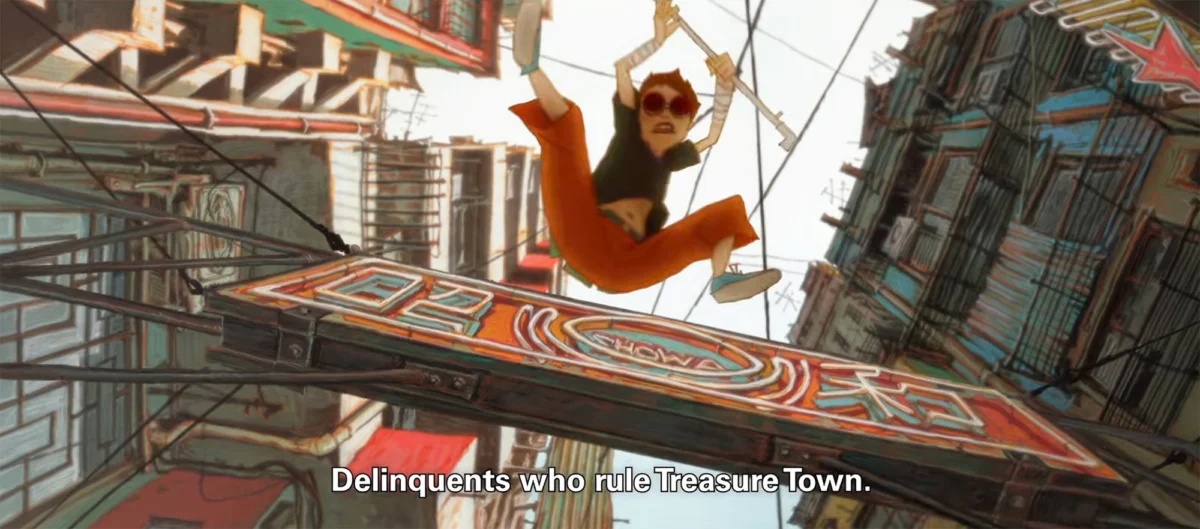
The acclaimed animation distributor GKids has officially announced a comprehensive 4K restoration and a limited theatrical re-release of the seminal animated feature Tekkonkinkreet to commemorate the film’s 20th anniversary. Originally debuting in late 2006, the film is widely regarded as a watershed moment in international animation, blending traditional Japanese storytelling with a unique visual language that defied the industry standards of its era. This new 4K remaster is scheduled to return to North American cinemas for a strictly limited two-night engagement on May 31 and June 1, 2026, offering both longtime enthusiasts and new audiences an opportunity to experience the film’s intricate urban landscapes with unprecedented clarity.
Directed by Michael Arias, Tekkonkinkreet remains a significant historical marker in the anime industry as the first major Japanese animated feature directed by a non-Japanese filmmaker. Produced by the avant-garde Studio 4°C, the film is an adaptation of the award-winning manga series by Taiyo Matsumoto, which was serialized between 1993 and 1994. The narrative follows two orphaned street children, Black and White, as they navigate the sprawling, decaying metropolis of Treasure Town. Their lives are upended when a syndicate of Yakuza and foreign developers attempt to demolish the city’s historic slums to make way for a commercial theme park, sparking a violent and psychological struggle for the soul of the city.
Historical Context and the Rise of Studio 4°C
The production of Tekkonkinkreet in the mid-2000s occurred during a period of significant technological transition within the animation industry. Studio 4°C, known for its experimental approach and high-quality production values, sought to push the boundaries of how digital tools could be integrated with hand-drawn aesthetics. Under the leadership of producer Eiko Tanaka, the studio had already established a reputation for non-conformity through projects like Mind Game and segments of The Animatrix.
Michael Arias, who had served as a producer on The Animatrix, brought a unique perspective to the director’s chair. His background in computer graphics and his deep immersion in Japanese culture allowed him to bridge the gap between Western technical innovation and Eastern artistic traditions. The result was a film that retained the distorted, expressive linework of Taiyo Matsumoto’s original manga while utilizing complex 3D environments to create a sense of vertiginous scale in Treasure Town. Upon its initial release in December 2006, the film was lauded for its "unapologetically gritty" art style, which stood in stark contrast to the cleaner, more pastoral aesthetics popularized by contemporaries like Studio Ghibli.

Technical Specifications of the 4K Remaster
The 2026 re-release utilizes a brand-new 4K master, which has been meticulously restored to preserve the film’s complex color palette and dense background art. Treasure Town, the film’s central setting, is famous for its "cluttered" aesthetic—a mixture of Showa-era nostalgia, neon-lit commercialism, and industrial decay. The 4K resolution is expected to highlight the immense detail in these backgrounds, which were originally painted with a high degree of texture that often became compressed in standard-definition home video releases.
GKids has confirmed that the remastering process involved scanning original film elements and utilizing modern color-grading techniques to ensure that the vision of art director Shinji Kimura is fully realized. The film’s soundscape, featuring an electronic score by the British duo Plaid, has also been optimized for modern theatrical sound systems. This auditory experience is crucial to the film’s atmosphere, as the soundtrack serves to heighten the tension of the action sequences and the melancholy of the character-driven moments.
Narrative Themes and Cultural Impact
At its core, Tekkonkinkreet is a story of duality and the symbiotic relationship between its two protagonists. Black is the cynical, violent protector, while White is the innocent, ethereal dreamer. The film posits that neither can survive without the other—a theme reflected in the title itself, which is a play on the Japanese words for "iron," "concrete," and "muscle." The story explores the psychological toll of urban violence and the loss of childhood innocence in the face of relentless modernization.
The film’s influence has persisted for two decades, particularly within the indie animation circuit and among international filmmakers. It won the prestigious Japan Academy Prize for Animation of the Year in 2008 and was featured in numerous international film festivals, helping to broaden the global perception of what anime could achieve artistically. By focusing on themes of brotherhood and environmental displacement, Tekkonkinkreet resonated with a global audience, transcending the typical "action-adventure" tropes associated with the genre at the time.
Chronology of the Tekkonkinkreet Franchise
To understand the significance of this 20th-anniversary event, it is necessary to look at the timeline of the property’s development and its subsequent legacy:

- 1993–1994: Taiyo Matsumoto’s original manga, Tekkonkinkreet (also known as Black & White), is serialized in Shogakukan’s Big Comic Spirits. The manga receives critical acclaim for its unconventional art style.
- 1999: A short pilot film is created to explore the possibility of an animated adaptation, demonstrating early experiments in blending 2D and 3D animation.
- December 2006: The feature film, directed by Michael Arias and produced by Studio 4°C, premieres in Japanese theaters.
- 2007: The film receives an international release and is submitted for consideration in the Best Animated Feature category at the Academy Awards.
- 2008: Tekkonkinkreet wins the Animation of the Year at the 31st Japan Academy Prize, solidifying its status as a masterpiece of the medium.
- 2010–2020: The film gains a massive cult following through DVD and Blu-ray releases, becoming a staple of "must-watch" lists for animation students and cinephiles.
- May 2026: GKids announces the 4K remaster and the special 20th-anniversary theatrical event.
Industry Implications of the Re-release
The decision by GKids to bring Tekkonkinkreet back to theaters reflects a broader trend in the film industry: the rising value of "event cinema" and the preservation of cult classics. As streaming services dominate the distribution landscape, theatrical distributors are increasingly turning to high-quality remasters of beloved films to draw audiences back to the big screen.
Industry analysts suggest that the success of similar re-releases, such as the 4K restorations of Akira and Ghost in the Shell, has proven that there is a significant market for premium anime experiences. For GKids, a company that has built its brand on prestige animation, Tekkonkinkreet is a natural fit for this strategy. The two-night engagement model creates a sense of urgency and community, encouraging fans to congregate for a shared experience that cannot be replicated at home.
Furthermore, this re-release serves as a tribute to the career of Michael Arias and the enduring creativity of Studio 4°C. In an era where many large-scale animated features rely on standardized CGI models, the hand-crafted, idiosyncratic nature of Tekkonkinkreet stands as a reminder of the medium’s expressive potential.
Voice Cast and Production Credits
The film features a distinguished voice cast that contributed significantly to its emotional weight. The Japanese version stars:
- Kazunari Ninomiya as Black: A member of the popular idol group Arashi, Ninomiya provided a gritty, weary performance that anchored the film’s darker moments.
- Yū Aoi as White: Aoi’s portrayal of the eccentric and youthful White provided the necessary contrast to Black’s intensity.
- Yūsuke Iseya as Kimura: A complex antagonist whose loyalty is tested throughout the film.
- Min Tanaka as Suzuki (The Rat): A veteran actor who brought gravitas to the role of the aging Yakuza boss.
The screenplay was penned by Anthony Weintraub, who worked closely with Arias to translate Matsumoto’s poetic and often abstract dialogue into a cohesive cinematic script. The production was overseen by a team of veteran producers, including Eiichi Kamagata and Masao Teshima, who ensured that the film maintained its independent spirit despite its ambitious technical requirements.

Conclusion and Future Outlook
The return of Tekkonkinkreet to the big screen in 4K is more than a simple nostalgia trip; it is a reaffirmation of the film’s status as a pillar of modern animation. By investing in a high-resolution restoration, GKids and Studio 4°C are ensuring that the film’s intricate artistry is preserved for future generations. As Treasure Town once again comes to life in cinemas across North America, the message of the film—that connection and brotherhood can survive even in the most decaying of worlds—remains as relevant today as it was in 2006.
Tickets for the May 31 and June 1 screenings are expected to be in high demand, reflecting the enduring legacy of a film that refused to "wag its tail for anyone." As the animation industry continues to evolve, Tekkonkinkreet stands as a testament to the power of a singular, uncompromising vision.