Ulrike Ottinger’s seminal 1989 drama feature, Johanna d’Arc of Mongolia, a film that masterfully blends ethnographic exploration with a surreal narrative, is experiencing a significant resurgence on the international festival circuit. This nearly three-hour epic, often described as a journey-film, delves into unfamiliar worlds, ritualistic details, and female-centered stories, cultivating naturally evolving relationships against the backdrop of the vast Mongolian steppes. Following its premiere at the 39th Berlin International Film Festival, the film has recently garnered renewed attention, notably with upcoming screenings at the 76th Berlinale and the 2026 Queer East Festival in London, cementing its status as a timeless piece of cinematic artistry and a pioneering work in queer and feminist filmmaking.
Ulrike Ottinger’s Vision: A Cross-Cultural Epic
At the heart of Johanna d’Arc of Mongolia lies the distinctive vision of its director, Ulrike Ottinger. Born in Konstanz, Germany, Ottinger established herself as a formidable force in avant-garde and experimental cinema, particularly known for her unique aesthetic that often combines elaborate costume design, meticulously constructed sets, and a profound interest in cultural anthropology. Her filmography, which includes works like Madam X: An Absolute Ruler (1978) and Dorian Gray in the Mirror of the Yellow Press (1984), frequently challenges conventional narratives, exploring themes of identity, gender, and power dynamics through a decidedly queer and feminist lens.
For Johanna d’Arc of Mongolia, Ottinger embarked on extensive research, spending considerable periods in Mongolia immersing herself in local traditions, customs, and landscapes. This deep engagement with the subject matter allowed her to craft a screenplay that, while fantastical, is rooted in an authentic understanding of Mongolian culture. The title itself, "Johanna d’Arc of Mongolia," is a potent symbol of cultural collision and synthesis. It evokes the legendary French heroine Joan of Arc, a figure synonymous with female leadership, spiritual guidance, and defiance, transplanted into an Eastern context. This juxtaposition immediately signals the film’s intent to explore universal themes of empowerment and identity through a cross-cultural prism, suggesting a narrative where traditional boundaries are not merely crossed but dissolved. Ottinger’s approach is less about direct historical parallelism and more about invoking the spirit of a revolutionary female figure within a new, equally compelling cultural narrative.
The Trans-Siberian Odyssey: A Journey into the Liminal
The film’s narrative commences with a journey along the Trans-Siberian Railway, the world’s longest railway, connecting European Russia with its Far East. This monumental rail line, which stretches from Moscow to Ulan-Ude at Lake Baikal, branches into the Trans-Mongolian Railway, traversing Mongolia’s diverse tundras and taigas. This railway serves as more than just a mode of transport; it is a metaphorical conduit, a liminal space where disparate cultures and individuals converge before their true adventure begins.
Ottinger deliberately crafts the initial train sequences as a "psychedelic trip," filled with an array of props and human-made decorations. Each station stop appears less like a real-world location and more like a "deliberately artificial studio set." This theatricality is not merely a stylistic choice but a fundamental element of Ottinger’s world-building, creating an atmosphere where reality blurs with performance. Within these crowded, richly decorated interiors, a myriad of identities are presented. Passengers, each speaking a different language, miraculously manage to communicate, underscoring the film’s exploration of shared humanity and the transcendence of linguistic barriers. The scripted monologues, the eccentric attire, and the exaggerated behaviors of the characters further amplify this fever-dream atmosphere, immersing viewers in a highly stylized, almost surreal environment that challenges conventional perceptions of authenticity.
Characters as Archetypes: Navigating Identity on the Tracks
The diverse group of female travelers aboard the train serves as a microcosm of Western archetypes encountering an unknown Eastern world. Lady Windermere, portrayed by the esteemed Delphine Seyrig, is an English private scholar and anthropologist. Her character embodies intellectual curiosity and an observational demeanor, often serving as a sophisticated narrator, guiding the younger Giovanna through the unfolding experiences. Seyrig, a celebrated actress known for her collaborations with avant-garde directors like Alain Resnais and Chantal Akerman, brings a profound gravitas and composed presence to her role, reflecting a European intellectual tradition grappling with the exotic.
Contrasting Lady Windermere is Fanny Ziegfeld (Gilian Scalici), an American musical-comedy singer. Scalici fills the frame with an exuberant, almost boisterous performative energy, embodying a vibrant, perhaps even superficial, facet of Western entertainment culture. Her loudness and theatricality stand in stark contrast to the more restrained elegance of Seyrig. Ms. Muller-Vohwinkel (Irm Hermann), a German teacher and traveler, adds another layer of Western identity with her more measured and disciplined presence, representing a different cultural approach to exploration and self-discovery. Finally, Giovanna (Ines Sastre), a young adventurer armed with only a rucksack and a walkman, represents youthful curiosity and an openness to new experiences. She is the audience’s surrogate, embarking on a journey of discovery alongside the more established characters.
This eclectic ensemble is united by their shared destination, Ulaanbaatar, but their journey takes an unexpected turn when they are abducted by a group of enigmatic female warriors led by a mysterious Mongolian princess, portrayed by Xu Re Huar. This pivotal event marks the transition from the constructed reality of the train to the expansive authenticity of the Mongolian steppe.
From Artificiality to Authenticity: The Steppe’s Embrace
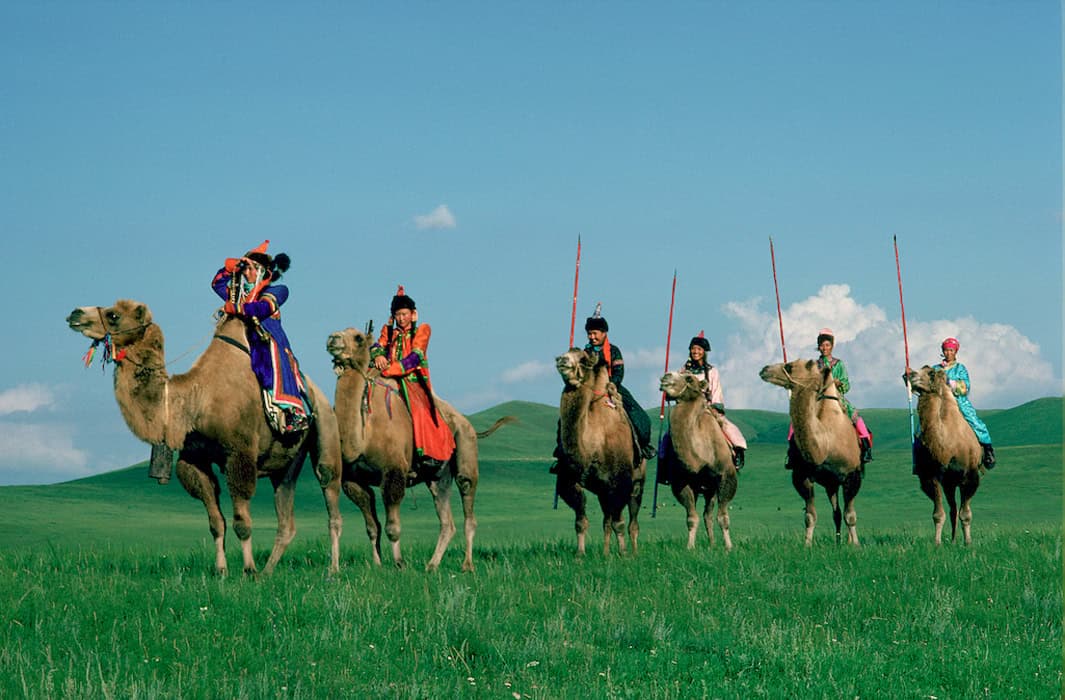
The moment the group of women disembarks from the train and follows the Mongolian warriors into their "traveling city made of traditional yurts," the film undergoes a radical narrative and aesthetic transformation. The claustrophobic, theatrical studio sets of the train sequences give way to the boundless, majestic exterior world of the steppe. What began as a scripted, almost performative story of a few Western travelers evolves into a profound "semi-documentary ethnographic observation."
This shift is where Ottinger’s meticulous research in Mongolia truly shines. The film delves into the secrets and rituals of Mongolian nomadic life, portraying traditional practices with a remarkable blend of reverence and artistic interpretation. The yurts, or gers, are not merely dwellings but symbols of a sustainable, mobile civilization, deeply connected to nature. Ottinger’s vision for this segment of the film provides an intimate texture, showcasing the daily lives, ceremonial practices, and social structures of the Mongolian women warriors. These scenes are infused with an observational quality, allowing viewers to witness aspects of a culture that often remain unseen by outsiders. The film explores themes of matriarchy, community, and survival in a harsh yet beautiful environment, presenting a powerful counter-narrative to the Western-centric perspectives introduced in the first half.
Cinematography and Design: A Visual Language of Contrast
Special recognition must be accorded to Ulrike Ottinger herself, who served not only as director but also as the film’s cinematographer. Her dual role ensures that her artistic vision is seamlessly translated onto the screen, creating a cohesive and compelling visual experience. Her camera movements demonstrate remarkable sensitivity, transitioning from the opulent, crowded interiors of the train to the vast, serene expanses of the Mongolian landscapes.
The visual contrast between these two halves of the film is stark and intentional. The train sequences, with their elaborate props and decorative elements, evoke a sense of theatricality and even claustrophobia, despite the grandeur of the setting. The camera often feels confined, reflecting the characters’ initial entrapment within their own cultural frameworks and the artificial environment. In stark opposition, the wide shots of the steppe are imbued with an unexpected calmness and meditative quality. Here, nature dominates the frame entirely, with the human figures often appearing small against the epic backdrop of endless skies and rolling hills. This visual language allows the unknown world to assert its presence, fostering a sense of awe and quiet introspection. The transition is not merely a change of scenery but a profound shift in perspective, moving from an artificial, human-centric world to an organic, nature-dominated one. The costume and set designers also deserve immense credit for creating these distinct visual palettes, from the flamboyant Western attire to the authentic Mongolian garments and the intricate details of the yurt interiors.
Performance and Presence: Anchoring a Dreamlike Narrative
The performances in Johanna d’Arc of Mongolia are integral to Ottinger’s unique world-building. In the first half, the actresses deliberately adopt an almost exaggerated screen persona, eschewing realism for a more theatrical approach. Gilian Scalici’s Fanny Ziegfeld, for instance, fills the frame with a boisterous, performative energy that captivates and occasionally overwhelms. Irm Hermann, as Ms. Muller-Vohwinkel, provides a contrasting, more restrained presence, highlighting the varied expressions of Western identity. Delphine Seyrig’s Lady Windermere carries herself with the composed elegance of a scholar and narrator, simultaneously guiding the curious Giovanna into an unfamiliar realm while maintaining an air of detached observation. These performances collectively contribute to the "fever-dream" quality of the train sequences, blurring the lines between character and caricature.
However, it is Xu Re Huar, in her singular screen appearance as the Mongolian princess, who leaves the most indelible impression. Her portrayal entirely eschews the theatricality of the Western characters, replacing it with a calm, precise, and authoritative energy. She embodies a natural gravitas and an unwavering sense of self that anchors the entire second half of the film. Her presence is not performative but intrinsic, radiating an authentic power that commands respect and provides a stark, grounding contrast to the surrealism that precedes it. This deliberate distinction in acting styles reinforces the film’s central theme of cultural encounter and the contrasting ways in which identity is expressed and perceived.
Enduring Themes: Feminism, Cultural Exchange, and Queer Identity
Beneath its dreamlike structure and ethnographic observations, Johanna d’Arc of Mongolia is a profoundly layered work that addresses several critical themes. At its core, it is a story about female autonomy and empowerment. The film features an all-female cast in its primary roles, showcasing women as adventurers, intellectuals, performers, and fierce warriors. The Mongolian princess and her army of female warriors are potent symbols of self-sufficiency, leadership, and a societal structure where women hold significant power, challenging traditional patriarchal narratives prevalent in cinema.
The film also serves as a rich tapestry of cultural exchange. It explores the fascinating dynamics that unfold when disparate cultures meet, emphasizing the possibility of connection and understanding beyond national and linguistic boundaries. Despite the initial communication barriers, the characters find common ground, sharing experiences and learning from one another. This dialogue highlights the film’s hopeful message about global interconnectedness and mutual respect.
Crucially, Johanna d’Arc of Mongolia holds significant relevance within the context of queer cinema. Ulrike Ottinger herself is an openly lesbian filmmaker, and her work frequently explores themes of gender fluidity, alternative lifestyles, and non-normative relationships. While not explicitly depicting romantic queer relationships, the film’s "female-centered stories" and "naturally evolving relationships" among women can be interpreted through a queer lens, celebrating sisterhood, community, and forms of female intimacy that transcend conventional expectations. The film’s subversive narrative structure, its challenge to traditional gender roles, and its celebration of diverse female experiences resonate deeply with the tenets of queer aesthetics and politics. Its inclusion in festivals like Queer East underscores its ongoing importance in expanding the canon of queer film and challenging heteronormative perspectives.
Festival Revival: "Johanna d’Arc of Mongolia" Returns to the Spotlight
The film’s journey began with its premiere at the 39th Berlin International Film Festival in 1989. The Berlinale has long been recognized for its commitment to showcasing diverse, challenging, and artistically significant cinema, making it a fitting platform for Ottinger’s unconventional masterpiece. Its initial reception, though perhaps niche, established its reputation among critics and cinephiles as a unique and daring work.
More than three decades later, Johanna d’Arc of Mongolia is experiencing a significant revival, signaling its enduring relevance and its status as a rediscovered classic. Its upcoming screening at the 76th Berlinale, scheduled for 2026, is a testament to the festival’s dedication to revisiting and re-evaluating historically important films. This re-presentation offers a new generation of audiences the opportunity to engage with Ottinger’s groundbreaking vision in a contemporary context, allowing for fresh interpretations and renewed appreciation.
Further solidifying its contemporary significance, the film is also slated for screening at the 2026 Queer East Festival in London. Queer East is dedicated to championing queer Asian cinema and culture, providing a vital platform for stories that often go unheard in mainstream cinema. The inclusion of Johanna d’Arc of Mongolia in their program highlights its intersectional themes of female empowerment, cultural identity, and its implicit queer sensibilities. A programmer for the Queer East Festival, inferring their perspective, might state, "Ulrike Ottinger’s Johanna d’Arc of Mongolia is a monumental work that brilliantly merges ethnographic inquiry with a surrealist aesthetic, creating a timeless narrative of female strength and cross-cultural dialogue. Its audacious vision and exploration of identity resonate powerfully with Queer East’s mission to celebrate diverse queer narratives, particularly within an Asian context, making it an essential viewing for our audience in 2026." This strategic programming ensures that the film continues to reach audiences who appreciate its artistic merit and its profound social and cultural commentary.
In conclusion, Johanna d’Arc of Mongolia exists as a singular cinematic achievement, meandering between the realms of a surrealist train expedition and a nature-based ethnographic sojourn, skillfully navigating the tension between artificiality and realism. Yet, beneath its dreamlike surface, it weaves a compelling narrative about female autonomy, profound cultural exchange, and the universal human quest for connection that transcends national and linguistic barriers. Even after its final images fade, the film lingers in the mind, much like the indelible memory of a distant and transformative journey, reaffirming its place as a vital and enduring work in the annals of world cinema.