Fatherland is the latest cinematic endeavor from Academy Award-winning director Paweł Pawlikowski, marking his return to the screen with a stark, historical drama that explores the fractured landscape of post-World War II Germany. Set in 1949, the film chronicles a pivotal road trip undertaken by the Nobel Prize-winning author Thomas Mann and his daughter, Erika, as they navigate the physical and moral ruins of their native country. Featuring a runtime of 82 minutes, the production reunites Pawlikowski with several of his long-term collaborators, including cinematographer Łukasz Żal, and stars an ensemble cast led by Hanns Zischler and Sandra Hüller. The film serves as a thematic successor to Pawlikowski’s previous acclaimed works, Ida (2013) and Cold War (2018), continuing his exploration of identity, displacement, and the intersection of personal lives with tectonic political shifts.
Historical Context and the 1949 Goethe Bicentennial
To understand the narrative weight of Fatherland, it is essential to examine the historical reality of its setting. In 1949, Germany was a nation in the midst of a profound identity crisis, split into occupation zones following the unconditional surrender of the Nazi regime in 1945. The year 1949 was particularly significant as it marked the 200th anniversary of the birth of Johann Wolfgang von Goethe, Germany’s most celebrated literary figure. Both the Western Allies and the Soviet Union sought to claim Goethe’s legacy to bolster the legitimacy of their respective ideological systems.
Thomas Mann, who had lived in exile in the United States since 1933 and became a U.S. citizen in 1944, was invited to receive the Goethe Prize in both Frankfurt (located in the American occupation zone) and Weimar (located in the Soviet zone). His decision to visit both cities was met with intense controversy. Critics in the West accused him of being a "fellow traveler" of communism, while those in the East viewed his presence as a validation of the nascent German Democratic Republic (GDR). Fatherland dramatizes this journey, using the historical friction of the "Two Germanys" to frame the internal conflicts of the Mann family.
Narrative Chronology and Structural Development
The film’s narrative is structured as a linear but atmospheric journey that mirrors the geopolitical transition of the era. The chronology begins in the ruins of Frankfurt, where Thomas Mann (Hanns Zischler) and Erika Mann (Sandra Hüller) first arrive from their comfortable exile. The initial sequences establish the "US-dominated" atmosphere of the West, characterized by a burgeoning capitalist order and the shadow of the Marshall Plan.
As the protagonists move toward Weimar, the film transitions into the Soviet-controlled territories. This segment of the journey is depicted not merely as a change in geography but as a shift in ideological frequency. The road trip serves as a narrative device to expose the characters to various strata of German society: former Nazis attempting to reintegrate, disillusioned youth, and intellectuals grappling with the demands of the new socialist state.
The climax of the film centers on the visit to Weimar, specifically the room where Goethe died. This sequence serves as a metaphorical bridge between the 18th-century German Enlightenment and the 20th-century moral collapse. The film concludes with the realization that "home" is no longer a physical location but a memory, as the Manns must reckon with their status as "walking relics" in a land that is rapidly reinventing itself.
Technical Execution and Visual Language
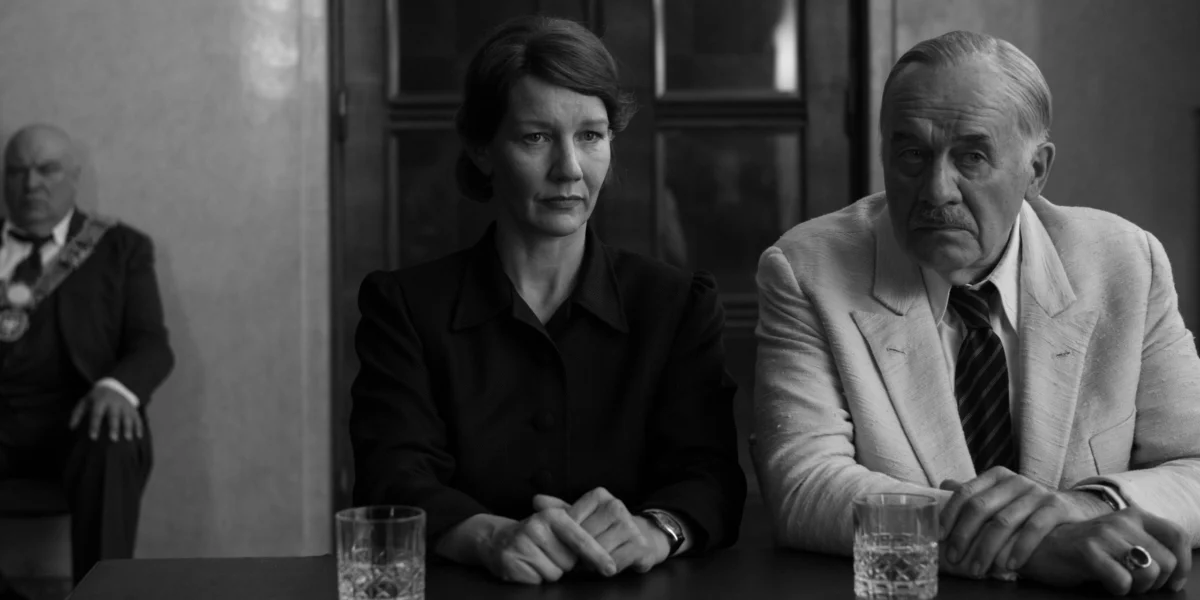
Director Paweł Pawlikowski and cinematographer Łukasz Żal have once again opted for a black-and-white aesthetic, a choice that has become a hallmark of Pawlikowski’s period pieces. This visual style serves multiple purposes: it evokes the archival footage of the post-war era, emphasizes the starkness of the architectural ruins, and focuses the viewer’s attention on the subtle emotional shifts in the actors’ faces.
The film’s 82-minute duration reflects a commitment to "contained storytelling." Unlike traditional historical epics that favor sprawling runtimes, Fatherland utilizes precise camerawork and tight editing to deliver a concentrated narrative. The use of the Academy ratio (1.37:1), similar to that seen in Ida and Cold War, creates a sense of verticality and confinement, suggesting that the characters are trapped by the weight of history.
Musical integration is another critical component of the film’s technical profile. The soundtrack features a blend of haunting anthems and classical compositions, used to underscore the "moral state" of the country. These auditory elements are not merely background noise but act as dialogue, communicating the grief and cultural dissonance that the characters cannot always express in words.
Performance Analysis: Zischler and Hüller
The success of Fatherland rests heavily on the chemistry and individual prowess of its lead actors. Hanns Zischler, a veteran of European cinema known for his work with Wim Wenders and Steven Spielberg, portrays Thomas Mann as a "bourgeois relic." Zischler captures the complexity of a man who is simultaneously a global intellectual icon and a deeply conflicted father. His performance during the Goethe Prize press conference is a highlight, illustrating the character’s struggle to define the future of German society while standing amidst its rubble.
Sandra Hüller, whose recent roles in Anatomy of a Fall and The Zone of Interest have established her as one of the preeminent actors of her generation, plays Erika Mann. Erika is depicted as the emotional anchor and the primary agitator of the story. Haunted by the disappearance of her brother, Klaus (played in opening sequences by August Diehl), Erika represents the restless, traumatized spirit of the German intelligentsia. Hüller’s performance is characterized by a balance of "emotional restraint and release," with notable scenes involving her confrontation with former fascists and her complex, protective relationship with her father.
Supporting Data and Production Background
Fatherland is a multi-national production involving German, Polish, and British interests. The screenplay, co-written by Pawlikowski and Hendrik Handloegten (the latter known for his work on the acclaimed series Babylon Berlin), draws from extensive historical research into the Mann family’s correspondence and diaries.
Key production data includes:
- Director: Paweł Pawlikowski (Oscar winner for Ida).
- Cinematography: Łukasz Żal (Two-time Oscar nominee).
- Format: Black and White, 1.37:1 aspect ratio.
- Language: German and English.
- Filming Locations: Various sites across Germany and Poland to recreate the 1949 ruins.
The film’s brisk 82-minute runtime is a deliberate artistic choice, aligning with Pawlikowski’s philosophy of removing "indulgent" subplots to focus on the core psychological truth of the characters. This approach has historically resonated with international film festivals; Ida and Cold War earned a combined total of over 100 awards worldwide.
Broader Impact and Industry Implications
Fatherland arrives at a time when European cinema is increasingly focused on re-examining the post-war period to find parallels with contemporary political divisions. By focusing on the Mann family—figures who were both outsiders and insiders—Pawlikowski provides a nuanced critique of how national identity is constructed and manipulated.
Industry analysts suggest that Fatherland will be a significant contender in the upcoming awards season, particularly in categories related to directing, cinematography, and lead acting. The film’s exploration of the clash between "capitalist and collective societal models" remains relevant in a modern geopolitical context where the boundaries between East and West are once again being scrutinized.
Furthermore, the film reinforces the status of Sandra Hüller as a powerhouse in international cinema. Following her dual success in 2023, her role in Fatherland demonstrates her range and ability to handle historically dense material with contemporary sensitivity. For Hanns Zischler, the film provides a career-defining role that synthesizes his decades of experience in the "New German Cinema" movement.
In summary, Fatherland is an impeccably crafted drama that utilizes a specific historical moment—the 1949 road trip of Thomas and Erika Mann—to explore universal themes of grief, legacy, and the search for home. Through the collaboration of Pawlikowski and Żal, the film translates the complexities of German history into a poetic and visually stunning cinematic experience. It stands as a testament to the power of succinct, focused storytelling in an era often dominated by narrative excess.