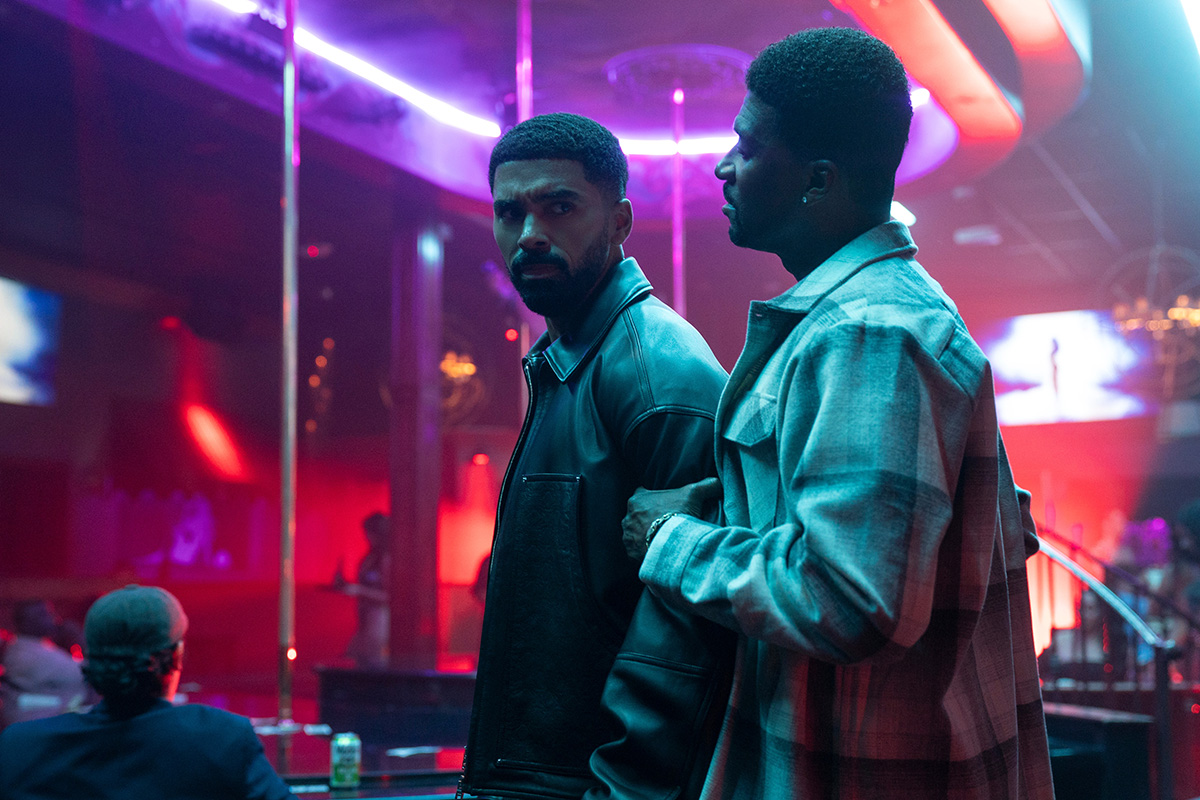
The highly anticipated Netflix crime drama Nemesis, a thrilling new series from acclaimed creators Courtney A. Kemp and Tani Marole, has officially premiered, captivating audiences with its unique Los Angeles setting and intricate cat-and-mouse narrative. The series masterfully pits two formidable figures against each other: Detective Isaiah Stiles, portrayed by Matthew Law, and the enigmatic expert thief, Coltrane Wilder, brought to life by Y’lan Noel. In true genre fashion, these protagonists are presented as two sides of the same coin, bound by circumstance and a shared intensity that promises explosive confrontations.
Kemp, renowned for her groundbreaking work on the hit series Power, and Marole, a rising force in television production, have openly discussed their ambition to craft Nemesis as precisely the kind of sophisticated thriller they themselves would eagerly watch. Their shared appreciation for the staples of heist films is immediately evident, particularly in the pilot episode, which culminates in a meticulously orchestrated heist within the bustling Diamond District—a sequence praised for its pure atmosphere and stylistic flair. This dedication to the genre’s core elements, while simultaneously seeking to innovate, forms the bedrock of Nemesis‘s appeal.
Los Angeles: More Than Just a Backdrop
A cornerstone of the Nemesis production, and a point of profound importance for both creators, was the unwavering commitment to making the series an authentic Los Angeles show. Tani Marole emphasized this decision, stating, "It was of the utmost importance. Not only was it important to bring production back into LA—I mean, we were on the wave before the wave. People were talking about it. We were all about LA productions as soon as we came up with the idea." This sentiment reflects a broader industry movement and a concerted effort to reverse the trend of "runaway productions" that have increasingly left California in pursuit of more favorable tax incentives elsewhere. The creators’ dedication to filming in their home city was driven by a desire to support the local film ecosystem and the hundreds of professionals who call Los Angeles home.
Marole further elaborated on the personal connection, highlighting that many crew members have families, children, and homes in Los Angeles. "Filming outside of Los Angeles really wasn’t an option," she asserted, crediting Courtney Kemp, line producer Phil, and Netflix executives for their instrumental role in meticulously managing the budget to ensure the production could remain in the city. This financial commitment allowed Nemesis to employ a substantial crew of over 200 individuals, a significant boost to the local economy and a testament to the creators’ community-focused vision. Courtney Kemp added a poignant note, revealing that shooting commenced shortly after devastating fires had impacted Los Angeles, making the opportunity to inject life and employment back into the community even more critical. Their hope for multiple seasons underscores a desire to provide ongoing stability for their dedicated crew.
Showcasing the Untapped Facets of the City of Angels

Beyond merely filming in Los Angeles, Kemp and Marole harbored an ambitious goal: to showcase the city in a manner rarely seen on television and film. This meant venturing far beyond the iconic, often overused locales of Beverly Hills, the Hollywood sign, or generic American diners. Tani Marole recounted her proactive approach during the ideation phase, driving through various neighborhoods with staff writers, actively scouting for authentic backdrops. "We went all through South Central, Watts, Compton. We went to the Diamond District," she explained, emphasizing her personal excitement about finding the perfect shooting locations.
The result is a rich tapestry of Los Angeles, where viewers can experience the distinct character of Leimert Park, the vibrant streets of South Central, the elegance of Hancock Park, and the exclusive enclaves of Bel Air. This intentional decision ensures that Nemesis functions as a love letter to the city, presenting its diverse nooks and crannies with an unprecedented level of detail and respect. Courtney Kemp drew a parallel to her previous work, stating, "Power had New York as a big character. It was a really big character. In our first season, we wanted New York a part of the show. We definitely wanted Los Angeles to feel like it was part of this show. If you are from here, if you grew up here, you understand exactly where we are and what we’re doing." This approach ensures that the urban landscape is not merely scenery but an integral, breathing component of the narrative, influencing characters and plotlines alike.
The Unique Narrative Rhythm of a "Car City"
Courtney Kemp, having lived in New York and now a long-time resident of Los Angeles, offered insightful comparisons between the two metropolitan giants and how their distinct characteristics influence storytelling. While she holds a passionate affection for New York, her 20 years in LA, where her child was born an "Angeleno," have cultivated a deep appreciation for its unique rhythm. The most striking difference, according to Kemp, lies in Los Angeles being fundamentally a "car city." This architectural and cultural distinction profoundly impacts the human experience and, consequently, the narrative possibilities.
"People are much more isolated than they are in New York," Kemp observed, contrasting it with New York’s constant proximity where "everybody’s on top of each other all the time." This inherent expansiveness and separation in Los Angeles allows for a different kind of storytelling, one that can explore themes of solitude, journeys, and the vast distances that define relationships and criminal pursuits. Furthermore, the practicalities of a car city allowed for greater accuracy in depicting time and distance, a luxury often forgone in Power‘s New York-centric narratives where characters might unrealistically traverse boroughs in minutes. This commitment to geographical authenticity enhances the show’s realism and immersion, allowing Angelenos to recognize and appreciate the detailed portrayal of their city.
Crafting the Thriller: A Vision for Subversion
The genesis of Nemesis was deeply rooted in the creators’ personal preferences as fans of the genre. Kemp articulated their starting point: "We were talking about what experiences we wanted to have as fans, what we wanted to watch, and things that we really love. Tani and I, we love heist movies. I always love family stuff and things that are thematically about generational trauma—but fun generational trauma, the best kind, the kind with guns." This clear vision, blending classic heist tropes with deeper character themes, guided their creative process.

Tani Marole described the evolution of the show as a progression from "theme, character, world, essentially." They identified the core components needed for their ideal thriller, allowing for a natural evolution where "the world starts entwining. All of a sudden you’re manifesting and creating a whole other world right there." This organic approach ensured that the narrative felt cohesive and deeply integrated.
A crucial aspect of their creative philosophy revolved around engaging with established genre conventions. With a clear "cop and robber" dynamic at its core, the series builds suspense around the inevitable clash between Stiles and Wilder. Marole explained their strategy: "It’s really essentially about, all right, let’s be honest, what are the key tropes? And then how do you pay off while subverting?" They consciously acknowledged the traditional "one general meetup and then the fatal ending" common in heist films. However, their goal for Nemesis was to honor these expectations while simultaneously challenging and reimagining them. "We really looked at all the boxes of the heist genre, and then we aimed to service them, super-service them, while also subverting your expectations. You can leave with a smile on your face versus going, ‘Ah, it’s a knockoff,’" Marole affirmed. This commitment to both homage and innovation promises a fresh yet familiar viewing experience for thriller enthusiasts.
The Literary Foundations of a Crime Saga
Courtney A. Kemp’s academic background as an English major, culminating in a Master’s in English Literature, profoundly shapes her approach to storytelling. Far from being a "useless degree" as she playfully suggests, her literary foundation is a constant wellspring of inspiration, influencing Nemesis and her entire body of work. She prominently displayed the works of literary giants like James Baldwin and Zora Neale Hurston, underscoring that her primary influences stem from literature rather than solely filmmaking.
Kemp cited Emmanuel Carrère’s L’Adversaire as a direct influence, a book about a conman that delves into the psychology of deceit and the allure of the criminal mind, even for the observer. "I love the idea of being able to see the criminal from both sides," Kemp explained, a thematic resonance clearly evident in the dual protagonists of Nemesis. This nuanced perspective, which humanizes both the law enforcer and the lawbreaker, adds significant depth to the series.
Her literary inspirations extend throughout her oeuvre. Kemp revealed that Power was structurally influenced by F. Scott Fitzgerald’s The Great Gatsby, exploring themes of aspiration, identity, and the American Dream through a contemporary lens. Even the final season of Power drew parallels to Shakespeare’s Richard III, a play steeped in ambition, betrayal, and the ruthless pursuit of power. Kemp lamented that these literary underpinnings often go unnoticed by some viewers, perhaps due to the characters’ racial identities, but affirmed her continuous engagement with classical and modern literature. "I’m always taking from literature all the time because that’s how I grew up. I’m an English nerd," she proudly declared.
This academic rigor ensures that Nemesis is not just a high-octane thriller but also a narrative rich in thematic complexity, character depth, and structural integrity. Both Kemp and Marole encouraged a "single-screen experience" for Nemesis, urging viewers to "put down the phone and put down the book and just focus on the screen," a testament to their confidence in the show’s immersive power.
Broader Impact and Implications
The launch of Nemesis holds significant implications for both the creators and the broader entertainment landscape. For Courtney A. Kemp, it marks a pivotal new chapter post-Power, showcasing her versatility and ability to helm fresh narratives while maintaining her signature blend of high-stakes drama and character-driven storytelling. For Tani Marole, it solidifies her position as a creative force, contributing to a project that aligns with contemporary industry trends and audience desires.
Netflix’s investment in Nemesis further underscores the streaming giant’s commitment to original crime dramas and its strategy of empowering established showrunners like Kemp while fostering new talent. The deliberate decision to film entirely in Los Angeles, despite potential budget challenges, also serves as a positive signal for the local film industry. It highlights the value of California’s production infrastructure and skilled workforce, potentially encouraging other major studios and streamers to prioritize local shoots. This commitment to "bringing production back" contributes to the economic vitality of the region, generating jobs and supporting countless ancillary businesses.
Moreover, Nemesis‘s ambition to portray Los Angeles beyond its clichéd image represents a valuable contribution to the city’s cultural narrative. By showcasing diverse neighborhoods and authentic locales, the series offers a more comprehensive and nuanced view of one of the world’s most iconic cities. This approach can resonate deeply with local audiences while providing a richer, more engaging experience for viewers worldwide, challenging preconceived notions about Los Angeles.
As Nemesis embarks on its run, its blend of classic thriller elements, innovative storytelling, deep literary roots, and a profound sense of place positions it as a significant new entry in the crime drama genre. The hope for future seasons, voiced by its creators, speaks to the potential longevity and impact of a series that is not only a gripping watch but also a thoughtful exploration of character, environment, and the timeless struggle between opposing forces.