The survivalists featured in the Discovery Channel’s long-running reality franchise Naked and Afraid face numerous threats, including predatory wildlife, extreme weather, and severe dehydration, but the risk of indecent exposure on national television is one hazard they do not have to manage themselves. That responsibility falls to a specialized team of post-production graphic designers who are tasked with meticulously obscuring every intimate detail of the participants’ bodies. As the franchise expands with the premiere of Naked and Afraid: Global Showdown, the focus has shifted toward the technical and legal complexities of maintaining a "TV-14" or "TV-PG" rating for a show where the cast is entirely nude for weeks at a time.
This specialized unit, colloquially known within the production offices of Sherman Oaks, California, as the Blur Man Group, operates at the intersection of high-end digital artistry and strict broadcast compliance. While the premise of the show suggests a primitive, raw experience, the post-production process is a highly sophisticated operation that requires hundreds of man-hours per episode to ensure that the final product remains suitable for a mainstream audience.
The Mechanics of Digital Censorship
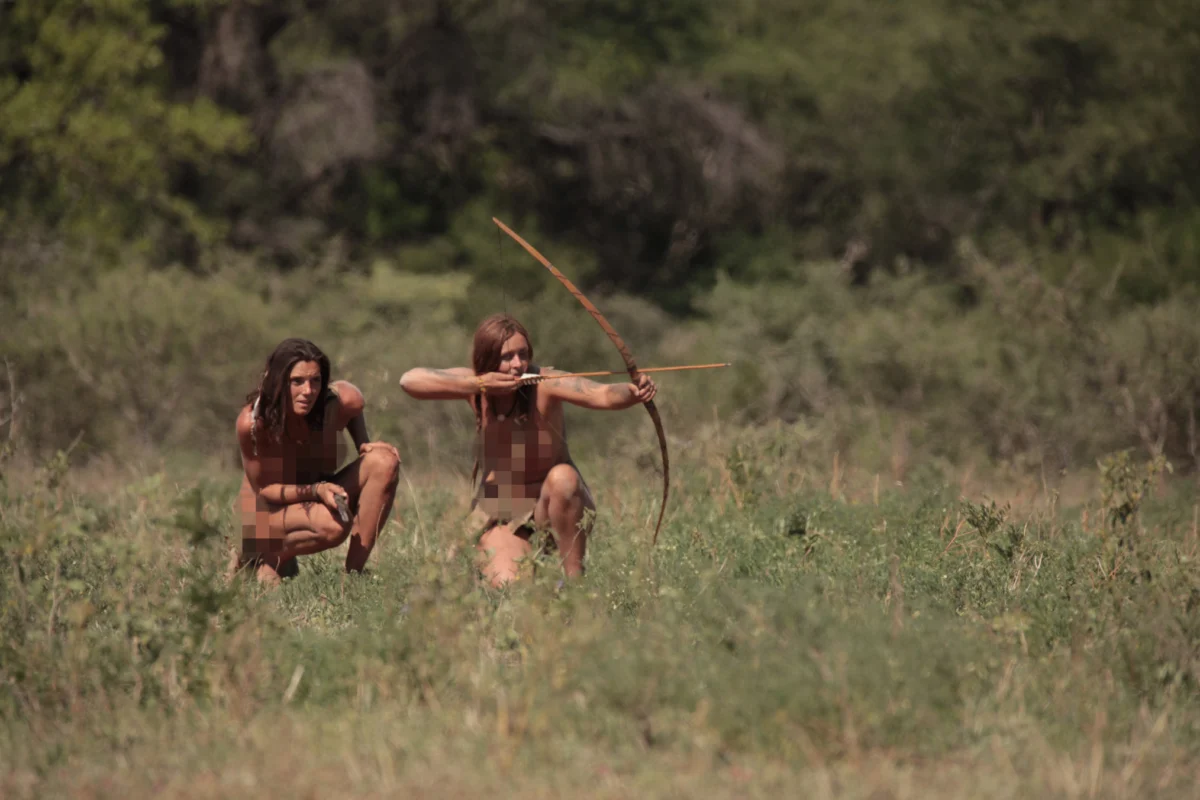
The process of "blurring" is far more labor-intensive than the average viewer might assume. According to data from the production team, a single 42-minute episode of Naked and Afraid can require upwards of 600 individual blur shots. Because the participants are constantly moving, interacting with their environment, and shifting through varying lighting conditions, the blurs cannot be static. Each "pixelation" must be frame-tracked, a process where the software follows the movement of a specific body part to ensure the obscuration remains centered.
Shaun O’Steen, a veteran post-production lead who has spearheaded the censorship efforts for multiple seasons, noted that a single episode requires a minimum of 50 hours of dedicated blurring work. This labor is distributed among a team of 10 to 14 graphic artists per season. The goal is to achieve what the team calls the "Barbie doll" effect—a visual state where the human form is recognizable, but the specific anatomical details are rendered as smooth, featureless gradients.
The workflow is governed by a rigorous internal tracking system. Production spreadsheets for the show do not track typical editorial notes like "tighten this cut" or "enhance the color." Instead, they are filled with specific directives such as "boobs blur insufficient" or "more opaque crotch blur for him." These notes ensure that every frame meets the standards set by the network’s Standards and Practices (S&P) department.
A Chronology of the Naked and Afraid Franchise
The need for such a robust censorship team evolved alongside the franchise’s growth. When Naked and Afraid first premiered on June 23, 2013, it was a bold experiment for Discovery. The network had to balance the "primitive" hook of the show with the conservative requirements of American cable television advertisers.
- 2013 – The Launch: The original series established the 21-day survival format. Initial censorship was handled by generalist editors, but the sheer volume of nudity quickly necessitated a dedicated team.
- 2015 – XL Expansion: The introduction of Naked and Afraid XL, which featured larger groups and longer survival periods (40 to 60 days), exponentially increased the amount of raw footage. This period saw the formalization of the "Blur Man Group."
- 2016 – Legal Precedents: The industry at large took note of the legal risks associated with reality TV nudity. A participant on VH1’s Dating Naked filed a high-profile $10 million lawsuit against the network, alleging that an "insufficient blur" had exposed her genitalia during a wrestling scene. This event reinforced the necessity for the meticulous, multi-pass review process used by the Discovery team.
- 2019 – Technical Refinement: By the time the series reached its tenth season, the Blur Man Group had refined its internal lexicon and technical workflows, moving from simple pixelation to more aesthetic "feathered" blurs that felt less intrusive to the viewing experience.
- 2020 and Beyond – Global Showdown: The premiere of spinoffs like Naked and Afraid: Global Showdown continues to push the boundaries of the format, requiring the censorship team to manage footage from diverse climates and terrains, each presenting unique visual challenges.
The Linguistic and Technical Lexicon of the Edit Suite
To maintain efficiency and clarity during the grueling post-production process, the Blur Man Group developed a specific set of internal terms. These "industry" slang words help artists communicate specific issues without the need for clinical or overly graphic descriptions.
Among the terms used is the "weenie waggler," referring to the movement of male genitalia during physical activity like running or wood-chopping, which requires more complex motion tracking. "Side boob" and "nip slips" are standard terms for accidental exposures that occur when a participant leans over or reaches for something. More niche terms include "floaters"—referring to body parts visible under the surface of the water—and "boob shad," which involves blurring the shadows cast by body parts to ensure the viewer’s mind does not "fill in the blanks" of what is being obscured.
One of the most difficult challenges for the team involves "the chinchilla," a term used to describe certain types of body hair that may peek out from behind a blur. Additionally, "danglers" refer to instances where a shadow or a piece of equipment creates an optical illusion of nudity that must be censored to prevent audience confusion or complaints.
The Paradox of Natural Coverings
One might assume that when participants create clothing out of palm fronds, animal hides, or mud, the work for the censorship team would decrease. However, Shaun O’Steen revealed that the opposite is often true. Natural coverings are notoriously unreliable; palm fronds shrivel as they dry, mud cracks and falls off, and grass skirts shift during movement.
"One of my most-feared producer comments when they come back from the field is, ‘Hey, we helped you out. We had them make clothes,’" O’Steen remarked. Because these "clothes" often have holes or gaps that expose "interesting things," the editors must work twice as hard to blur the specific areas visible through the gaps while leaving the rest of the natural clothing visible. This requires "masking," a technique where the editor draws a digital shape around the fronds to keep them clear while blurring only the skin behind them.
Legal Implications and Broadcast Standards
The necessity of the Blur Man Group is driven by the complex landscape of American media regulation. While the Federal Communications Commission (FCC) does not strictly regulate cable networks like Discovery in the same way it does broadcast networks (like ABC or NBC), cable channels still adhere to strict internal "Standards and Practices." These standards are vital for maintaining relationships with "blue-chip" advertisers who do not want their products associated with adult content.
The legal risk is also a primary motivator. The aforementioned $10 million lawsuit involving VH1 served as a cautionary tale for the entire reality television industry. In that case, the plaintiff argued that the failure to properly censor her caused significant emotional distress. Consequently, the Blur Man Group operates under a "zero-tolerance" policy for errors. Every episode undergoes multiple "passes" or reviews—first by the artist, then by a lead designer, then by an executive producer, and finally by a network legal representative.
Psychological and Broader Industry Impact
Interestingly, the production team has noted a psychological shift in the contestants that complicates the censorship process. Steve Rankin, an executive producer, observed that after the initial shock of the first few hours, most participants become entirely comfortable with their nudity. They stop attempting to cover themselves with their hands or positioning themselves behind foliage. This lack of modesty results in "full-frontal" footage for nearly every hour of the 21-day challenge, leaving the editors with no "easy" scenes to cut to.
The work of the Blur Man Group has a broader implication for the television industry. It represents a specialized niche of "invisible" labor that is essential for the success of "boundary-pushing" content. As reality TV continues to seek out more "authentic" and "extreme" human experiences, the role of the digital censor becomes more critical. They are the gatekeepers who allow a show about total vulnerability to exist within the confines of polite society.
The "sane but barely" artists who comprise this team occupy a unique position in Hollywood. Their success is measured by the viewer’s ability to ignore their work. If the blur is too distracting, it ruins the immersion; if it is too light, it risks a lawsuit or a fine. The delicate balance they maintain ensures that Naked and Afraid can remain a staple of Discovery’s programming, proving that in the world of television, what you don’t see is often just as carefully produced as what you do.