In the expansive realm of science fiction, the concept of galactic empires has long served as a fertile ground for imaginative storytelling, exploring themes of conquest, governance, societal evolution, and the very nature of power on a cosmic scale. Brian Aldiss’s 1976 anthology, Galactic Empires: Volume One, published by St. Martin’s Press, offers a curated journey through this thematic landscape, presenting a diverse collection of short stories that, while not always adhering strictly to the titular promise, collectively paint a compelling picture of the genre’s evolution and its engagement with the grand narratives of interstellar dominion. This collection, unearthed from a personal collection and revisited by reviewer Alan Brown, serves as a valuable touchstone for understanding the trajectory of "front-line" science fiction, stories that delve into the machinations of soldiery, spacefaring, scientific endeavor, and the thrill of exploration and conflict.
A Thematic Tapestry of Interstellar Ambition
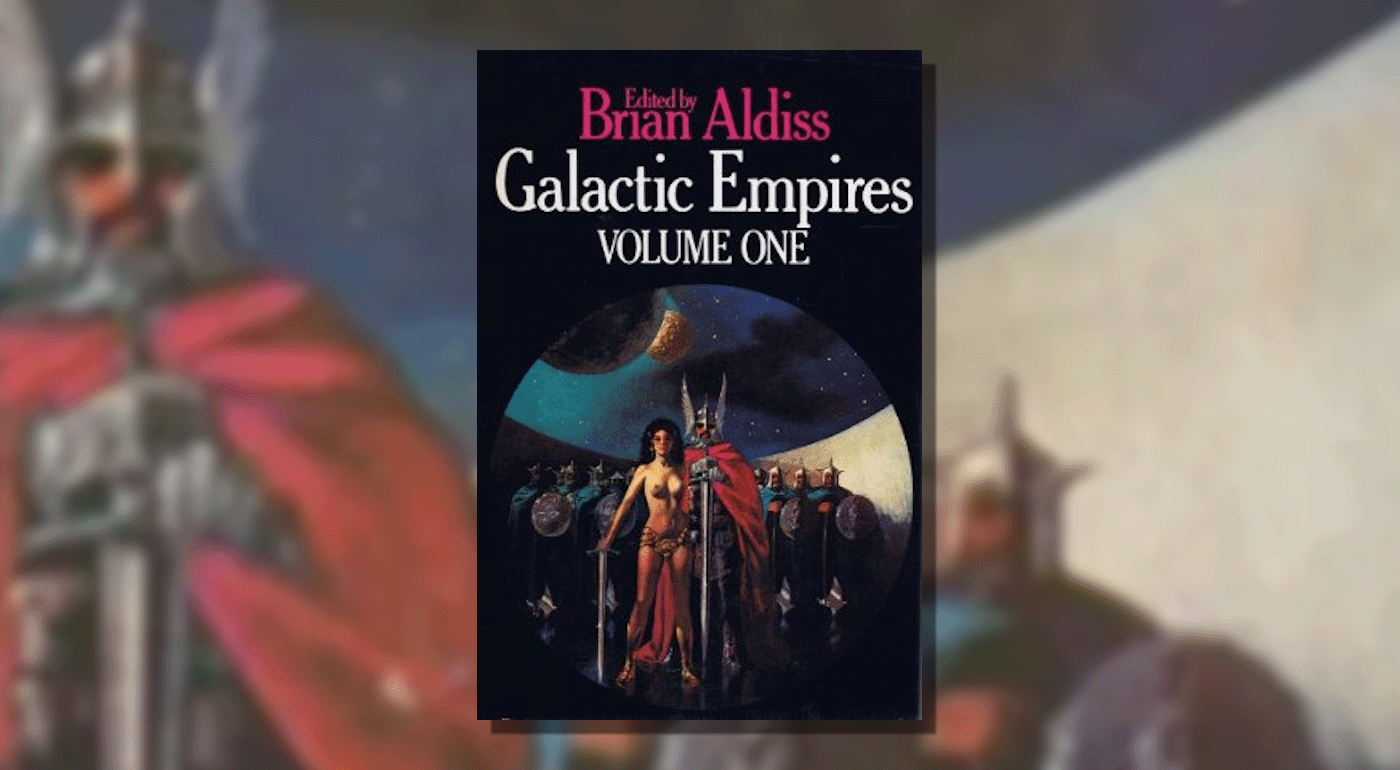
Galactic Empires: Volume One, as part of Alan Brown’s bi-weekly series "Front Lines and Frontiers," aims to explore narratives rich with "alarums and excursions"—battles, chases, and clashes that define excitement in speculative fiction. While the anthology’s cover art, a fantasy-tinged depiction of armored warriors by Karel Thole, might initially suggest a more conventional epic, the contents offer a nuanced exploration of empire, often through indirect or unconventional lenses. The anthology draws from a significant period in science fiction history, spanning from the 1950s through the mid-1970s, a time marked by both evolving attitudes towards imperialism and the continued dynamism of the genre.
The collection’s organization, revealed midway through the reading, adds a layer of intentionality to the seemingly disparate early stories. Aldiss structures the anthology into thematic sections: "Rise and Shine," "Maturity or Bust," and "The Health Service in the Skies." The initial stories, grouped under "A Sense of Perspective," serve as prologues, setting a broader stage before delving into the mechanics and consequences of empire-building. This approach allows for a more fluid and less literal interpretation of the "galactic empire" theme, encompassing tales of exploration, alien encounters, and the long arc of history.
Examining the Anthology’s Key Contributions
The anthology opens with R.A. Lafferty’s "Been a Long Time," a surreal and philosophical tale that, while amusing to fans of Lafferty’s unique style, offers little direct connection to galactic empires, leaving the reader to ponder its thematic placement. Arthur C. Clarke’s "The Possessed" follows, a clever narrative about an alien swarm influencing galactic destinies, which, despite its grand scope, also sidesteps a direct exploration of empire. H.B. Fyfe’s "Protected Species" offers a darker, more resonant connection, depicting human colonization and a callous disregard for indigenous life, hinting at the potential for lost civilizations and the ethical quandaries of expansion. Michael Sharra’s "All the Way Back," surprising for an author primarily known for Civil War narratives, presents a compelling story of human explorers encountering a multi-species civilization’s warship, its twist ending marking it as a standout.
The anthology truly begins to engage with its central theme in the "Rise and Shine" section. Poul Anderson’s "The Star Plunderer" squarely addresses the genesis of empires, chronicling the rise of a human emperor from prisoner of war amidst an Earth succumbing to alien invaders. Anderson’s work, as noted by Brown, elevates pulp action with his characteristic intricate future histories and emotional depth. Isaac Asimov’s "Foundation," a precursor to his seminal Foundation Trilogy, is included, though it elicits a less enthusiastic response from the reviewer. While acknowledging Asimov’s talent for shorter, humorous stories, Brown finds the Foundation tales, and this one in particular, to be "cold." The story’s portrayal of a declining Galactic Empire and the hubris of its scientific custodians, who are manipulated by a larger plan, encapsulates a critique of technocratic arrogance that resonates with the reviewer’s reservations. Mark Clifton and Alex Apostolides’ "We’re Civilized!" offers another cautionary tale of human overreach meeting its inevitable comeuppance.
The "Maturity or Bust" section, particularly the "Horses in the Starship Hold" subsection, pivots to more adventurous, pulp-inspired narratives. Cordwainer Smith’s "The Crime and Glory of Commander Suzdal," set in his unique Instrumentality of Mankind universe, delivers dark humor and social commentary, featuring uplifted animals and a protagonist’s audacious, if ethically questionable, solution involving warrior cats. Alfred Coppel’s "The Rebel of Valkyr," however, emerges as the anthology’s crown jewel. This tale of a post-imperial galaxy, where magic has supplanted lost technology and knights ride into battle on horseback from starships, is lauded as one of the best planetary romance tales not written by Leigh Brackett. Its rich tapestry of political intrigue, greed, ambition, romance, and swashbuckling action makes it a standout, and its expansion into a series under the pseudonym Robert Cham Gilman offers promising avenues for further literary exploration. Idris Seabright’s "Brightness Falls from the Air" presents a bittersweet narrative set in a decadent empire, exploring themes of forbidden love and loss within a society that thrives on gladiatorial spectacle. Clifford Simak, a favored author of the reviewer, contributes "Immigrant," a story imbued with his signature whimsical sadness, exploring themes of humility and understanding through an Earthman’s encounter with telepathic aliens.
The final section, "The Health Service in the Skies," shifts focus to a more specialized, albeit still thematically relevant, area of space opera. James White’s "Resident Physician" offers a glimpse into his Sector General series, where doctors in a massive space hospital treat an array of alien species, delving into the mystery of a fatal encounter. Hal Lynch’s "Age of Retirement" is a brief, humorous piece that struggles to leave a lasting impression and has only a tangential connection to the medical theme. The anthology concludes with Pete Adams and Charles Nightingale’s "Planting Time," a story that the reviewer finds to be the weakest, its tenuous link to the medical theme being the consideration of sex as a medical issue. The tale’s explicit and, in the reviewer’s estimation, "redeeming quality-free" narrative of a human explorer’s encounter with sexually-alluring flora and his subsequent entrepreneurial endeavors leaves a decidedly sour note.
Historical Context and Shifting Imperial Ideals
The anthology, published in 1976, arrives at a point where overt expressions of 19th-century imperialistic fervor were becoming increasingly rare in Western literature, particularly within the science fiction genre. The stories, predominantly male-oriented with women in supporting roles, reflect the societal norms of their respective publication eras. However, the thematic evolution within the anthology—from early, less direct engagements with empire to more explicit explorations of conquest, decline, and the ethical implications of expansion—mirrors a broader shift in cultural attitudes. Post-World War II sensibilities, the rise of anti-colonial movements globally, and a growing awareness of the complexities of power dynamics likely influenced how authors approached the concept of galactic empires. Instead of straightforward glorifications of conquest, later stories often incorporated elements of critique, nuance, and cautionary tales about the human tendency towards domination and its potential downfall.
Brian Aldiss himself, a prominent figure of the British New Wave movement, was known for his literary ambitions and focus on the "soft" sciences. His selection of stories for Galactic Empires: Volume One demonstrates a capacity for engaging with more traditional science fiction tropes while infusing them with his characteristic intellectual curiosity. His own prolific career, marked by critical acclaim including Hugo and Nebula Awards, and induction into the Science Fiction Hall of Fame, underscores his significant contribution to the genre. The anthology, therefore, benefits from the editorial hand of a seasoned craftsman who, while perhaps not always adhering rigidly to a narrowly defined theme, curated a collection that is both entertaining and representative of a significant period in science fiction’s dialogue with grand narratives.
Broader Implications and Legacy
Galactic Empires: Volume One, despite its loose thematic connections in parts, stands as a testament to the enduring power and versatility of the galactic empire trope in science fiction. The anthology’s strength lies in its diversity, offering a cross-section of styles, eras, and approaches to the concept. From the hard-hitting action of Poul Anderson to the philosophical musings of R.A. Lafferty and the imaginative world-building of Cordwainer Smith and Alfred Coppel, the collection provides a rich reading experience. The success of such anthologies in sparking further discussion and inspiring subsequent works highlights the genre’s ongoing exploration of complex societal structures and the perennial human fascination with power, expansion, and the challenges of governance on a grand scale. The very act of revisiting such collections, as demonstrated by Alan Brown’s review, serves to preserve and propagate these foundational narratives, ensuring their continued relevance for new generations of readers and writers. The desire to seek out Volume Two, as expressed by the reviewer, indicates the successful engagement of the anthology in sparking further curiosity about these cosmic sagas.