Within 48 hours of the launch of this year’s Cannes Film Festival, the traditional hierarchy of global celebrity was challenged as two Formula One drivers commanded the spotlight on the Palais carpet. Carlos Sainz and Charles Leclerc—once teammates at Scuderia Ferrari and now rivals following Sainz’s high-profile move to Williams—triggered a media frenzy as they arrived with their respective partners for the festival’s prestigious galas. While their presence was officially tied to their roles as global ambassadors for L’Oréal, industry analysts suggest a deeper subtext: as Cannes’ position as the undisputed center of international cinema faces new competitive pressures, the festival is increasingly eager to tap into the explosive cultural capital of Formula One.
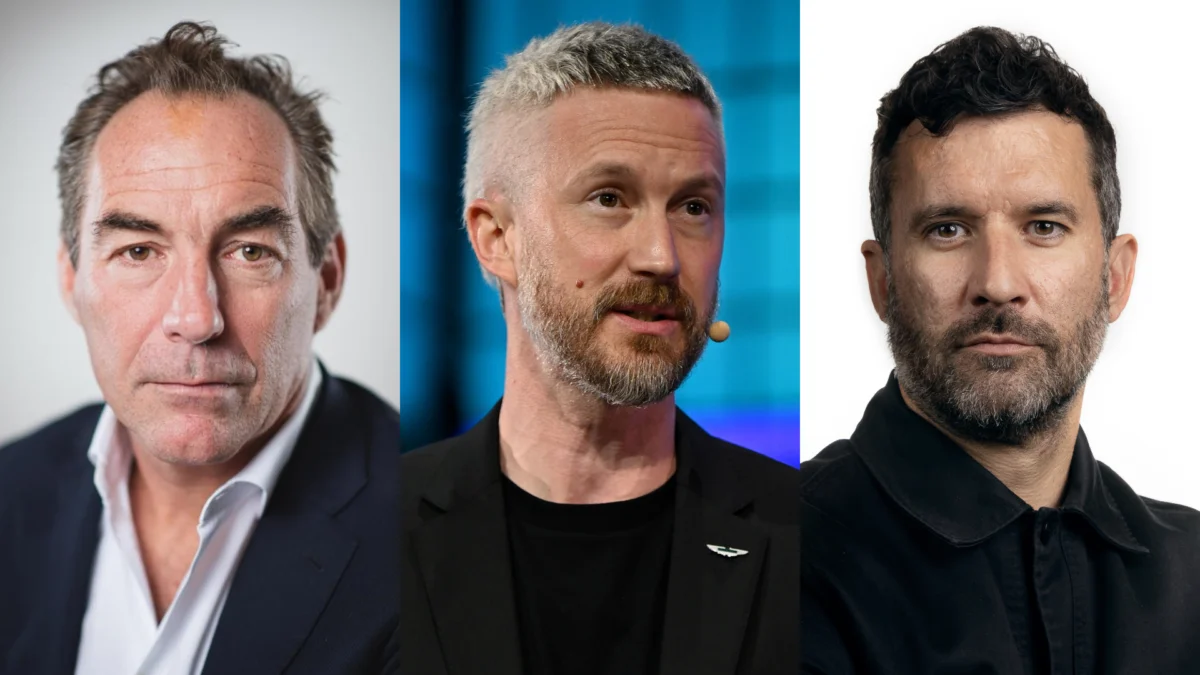
The transformation of F1 from a niche European motorsport into a global entertainment juggernaut is one of the most significant media success stories of the decade. Since the 2018 debut of the Netflix docuseries Drive to Survive, the sport’s global fan base has surged by over 68 percent. This growth is not merely a byproduct of increased broadcasting; it is the result of a calculated "Hollywood-ization" of the sport. Rob Bloom, Chief Marketing Officer at Aston Martin—currently the fastest-growing team on the grid—describes the phenomenon as a systemic shift. "The F1 river has truly burst its banks," Bloom noted. "It’s everywhere."
A Chronology of the Formula One Renaissance
To understand the current intersection of Hollywood and the paddock, one must look at the timeline of Formula One’s commercial evolution. The modern era began in 2017 when Liberty Media acquired the Formula One Group for $4.4 billion, signaling an end to the insular management style of previous decades.
In 2018, the launch of Drive to Survive shifted the narrative focus from technical specifications to human drama, introducing the world to the personalities behind the helmets. By 2021, the sport saw a dramatic spike in American interest, leading to the addition of the Miami Grand Prix in 2022 and the Las Vegas Grand Prix in 2023. These events were designed not just as races, but as multi-day entertainment festivals.
By 2024, the sport had achieved record-breaking engagement levels, setting the stage for the massive figures reported in 2025. According to Nielsen data, 1.83 billion people watched Formula One in 2025, a 6.8 percent increase from the previous year. This trajectory shows no signs of plateauing, as the sport prepares for the release of F1: The Movie, a $630 million production starring Brad Pitt, which seeks to do for cinema what the Netflix series did for streaming.
The Demographic Shift: Youth and Gender Parity
The data underlying F1’s growth reveals a radical shift in who consumes the sport. Historically viewed as an "old boys’ club" with an aging, male-dominated audience, the modern F1 fan base is increasingly young and diverse. Currently, over 43 percent of fans are under the age of 35. Perhaps more significantly, female representation in the fan base has climbed to 42 percent.

At the Aston Martin Aramco Formula One Team, led by drivers Lance Stroll and Fernando Alonso, the commercial impact of this shift is palpable. The team has reported a 30 to 40 percent year-on-year growth in engagement metrics. This demographic evolution has forced teams to reconsider their branding strategies. Performance on the track, while still the primary objective, is no longer the sole metric of a team’s value. The modern F1 team operates as a luxury lifestyle franchise, leveraging fan engagement and commercial partnerships to maintain relevance between race weekends.
The Hollywood Recipe: World-Building and Storytelling
Stu Peddie, Aston Martin’s Executive Creative Director, argues that the sport’s success stems from its adoption of Hollywood’s core principles: star power, immersive world-building, and serialized drama. Peddie notes that the 22 drivers on the grid are now marketed as A-list protagonists in a global narrative that spans 24 races across five continents.
"For years, Hollywood has honed its recipe, a recipe built on key ingredients," Peddie explained. "If you think about Hollywood, it thrives because there are multiple storylines. Formula One is the same." This immersive world-building takes fans from the neon-lit streets of Singapore to the historic glamour of Monaco and the high-speed drama of Mexico City. This "ecosystem of creative assets" allows the sport to maintain a constant presence in the cultural conversation, much like a long-running cinematic franchise.
The Miami Grand Prix serves as the ultimate case study for this convergence. At the most recent event, the trackside guest list read like a Hollywood awards ceremony. Attendees included Patrick Dempsey, Jimmy Fallon, Jamie Foxx, Colin Farrell, Lupita Nyong’o, and musicians like Chance the Rapper and DJ Khaled. Jefferson Slack, Managing Director for Commercial at Aston Martin, observes that every Grand Prix now mirrors the atmosphere of a Super Bowl weekend.
"It attracts actors, musicians, athletes, and global brands who want to be part of that atmosphere," Slack said. "We’ve also seen it work the other way, too, with drivers increasingly appearing in culturally relevant spaces such as film premieres, fashion events, and the Met Gala."
Strategic Partnerships and Lifestyle Integration
The "Hollywood-ization" of the sport is most visible in the commercial sector. Aston Martin has pioneered a strategy that positions the team as a luxury lifestyle brand rather than a traditional racing entity. This has led to unexpected and lucrative collaborations that extend far beyond the automotive industry.
Recent merchandise collaborations have included tie-ins with The Rolling Stones and Disney’s Toy Story franchise, the latter timed to coincide with the release of the fifth installment in the film series. Aston Martin also became the first team to secure an official skincare partner, Elemis, and has established long-term deals with prestige brands like Breitling, Puma, and Celsius.

These partnerships are activated through experiential marketing. During the Miami Grand Prix, the team hosted a South Beach pop-up that offered fans everything from Pilates and HIIT classes to a run club that attracted 2,000 participants. Rob Bloom emphasizes that these activations are about community building. "It wasn’t about people setting personal bests in a 5K. It was about bringing people together for a shared experience, united by a shared interest around Formula One."
This model mirrors the marketing "blitz" strategy used by major film studios. For example, the recent success of The Devil Wears Prada 2, which has earned $440 million at the global box office, was driven by a massive collaborative ecosystem involving brands like Dior, Tiffany & Co., and Mercedes-Benz. Formula One is now employing this same blueprint to ensure its "box office" remains high.
Inclusion and the Future of the Grid
As the sport expands its reach, the pressure to evolve culturally has intensified. The "Hollywood-ization" of F1 has brought a new urgency to the issues of inclusion and diversity. Once criticized for its lack of accessibility, the sport is now making concerted efforts to foster gender parity and inspire the next generation of professionals.
Aston Martin has placed a significant emphasis on its female ambassadors, including Jessica Hawkins and F1 Academy driver Mathilda Paatz. These figures are marketed as role models for the burgeoning female audience in the United States and beyond. Stu Peddie expressed a long-term vision where younger female fans naturally gravitate toward the sport because they see themselves represented in the paddock.
Furthermore, the integration of STEM (Science, Technology, Engineering, and Mathematics) initiatives has become a cornerstone of team branding. During the 2025 U.S. Grand Prix, Aston Martin’s "The Science Inside" campaign featured a car livery covered in aerodynamic equations. The goal was to pivot from purely visual aesthetics to a meaningful program designed to encourage careers in engineering and motorsport.
Conclusion: The New Entertainment Frontier
The lines between the sports world and the entertainment industry have blurred to the point of invisibility. If Formula One is viewed as a global film franchise, its drivers are the A-list stars, its technical squads are the production crews, and its races are the blockbuster releases. Unlike a traditional film, however, this franchise delivers a new "sequel" every two weeks, complete with unscripted drama, high stakes, and global celebrity cameos.
The presence of Carlos Sainz and Charles Leclerc at Cannes was not a marketing fluke; it was a sign of the times. As Formula One continues to refine its "Hollywood" framework, the sport is no longer just chasing checkered flags—it is chasing cultural immortality. With a billion-dollar movie on the horizon and a demographic shift that has revitalized its commercial prospects, the F1 grid has officially become the world’s most exclusive and influential red carpet. As Rob Bloom concluded, "The Hollywood-ization of the sport has huge power to continue to inspire this generation."