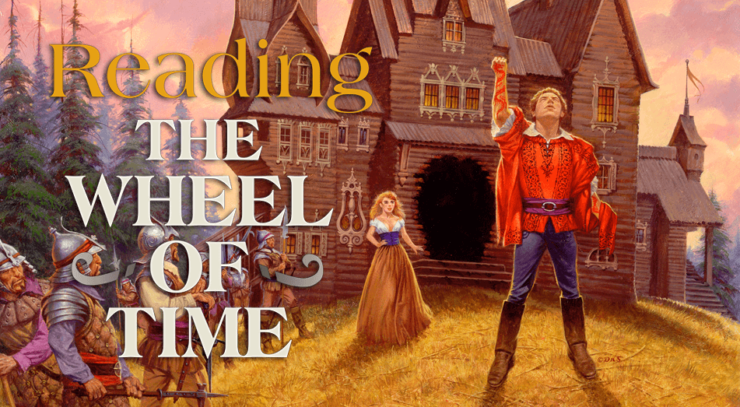
The recent events in Arad Doman, culminating in Rand al’Thor’s departure from the beleaguered city of Bandar Eban, have cast a long shadow over the region. Chapter 42 of The Wheel of Time series details a critical juncture where Rand, the world’s most powerful ta’veren, grapples with the immense psychological toll of his destiny and the seemingly insurmountable challenges he faces. His emotional state, a volatile mix of despair and grim determination, is profoundly impacting his leadership and the fate of those he is sworn to protect.
A Leader Under Siege: Internal Conflict and External Pressures
As Rand rode through the streets of Bandar Eban, his internal dialogue with Lews Therin, the echo of the Dragon Reborn’s past life, became increasingly fraught. Their discussions centered on the cyclical nature of destruction and the tragic inevitability of killing those they love. This internal struggle, a constant battle for Rand’s sanity, was momentarily interrupted by Min, who observed him. In that instant, Rand rallied, a desperate act to conceal the precariousness of his mental state from those around him. This self-preservation, while understandable, underscores the immense pressure he is under, a pressure that risks fracturing his control.
The core of Rand’s current crisis lies in his perceived failures in Arad Doman. His efforts to alleviate suffering by bringing in food supplies backfired, attracting a wave of refugees that further strained already depleted resources. His attempts to establish a stable leadership by facilitating the election of a new king and to negotiate peace with the formidable Seanchan forces proved futile. The people of Arad Doman, faced with the specter of renewed war and imminent starvation, looked upon Rand not as a savior, but as a harbinger of abandonment.
"Somehow, the people realized that, and it was very hard for Rand to look at them. Their hungry eyes accused him: Why bring hope, then let it dry up, like a newly dug well during a drought? Why force us to accept you as our ruler, only to abandon us?" This poignant observation from the original text encapsulates the profound sense of betrayal and despair felt by the populace.
The Impending Storm: Seanchan Advance and Unresolved Threats
Adding to the dire situation, Bashere, a trusted advisor, reported on the return of Lady Chadmar and four other members of the merchant council whom Rand had held. Bashere’s suspicion was that these individuals would defy Rand’s orders to elect new council members and a king, opting instead to flee the city upon Rand’s departure, anticipating the imminent arrival of the Seanchan. This widespread knowledge of the Seanchan threat highlights the precariousness of the region’s political landscape and the pervasive fear that grips its inhabitants.
Meanwhile, the northern borders presented their own set of escalating concerns. Ituralde, a key military figure, had engaged in minor skirmishes with Trollocs along the Blight. However, scouts reported the gathering of substantial forces, indicating a significant and coordinated threat assembling at the Gap, a critical strategic point. The scale of these forces was estimated to be strong enough to overwhelm Ituralde’s own defenses, suggesting a major offensive was being prepared.
A Swift and Tragic Exit
In a desperate attempt to escape the unfolding crisis, Rand commanded Flinn and Naeff to open a gateway. However, before he could pass through, Iralin, a dockmaster, delivered a devastating blow: all food stores, both in the city’s reserves and aboard Sea Folk ships, had inexplicably spoiled. The rot was so advanced that it posed an immediate health hazard, rendering the provisions useless. Faced with this catastrophic loss and the desperate pleas of Iralin, Rand made the agonizing decision to depart, leaving Bandar Eban to its fate.
Upon arriving in Tear, Rand was met with a surprisingly large turnout. His companions, including Bashere, noted the citizens’ apparent surprise at his reappearance, attributing it to the widespread rumors of his death or disappearance during his absence. Rand, ever vigilant, observed the absence of Cadsuane and Nynaeve, two influential figures whose locations remained unknown to him, though he surmised they would not be together.
The conversation between Rand and Bashere quickly turned to strategic concerns. They debated whether Ituralde would abandon his post in the Blight upon hearing of Rand’s withdrawal from Arad Doman. The prospect of entering into a major conflict with the Seanchan while this northern threat remained unresolved was a grim outlook. Rand’s immediate objective was to seek out the Borderland army, intending to address their dereliction of duty and incorporate them into his own plans. Bashere expressed bewilderment at the leaders of the Borderlands abandoning their homes at such a critical juncture.
The Stone of Tear and a Dire Declaration
Within the Stone of Tear, Rand was greeted by a contingent led by King Darlin, Lord Dobraine, and the controversial Lord Weiramon. Rand expressed shock when Lews Therin voiced approval for Weiramon, commending his loyalty despite his perceived foolishness. Rand, wisely choosing not to engage in an argument with his fractured psyche, acquiesced. The assembled High Lords and Ladies were present, as was Alanna, whose sorrow Rand felt acutely through their psychic bond.
King Darlin confirmed that the army Rand had requested was indeed assembled. However, he was surprised to learn that the army was not being deployed to Arad Doman. Rand’s subsequent declaration was stark and chilling: Darlin’s forces were to accompany him to Shayol Ghul, the site of the prophesied Last Battle.
Analysis of Rand’s Actions and Their Implications
Rand’s departure from Bandar Eban represents a profound tragedy, forcing a re-evaluation of his leadership and the agonizing choices he faces. The original analysis highlights the difficult position Rand was in, attempting to balance immediate humanitarian aid with the overwhelming demands of the impending Last Battle.
The Dilemma of Arad Doman:
- Insufficient Resources: Rand’s delivery of grain, a significant undertaking involving the Sea Folk, proved insufficient to meet the needs of the refugee population. This underscores the scale of the humanitarian crisis in Arad Doman even before the miraculous spoilage.
- Failure to Establish Leadership: Rand’s inability to secure the election of a new king, due to the disappearance or death of council members, left a power vacuum. While he could have appointed a ruler, the lack of viable candidates and the potential need for continued resource allocation made this a complex decision.
- The Seanchan Threat: The imminent Seanchan invasion presented a clear and present danger that Rand could not fully counter without compromising his larger objectives. His failure to secure a truce with the Seanchan effectively removed the option of protecting Arad Doman from this specific threat.
- The Ituralde Miscalculation: A significant point of contention is Rand’s decision to send Ituralde, with Asha’man support, to the Blight rather than to defend Arad Doman. The analysis suggests that Ituralde, with his deep connection to his countrymen, could have provided crucial morale and leadership, potentially mitigating the effects of starvation and deprivation. His deployment to the Blight, while strategically sound for containing the Trolloc threat, left Arad Doman defenseless against the Seanchan and other opportunistic invaders. This decision highlights Rand’s suspicion of allowing his followers to operate independently in their homelands, a trait that may be hindering his effectiveness.
The Overarching Imperative: Tarmon Gai’don:
Rand’s ultimate justification for his actions is the impending Last Battle. The analysis argues that if he fails to be prepared for Tarmon Gai’don, then any efforts to save Arad Doman from starvation or Seanchan subjugation would be rendered meaningless by the world’s potential annihilation. This perspective frames his departure not as abandonment, but as a grim necessity dictated by the highest stakes.
The Psychological Toll and Manifestation of Despair:
The original text and analysis strongly emphasize Rand’s deteriorating psychological state. His acceptance of himself as a bringer of death and destruction, particularly after his actions at Natrin’s Barrow, has created a self-fulfilling prophecy. This emotional hardness, coupled with his internal dialogue with Lews Therin, has led to a dangerous detachment from the value of individual lives.
- The Spoiled Grain: The miraculous spoilage of the grain is presented as a potent symbol of Rand’s despair. The analysis posits that his presence, imbued with his overwhelming negativity, may have directly contributed to this catastrophic event, reflecting his internal state onto the external world. This aligns with the concept of ta’veren power being influenced by the individual’s emotional and psychological condition.
- The "It Doesn’t Matter" Mentality: Rand’s declaration that "it doesn’t matter" if he kills those he loves, as long as the world survives, is a critical turning point. This dismissal of personal cost, while seemingly noble, represents a dangerous erosion of his moral compass. If he can accept the deaths of loved ones as inconsequential, the path to accepting the deaths of countless others, or even the world itself, becomes alarmingly short.
- Perception Shaping Reality: The article highlights the psychological principle that perception shapes reality. Rand’s focus on his failures and his belief that he is a monster lead him to see fear in Min’s actions, reinforcing his isolation. This inward spiral of negativity risks not only his ability to defeat the Dark One but also the possibility of him becoming a destructive force himself.
The Evolving Bond with Lews Therin:
The relationship between Rand and Lews Therin has reached a new phase. They increasingly refer to themselves as "we" when in agreement, signifying a growing integration of their personalities. Disagreements are no longer about one being mad within the other’s head, but rather about the attribution of thoughts and actions. Lews Therin’s acceptance of Rand’s actions at Natrin’s Barrow as his own is a significant development, blurring the lines between their identities. This evolving symbiosis, whether a sign of increasing madness or a pragmatic acceptance of an unchangeable reality, is poised to play a crucial role in Rand’s journey towards the Last Battle.
Future Outlook and Lingering Questions
The strategic implications of Rand’s actions are vast. His decision to lead the Borderland army to Shayol Ghul raises questions about the fate of the northern front and the potential for a wider conflict at the Gap. The narrative trajectory suggests that the Last Battle itself may span the remaining novels, leaving audiences to wonder about the nature of this ultimate confrontation and the role of conventional warfare within it.
The article concludes by acknowledging Rand’s awareness of his precarious mental state and the immense challenges still ahead. The prospect of him enduring further trials without significant change or intervention is daunting. The potential for a climactic confrontation with his despair, perhaps through the intervention of figures like Cadsuane or Aviendha, or a renewed embrace of love and support from Min, remains an open question. The fate of Lan in the Blight, a figure of immense importance, also hangs in the balance, with the possibility of a desperate last-minute reinforcement reminiscent of classic heroic narratives. The ongoing quest to rescue Moiraine further adds a layer of complexity to the unfolding events, ensuring that the remaining narrative will not solely focus on the immediate confrontation with the Dark One. The upcoming chapters, focusing on Egwene’s return to the rebel camp and Rand’s interactions with Nynaeve and Perrin, promise to shed further light on these unfolding crises.