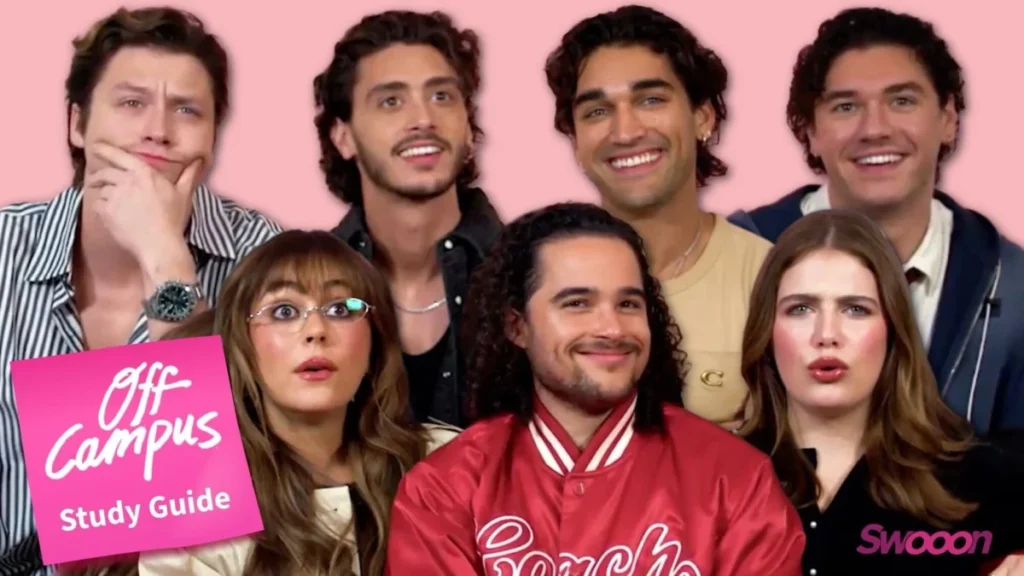
The streaming adaptation of Elle Kennedy’s bestselling New Adult romance series, Off Campus, has initiated a significant shift in how contemporary romance literature is translated for television audiences. Following the release of its inaugural season, the series has garnered critical and commercial attention for its strategic narrative restructuring, most notably its decision to weave elements of the third novel, The Score, into the foundational timeline of the first book, The Deal. This creative choice has centered the relationship between Dean Heyward-Di Laurentis, played by Stephen Kalyn, and Allie Hayes, portrayed by Mika Abdalla, earlier than many readers anticipated. As the production moves toward future installments, industry analysts and fans alike are examining how these structural changes impact the narrative arc of the characters and the broader implications for the New Adult genre on screen.
The Architectural Shift: Merging The Deal and The Score
In the original literary series published between 2015 and 2016, Elle Kennedy established a formulaic but highly successful progression, with each book focusing on a different member of the Briar University hockey team. The Deal focused on Garrett Graham and Hannah Wells, while The Score, the third installment, focused on the hedonistic Dean and the recently single Allie. However, the television adaptation has opted for a multi-perspective ensemble approach from the outset.
By introducing Dean and Allie’s dynamic in Season 1, the showrunners have deviated from the chronological linearity of the source material. This move serves to establish the "Briar U" universe as a cohesive ecosystem rather than a series of isolated romantic vignettes. The Season 1 narrative primarily follows the plot of The Deal—where a college student strikes a deal with a star hockey player to help her win over a crush in exchange for tutoring—but it simultaneously plants the seeds for the intense, often tumultuous connection between Dean and Allie.
The inclusion of these secondary arcs provides a richer sub-textual layer to the show. In the books, Dean is often viewed as a comic-relief figure until his specific volume; in the series, his characterization is given more immediate depth through his early interactions with Allie. This structural pivot allows the television medium to capitalize on long-term character development, building tension over several episodes rather than a single self-contained season.
Chronology of the Off-Campus Franchise
To understand the impact of the television series, one must look at the timeline of the franchise’s growth:
- February 2015: Elle Kennedy releases The Deal, which quickly becomes a sensation in the "New Adult" (NA) category, topping the New York Times, USA Today, and Wall Street Journal bestseller lists.
- 2015–2016: Kennedy releases the subsequent books: The Mistake (John Logan’s story), The Score (Dean’s story), and The Goal (Tucker’s story).
- 2017–2020: The series sees a resurgence via social media platforms, specifically TikTok (BookTok), where the "hockey romance" subgenre becomes a dominant trend.
- 2023: Official announcement of the television adaptation, with casting reveals highlighting Stephen Kalyn and Mika Abdalla as key figures in the ensemble.
- 2024: Season 1 premieres, blending the narrative beats of The Deal with the introductory tension of The Score.
This timeline illustrates a decade-long trajectory from a self-published success to a major streaming property, reflecting the increased appetite for romance-centric content in the wake of successes like Netflix’s Bridgerton and Amazon Prime’s The Summer I Turned Pretty.
Supporting Data: The Rise of Romance and "BookTok" Adaptations
The decision to adapt Off Campus is backed by significant market data. According to NPD BookScan, romance was the fastest-growing genre in the publishing industry between 2021 and 2023, with sales increasing by over 50%. Within that category, "sports romance" and "college romance" emerged as the most lucrative sub-niches.
Furthermore, the "BookTok" phenomenon—where users recommend books through short-form video—has proven to be a reliable predictor of streaming success. Titles associated with the #BookTok tag have seen a direct correlation with high viewership numbers when adapted. Off Campus currently holds hundreds of millions of views across various hashtags on TikTok, providing a pre-built global audience for the television production.
Data from streaming analytics firms suggests that "New Adult" content—media aimed at the 18–25 demographic—is currently underserved compared to Young Adult (YA) or Mature Adult content. By bridging this gap, Off Campus targets a demographic with high engagement rates and significant social media influence.
Critical Analysis of the "Call Dean" Moment
A pivotal point of discussion for the adaptation involves the "call Dean" scene, a hallmark of The Score. In the novel, this moment occurs after Allie is subjected to public shaming by her ex-boyfriend, Sean. The incident serves as a catalyst for Allie to seek comfort in Dean, marking a transition from a casual physical relationship to a more profound emotional connection.
In the television series, the anticipation surrounding this scene is high. Because Season 1 has already established Allie’s vulnerability and Dean’s hidden depth, the "call Dean" moment is expected to carry more weight. Industry analysts suggest that the show may "tweak" this moment to better fit the medium of television. Rather than a singular phone call, the show might use the conflict with Sean to explore broader themes of agency and emotional resilience.
The adaptation of such scenes requires a delicate balance. On one hand, the show must satisfy the "purist" readers who expect a faithful recreation of the book’s most famous scenes. On the other hand, the writers must ensure that the drama feels earned within the context of the TV show’s specific pacing. The "call Dean" moment represents more than just a plot point; it is the emotional anchor for Dean’s redemption arc and Allie’s journey toward independence.
Stakeholder Perspectives and Official Reactions
While official press releases from the production companies have remained focused on the show’s overall success, interviews with the lead actors provide insight into the creative process. Stephen Kalyn has frequently spoken about the complexity of Dean’s character, noting that the character’s "playboy" persona is a mask for deeper insecurities—a theme that is central to The Score.
Mika Abdalla has similarly commented on the importance of Allie’s autonomy. In interviews, Abdalla has emphasized that the relationship between Dean and Allie in the show is built on a foundation of mutual support rather than just physical attraction. This perspective aligns with a modern shift in romance adaptations that prioritizes healthy communication and emotional growth over toxic tropes.
Behind the scenes, showrunners have indicated that the decision to merge book elements was a logistical necessity to keep the ensemble cast engaged. In a traditional one-book-per-season format, actors playing Dean or Tucker would have very little to do in the first two years. By integrating their stories early, the production ensures a consistent presence for all the "Briar boys," which is essential for maintaining the show’s chemistry-driven appeal.
Broader Impact and Industry Implications
The success of Off Campus signals a broader shift in the entertainment landscape. For years, the romance genre was often relegated to made-for-TV movies with lower production values. However, the current wave of adaptations treats romance with the same cinematic rigour as prestige dramas or action franchises.
- Genre Legitimacy: The high production value and sophisticated writing of Off Campus contribute to the legitimization of the New Adult genre. It proves that stories centered on female desire and emotional intimacy can be commercially viable and critically respected.
- The "Hockey Romance" Trend: The show has solidified the "hockey romance" as a staple of contemporary pop culture. This has led to increased interest in the NHL and collegiate hockey among demographics that were previously unengaged with the sport.
- Franchise Potential: By establishing a shared universe, the producers have created a template for long-term growth. Beyond the original four books, Elle Kennedy has a spin-off series, Briar U, which provides years of potential content.
Conclusion: The Future of the Briar U Universe
As the production looks toward a potential second season, the focus remains on how the series will navigate the remaining storylines of The Mistake and The Goal. The challenge will be to maintain the balance between the established Garrett-Hannah dynamic and the rising Dean-Allie tension.
The adaptation of Off Campus is more than just a retelling of a popular book series; it is a calculated effort to redefine romance for the streaming era. By merging timelines, deepening character backgrounds, and leveraging the power of a dedicated fanbase, the series has set a new standard for literary adaptations. Whether it continues to stay faithful to the books or chooses to forge its own path, the impact of the "Dean and Allie" era on television is undeniable, ensuring that the halls of Briar University will remain a central fixture in the cultural zeitgeist for seasons to come.