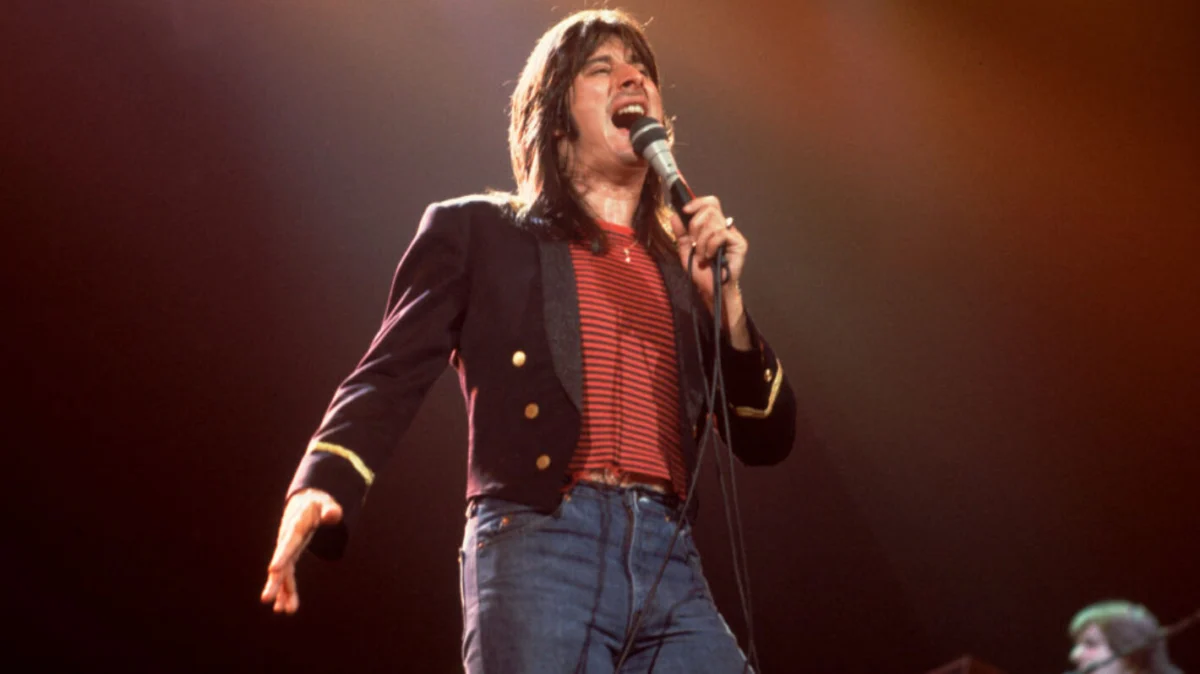
The 1984 release of "Oh Sherrie" marked a pivotal transition in the career of Steve Perry, moving him from the collective powerhouse of Journey into the spotlight as a formidable solo artist. While the track remains a staple of classic rock radio and a definitive example of the mid-1980s power ballad, its origins are deeply rooted in a personal narrative that blended Perry’s public persona with his private romantic life. As the lead single from his debut solo album, Street Talk, the song not only dominated the charts but also immortalized Sherrie Swafford, Perry’s girlfriend at the time, in the annals of music history.
The Genesis of Street Talk and the Solo Pivot
By the early 1980s, Steve Perry had established himself as one of the premier vocalists in rock music. Under his leadership, Journey had achieved astronomical success with albums like Escape (1981) and Frontiers (1983). However, the relentless cycle of recording and touring had begun to take a toll on the band’s internal dynamics. In 1984, Perry sought a creative outlet that allowed him to explore a more soulful, R&B-influenced sound that differed slightly from Journey’s arena-rock formula.
The resulting project, Street Talk, was produced by Bruce Botnick and featured a polished, radio-friendly production style. "Oh Sherrie" was chosen as the flagship single to introduce this new chapter. The song was a collaborative effort, written by Perry alongside Randy Goodrum, Craig Krampf, and Bill Cuomo. According to historical accounts from the recording sessions, the song’s creation was a spontaneous late-night endeavor. The writing team began working around midnight, fueled by the creative energy of the late hours.
The iconic chorus, featuring the emotive "Oh Sherrie" refrain and the "hold on, hold on" hook, was developed while Sherrie Swafford was physically present but asleep in the same room. This intimate setting contributed to the song’s authentic emotional resonance. Perry’s vocal performance, characterized by his signature soaring tenor and vulnerable delivery, captured the complexities of a relationship under the strain of high-profile fame.
Who Was Sherrie Swafford?
Sherrie Swafford, the woman who inspired the hit, was a significant figure in Perry’s life during the peak of his career. Unlike many celebrity partners of the era, Swafford maintained a relatively low profile, though she agreed to appear in the song’s music video, which further cemented her identity in the public consciousness.
Swafford was an aesthetician and yoga instructor, and her relationship with Perry lasted several years. Friends and associates from that era described their bond as intense and sincere, though it was eventually tested by the pressures of Perry’s touring schedule and the overwhelming scrutiny of the music industry. While the song "Oh Sherrie" portrays a moment of romantic tension and a plea for reconciliation ("You should’ve been gone / Knowing how I made you feel"), it served as a public testament to Perry’s devotion.
In the decades following their breakup, Swafford largely retreated from the public eye. In rare communications, she has expressed a desire for privacy, occasionally clarifying that while she remembers her time with Perry fondly, she chose a life away from the entertainment industry. Her legacy, however, remains inextricably linked to the song that bears her name.
Chart Performance and Statistical Data
Upon its release in April 1984, "Oh Sherrie" became an immediate commercial juggernaut. Its success was bolstered by heavy rotation on both Top 40 and rock radio stations, showcasing Perry’s broad appeal.
- Billboard Hot 100: The single peaked at No. 3, making it Perry’s highest-charting solo hit. It remained on the chart for over 20 weeks.
- Mainstream Rock Tracks: The song reached No. 1 on Billboard’s Mainstream Rock chart, a testament to its credibility within the rock community despite its pop sensibilities.
- RIAA Certification: The single was certified Gold, and the parent album, Street Talk, eventually reached double-platinum status, selling over two million copies in the United States alone.
- International Reach: The song found success globally, charting in the Top 10 in Canada and performing well in the United Kingdom and Australia, solidifying Perry’s status as an international solo star.
The success of "Oh Sherrie" was a significant factor in Street Talk’s overall performance. Other singles from the album, such as "She’s Mine" and "Strung Out," also performed well, but none reached the cultural zenith of the lead track.
The Music Video and the MTV Era
The visual representation of "Oh Sherrie" played a crucial role in its popularity. Directed by Jack Cole, the music video was a "behind-the-scenes" meta-narrative that reflected the burgeoning MTV culture of the mid-1980s.
The video begins with a "set within a set" concept, showing Perry frustrated with a pretentious, high-concept video shoot involving elaborate costumes and artificial lighting. He eventually breaks character, strips away the artifice, and begins singing the song in a more naturalistic, rehearsal-style setting. This approach resonated with audiences who were beginning to tire of overly theatrical music videos, presenting Perry as a grounded, authentic artist.
Sherrie Swafford’s appearance in the video was pivotal. The chemistry between her and Perry was palpable, particularly in the closing scenes where they embrace. This glimpse into their real-life relationship added a layer of sincerity to the song’s lyrics, making the "hold on" plea feel like a genuine appeal rather than a scripted performance.
Timeline of Events: The Solo Era and Beyond
To understand the impact of "Oh Sherrie," it is essential to view it within the broader chronology of Steve Perry’s career and the history of Journey:
- 1977: Steve Perry joins Journey, transforming the band’s sound from jazz-fusion to melodic rock.
- 1981–1983: Journey releases Escape and Frontiers, becoming one of the biggest bands in the world.
- Early 1984: Perry records Street Talk during a hiatus from Journey.
- April 1984: "Oh Sherrie" is released as a single.
- 1985: Perry participates in the "We Are the World" recording, further establishing his solo prestige.
- 1986: Journey reunites for the album Raised on Radio, though the band’s internal cohesion begins to fracture. Perry’s solo success is often cited as a point of contention among band members.
- 1987: Journey enters a lengthy hiatus; Perry retreats from the music industry for several years.
- 1994: Perry releases his second solo album, For the Love of Strange Medicine, which features the hit "You Better Wait."
Impact on Journey and the "Frontman Solo" Trend
The success of "Oh Sherrie" had profound implications for the future of Journey. While the band’s guitarist Neal Schon and keyboardist Jonathan Cain were also involved in side projects (such as Bad English and HSAS), Perry’s solo stardom was on a different scale. The narrative that Perry might leave the band permanently was a constant theme in music journalism of the mid-80s.
When Journey returned for Raised on Radio, the production reflected the more polished, pop-oriented sound Perry had explored on Street Talk. This shift led to creative differences within the group, eventually resulting in the departure of founding bassist Ross Valory and drummer Steve Smith during the recording sessions. Consequently, "Oh Sherrie" is often viewed by music historians as the beginning of the end for the "classic" Journey lineup of the early 80s.
Furthermore, Perry’s success paved the way for other 80s frontmen to pursue solo careers while maintaining their band affiliations. This trend, seen with artists like Phil Collins (Genesis) and Don Henley (The Eagles), redefined the expectations for lead singers in the industry.
Technical Analysis of the Composition
Musically, "Oh Sherrie" is a masterclass in mid-80s pop-rock construction. Bill Cuomo’s keyboard work provides the atmospheric foundation, utilizing the synthesizers that defined the era’s sound. The arrangement is built around a dynamic build-up; it begins with a relatively sparse verse that focuses on Perry’s vocal clarity and gradually adds layers of percussion and guitar as it approaches the explosive chorus.
The lyrical structure is straightforward yet effective. The repetition of "Hold on, hold on" serves as a rhythmic anchor, while the bridge provides a harmonic shift that heightens the emotional stakes. The song’s production—clean, bright, and vocally centered—ensured it sounded impeccable on FM radio, which was the primary medium for music discovery at the time.
Broader Implications and Legacy
Decades after its release, "Oh Sherrie" continues to resonate. It is frequently featured in film and television soundtracks seeking to evoke the nostalgia of the 1980s. Its enduring popularity is a testament to the universal nature of its theme: the struggle to maintain a relationship amidst external chaos.
For Steve Perry, the song remains his signature solo achievement. Even as he stepped away from the limelight for long periods, "Oh Sherrie" kept his voice in the public ear. For Sherrie Swafford, the song serves as a permanent digital and vinyl record of a specific time in her life—a time of immense public interest and private emotion.
The song also stands as a reminder of a specific era in the music industry where "the muse" was a central part of the marketing and creative narrative. Much like Eric Clapton’s "Layla" or Toto’s "Rosanna," "Oh Sherrie" transformed a private individual into a cultural icon, creating a bridge between the artist’s reality and the listener’s imagination.
In a modern context, the song’s success highlights the power of the "power ballad" as a commercial force. It proved that a rock singer could achieve massive pop success without sacrificing their vocal integrity or their rock-and-roll roots. As Steve Perry’s career continues to be celebrated by new generations of fans, "Oh Sherrie" remains the gold standard for his solo output—a perfect intersection of melody, emotion, and the true story of a girl who fell asleep while a hit was being born.