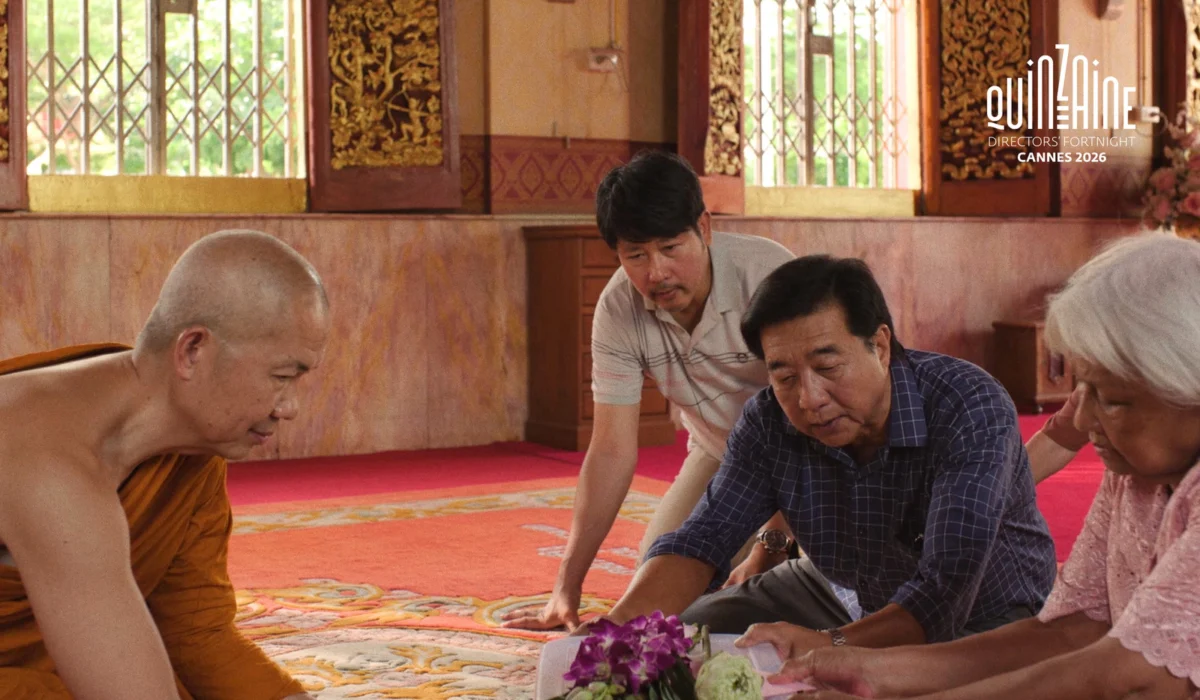
9 Temples to Heaven marks a significant milestone in the career of Thai filmmaker Sompot Chidgasornpongse, serving as his debut narrative feature following years of acclaimed documentary work and collaboration with Palme d’Or winner Apichatpong Weerasethakul. The film, a 140-minute meditative exploration of familial duty and spiritual desperation, centers on a high-stakes pilgrimage undertaken by a family in crisis. When Sakol, played by Surachai Ningsanond, receives a dire prediction from his employer regarding his elderly mother’s imminent demise, he orchestrates an ambitious one-day journey to nine different Buddhist temples. This act, rooted in the Thai tradition of merit-making, serves as a desperate attempt to manipulate fate and extend the life of the matriarch, portrayed by Amara Ramnarong.
The Narrative Foundation and Cultural Context
The central premise of 9 Temples to Heaven is built upon the "Kao Wat" (Nine Temples) tradition, a common practice in Thai Buddhist culture where devotees visit nine sacred sites in a single day to garner auspicious blessings and spiritual merit. In the context of the film, this ritual is elevated from a routine act of piety to a frantic medical intervention of a spiritual nature. Sakol’s belief that the collective energy of ten family members—including his wife, siblings, and children—can reverse a terminal prophecy provides the narrative’s driving force.
The film introduces the mother’s condition not through clinical diagnosis, but through the lens of spiritual premonition and familial observation. The audience learns of her fragility through fragmented memories and her physical presence within the confines of the family vehicle. As the group moves from one architectural marvel to the next, the film transitions from a simple travelogue into a complex study of how different generations process the inevitable approach of death.
Chronology of the Pilgrimage
The film’s structure follows the linear progression of a single day, beginning in the early morning hours as the family departs. The initial segments are characterized by a sense of purpose and hope. As they visit the first few temples, the focus remains on the rituals: the lighting of incense, the chanting of prayers, and the interaction with monks. However, as the sun moves across the sky, the physical toll of the journey begins to manifest in the elderly matriarch.
By mid-day, the narrative tension shifts from the spiritual goal to the immediate physical reality of the mother’s declining health. The chronology of the day becomes a countdown not just to the completion of the nine-temple circuit, but to a potential medical emergency. This creates a philosophical crossroads for the characters: should they honor the spiritual commitment to complete the nine temples, or should they abandon the ritual to seek conventional medical rest? The final hours of the film deal with the fallout of these decisions, leading to a conclusion that emphasizes internal reflection over external miracles.
Cinematic Style and the Influence of Slow Cinema
Sompot Chidgasornpongse employs a "slow burn" directorial style that demands a high degree of patience from the audience. This aesthetic choice is intentional, mirroring the discipline required for meditation. The 140-minute runtime allows for long, uninterrupted takes that capture the subtle shifts in family dynamics and the quiet grandeur of the Thai landscape.
The cinematography focuses heavily on the contrast between the ancient, static beauty of temple architecture—characterized by ornate ceilings and shimmering chandeliers—and the fluid, often chaotic nature of human emotion. By framing the mother frequently from behind or through reflections, Chidgasornpongse maintains an air of mystery around her character, forcing the audience to engage with her physicality and the way her family perceives her before revealing her inner thoughts in the film’s latter half.
Supporting Data: The Tradition of Merit-Making and Aging Demographics
To understand the weight of Sakol’s mission, one must look at the cultural data surrounding merit-making in Thailand. The number nine (Kao) is homophonous with the Thai word for "stepping forward" or "progress," making it the most auspicious number in the culture. The "Nine Temple" tour is a multi-million baht industry in Thailand, particularly in Bangkok and Ayutthaya, often marketed to those seeking a "reset" in their luck or health.
Furthermore, the film touches on a pressing socio-economic reality in Thailand: the rapidly aging population. According to data from the World Bank, Thailand has one of the fastest-aging populations in the developing world. This demographic shift has placed immense pressure on the "sandwich generation"—middle-aged adults like Sakol who must balance the demands of their careers with the intensive caregiving required by elderly parents. 9 Temples to Heaven acts as a cinematic reflection of this societal pressure, illustrating the lengths to which family members will go when modern systems feel inadequate to address the mystery of mortality.
Character Analysis and Performance
The ensemble cast delivers performances that emphasize realism over melodrama. Amara Ramnarong’s portrayal of the mother is a masterclass in subtlety. With minimal dialogue, she conveys a lifetime of unspoken history. A pivotal moment in the script occurs when she challenges her family’s romanticized view of her past, revealing that her marriage was not one of choice but of circumstance. This revelation serves to humanize her, moving her character from a symbolic object of care to a woman with her own distinct agency and regrets.
Surachai Ningsanond captures the frantic energy of a son caught between faith and logic. His performance highlights the desperation of the "believer" who uses ritual as a shield against grief. Meanwhile, Sompop Songkampol, playing the grandson Tor, provides the film’s most surreal and vulnerable moments. Tor represents the younger generation’s perspective—skeptical yet deeply affected. His sequence involving a fourth-wall-breaking knock on a car window serves as a meta-commentary on the nature of reality and the cinematic medium itself, questioning what remains "real" when a loved one is fading away.
Official Responses and Festival Reception
While 9 Temples to Heaven is a fictional work, its themes have resonated with cultural critics and film historians who follow the "Thai New Wave." Early reactions from the festival circuit have noted Chidgasornpongse’s ability to transition from the observational style of his documentary Railway Sleepers to a structured narrative without losing his signature contemplative pace.
Critics have pointed out that the film serves as a response to the "short attention span" culture mentioned by the monk in the film. By forcing the viewer to sit with the characters in long car rides and extended prayer sessions, Chidgasornpongse creates a space for the "deliberate self-reflection" that the film argues is disappearing from modern life. Film scholars have categorized the work as an essential piece of contemporary Southeast Asian cinema that bridges the gap between traditional Buddhist philosophy and modern existentialism.
Broader Impact and Implications
The implications of 9 Temples to Heaven extend beyond the confines of the cinema. The film raises critical questions about the intersection of traditional belief systems and modern healthcare. In many Southeast Asian cultures, the line between seeking medical help and seeking spiritual intervention is often blurred. Sakol’s journey is a manifestation of the "pluralistic" approach to healing, where merit-making is seen as a valid supplement to—or in desperate cases, a substitute for—medicine.
Additionally, the film explores the concept of "generational healing." The pilgrimage is as much about the siblings and children mending their own relationships as it is about saving the matriarch. The shared space of the car and the shared goal of the temples force a level of intimacy that modern technology usually precludes. The film suggests that while the rituals themselves may or may not have the power to heal the body, the act of collective devotion has a profound impact on the "body politic" of the family unit.
Conclusion: A Reward for the Patient Observer
9 Temples to Heaven concludes not with a miraculous recovery or a tragic climax, but with a sense of clarity born from exhaustion. The film’s mantra—that those who can sit still and endure the longest will be rewarded—is ultimately proven true for the audience. By the end of the 140-minute journey, the viewers have undergone a parallel experience to the characters, transitioning from a state of restlessness to one of acceptance.
Sompot Chidgasornpongse has crafted a film that is both a tribute to Thai cultural traditions and a critique of the modern world’s inability to process loss. It stands as a lyrical, slow-moving vessel that carries its characters and its audience toward an inevitable truth: that while we cannot always control the timing of death, we can control the mindfulness with which we approach the end of a life. Through its gentle camerawork and spiritual depth, 9 Temples to Heaven remains a poignant reminder of the power of presence in an increasingly distracted world.