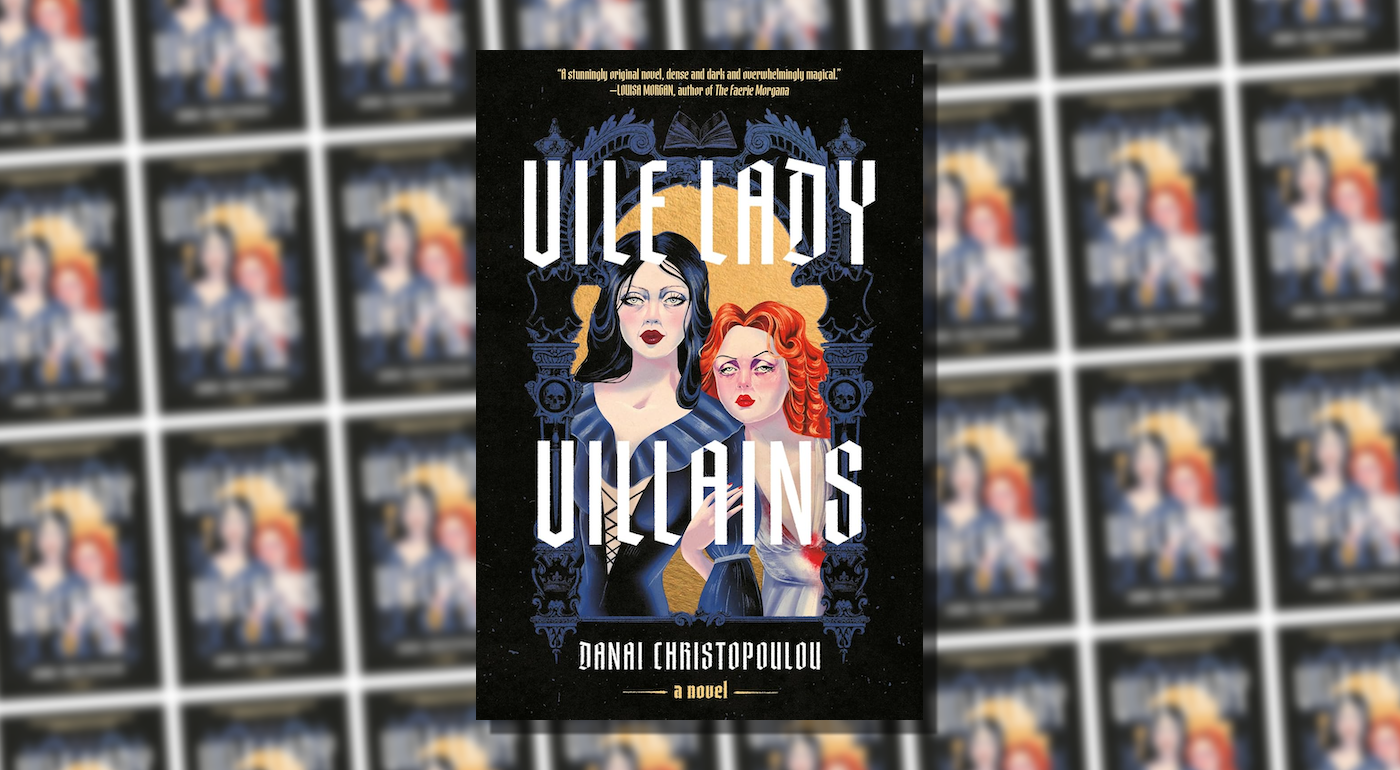
In Danai Christopoulou’s ambitious novel, Vile Lady Villains, two of literature’s most infamous female figures, Lady Macbeth and Klytemnestra, are granted an extraordinary opportunity: a chance to reclaim their narratives from the shadows of their tragic destinies. The novel plunges readers into a surreal and spectral landscape, where these queens find themselves stripped of their original worlds and thrust into a realm populated by wraiths and otherworldly terrors. Their journey is orchestrated by the Fates themselves – the Moirai for Klytemnestra and the Three Witches for Lady Macbeth – who task them with a quest whose purpose remains shrouded in mystery until its culmination.
The narrative unfolds as Lady Macbeth, notorious for her complicity in the murder of her first husband to secure the throne for her second, and Klytemnestra, infamous for avenging her daughter’s death by slaying her own husband, embark on a bewildering odyssey. Their guide through this liminal space is none other than William Shakespeare himself, accompanied by a collection of arcane objects and potent magics that both aid and impede their progress. A pivotal encounter introduces them to Shepherd, the enigmatic queen of a world where fictional characters either reside or are eternally imprisoned, depending on one’s perspective. Shepherd views the two queens, now self-styled as Claret and Anassa, as her newest subjects. However, Claret and Anassa, having experienced the crushing weight of being defined by others’ narratives, yearn for more than mere existence at the whim of another ruler. As they forge their own paths, an undeniable bond blossoms between them, their love forged in the crucible of shared trauma and defiance, rising from the metaphorical "pools of blood" of their pasts. The novel compels readers to question the labels so readily applied to them: are they simply "vile villains," or are they maligned mothers, complex femme fatales, or, most importantly, women who resolutely refuse to be confined by pre-ordained roles?
A deeper appreciation of Vile Lady Villains can be cultivated by engaging with the source material that inspired it. Christopoulou herself notes in her author’s commentary that prior knowledge of Shakespeare’s Macbeth or Aeschylus’s Oresteia is not a prerequisite for enjoyment. However, for readers like the reviewer, a desire to unravel the intricate tapestry of allusions and references woven throughout the text offers a richer reading experience. Extensive scholarly work exists on the thematic and characterological overlaps between Klytemnestra and Lady Macbeth, highlighting their shared traits of ambition, ruthlessness, and a formidable will. A particularly resonant observation, articulated by J. Churton Collins in his Studies in Shakespeare, encapsulates this enduring fascination: "Klytemnestra in the Agamemnon might well be the archetype of Lady Macbeth. Both possessed by one idea are, till its achievement, the incarnations of a murderous purpose. In both, the motive impulses are from the sexual affections. Both, without pity and without scruple, have nerves of steel and wills of iron before which their husband and paramour cower in admiring awe, and yet in both beats the woman’s heart." This sentiment echoes throughout Christopoulou’s reimagining, emphasizing the complex humanity beneath the monstrous deeds attributed to these women.
The Genesis of Literary Archetypes and Historical Narratives
The novel delves into the fascinating debate surrounding the potential knowledge Shakespeare possessed of classical Greek literature, specifically Aeschylus’s Oresteia. By weaving this historical literary discussion into its fictional framework, Vile Lady Villains opens a profound dialogue about the very nature of storytelling and its evolution. Shepherd’s dominion, a pocket world teeming with fictional characters, allows one living writer per generation entry into its boundless creative reservoir. These privileged writers gain access to an endless wellspring of muses, ostensibly to fuel their original works in the real world. The writer featured in Christopoulou’s novel is William Shakespeare, whose creative peak is generally considered to be around 1606, towards the latter stages of his career.
While Klytemnestra herself does not appear in any of Shakespeare’s plays, her husband, Agamemnon, a central figure in the Oresteia, makes a notable appearance in Shakespeare’s The Tragedy of Troilus and Cressida, written around 1602. Lady Macbeth, on the other hand, finds her literary antecedent in Gruoch, the historical wife of MacBethad mac Findláich, King of Scotland. Shakespeare’s portrayal of Lady Macbeth is largely derived from the historical accounts presented in Raphael Holinshed’s Chronicles, first published in 1587, a work well-documented as a significant source of inspiration for Shakespeare’s historical plays. This historical context underscores Christopoulou’s exploration of how narratives are shaped, adapted, and sometimes radically transformed across different eras and by different storytellers. The novel highlights the discrepancy between historical figures and their dramatic personae, prompting a critical examination of authorship and influence.
Shedding Skins: From Archetype to Autonomy
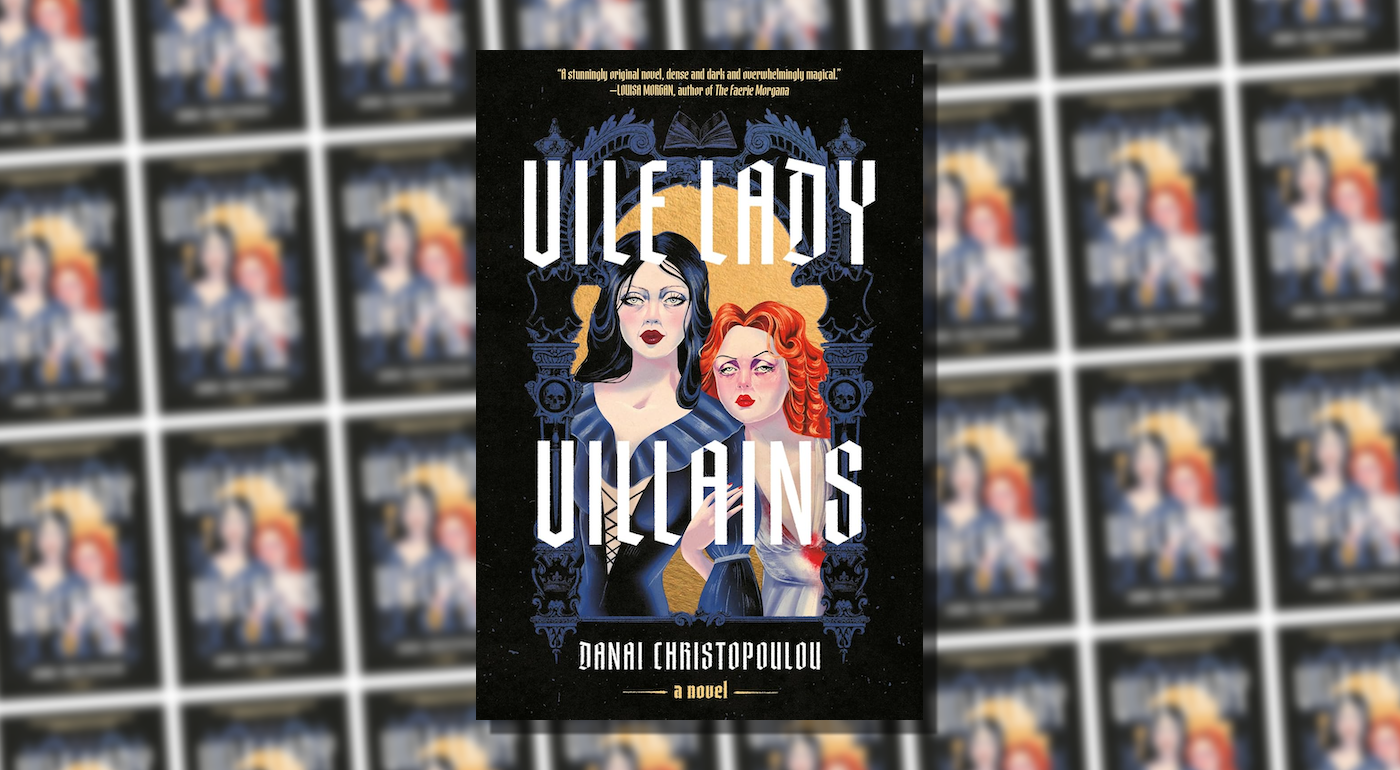
Initially, both Klytemnestra and Lady Macbeth are presented through the narrow lenses of their most damning actions. Klytemnestra is depicted as consumed by thoughts of murder and vengeance, her identity solely defined by the act of matricide. Lady Macbeth, conversely, appears as a figure of weakness, succumbing to guilt and madness. However, as they shed their given names and adopt new ones – Claret and Anassa – they simultaneously begin to shed the rigid personalities imposed upon them by their respective storytellers.
A pivotal moment in Anassa’s (Klytemnestra’s) journey involves a direct confrontation with the historical Gruoch. This encounter reveals the extent to which "Willy Shakes" may have manipulated or reinterpreted Gruoch’s story for dramatic effect, highlighting the vast distance Anassa has traveled in rejecting that imposed image. Similarly, Claret (Lady Macbeth) undergoes her own profound moment of self-reflection, arriving at a comparable realization about the distortion of her own narrative. The central question that emerges from these transformations is one of agency and future direction: Will they revert to their old, ill-fitting roles? Will they allow another author to pen their new ending? Or will they seize control and write an entirely new story for themselves? This thematic core underscores the novel’s powerful exploration of self-determination and the refusal to be defined by external narratives.
Navigating the Labyrinth: Structural Considerations and Narrative Flow
While Vile Lady Villains offers a compelling premise and evocative prose, the novel is not without its structural challenges that, at times, temper its potential for greatness. The exquisite and often poetic writing style is occasionally disrupted by anachronistic or jarring narrative choices that can pull the reader out of the immersive experience. The reviewer notes a desire for more development of a secondary sapphic romance, which appears somewhat abruptly and dissipates as quickly as it is introduced, leaving a sense of missed opportunity for further exploration of queer narratives within the fantastical setting.
The use of a deus ex machina, a narrative device where an unexpected power or event saves a seemingly hopeless situation, is identified as a somewhat convenient resolution for the queens’ initial displacement into the Moirai’s crosshairs. The novel’s chapter structure, characterized by its brevity, often concludes at moments of heightened tension, which, while effective in driving immediate engagement, can also contribute to a sense of fragmented pacing. Furthermore, the narrative journey of Claret and Anassa frequently involves revisiting previously explored locations and engaging in conversations or revelations that echo earlier parts of the story. For readers anticipating a more overtly "romantasy" experience, this cyclical progression might feel like narrative meandering, or "dilly-dallying." Despite these criticisms, the reviewer largely found enjoyment in the deliberate, slow burn of the plot, even acknowledging moments where the pacing felt protracted.
A Feminist Manifesto and a Sapphic Anthem
Ultimately, Vile Lady Villains transcends its fantastical elements to deliver a profound commentary on the nature of stories themselves. It is a narrative about storytellers, about the subjective and often contradictory nature of history, which we assemble into a fragile, overarching narrative. The novel posits that any story is irrevocably shaped by the context—both the writer’s and the reader’s—that is brought to it. Christopoulou’s work stands as a potent feminist critique of patriarchal structures, challenging the historical silencing and misrepresentation of women. Simultaneously, it serves as a vibrant sapphic anthem, advocating for the courage to live authentically and embrace one’s truth. The journey of Claret and Anassa is portrayed as an epic odyssey, a tempestuous odyssey, a descent into the underworld (katabasis), and a profound dreamscape. Through her command of sumptuous language and dramatic descriptions, Danai Christopoulou has crafted a literary work of significant depth and beauty, inviting readers to reconsider the power and persistence of narratives.
The novel is published by Union Square & Co.