The cinematic landscape is currently witnessing a significant shift in source material acquisition as A24 releases its feature-length adaptation of the viral internet phenomenon known as the Backrooms. Directed by Kane Parsons and written by Will Soodik, the film represents the first major studio attempt to translate "creepypasta" and "liminal space" aesthetics into a high-production psychological thriller. Starring Academy Award nominee Chiwetel Ejiofor and Renate Reinsve, the production bridges the gap between digital-native storytelling and prestige independent cinema. The narrative centers on Dr. Mary Kline, a therapist who ventures into a physics-defying, otherworldly dimension in a desperate search for her missing patient, Clark, who vanished within the confines of his own furniture warehouse.
Narrative Architecture and Plot Development
The story begins in the mundane setting of Cap’n Clark’s Ottoman Empire, a furniture retail outlet owned by Clark (Chiwetel Ejiofor). Following a localized power surge, Clark discovers a spatial anomaly in the store’s lower level. In a state of intoxication and emotional distress, he passes through a physical wall, entering an alternate reality that mirrors the architecture of his store but stripped of its utility and logic. This "Backrooms" dimension is characterized by endless, interconnected rooms featuring faded yellow wallpaper, fluorescent lighting, and furniture that appears fused with the floors or walls.
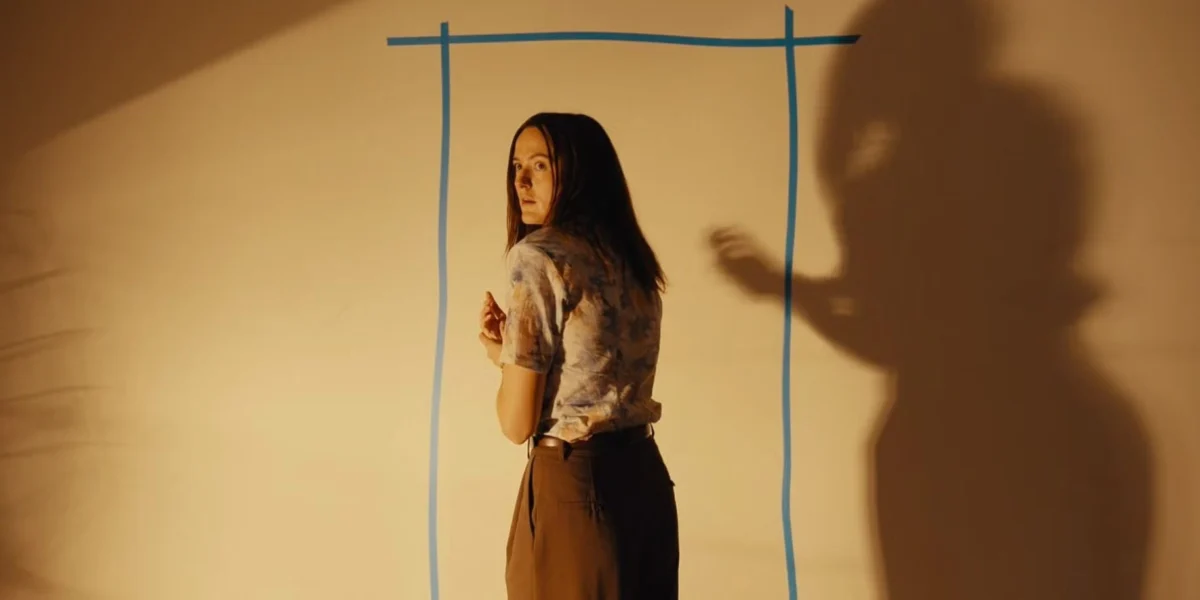
As Clark becomes trapped in this labyrinth, the film shifts its focus to Dr. Mary Kline (Renate Reinsve), Clark’s therapist. The narrative establishes a psychological parallel between the characters; Clark is a frustrated architect mourning the collapse of his marriage, while Mary is grappling with the recent demolition of her childhood home. When Clark’s disappearance draws in local teenagers and eventually Mary herself, the film transitions from a domestic drama into a survival-based psychological study. The characters must navigate a realm where the laws of physics are suspended and a malevolent, unseen presence tracks their movements through the muffled silence of the yellow corridors.
The Evolution of the Backrooms: From 4chan to A24
The intellectual property of the Backrooms originated on May 12, 2019, on the internet forum 4chan. An anonymous user posted an image of a slanted, yellow-hued room with the caption describing an accidental "noclip" out of reality into a space consisting of "the stink of old moist carpet, the madness of mono-yellow, the endless background noise of fluorescent lights at maximum hum-buzz." This concept birthed the "liminal space" movement—an aesthetic focused on empty, transitional places that feel eerily familiar yet deeply unsettling.
In January 2022, Kane Parsons, then a 16-year-old visual artist operating under the pseudonym Kane Pixels, uploaded a short film titled "The Backrooms (Found Footage)" to YouTube. The video utilized Blender-rendered environments and VHS-style filters to create a convincing analog horror experience. The video garnered over 50 million views, spawning a complex web series that established a lore involving a fictional research organization known as ASYNC. Recognizing the cultural impact and technical proficiency of Parsons’ work, A24, along with James Wan’s Atomic Monster and 21 Laps Entertainment, signed Parsons to direct a feature-length adaptation, making him one of the youngest directors to helm a major independent studio production.
Technical Specifications and Production Design
The feature film departs from the found-footage aesthetic of the YouTube series, opting instead for a 110-minute cinematic presentation that emphasizes atmospheric dread and production scale. Production designer Danny Vermette was tasked with recreating the non-Euclidean geometry of the Backrooms on a physical set, ensuring the environment felt tangible rather than purely digital. The design utilizes a specific color palette of "aged parchment" and "sulfur yellow" to induce a sense of sensory claustrophobia.
The auditory experience is a critical component of the film’s tension. The score, composed by Kane Parsons in collaboration with Edo Van Breemen, avoids traditional orchestral swells in favor of ambient "drone" music and "nerve-shredding" bass frequencies. The sound design replicates the hum of industrial lighting and the muffled acoustics of empty carpeted rooms, creating a sonic environment that mirrors the visual isolation of the characters. This technical approach aligns with the "slow cinema" movement, where the pacing allows the audience to inhabit the space alongside the protagonists.
Casting and Character Archetypes
The inclusion of high-profile actors like Chiwetel Ejiofor and Renate Reinsve signals A24’s intent to elevate the material beyond its "internet horror" roots. Ejiofor portrays Clark as a man whose professional failures as an architect manifest in the chaotic construction of the Backrooms. His performance relies heavily on physicality and facial expression, as much of his screen time involves solitary exploration of the labyrinth.
Renate Reinsve, known for her breakout role in The Worst Person in the World, provides the emotional anchor for the film. Her character, Dr. Mary Kline, represents the rational world attempting to categorize and understand the irrational. Supporting performances by Mark Duplass, Finn Bennett, and Lukita Maxwell round out a cast that explores the human impact of the phenomenon. The casting of these actors suggests a focus on "interiority"—the internal psychological state of the characters—which is necessary for a film that features long stretches of silence and minimal traditional action.
Chronology of the Production Deal
The timeline of the film’s development reflects the rapid pace at which digital creators are being integrated into the traditional Hollywood system:
- May 2019: The original Backrooms image is posted on 4chan, initiating the urban legend.
- January 2022: Kane Parsons releases the first "Found Footage" short on YouTube, which goes viral within weeks.
- February 2022 – January 2023: Parsons expands the YouTube universe with multiple installments, building a massive subscriber base and attracting industry attention.
- February 2023: A24 officially announces the feature film project with Parsons directing during his summer break from school.
- 2023 – 2024: Script development by Will Soodik and principal photography take place, focusing on a narrative that balances the lore of the YouTube series with new, character-driven elements.
- 2024: The film enters the festival and theatrical circuit, marketed as a prestige horror event.
Analytical Implications: Allegory and Social Commentary
The film utilizes the Backrooms as a multifaceted allegory. Critics and analysts have noted several potential interpretations of the "yellow-walled nightmare":
- Post-Pandemic Isolation: The imagery of empty, commercial spaces resonates with the global experience of lockdowns, where once-bustling offices and malls became desolate, liminal zones.
- Generative AI and Digital Decay: The "off-kilter" architecture and the way objects are half-sunken into floors mirror the glitches seen in early AI-generated imagery, representing a world where reality is being reconstructed by non-human intelligence.
- The 1990s Self-Help Movement: By setting the film in the 1990s, the filmmakers critique the era’s obsession with psychological "self-actualization" and the commercialization of therapy. The Backrooms serve as a literalized version of the "subconscious" that the characters are desperately trying to map and control.
- The Death of Retail: The furniture store setting provides a commentary on the decline of physical retail and the "death of the salesman," as Clark’s desperate attempts to save his business lead him into a literal void of consumerism.
Broader Impact on the Film Industry
The success and production of Backrooms serve as a case study for the future of talent scouting in the film industry. Traditionally, directors rose through the ranks of film schools or commercial production. Parsons’ trajectory—from a bedroom VFX artist to an A24 director—demonstrates that high-concept digital storytelling can serve as a viable proof-of-concept for major features.
Furthermore, the film challenges the conventions of the horror genre. By eschewing frequent "jump scares" in favor of existential dread and "liminal horror," the production aligns itself with other "elevated horror" titles in the A24 catalog, such as Hereditary or The Witch. It relies on the psychological discomfort of the audience, tapping into a modern form of anxiety that is specific to the digital age: the fear of being "erased" from reality or lost in an infinite, purposeless space.
As the film reaches global audiences, it stands as a testament to the power of collective internet mythology. What began as a single image on an anonymous message board has evolved into a sophisticated cinematic exploration of grief, architecture, and the fragility of the human mind. The project confirms that "creepypasta" culture has matured into a significant source of contemporary folklore, capable of sustaining complex narratives and attracting some of the industry’s most respected talent.