The decade-long reign of My Hero Academia continues to captivate audiences worldwide, demonstrating an enduring appetite for the burgeoning superhero saga. Even as the franchise celebrated its tenth anniversary and garnered the prestigious Anime of the Year award at the recent Crunchyroll Anime Awards, new content has been strategically released to satiate its dedicated fanbase. Prior to the awards ceremony, the release of My Hero Academia: More offered fans a nostalgic reunion with beloved characters from the earlier arcs, complete with a long-anticipated romantic confession, further solidifying the series’ emotional core. The continued production of additional seasons for the spin-off series Vigilantes also contributed to this sustained fan engagement. In a move that underscores Studio Bones’ commitment to celebrating this significant milestone, Anime Expo 2026 hosted an exclusive, month-ahead premiere of their latest short film, My Hero Academia: I am a hero too. This highly anticipated release, which focuses on a pivotal character from the series’ narrative, is slated for a global debut on August 3, 2026, offering fans a glimpse into the future of its expansive universe.
A New Chapter for Eri: From Ward to Virtuoso
The short film My Hero Academia: I am a hero too shifts the narrative spotlight to Eri, a character whose journey of healing and self-discovery has been a central theme in the latter half of the main series. Set several years after the iconic school festival concert orchestrated by Kyoka Jirou in Season 4, the short presents a remarkably transformed Eri. The child who once hesitated to speak now stands as a self-assured young adult, poised to perform on her own terms. Freed from the oppressive influence of her past and the long shadow of her father, Overhaul, Eri embodies a bright-eyed optimism, her gaze firmly fixed on a promising future. This optimism is mirrored in the advancements of the hero community; Izuku Midoriya, or Deku, has ascended the ranks to become the Number 4 hero, resuming his hero work alongside his teaching responsibilities, with Mirio Togata still holding the coveted top position. Eri’s burgeoning talent has not gone unnoticed; Kyoka Jirou and Denki Kaminari have become her mentors, nurturing her passion for music. This guidance has culminated in Eri forming her own street band, a testament to her growth and independent spirit.
The narrative of the short centers on Eri’s desire to express her gratitude to her heroes by inviting them to witness her band’s debut performance. However, she imposes a crucial condition: her esteemed guests must remain concealed from the audience. The reason behind this request is the current status of these heroes. No longer mere students, they have become celebrated figures in the hero world. The revelation of their attendance at a local concert would inevitably overshadow Eri’s performance, diverting the attention she has worked so hard to earn. Eri’s intention is to showcase her own capabilities, proving that she can shine independently, much like her heroes did on stage years prior, rather than relying on their established fame. This desire to stand on her own merits is poignantly reflected in her song choice: a heartfelt cover of the song "Hero Too," a track intrinsically linked to her own past and the heroes who aided her.

A Six-Minute Spectacle: Artistic Evolution and Narrative Restraint
While the thematic resonance and character development presented in My Hero Academia: I am a hero too are undeniably compelling, a segment of the fanbase may need to temper their expectations regarding the film’s scope. The "short" designation is literal, with the entire runtime clocking in at approximately six minutes. The majority of this brief duration is dedicated to Eri’s musical performance. The rendition of "Hero Too" itself is a significant artistic achievement. It distinguishes itself from the original through its stripped-down acoustic instrumentation and more delicate vocal delivery. Visually, the short employs a distinct art style, leaning towards a watercolor aesthetic. This departure from the comic-book-inspired styling that has characterized recent openings and endings of the main series signifies a deliberate artistic choice for this particular narrative. The imagery of a confident Eri emulating Jirou’s stage presence is undeniably powerful and emotionally resonant. However, the brevity of the short leaves viewers yearning for more. The fleeting glimpses of Eri’s bandmates coming together and the promise of their independent future spark curiosity about the potential of a full-episode narrative, replete with original songs and expanded character interactions.
Anime Expo 2026: A Celebration of Fandom and Voice Acting Prowess
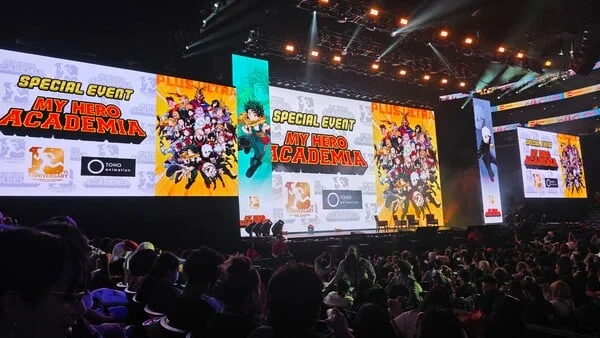
Despite its limited runtime, the enthusiasm generated by the early premiere of My Hero Academia: I am a hero too at Anime Expo 2026 was palpable. The convention’s programming clearly accounted for the short’s concise nature, as evidenced by the choice of hosts for the accompanying panel: Daiki Yamashita, the Japanese voice actor for Izuku Midoriya (Deku), and Kōki Uchiyama, the voice actor for Tomura Shigaraki. Their presence amplified the celebratory atmosphere, transforming the event into a multifaceted tribute to the series and its dedicated voice talent.
Following a dynamic montage showcasing some of the most heroic and impactful moments from the anime’s history, the panel transitioned into an interactive segment. Yamashita and Uchiyama engaged the audience in a spirited debate, prompting attendees to vote on their favorite moments featuring their respective characters. The results were a testament to the series’ dramatic evolution. For Shigaraki, his pivotal speech to the heroes during the Paranormal Liberation War arc in episode 121 secured a decisive victory over his initial attack on the USJ. Deku’s climactic "final smash" in episode 167 elicited a more fervent crowd reaction than All Might’s iconic declaration, "You too can become a hero," in their first encounter. Yamashita humorously remarked that the roar of the crowd during Deku’s final smash rivaled the volume typically generated by Present Mic, the hero known for his sonic abilities and radio broadcasts. The discussion further delved into the series’ critical acclaim, with specific mention of episodes 162, 163, and 167, which collectively boast an impressive average IMDb rating of 9.8, underscoring the show’s consistent quality and fan reception.
The Evolving Bond Between Deku and Shigaraki: A Voice Actor’s Perspective
The panel provided an intimate look into the evolving professional relationship and genuine friendship between Daiki Yamashita and Kōki Uchiyama, a bond that has developed both on and off-screen. Uchiyama initially harbored concerns about fostering camaraderie with fellow cast members too early in their careers, fearing it might compromise the intensity of his villainous portrayal of Shigaraki. To maintain this professional distance, he deliberately scheduled his first recording session with Yamashita during the tense invasion sequence in episode 11 of the anime. This strategic approach allowed him to immerse himself fully in Shigaraki’s antagonistic persona. However, as the series progressed, numerous opportunities arose, both within the narrative and through public appearances such as radio talks, for the two actors to connect and develop a rapport.

When queried about their personal resemblances to their characters, Uchiyama observed that Daiki Yamashita consistently exhibits a certain innocence reminiscent of Deku. Conversely, Yamashita suggested that Shigaraki’s more objective and detached perspective allows Uchiyama to function as an astute judge of character. This dynamic between the actors profoundly influenced their portrayal of the characters’ climactic confrontation.
The culmination of their evolving professional relationship was powerfully demonstrated in their performances for episode 167. The intense battle between Deku and All-for-One, culminating in their combined final punch, was executed with an improvisational fervor. No specific script dictated the performance of this pivotal moment; the raw emotion and intensity of their screams were left to the actors’ discretion. Uchiyama expressed his admiration for Yamashita’s vocal performance during this scene, while Yamashita confidently asserted his ability to match Uchiyama’s intensity. The subsequent conversation between Deku and Shigaraki in the vestige realm marked a significant moment for Yamashita, as it was the first time he witnessed Uchiyama perform as Tenko Shimura, Shigaraki’s civilian persona, rather than solely as the villain. He cherishes this moment as one of the series’ rare instances of quiet introspection and emotional depth. Yamashita further recounted the overwhelming positive reception on social media upon the episode’s airing, noting that the widespread cheers and support for Deku mirrored the in-universe characters rooting for his victory. The thunderous "Plus Ultra" chants that echoed at the episode’s conclusion served as definitive proof of this sentiment, solidifying the profound impact of their performances on the global audience.