The creation of the 1960 Metro-Goldwyn-Mayer (MGM) drama Butterfield 8, which ultimately secured Elizabeth Taylor her inaugural Academy Award for Best Actress, was anything but a smooth cinematic endeavor. This production, fraught with personal turmoil and professional acrimony, stands as a pivotal moment in Taylor’s legendary career, marking both an artistic nadir in her own estimation and an undeniable critical and commercial triumph. Its narrative is deeply interwoven with the waning days of Hollywood’s powerful studio system and the emergence of Taylor as an independent, formidable star.
The Ascendance of a Star: Taylor’s Pre-1960 Trajectory
Elizabeth Taylor’s journey in Hollywood began precociously, signing her first contract with Universal Pictures at the tender age of nine. After a brief stint, she moved to MGM, where she blossomed from a child star in films like National Velvet (1944) into one of the industry’s most dazzling and bankable adult actresses. By her mid-20s, Taylor had cemented her status as a leading lady, renowned for her striking beauty and burgeoning dramatic prowess. Her talent was increasingly recognized by the Academy, leading to a remarkable string of consecutive Best Actress nominations in the late 1950s for critically acclaimed performances. She captivated audiences and critics alike with her roles as Susanna Drake in Raintree County (1957), Maggie "The Cat" Pollitt in Cat on a Hot Tin Roof (1958), and Catherine Holly in Suddenly, Last Summer (1959). Each of these nominations underscored her growing artistic credibility and box-office appeal, positioning her as one of Hollywood’s most valuable assets.
The Studio System’s Grip and the Allure of Cleopatra
At the pinnacle of her success, Taylor found herself at a crossroads, still contractually bound to MGM, a studio that had nurtured her career for nearly two decades. The studio system, a pervasive model that dominated Hollywood from the 1920s to the 1950s, dictated nearly every aspect of a star’s professional life, from film assignments to public appearances. While it provided stability, it often stifled artistic freedom. It was during this period that an unprecedented offer materialized from 20th Century Fox: a staggering $1 million salary to star as the titular queen in the epic production of Cleopatra. This figure was astronomical for its time, far exceeding the typical compensation for even the biggest stars and signaling a dramatic shift in actor power. To accept this groundbreaking role, however, Taylor needed to fulfill her existing obligations with MGM. The studio, eager to capitalize on her star power one last time before her potential departure, insisted she complete one final film under her contract. That film would be Butterfield 8.
A Reluctant Commitment: The Genesis of Butterfield 8
Butterfield 8 was an adaptation of John O’Hara’s controversial 1935 novel, known for its frank exploration of sexuality and moral ambiguity in Depression-era New York City. The title itself referred to a specific telephone exchange system in Manhattan, a detail that subtly anchored the narrative in a particular urban context. The film adaptation, directed by Daniel Mann, cast Taylor as Gloria Wandrous, a beautiful and complex model who engages in a series of casual relationships before falling deeply for a married man. The ensemble cast included Laurence Harvey as the illicit lover and, notably, Taylor’s then-husband, Eddie Fisher. The casting of Fisher was not merely a professional choice; it was deeply intertwined with the sensational public scandal surrounding Taylor, Fisher, and Fisher’s previous wife, Debbie Reynolds. The affair and subsequent marriage of Taylor and Fisher had been a tabloid sensation, making them one of the most talked-about couples in America. This real-life drama inevitably cast a long shadow over the film’s production and public reception, particularly given the narrative’s themes of infidelity and societal judgment.
Behind-the-Scenes Turmoil: Production Challenges and Taylor’s Discontent
From its inception, Butterfield 8 was plagued by discord, primarily stemming from Taylor’s profound dissatisfaction with the project. Reports from The Hollywood Reporter in late 1959 indicated that the studio initially agreed to script rewrites after Taylor voiced concerns that her character was "too unsavory." However, these revisions apparently did little to assuage her discomfort. Her character, Gloria Wandrous, was perceived by many, including Taylor herself, as little more than a "glorified prostitute." This portrayal, particularly for an actress of Taylor’s stature and public image, was deeply problematic in the social climate of the early 1960s, which still adhered to conservative standards regarding female sexuality on screen.
Taylor’s resentment towards the film and her role was palpable. In archival audio featured in the 2024 documentary Elizabeth Taylor: The Lost Tapes, she candidly expressed her feelings: "I did it with a pistol at my head. The lines were so diabolical. It was such a piece of shit. And it made me angry. And out of the anger, it gave me an incentive." This visceral reaction underscores the intense pressure she felt, not only from her contractual obligations but also from the perceived assault on her artistic integrity and public persona. The "pistol at my head" metaphor powerfully conveys the lack of creative control she experienced within the rigid studio system.
A particularly memorable and emblematic scene in the film depicted Taylor’s character writing "no sale" on a mirror in lipstick, a defiant act after she believes she has been mistaken for a sex worker. This moment of on-screen rebellion mirrored Taylor’s own off-screen sentiments. Kate Andersen Brower, author of the 2022 authorized biography Elizabeth Taylor: The Last Star, recounted a telling anecdote about the star’s reaction during an early screening. "When Elizabeth saw the movie, she took out a tube of lipstick and wrote on the screening room’s wall, ‘Piece of shit.’ She really did see it as a personal affront that they were making her play a glorified prostitute." This dramatic act of defiance not only confirmed her disdain but also highlighted her powerful personality and unwillingness to passively accept a role she found demeaning. The confluence of her personal scandal, her professional frustrations with MGM, and her strong opinions about the character created a tempestuous atmosphere around the film.
Public Reception and Critical Acclaim
Despite the tumultuous production and Taylor’s personal disdain, MGM released Butterfield 8 on November 2, 1960. The film, perhaps fueled by the intense public interest in Taylor’s life and her controversial role, proved to be a significant commercial success. The Hollywood Reporter‘s review, despite the behind-the-scenes drama, lauded Taylor’s "bravura" performance, recognizing her ability to deliver a compelling portrayal even under duress. The film became MGM’s biggest title of the year, grossing an impressive $9 million domestically. Adjusting for inflation, this figure translates to approximately $99 million today, underscoring its considerable financial impact and demonstrating Taylor’s undiminished box-office power.
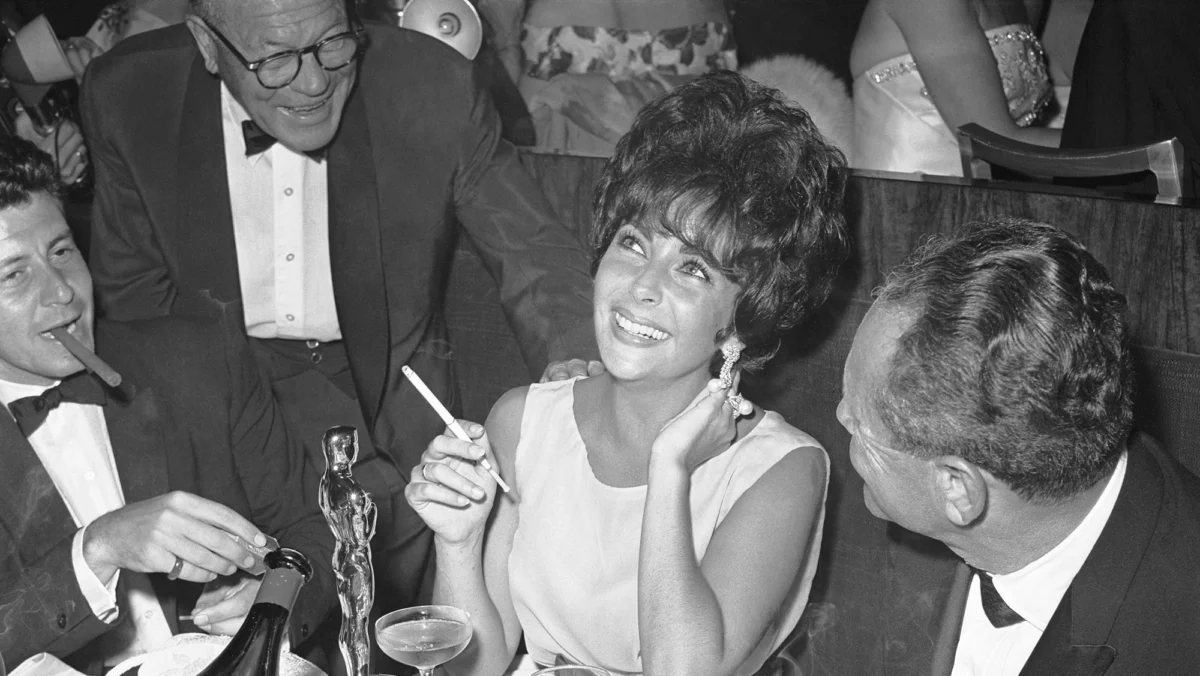
The ultimate validation of Taylor’s performance, however, came with the announcement of the 33rd Academy Awards nominations. For the fourth consecutive year, she received a Best Actress nod. Competing against formidable talents such as Shirley MacLaine for The Apartment, Melina Mercouri for Never on Sunday, Anna Magnani for The Fugitive Kind, and Deborah Kerr for The Sundowners, Taylor’s win was widely anticipated yet still surprising to some, given her vocal criticism of the film. On April 17, 1961, Elizabeth Taylor was awarded her first Best Actress Oscar for Butterfield 8.
A Contentious Victory: The Oscar and Taylor’s Enduring Disdain
Taylor’s victory for Butterfield 8 is often considered one of the most controversial Oscar wins in Academy history. Many contemporary critics and film historians speculate that her win was, in part, a sympathy vote. Just weeks before the awards ceremony, Taylor had suffered a severe bout of pneumonia, undergoing an emergency tracheotomy and narrowly escaping death. Her fragile health, combined with the dramatic public narrative surrounding her personal life, likely swayed voters. Regardless of the underlying reasons, the Oscar solidified her status as a top-tier actress and performer, further boosting her already stratospheric celebrity.
However, the Academy’s recognition did little to change Taylor’s opinion of the film. She consistently maintained her contempt for Butterfield 8 throughout her life, often referring to it as the worst film she ever made. This dichotomy—winning the industry’s highest honor for a film she despised—became a defining anecdote in her larger-than-life narrative, highlighting her unwavering honesty and her refusal to conform to Hollywood’s expectations of gratitude. The Oscar for Butterfield 8 was, in many ways, a testament to her sheer force of will and innate talent, enabling her to deliver a compelling performance even when completely disengaged from the material.
Enduring Legacy and Reappraisal
Decades after its release, Butterfield 8 has undergone a significant critical re-evaluation. While initially viewed largely through the lens of scandal and Taylor’s performance, contemporary analysis has illuminated its surprising feminist undertones. The character of Gloria Wandrous, who unapologetically pursues sexual relationships and challenges conventional morality, can now be seen as a precursor to more liberated female protagonists in cinema. In a time when women’s sexuality was often suppressed or condemned on screen, Gloria’s autonomy, even amidst her struggles, offers a compelling portrait of a woman attempting to navigate a patriarchal society on her own terms.
This re-examination has drawn parallels to modern cinema, particularly in discussions surrounding the 2025 Academy Award-winning role of Mikey Madison as a sex worker in the film Anora. Both films, separated by decades, delve into the complex lives of women in sex work, exploring themes of agency, judgment, and the pursuit of love and acceptance. Butterfield 8, once dismissed by its own star, now stands as a historical artifact that inadvertently pushed boundaries and sparked conversations about female representation and sexual liberation in film. Its ability to resonate with contemporary audiences and provoke new interpretations speaks to its unexpected depth and enduring cultural significance.
Impact on Taylor’s Career: Breaking Free from MGM
The experience of making Butterfield 8 proved to be a watershed moment for Elizabeth Taylor. It marked the definitive end of her long and often tumultuous relationship with MGM, allowing her to transition into a new phase of her career as an independent actress. Free from the constraints of the studio system, she was able to command unprecedented salaries and greater creative control, as evidenced by her subsequent work on Cleopatra. The sheer defiance she exhibited during the production of Butterfield 8, culminating in her "pistol at my head" declaration and her lipstick graffiti, solidified her image as a powerful, uncompromising force in Hollywood. She became a trailblazer, demonstrating that a star could challenge the studio machinery and still emerge victorious, both commercially and critically. The film, despite her personal disdain, ironically paved the way for her future triumphs and cemented her legacy as one of the most independent and influential figures in cinematic history.