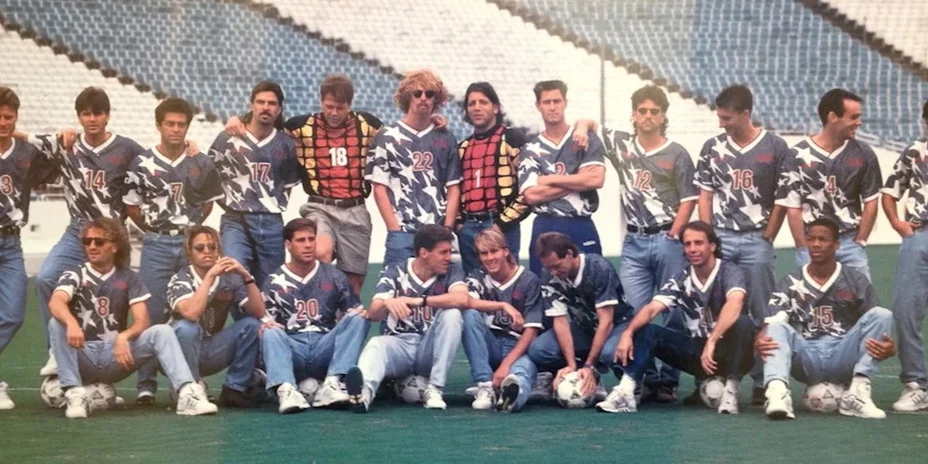
The documentary film Summer of ’94, directed by Dave LaMattina and Chad Walker, provides a comprehensive exploration of the 1994 FIFA World Cup and the improbable journey of the United States Men’s National Team (USMNT). As the United States prepares to co-host the 2026 World Cup alongside Canada and Mexico, this 99-minute retrospective serves as a vital historical document, capturing a period when the sport of soccer occupied a precarious position in the American cultural consciousness. Through a combination of rare archival footage, modern-day player testimonials, and a detailed look at the unconventional residency program in Mission Viejo, the film chronicles how a group of largely amateur and semi-professional athletes managed to advance to the Round of 16, forever altering the trajectory of the sport in North America.
Historical Context: The Pre-1994 Soccer Landscape in America
To understand the magnitude of the events depicted in Summer of ’94, one must examine the state of American soccer in the late 1980s and early 1990s. Following the collapse of the North American Soccer League (NASL) in 1984, the United States lacked a top-tier professional outdoor league. When FIFA awarded the 1994 World Cup hosting rights to the United States in July 1988, the decision was met with significant international skepticism. Critics argued that the U.S. lacked the soccer culture, the infrastructure, and a competitive national team necessary to justify hosting the world’s most prestigious sporting event.
At the time, the USMNT was composed of players who often had to seek opportunities in obscure European lower divisions or participate in indoor soccer leagues to maintain their fitness. The documentary highlights the "No National League, No Stars, No Clue" sentiment that permeated the international press. The U.S. team had qualified for the 1990 World Cup in Italy—their first appearance in 40 years—but lost all three group stage matches, underscoring the vast gap between American talent and the global elite.
The Mission Viejo Residency: A Radical Experiment
A central focus of the film is the two-year training camp established in Mission Viejo, California. Led by the enigmatic and highly experienced coach Bora Milutinović, who had previously coached Mexico and Costa Rica in World Cups, the residency program was a radical solution to the lack of a domestic professional league. Milutinović recognized that if his players were to compete with the world’s best, they needed to live, breathe, and train as a cohesive unit for years, rather than weeks.
The documentary utilizes never-before-seen footage from this period, showcasing the grueling daily routines and the psychological toll of the "bubble" environment. Players such as Tony Meola, Alexi Lalas, Tab Ramos, and Cobi Jones provide retrospective insights into the camaraderie and friction that defined this era. The Mission Viejo camp was less of a traditional sports training facility and more of a laboratory for Milutinović’s unorthodox tactics and team-building exercises. The goal was to transform a group of individualists into a disciplined defensive unit capable of absorbing pressure from world-class attacking sides.
Chronology of the 1994 World Cup Campaign
The narrative structure of Summer of ’94 builds toward the tournament itself, which began in June 1994. The film meticulously details the U.S. team’s progression through Group A, which included Switzerland, Colombia, and Romania.
- USA vs. Switzerland (June 18, 1994): Playing at the Pontiac Silverdome, the first indoor match in World Cup history, the U.S. secured a 1-1 draw. Eric Wynalda’s stunning free-kick goal served as an early indicator that the Americans would not be easily dismissed.
- USA vs. Colombia (June 22, 1994): Widely considered one of the greatest upsets in World Cup history, the U.S. defeated a highly-favored Colombian side 2-1 at the Rose Bowl. The match is remembered for the tragic own goal by Colombian defender Andrés Escobar, a moment the documentary treats with the necessary gravity and historical context.
- USA vs. Romania (June 26, 1994): Despite a 1-0 loss to a Romania team led by Gheorghe Hagi, the U.S. had accumulated enough points to advance to the knockout stages as one of the best third-place finishers.
- USA vs. Brazil (July 4, 1994): In the Round of 16, the U.S. faced the eventual champions, Brazil, on Independence Day. Playing before a massive television audience, the U.S. held the Brazilian juggernaut to a 0-0 deadlock for much of the match before falling 1-0. The performance earned the team international respect and proved that American soccer had arrived on the global stage.
Data and Statistical Impact of the 1994 Tournament
The 1994 World Cup remains, by several metrics, the most successful in FIFA history. Summer of ’94 touches upon the sheer scale of the event, but the underlying data provides even greater depth to the film’s narrative.
- Attendance Records: Total attendance for the 1994 World Cup reached 3,587,538, an average of 68,991 spectators per match. Despite the tournament expanding to 48 teams in 2026, the 1994 records for total and average attendance still stand today, reflecting the immense public interest in the U.S.
- Economic Reach: The tournament generated an estimated $1.4 billion in economic activity for the host cities, far exceeding initial projections.
- Broadcast Growth: In the United States, the Round of 16 match between the U.S. and Brazil drew a then-record 13.7 million viewers on ABC, demonstrating that soccer could command significant television ratings in a market dominated by the NFL, MLB, and NBA.
Technical Analysis of the Documentary
Directors Dave LaMattina and Chad Walker, along with editor Billy McMillin, employ a "time capsule" approach to the filmmaking. Rather than relying solely on high-definition recreations or modern B-roll, the film leans heavily on the grainy, visceral aesthetic of 1990s archival video. This choice grounds the story in its specific era, highlighting the contrast between the unpolished nature of the 1994 team and the billion-dollar industry that soccer has become today.
The film’s 99-minute running time is described by critics as efficient, avoiding the "mini-series bloat" common in contemporary sports documentaries. By focusing the majority of the runtime on the assembly of the team and the interpersonal dynamics of the Mission Viejo camp, the directors ensure that the eventual match footage carries significant emotional weight. The interviews are noted for their honesty; players discuss not only the triumphs but also the firings, injuries, and the intense pressure of representing a nation that, at the time, largely did not understand the game they were playing.
Broader Implications and the Path to 2026
The legacy of the 1994 World Cup is inextricably linked to the birth of Major League Soccer (MLS). As a condition of being awarded the tournament, FIFA required the United States to establish a professional outdoor league. MLS began play in 1996 with ten teams; today, the league has expanded to 29 clubs, with multi-billion dollar valuations and global stars like Lionel Messi participating in the competition.
Summer of ’94 serves as a reminder that the current infrastructure of American soccer—from youth academies to purpose-built stadiums—was built on the foundation laid by the 1994 squad. The documentary arrives at a strategic moment, as the U.S. Soccer Federation seeks to capitalize on the momentum leading into the 2026 World Cup. The film highlights the cyclical nature of sports history, drawing parallels between the "unusual personalities" of the 1994 team and the current generation of American players who now compete in the top leagues of Europe.
Conclusion and Official Significance
While the documentary is framed as a "feel-good" underdog story, its journalistic value lies in its preservation of a transition point in American sports history. The 1994 World Cup was the catalyst that moved soccer from the fringes of the American sports landscape toward the mainstream.
By chronicling the "Summer of ’94," LaMattina and Walker have provided a definitive account of how a group of players with "no clue" and "no stars" managed to meet the moment. The film concludes that the 1994 tournament was not just a successful sporting event, but a cultural pivot point that validated the United States as a viable soccer nation. As the country prepares to host the world again in 2026, the lessons of 1994—the importance of preparation, the necessity of a domestic league, and the power of a home-field advantage—remain more relevant than ever.