The Path to the Golden Leopard and Global Recognition
The journey of Two Seasons Two Strangers began in August 2025 at the Locarno Film Festival in Switzerland. The festival, renowned for its commitment to auteur-driven and experimental cinema, provided the ideal platform for Miyake’s latest work. The Golden Leopard win placed Miyake in the company of cinematic legends, reinforcing his position as one of the most vital voices in the modern Japanese "New Wave."
The jury at Locarno praised the film for its "bifurcated narrative structure" and its "profoundly humanist approach to the transience of human connection." Following its success in Europe, the film was selected for the prestigious New Directors/New Films Festival in New York City, scheduled for April 2026. This festival, a collaboration between the Museum of Modern Art (MoMA) and Film at Lincoln Center, serves as the primary gateway for international filmmakers to enter the North American market. The inclusion of Two Seasons Two Strangers in this lineup underscores its importance as a work of artistic merit and its potential to resonate with Western audiences.
Adapting the Surrealist Legacy of Yoshiharu Tsuge
The foundation of Two Seasons Two Strangers lies in the literary and visual heritage of Yoshiharu Tsuge, a seminal figure in the history of Japanese manga. Tsuge is best known for his contributions to Garo, an avant-garde magazine that revolutionized the medium in the 1960s and 70s. Unlike mainstream manga of the era, Tsuge’s work focused on surrealism, introspection, and the "watakushi manga" (I-manga) style, which emphasizes personal experience over traditional plot structures.
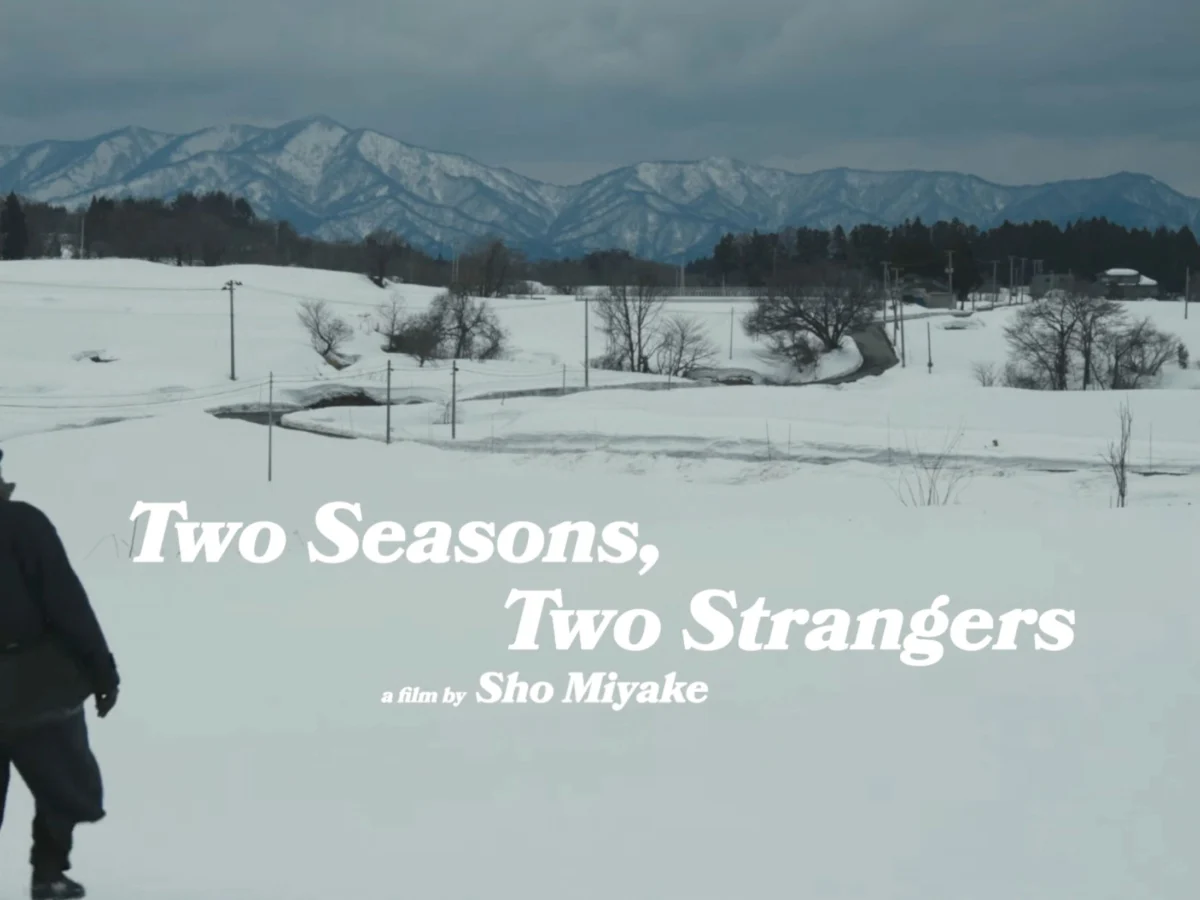
Miyake’s film adapts two of Tsuge’s stories, weaving them into a diptych that explores the emotional landscapes of different seasons. The first segment, set in the summer, follows the characters Nagisa and Natsuo as they navigate an enigmatic encounter by a rainy seaside. The second segment shifts to a winter landscape, where a screenwriter named Li travels to a remote, snow-covered village and finds herself sharing a guesthouse with an innkeeper named Benzo.
The choice to adapt Tsuge is a bold creative move, as his works are often considered "unfilmable" due to their dreamlike logic and atmospheric density. Industry analysts have noted that Miyake successfully translates Tsuge’s "gekiga" (dramatic pictures) aesthetic into a cinematic language that utilizes silence, ambient sound, and long takes to evoke a sense of yearning and existential isolation.

A Dual Narrative of Summer and Winter
The film’s structure is intentionally divided, reflecting the "Two Seasons" of its title. In the summer sequence, Yuumi Kawai (Nagisa) and Mansaku Takada (Natsuo) portray a dynamic defined by what is left unsaid. Their interactions are described as a series of "distant looks and clumsy words," set against the backdrop of a turbulent ocean. This segment captures the fleeting nature of youth and the awkwardness of initial attraction, framed by the sensory intensity of the rainy season.
The winter sequence provides a stark contrast, both visually and tonally. Shim Eun-kyung, playing the screenwriter Li, brings a contemplative depth to a role that requires navigating the quietude of a rural guesthouse. Her interaction with Benzo, portrayed by Shinichi Tsutsumi, form the emotional core of the film’s second half. Despite their "disconnected talks," the two characters embark on a shared journey that explores the possibilities of companionship in the face of individual solitude.
This bifurcated approach allows Miyake to explore how environment and climate dictate human behavior. The "exhilarating complexity" mentioned by early critics stems from the parallels drawn between these two seemingly unrelated stories, suggesting a universal thread of human experience that transcends specific time and place.
The Creative Team and Cast Profiles
The success of Two Seasons Two Strangers is attributed to its high-caliber ensemble cast and a production team that has a history of critical success. Sho Miyake has built a reputation through previous works such as And Your Bird Can Sing (2018), Wild Tour (2019), and the internationally acclaimed Small, Slow but Steady (2022). His 2024 film All the Long Nights further established his ability to handle delicate interpersonal dramas with a rhythmic, almost musical sensibility.
The casting of Shim Eun-kyung is particularly noteworthy. The South Korean actress, who made history as the first non-Japanese performer to win the Japan Academy Film Prize for Best Actress for her role in The Journalist (2019), continues to be a bridge between the two film industries. Her presence in Two Seasons Two Strangers adds a layer of cross-cultural nuance to the role of the screenwriter Li.
Supporting her is Yuumi Kawai, who has rapidly become one of Japan’s most sought-after young actresses following her breakout roles in Plan 75 and A Man. The cast is rounded out by veteran actors Shiro Sano and Shinichi Tsutsumi, providing a grounded, experienced counterpoint to the younger leads. The film is produced by Masayoshi Jonai, a frequent collaborator of Miyake’s who has been instrumental in securing international co-production interest for independent Japanese projects.

Chronology of Production and Release
The timeline of Two Seasons Two Strangers reflects the slow-burn nature of independent cinema distribution:
- Late 2023 – Early 2024: Principal photography takes place in various locations across Japan, capturing the authentic seasonal transitions required for the script.
- August 2025: The film premieres at the Locarno Film Festival, winning the Golden Leopard.
- Late 2025: The film tours the international festival circuit, including screenings in Busan and London, garnering positive reviews for its cinematography and sound design.
- March 2026: Several Futures releases the official US trailer, initiating the domestic marketing campaign.
- Early April 2026: The film headlines the New Directors/New Films Festival in New York City.
- April 24, 2026: The film begins its limited theatrical engagement in major US markets, including New York, Los Angeles, and Chicago.
Industry Implications and Market Analysis
The US release of Two Seasons Two Strangers comes at a time when North American audiences are showing an increased appetite for East Asian cinema. Following the "Parasite effect" and the subsequent success of films like Drive My Car and Monster, independent distributors have become more aggressive in acquiring high-concept Japanese dramas.
Several Futures’ strategy for the film involves targeting art-house audiences who value the "slow cinema" movement. By positioning the film as both an adaptation of a cult manga and a major award winner, the distributor aims to capture two distinct demographics: fans of Japanese pop culture and history, and traditional cinephiles.
Financial projections for limited releases of this nature are typically modest, but the prestige associated with the Locarno win often leads to long-term viability on streaming platforms and physical media. Analysts suggest that Two Seasons Two Strangers could serve as a bellwether for the commercial potential of avant-garde manga adaptations in the West.
Critical and Official Responses
While formal reviews for the US release are embargoed until closer to the April premiere, international critics have already weighed in. The Hollywood Reporter described the film as "a masterful exercise in atmospheric storytelling," while Sight & Sound noted that Miyake "finds the extraordinary in the ordinary, turning brief encounters into monumental shifts in the human spirit."
The Japanese Ministry of Foreign Affairs and various cultural organizations have also noted the film’s success as a positive development for Japan’s cultural diplomacy. By showcasing the works of Yoshiharu Tsuge through a modern lens, Miyake is seen as revitalizing interest in Japan’s mid-century artistic movements for a global 21st-century audience.

The trailer itself emphasizes the film’s poetic nature, featuring the evocative line: "I wonder what the atmosphere would be like to see us walking in the snow from afar." This focus on perspective and "atmosphere" remains central to the film’s identity.
Broader Impact on Independent Cinema
Two Seasons Two Strangers stands as a testament to the enduring power of intimate storytelling in an era often dominated by large-scale franchise entertainment. By focusing on "disconnected talks" and "clumsy words," Sho Miyake challenges the audience to find meaning in the gaps between communication. As the film prepares for its April 24, 2026, debut, it remains a focal point for discussions regarding the future of the Japanese film industry and its ability to export deeply local, yet universally resonant, narratives.
The film’s arrival in US theaters represents not just the culmination of a successful festival run, but a moment of intersection between the surrealist history of Japanese manga and the contemporary evolution of global art-house cinema. For audiences seeking a unique, intimate exploration of relationship and human connection, Two Seasons Two Strangers offers a cinematic experience that is, as the trailer suggests, both simple in its premise and immensely complex in its execution.