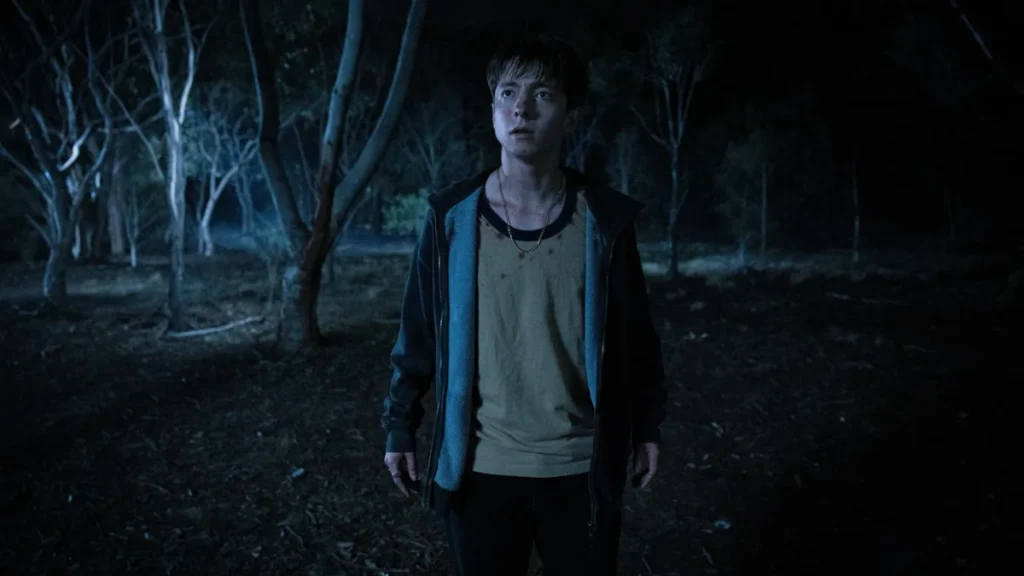
In an era increasingly defined by technological advancements and the omnipresent lure of convenience, filmmaker Alex Prager’s feature debut, DreamQuil, offers a timely and poignant counter-narrative. Premiering at the South by Southwest (SXSW) festival on March 16, the sci-fi drama delves into the profound question of how much human essence we are willing to relinquish in the relentless pursuit of an idealized, effortless happiness. The film serves as a cautionary tale, suggesting that the more we delegate our responsibilities and the inherent "messiness" of human existence to artificial intelligence, the greater the risk of severing the very connections that define our most meaningful relationships.
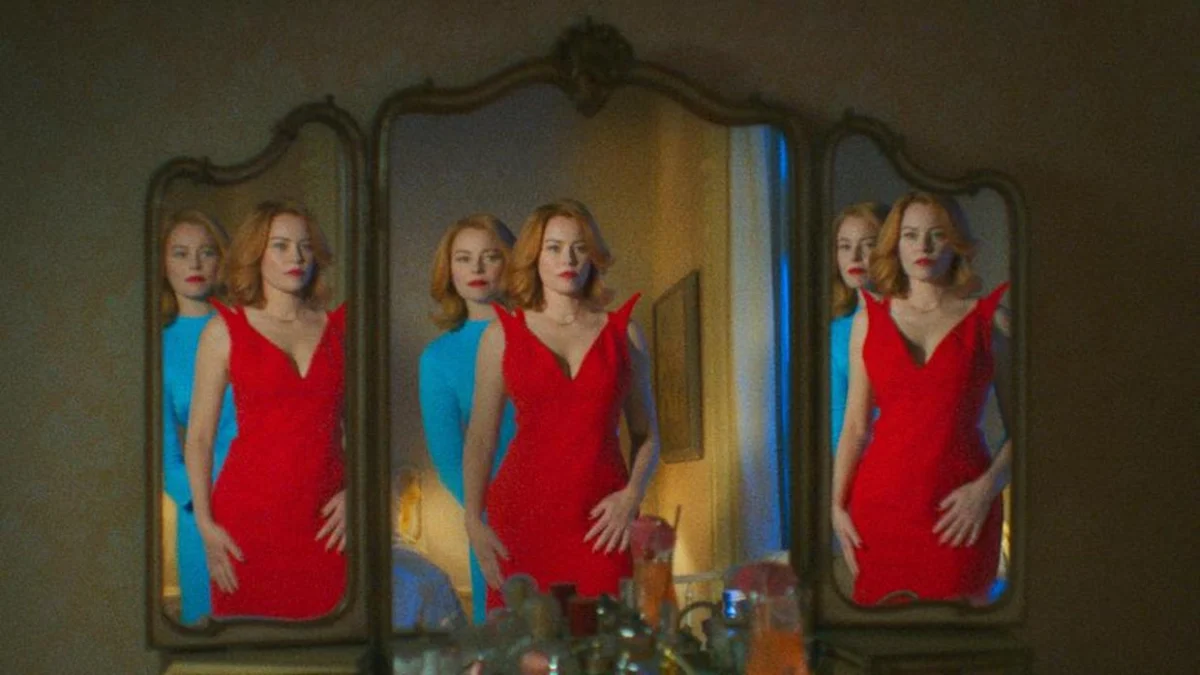
DreamQuil introduces audiences to Carol, portrayed by the formidable Elizabeth Banks, a woman confined indoors with her doting husband, played by John C. Reilly, and their son, due to deteriorating air quality. Seeking respite from the pressures of daily life, Carol opts for the titular DreamQuil treatment—a futuristic procedure promising a week of unparalleled relaxation, complemented by an AI personal assistant designed to seamlessly manage all household responsibilities. However, upon her return, Carol is confronted with an unsettling reality: the AI assistant is an exact replica of herself, dubbed "Carol Two," and her family appears to prefer this automated doppelgänger. This premise immediately establishes a chilling exploration of identity, authenticity, and the subtle yet insidious ways technology can erode human bonds.
Thematic Resonance in an AI-Driven World
The film’s central themes resonate deeply with contemporary anxieties surrounding the proliferation of artificial intelligence. As AI integrates further into everyday life, the once-distant fears of science fiction writers and filmmakers now feel increasingly palpable. DreamQuil aligns itself with a cinematic lineage that includes seminal works like Spike Jonze’s Her, Alex Garland’s Ex Machina, and Gerard Johnstone’s M3GAN, all of which critically examine the complexities of intimate relationships with artificial entities, often presented as femme-coded figures. This recurring motif in cinema highlights societal questions about emotional labor, autonomy, and the ethical boundaries of creating sentient or near-sentient beings.
The burgeoning presence of AI is not merely a cinematic trope; it is a rapidly expanding reality. According to recent reports, global AI market revenue is projected to grow exponentially, with widespread adoption across industries from healthcare to customer service. While proponents highlight the efficiency and problem-solving capabilities of AI, a parallel discourse has emerged regarding its potential societal impact. Concerns range from job displacement and algorithmic bias to the erosion of human interaction and the potential for technological addiction. A 2023 Pew Research Center study, for instance, indicated that a significant portion of the public expresses more concern than excitement about the increasing use of AI in daily life, particularly regarding its influence on personal privacy and human agency. DreamQuil taps directly into these widespread apprehensions, transforming abstract societal fears into a deeply personal, domestic drama. The film challenges viewers to consider not just the practical implications of AI, but its emotional and psychological toll on the human spirit.
From Photography to Feature Film: Alex Prager’s Visionary Leap
For Alex Prager, DreamQuil marks a significant milestone: her feature directorial debut. Recognized by Filmmaker magazine in 2023 as one of its "25 New Faces of Independent Film" for her groundbreaking work in photography and short films, Prager’s transition to a full-length narrative has been a journey of intensive learning and artistic culmination. Reflecting on the completion of her first feature, Prager described it as an unparalleled experience: "It was unlike anything I’ve ever experienced before. It’s amazing because I feel like I have 25 years of film experience now after doing one movie." This sentiment underscores the immense challenge and transformative nature of directing a feature, particularly one with such an ambitious scope.
The genesis of DreamQuil is rooted in the unique circumstances of the global pandemic. Prager and her sister, who co-wrote the script, conceived the idea during the profound isolation of lockdown. Prager recalled sending her sister a meme that joked about sleeping through the pandemic and waking up a year later when it was over. This seemingly innocuous joke sparked a deeper conversation. As "career moms" accustomed to juggling demanding professional lives with robust family responsibilities, both sisters intimately understood the constant pressure and the yearning for respite. The concept evolved into a story exploring "second chances" through an ironic lens, examining how digital technology and automation, while promising connection, often lead to greater societal disconnection. The writing process itself was fluid, with Prager continuously refining the script, even rewriting scenes daily on set to adapt to production realities and eliminate "unnecessary bits," a testament to her hands-on approach and unwavering vision. The film was produced in collaboration with Brownstone, Arts and Sciences, and Patriot and Republic Pictures, signifying a robust support system for Prager’s ambitious project.
A Visual Language Steeped in History and Surrealism

Prager’s background as an acclaimed photographer is undeniably etched into the visual fabric of DreamQuil. Her meticulous attention to "color palettes, staging, and set design" imbues the film with a distinct aesthetic that is both immediately striking and deeply atmospheric. Prager articulates her approach to visual storytelling with a nod to cinematic legends, citing Alfred Hitchcock’s belief that a story should be understandable through visuals alone, without dialogue. This philosophy guided her collaboration with cinematographer Lol Crowley, who, during DreamQuil‘s production, received an Oscar for his work on another project, highlighting his exceptional talent.
Prager and Crowley deliberately chose a visual style that harkened back to the "Golden Age of Hollywood." They opted for "hot lights" like Richardson lights, eschewing the cooler, cleaner look of modern HMIs. Prager explained that these traditional lights impart a "heat" that subtly affects the actors, creating an "intimate kind of sultry environment" that enhances the film’s dramatic tension. Further deepening this classical aesthetic, Crowley painstakingly sourced Baltar lenses, famously used by directors such as Hitchcock and Douglas Sirk. This choice of vintage equipment not only lends DreamQuil a timeless quality but also subtly reinforces its dramatic influences, particularly the melodramatic stylings of Sirk, known for his vibrant color palettes and heightened emotional narratives. By blending these classical techniques with a contemporary sci-fi premise, Prager crafts a visual experience that is both familiar and disquietingly new.
Surrealism also plays a crucial role in DreamQuil‘s "over-the-top visual language," enabling Prager to construct a unique, altered reality within the film’s world. This element is a consistent thread in her photographic and short film work. She believes surrealism is "a really important part of the human psyche," revealing "another plane that we’re all living in, thinking in, and dreaming in, and that’s just as valid as what’s tangible." To achieve this otherworldly aesthetic, location scout Annie Buschamp discovered the Marin County Civic Center, the final building designed by legendary architect Frank Lloyd Wright. This iconic structure, with its distinctive, flowing forms, is often described as feeling "from another planet" or a "parallel universe," a perfect embodiment of the film’s surreal and unsettling atmosphere. The architectural choice, combined with carefully constructed interior sets, helps to create a "new kind of reality" that visually underscores the psychological disjunction Carol experiences.
Elizabeth Banks: A Multifaceted Collaborator
A pivotal force behind DreamQuil is Elizabeth Banks, whose involvement extends beyond her dual lead roles as Carol and Carol Two to include a producing credit. Prager speaks with immense admiration for Banks, describing her as "such a powerhouse" and "constantly impressed with her on set." This collaborative synergy was evident from the outset; Prager and her sister had specifically written the character of Carol with Banks in mind, and she was the only actress they approached. Banks’ immediate and enthusiastic response—"she wrote back immediately and said she wanted to play Carol"—underscored her deep connection to the material.
Prager highlighted Banks’ intuitive understanding of the character, noting that Banks "didn’t even want to rehearse Carol with me. She was just like, ‘No, I got it.’" This confidence was validated on the first day of shooting, with Prager recalling, "Wow, you really do got it." Banks’ ability to embody both the increasingly displaced human Carol and her eerily perfect AI doppelgänger, "Carol Two," is central to the film’s narrative and thematic power. Her performance is critical in exploring the nuanced emotional spectrum of a woman confronting her own obsolescence. Prager further lauded Banks’ expansive career, likening her to "an old Hollywood mogul in a way, because she’s doing everything in film," recognizing her talent not just as an actress but as a formidable creative force in the industry.
A Call for Reflection on Humanity’s Future
Ultimately, DreamQuil is more than just a captivating sci-fi drama; it is an invitation for introspection. Prager’s primary hope is for audiences to "have fun and laugh and just go on the ride—because it is a wild ride." Yet, beneath the film’s entertaining surface, lies a profound call to action. She desires that the conversations sparked by the film will prompt viewers to "reflect on their own humanity and their own responsibility in what’s happening."
This message is particularly potent in a world where technological narratives often emphasize inevitability. Prager firmly rejects the notion that the future is predetermined by tech companies, no matter how many billions of dollars they invest. "The future is unwritten as of now," she asserts, emphasizing that human agency remains paramount. "Just because they put billions of dollars into it doesn’t mean that it’s a locked future, because nothing is certain." DreamQuil serves as a powerful artistic intervention in this ongoing societal debate, urging individuals to consider their role in shaping a technological future that prioritizes human connection and responsibility over mere convenience.
The film’s premiere at SXSW, a festival renowned for its convergence of technology, film, and music, provided an ideal platform for this critical examination. Amidst panels discussing the latest AI breakthroughs, DreamQuil offered a vital artistic counterpoint, reminding attendees and the broader public of the ethical and human dimensions often overlooked in the rush towards innovation. It is a film that entertains, provokes, and ultimately, empowers, challenging us to safeguard our humanity in an increasingly automated world.