A Deep Dive into Kaki Wong’s Experimental Vision
The film introduces viewers to the loosely intertwined lives of four protagonists – Shin, Melih, Tang Tao, and Ping – as they navigate a crowded metropolis, each immersed in their own states of recollection, mourning, or stupor. Director Kaki Wong, in their first full-length feature, employs a free-flowing narrative that deliberately blurs the lines between reality, fantasy, and memory. The overarching theme explores urban solitude and the individual’s struggle for connection within an isolating environment.
Wong’s artistic intent appears to be a radical departure from conventional storytelling, prioritizing mood and visual texture over linear plot development. The film’s structure, or lack thereof, has been a central point of contention among critics and audiences alike. While some interpret this approach as a bold, refreshing take on cinematic expression, others find it an obstacle to meaningful engagement. The film’s aesthetic choices, characterized by rich visual design, unusual frames captured by cinematographer Ka Hei Tang, and bold editing, undoubtedly create a distinctive atmosphere. However, these elements, while striking, often serve to highlight the film’s perceived shortcomings in narrative coherence and character development.
Influences and Divergences: The Shadow of Taiwanese New Wave
A prominent aspect of "I Heard That They Are Not Going to See Each Other Anymore" is its clear inspiration from Taiwanese New Wave Cinema. This influence is discernible across several dimensions, including the overall aesthetics, deliberate pacing, contemplative camerawork, and the recurring themes of urban alienation and existential introspection. Directors like Hou Hsiao-Hsien and Edward Yang, stalwarts of the Taiwanese New Wave, are known for their minimalist narratives, long takes, and profound exploration of societal changes and individual struggles in modern Taiwan.
Wong attempts to channel this legacy, particularly in the film’s visual language and its focus on character interiors rather than external action. The quiet observations of everyday life, the lingering shots of cityscapes, and the pervasive sense of melancholy are all hallmarks inherited from this cinematic tradition. However, critical analysis suggests that while Wong successfully emulates the form of the Taiwanese New Wave, the film struggles to capture its profound substance. Critics argue that where the masters of the New Wave achieved lyricism through subtle storytelling and deep character insight, Wong’s film often mistakes vagueness for profound poetry. Similarly, what might be intended as absurdist humor or profound mystery can, in practice, come across as nonsensical or banal, respectively. This perceived misinterpretation of influences ultimately undermines the film’s potential to resonate as deeply as its predecessors.
The Narrative Challenge: An Obstacle Course for the Viewer
At the core of the critical discourse surrounding "I Heard That They Are Not Going to See Each Other Anymore" is its storytelling. The film’s narrative is described as a meandering journey, shifting between its protagonists without providing sufficient context or development. The characters, despite frequently engaging in extensive monologues, remain largely opaque. They function as "walking vague-posters," discussing the aftermath of their life choices or emotional states without offering the viewer insight into the actual events or motivations that shaped them.
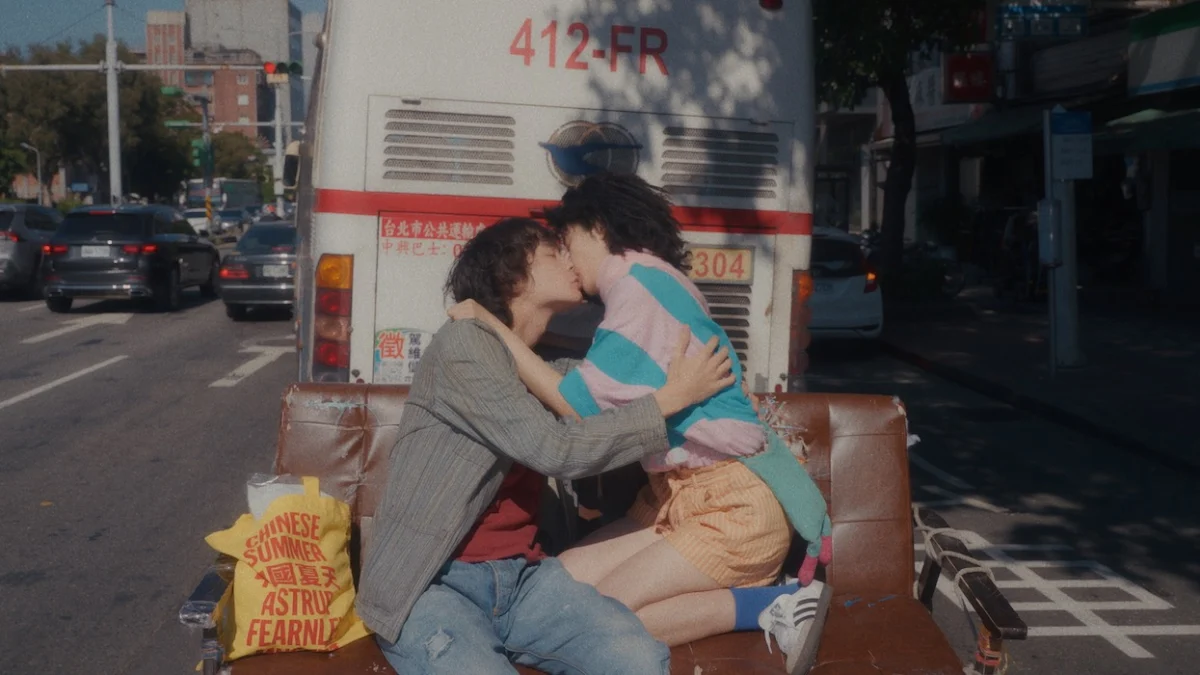
This approach means that traditional character development is largely absent, replaced instead by scenes of protagonists displaying sadness, confusion, or eccentricity directly to the camera. While some might defend this as an embrace of "absurdism," many critics contend that it feels more like a convenient justification for a lack of narrative purpose. For instance, visually compelling scenes, such as a woman driving a scooter through the bustling streets of Taipei, initially capture attention but ultimately fail to compel because they do not contribute to any discernible narrative progression or character arc.
Furthermore, the film incorporates meta-cinematic elements, with characters occasionally breaking the fourth wall, staring directly into the camera, or even addressing the director for instructions. While such techniques can be powerful tools for introspection or deconstruction in cinema, in Wong’s film, they are often perceived as disorienting interruptions that pull the viewer out of any nascent immersion without offering a compensatory layer of meaning or critical commentary. One particularly telling exchange involves a protagonist being questioned by the director about what they discarded in the trash, to which they reply, "My life." This "Coelhoesque" claim, despite its evocative potential, remains unexplained and abstract, leaving the audience without a clear understanding of its significance.
Production Timeline and Festival Circuit
"I Heard That They Are Not Going to See Each Other Anymore" began its journey as a highly independent production. Principal photography, primarily shot on location in Taipei, reportedly spanned several months in late 2022, utilizing a lean crew and a cast of relatively unknown actors. Post-production, which involved extensive experimental editing and sound design, extended into mid-2023.
The film’s initial exposure came on the international film festival circuit. It premiered at a niche, experimental film festival in Europe in late 2023, where it was met with a mixed, albeit often passionate, reception. While it did not secure any major awards, its screening sparked numerous discussions about the boundaries of cinematic art and narrative convention. Subsequent screenings at other independent festivals garnered similar reactions, solidifying its reputation as a divisive work that challenged audience expectations. Its limited theatrical release, primarily in arthouse cinemas in select Asian and European cities in early 2024, was accompanied by a modest marketing campaign targeting cinephiles and enthusiasts of avant-garde cinema.
The Hybridity Question: Fact, Fiction, or Both?
A significant tension within "I Heard That They Are Not Going to See Each Other Anymore" arises from its ambiguous hybridity. The film deliberately blurs the distinction between fact and fiction, leaving viewers uncertain about what proportion of the content is documentary versus staged narrative. While the overall aesthetic and performances often feel highly staged and unnatural, the director’s occasional direct interaction with the characters, or the characters’ seemingly unscripted monologues, introduce elements reminiscent of documentary filmmaking.
The label of "hybrid film" has gained prominence in contemporary cinema, often used to describe works that combine elements of documentary and fiction to create new forms of storytelling, frequently exploring themes of identity, memory, and reality in innovative ways. However, in the case of Wong’s film, critics argue that this hybridity, rather than enriching the experience, adds another layer of inscrutability. The film is neither accessible as a conventional fictional narrative, nor does it reveal compelling insights or information typically expected from a documentary. This ambiguity, while potentially an artistic statement, ultimately contributes to the film’s perceived inaccessibility, leading to the conclusion that the "hybrid" label, in this instance, does little to clarify or enhance the viewer’s understanding or engagement.
Technical Acumen Versus Narrative Engagement
Despite its narrative shortcomings, the film’s technical execution often receives commendation for its boldness and distinctiveness. Cinematographer Ka Hei Tang’s work is particularly noted for its unusual frames and striking visual compositions, which contribute significantly to the film’s mood-board aesthetic. The editing choices are similarly bold, employing jarring cuts and non-linear sequences that further enhance the sense of fragmentation and disorientation. The performances, often described as "over-the-top," align with the film’s experimental nature, with actors embodying characters who are intentionally stylized and often verge on the theatrical.
The film is replete with visually interesting elements: evocative gags, subtle optical illusions, and bold location choices that perfectly set a scene. Wong demonstrates a clear aptitude for creating compelling imagery and a distinctive atmosphere. However, this visual prowess often operates in isolation from a coherent narrative. The film successfully "sets the scene" repeatedly, yet the "story never truly arrives." This creates a dissonance where the film functions effectively as an exercise in visual artistry and atmospheric creation but fails to translate these elements into an immersive or emotionally resonant narrative experience.
Broader Implications for Experimental Cinema
"I Heard That They Are Not Going to See Each Other Anymore" serves as a potent case study in the ongoing discourse surrounding experimental and avant-garde cinema. It highlights the fine line between artistic innovation and audience alienation. While the freedom to explore unconventional forms and challenge narrative norms is crucial for the evolution of cinema, this film exemplifies the risk that such explorations, without a grounding in accessible thematic resonance or a compelling structural logic, can become insular and frustrating for even adventurous viewers.
The film’s reception underscores the perennial challenge for experimental filmmakers: how to push boundaries without entirely losing the audience. It prompts questions about the fundamental purpose of filmmaking – is it primarily an exercise in image-making and aesthetic exploration, or must it always, at its core, be a form of storytelling that invites the viewer into a world, however idiosyncratic?
Director Kaki Wong’s Future Trajectory
For Kaki Wong, "I Heard That They Are Not Going to See Each Other Anymore" represents a significant, albeit polarizing, debut. It firmly establishes Wong as an image-maker with a distinctive visual style and a willingness to defy cinematic conventions. The critical reception, while often harsh regarding narrative, consistently acknowledges the film’s visual richness and audacious spirit.
Looking ahead, Wong faces the challenge of refining their artistic approach. The film demonstrates a clear potential for visual poetry and atmospheric storytelling. The next step for Wong might involve integrating this visual prowess with a more developed understanding of narrative engagement, even within an experimental framework. This could mean finding new ways to convey character depth and thematic meaning without sacrificing the unique aesthetic that defines their work. The film’s divisive nature ensures that Kaki Wong is a director to watch, for better or worse, as the cinematic world anticipates how their audacious vision will evolve in future projects.