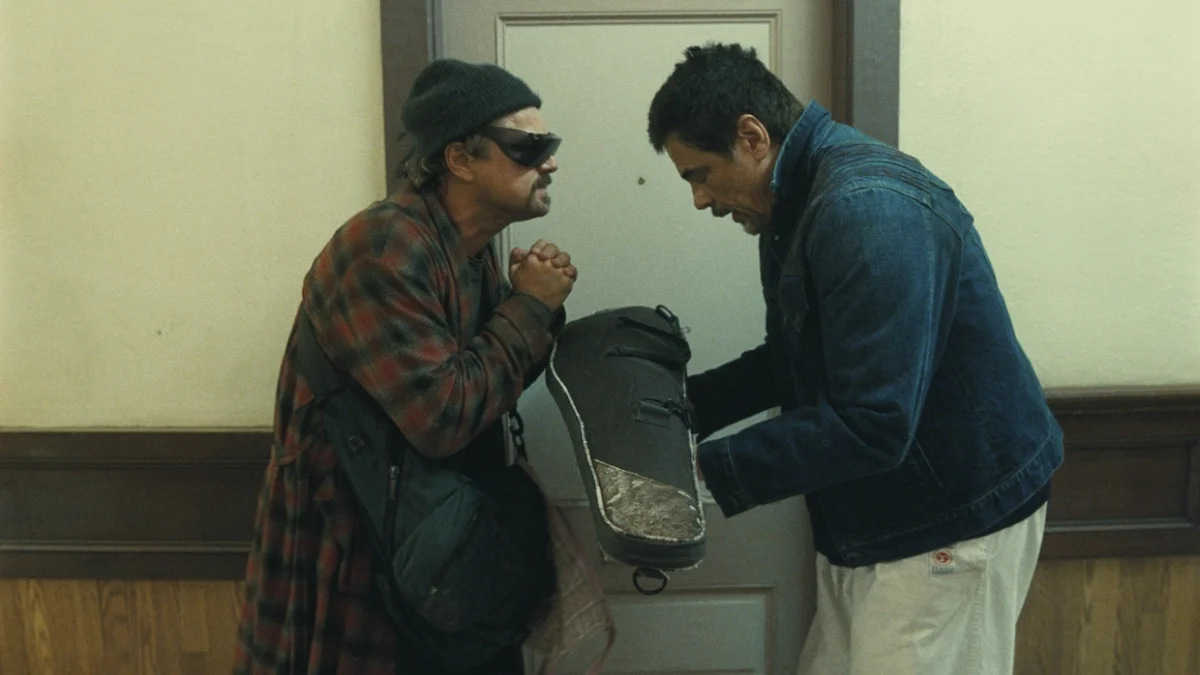
The Academy Awards ceremony culminated in a momentous night for cinematic achievement, with Paul Thomas Anderson’s critically acclaimed epic, One Battle After Another, sweeping the major categories and securing six coveted Oscars, including the prestigious Best Picture, Best Director for Anderson himself, Best Supporting Actor for Sean Penn, Best Adapted Screenplay, Best Film Editing, and Best Casting. This monumental victory marks Anderson’s first competitive Oscar win after a distinguished career spanning ten feature films and multiple previous nominations, solidifying his status as a master filmmaker finally recognized by the Academy’s highest honors.
A Decennial Triumph: Anderson’s Journey to Best Picture
For over two decades, Paul Thomas Anderson has been a distinctive voice in American cinema, celebrated for his intricate narratives, profound character studies, and visually arresting style. His journey to this watershed moment has been paved with critical adoration and a loyal following, but the elusive golden statuette had remained just out of reach, despite previous nominations for films like There Will Be Blood, Magnolia, and Phantom Thread. With One Battle After Another, Anderson not only delivered a film that resonated deeply with both critics and audiences but also managed to rally significant industry support, culminating in this unprecedented triumph. The film, a sprawling narrative exploring themes of resilience, conflict, and the human spirit, had been a frontrunner throughout the awards season, demonstrating a consistent appeal across various guilds and critics’ circles. Its victory in Best Picture, the culmination of a night of steady wins, was met with thunderous applause, marking a defining moment in Anderson’s illustrious career.
Accepting the top prize alongside producer Sara Murphy, Anderson delivered a poignant speech that underscored the subjective nature of artistic excellence. He invoked the memory of five iconic Best Picture nominees from half a century prior – Stanley Kubrick’s Barry Lyndon, Sidney Lumet’s Dog Day Afternoon, Steven Spielberg’s Jaws, Robert Altman’s Nashville, and Miloš Forman’s One Flew Over the Cuckoo’s Nest. "There is no best among them," Anderson stated, reflecting on the enduring power of cinema. "There is just what that mood might be that day." His remarks highlighted the rich tapestry of cinematic history that continues to inspire contemporary filmmakers, and indeed, remnants of those legendary films could be discerned in the diverse slate of ten pictures competing for the top honor tonight, showcasing the vibrant evolution of storytelling.
"Sinners" Shines with Historic Cinematography and Breakthrough Actor Win
While One Battle After Another dominated the night’s top honors, Ryan Coogler’s ambitious drama, Sinners, also left an indelible mark on the Academy’s record books. Entering the ceremony with a formidable 16 nominations – a staggering figure that placed it among the most nominated films in Oscar history, a feat comparable to classics like All About Eve and La La Land – Sinners ultimately secured four significant awards. These included Best Original Score for the prodigious Ludwig Göransson, who now adds a third Oscar to his growing collection, and Best Original Screenplay for Coogler, recognizing his masterful storytelling.
Perhaps the most historic win for Sinners came in the Best Cinematography category, where Autumn Durald Arkapaw made history as the first woman ever to win the award. Her stunning visual work on Sinners captivated audiences and critics alike, employing a rich palette and dynamic compositions that perfectly complemented the film’s intense narrative. Arkapaw’s groundbreaking achievement stands as a powerful testament to the increasing recognition of female talent in historically male-dominated craft categories within the film industry, following in the footsteps of pioneers like Rachel Morrison, who was the first woman ever nominated in the category for Mudbound. Her victory sends a resounding message about diversity and inclusion, inspiring a new generation of female cinematographers.
Furthermore, Sinners star Michael B. Jordan clinched the Best Actor award, marking his first Oscar nomination and win. Jordan’s victory was one of the most hotly contested races of the season, with industry pundits and awards strategists debating for weeks over a formidable field that included seasoned veterans like Leonardo DiCaprio and Wagner Moura, as well as rising star Timothée Chalamet. Jordan’s compelling performance, which had previously earned him the top acting prize at the Actor Awards just weeks prior, seemingly propelled him to the forefront. The standing ovation he received from his peers underscored the immense goodwill he has garnered throughout his career. At 39, Jordan, a former child actor who has meticulously built a career characterized by diverse and challenging roles, is now recognized as a veteran talent, his Oscar cementing his place among Hollywood’s leading men.
Acclaimed Actresses: Buckley’s "Hamnet" and Madigan’s "Weapons" Triumph
The Best Actress category saw a more predictable, yet no less celebrated, outcome with Jessie Buckley earning the statuette for her compelling performance in Hamnet. The Irish actress’s win capped off a remarkable awards season during which she collected numerous trophies for her nuanced portrayal. While Hamnet secured only this singular win, it represented an impressive continuation for director Chloé Zhao, who already boasts two Oscars for Nomadland. Zhao has now directed two different actresses to Best Actress Oscars, a rare and remarkable feat that speaks to her profound ability to draw extraordinary performances from her collaborators.
Earlier in the evening, the Best Supporting Actress category delivered one of the night’s most delightful and unexpected moments, with Amy Madigan winning for her role in the horror film Weapons. This victory, celebrated by many as a true "Oscar moment," saw an industry legend recognized for a surprising turn in a genre film. Her win immediately drew comparisons to Ruth Gordon’s iconic supporting actress win for Rosemary’s Baby, highlighting the Academy’s appreciation for veteran performers delivering fresh and impactful work. Madigan’s acceptance speech was a charmingly eccentric affair that set a lighthearted tone for the rest of the night. "I was in the shower last night trying to think of something to say as I was shaving my legs," Madigan quipped, eliciting laughter from the audience. "And I went, ‘[I’ll] have pants on, I don’t have to worry about that.’" Her candid humor resonated widely, showcasing the genuine joy and humility often found in these unexpected triumphs.
Sean Penn’s Absence and the Political Undercurrents

Sean Penn’s win for Best Supporting Actor in One Battle After Another marked his third career Oscar, adding to his two previous Best Actor prizes for Milk and Mystic River. However, Penn was conspicuously absent from the ceremony, a decision that underscored his often-skeptical stance towards awards show pageantry. Notably, Penn had previously gifted his Mystic River Oscar to Ukrainian President Volodymyr Zelensky, a powerful gesture that signaled his dedication to humanitarian causes over industry accolades. His non-attendance, coupled with his minimal engagement in the traditional awards campaigning circuit, offered a subtle challenge to the conventional wisdom of awards strategists, suggesting that genuine artistic merit and public good can sometimes supersede the meticulously planned campaigns that often define awards season. This could potentially influence how stars of his stature approach future awards cycles, prioritizing their craft and causes over promotional obligations.
The political dimension of the evening extended beyond individual choices. Javier Bardem, while presenting the International Feature nominees, unexpectedly interjected an unscripted message, declaring "No to war, and free Palestine," which was met with a mix of cheers and a palpable shift in the atmosphere, reflecting ongoing global geopolitical tensions.
"Mr. Nobody Against Putin" Secures Upset in Documentary Feature
One of the most significant upsets of the night occurred in the Best Documentary Feature category, where Mr. Nobody Against Putin unexpectedly triumphed over the heavily favored The Perfect Neighbor. The latter had garnered significant buzz and critical acclaim throughout the season, leading many to predict its victory. However, Mr. Nobody Against Putin‘s win underscored the powerful influence of current geopolitical events on Academy voters. As one industry analyst noted prior to the ceremony, the film’s title alone, with its direct anti-Russia stance, likely resonated deeply with a segment of the Academy, particularly European voters or those inclined to vote based on immediate relevance and political messaging, even if they hadn’t thoroughly viewed all nominees. The film’s victory produced one of the more overtly political acceptance speeches of the evening, highlighting the role of cinema as a platform for global commentary and activism.
Studio Performance: Warner Bros. Leads, Netflix Holds Its Ground
In terms of overall studio performance, Warner Bros. emerged as the dominant force, accumulating an impressive total of 11 Oscars across its three major contenders. This demonstrated the studio’s strategic slate and successful campaigning efforts. Netflix, the streaming giant, also managed to maintain a significant presence, securing a trio of craft wins for Frankenstein in Costume Design, Makeup and Hairstyling, and Production Design. The streamer further added two awards for KPop Demon Hunters, recognizing its achievement in Best Animated Feature and Best Original Song for "Golden." Netflix also celebrated victories in the short film categories, with The Singers tying for Best Live-Action Short (a rare occurrence that surprised many Oscar pool participants globally, alongside Two People Exchanging Saliva) and another win for Best Documentary Short. Despite these successes, there were likely some lingering disappointments within Netflix regarding the Best Documentary Feature outcome, especially given the widespread expectation for The Perfect Neighbor to win.
Other notable single Oscar winners included F1 for Best Sound, recognizing its immersive audio landscape, and Avatar: Fire and Ash for Best Visual Effects, a win fittingly presented by franchise star Sigourney Weaver in a heartwarming moment. The Girl Who Cried Pearls claimed the Best Animated Short Oscar, while Sentimental Value secured the highly competitive International Feature Oscar, a category that featured an unusually strong lineup of four NEON-distributed contenders, all of which had received multiple nominations.
A Mixed Bag: The Ceremony’s Production and Performances
The broadcast itself began with a high-energy bang, as host Conan O’Brien donned his Aunt Gladys drag for a comedic opening sequence, chased through various parody clips of Best Picture nominees by an army of children. However, the initial momentum proved difficult to sustain. O’Brien’s subsequent monologue, while featuring moments of his signature wit, included a few bits that didn’t quite land, setting the tone for an overall messy awards show. Technical mishaps, including microphone issues and awkwardly abrupt cuts to commercial breaks during acceptance speeches, plagued the evening. Bizarre camera angles from the audience frequently interrupted the flow, leaving many viewers feeling disconnected.
The emotional In Memoriam segment, a perennial highlight, paid tribute to beloved industry figures. Billy Crystal honored Rob Reiner, Rachel McAdams remembered Diane Keaton, and Barbra Streisand eulogized Robert Redford, culminating the package with a moving performance of her Oscar-winning classic, "The Way We Were." However, even this poignant moment was undercut by persistent sound problems, diminishing its intended impact. It is unlikely that the show’s production will earn an Emmy nomination this year, a stark contrast to the often meticulously choreographed broadcasts of past years.
Further adding to the show’s perceived shortcomings was the limited number of musical performances. Despite five songs being nominated, only two were featured: KPop Demon Hunters‘s energetic "Golden" and Sinners‘s soulful "I Lied to You." Both performances were exceptionally well-executed, yet the decision to exclude the other three nominees, with instructions to "scan a QR code during the commercial break" to hear them, left many feeling that the show’s producers had arbitrarily decided only two were worthy of a live audience presentation. This choice sparked considerable discussion among viewers and industry observers, raising questions about the show’s priorities and respect for all nominated works.
Reflecting on a Season and Looking Ahead
As the curtains closed on this year’s Academy Awards, the inevitable post-show discourse has already begun. While there will be plenty of analysis and critique in the days and weeks to come, the general sentiment is that it was a long, yet ultimately rewarding, awards season with a fairly good outcome. Paul Thomas Anderson’s long-awaited recognition, the historic wins for Autumn Durald Arkapaw and Michael B. Jordan, and the surprising documentary upset provided ample talking points. As the industry’s big players celebrate their victories and perhaps take a well-deserved day off, the relentless cycle of cinema continues. The next Oscar season is already looming, with new films emerging and new narratives beginning to take shape, ensuring that the conversation around cinematic excellence and recognition never truly ends.