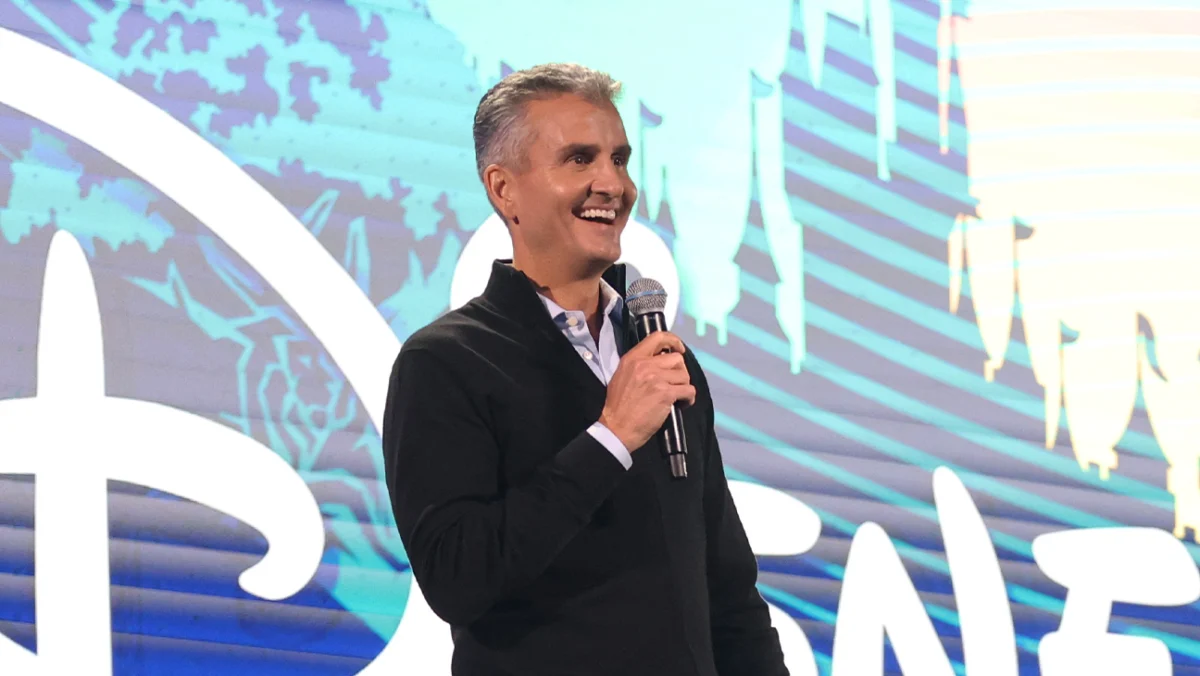
In a definitive shift for the world’s most iconic entertainment conglomerate, Josh D’Amaro used his first public address as Chief Executive Officer of The Walt Disney Company to signal a new era of aggressive integration and technological evolution. Speaking to shareholders during a pivotal Wednesday meeting, D’Amaro did not hesitate to draw a sharp contrast between Disney’s current trajectory and the perceived instability of its primary competitors in the media and streaming landscapes. The address served as both a victory lap for the structural foundations laid by his predecessor, Bob Iger, and a manifesto for a "One Disney" philosophy designed to consolidate the company’s vast assets into a single, seamless consumer ecosystem.
A Category of One: Asserting Market Dominance
The core of D’Amaro’s message centered on the concept of Disney as an entity without peers. He addressed the industry-wide volatility that has seen legacy studios scrambling to merge and digital platforms struggling to maintain cultural relevance. "Simply put, while others in our industry are consolidating just to compete, or struggling to be relevant in a fragmented and disrupted world, Disney is in a category of one poised to accelerate into our next era of innovation and growth," D’Amaro told the assembly.
This rhetoric arrives at a time of significant upheaval for Disney’s rivals. Paramount Global has been the subject of intense merger scrutiny, seeking to find stability through a potential deal with Skydance or other suitors, while Warner Bros. Discovery continues to navigate the complexities of its massive debt load and the integration of its Max streaming platform. Meanwhile, NBCUniversal’s Peacock remains in a growth phase, still seeking the scale necessary to rival the industry leaders. By framing Disney as a "category of one," D’Amaro is leaning into the company’s unique "flywheel"—a business model where films, television, theme parks, and consumer products all serve to reinforce and monetize the same intellectual property (IP).
The Evolution of Disney+ into a Digital Portal
Perhaps the most significant strategic shift detailed in the address is the transformation of Disney+. No longer viewed merely as a repository for movies and television shows, the platform is being reimagined as the "digital centerpiece" of the entire corporation. D’Amaro described a vision where Disney+ serves as a comprehensive portal connecting storytelling, physical experiences, gaming, and interactive media.
"Disney+ will continue to evolve beyond a traditional streaming service to become the digital centerpiece of our company—a portal that connects our stories, experiences, games, films, and more in entirely new ways," D’Amaro explained. He emphasized that the company is moving rapidly to finalize the unification of Disney+ and Hulu into a single app experience. This integration, expected to be fully realized later this year, is designed to reduce churn, increase engagement time, and provide a more robust advertising environment.
The technical evolution of the platform is already underway. Earlier this month, Disney+ introduced vertical video capabilities, a move interpreted by industry analysts as a gateway to creator-led content and social-media-style engagement. Furthermore, the company confirmed plans to eventually integrate AI-generated video tools, such as OpenAI’s Sora, to enhance the platform’s interactive potential. This shift suggests that Disney is looking to compete not just with Netflix, but with the "attention economy" dominated by platforms like TikTok and YouTube.
The Financial Foundation and the Iger Legacy
D’Amaro’s roadmap is built upon the "fortification" efforts led by Bob Iger since his return to the CEO role in late 2022. Iger’s second tenure was defined by a rigorous focus on cost-cutting—aiming for $7.5 billion in savings—and a pivot toward streaming profitability. D’Amaro acknowledged these achievements as the bedrock of his own strategy.
"When Bob returned to the company a few years ago, his goal was to fortify our business and lay the groundwork for long-term growth, by reigniting creativity and improving performance at our studios, building a robust and profitable streaming business, transforming ESPN for a digital future, and turbocharging our parks and experiences," D’Amaro said. He asserted that these goals have largely been met, allowing the company to operate from a position of financial strength.
Data supports this claim of a turnaround. In recent quarterly earnings, Disney’s combined streaming businesses (Disney+, Hulu, and ESPN+) reported their first profitable quarter, a milestone that had eluded the company since the launch of Disney+ in 2019. Additionally, the Parks, Experiences, and Products division continues to be a primary revenue driver, contributing billions in operating income even as the media side of the business navigates the transition from linear television to digital.
Chronology of the Disney Transition (2022–2024)
To understand the weight of D’Amaro’s comments, one must look at the timeline of events that led to this transition:
- November 2022: Bob Iger returns as CEO, replacing Bob Chapek, with a mandate to restore creative excellence and financial discipline.
- February 2023: Iger announces a massive restructuring, dividing the company into three segments: Disney Entertainment, ESPN, and Disney Parks, Experiences, and Products.
- Late 2023: Disney begins the "Beta" launch of Hulu on Disney+ for bundle subscribers in the United States.
- Early 2024: Disney announces a $1.5 billion investment in Epic Games, signaling a massive push into the gaming space and the creation of a "persistent universe" tied to Disney IP.
- Mid-2024: Josh D’Amaro is officially elevated to the CEO role, marking the first time a leader from the Parks and Experiences division has taken the helm of the entire company.
- Wednesday’s Shareholder Meeting: D’Amaro delivers his first public address as CEO, outlining the "One Disney" vision.
The Power of IP: Theatrical Slate and the Pixar Renaissance
A central pillar of the "One Disney" strategy is the continued dominance of the global box office. D’Amaro used the shareholder meeting to reinforce the company’s commitment to its most valuable franchises, highlighting the role of Pixar in the company’s historical and future success.
"There’s no better example than Toy Story," D’Amaro noted, referencing the 30-year legacy of the franchise. He confirmed that Toy Story 5 is scheduled for a June 2026 theatrical release, describing it as a brand-new story designed to be as relevant as the original. In a move that delighted investors looking for long-term stability in the film slate, D’Amaro also announced two major theatrical dates:
- Lilo & Stitch (Live-Action): Set to debut on May 26, 2028.
- The Incredibles 3: Set to debut on June 16, 2028.
These announcements underscore Disney’s strategy of leaning into established "mega-franchises" that can be leveraged across the entire ecosystem—from cruise ships and theme park attractions to consumer products and streaming spin-offs.
Analysis: Implications of the "One Disney" Approach
Industry analysts suggest that D’Amaro’s "One Disney" framing is more than just a marketing slogan; it is a defensive and offensive maneuver in a crowded market. By integrating the various divisions, Disney aims to create a "locked-in" consumer experience. For example, a user watching an Incredibles movie on Disney+ could receive personalized notifications for Incredibles-themed merchandise or discounts on a trip to Pixar Pier at Disney California Adventure.
However, this level of integration also presents challenges. Critics of the "unified experience" point to the potential for a "walled garden" that may feel overly commercialized to some segments of the audience. Furthermore, the reliance on AI tools like Sora and the push into vertical video represent a gamble on the future of media consumption that may alienate traditionalists who value the cinematic experience above all else.
Despite these risks, the market reaction to D’Amaro’s address has been largely positive. Investors have long called for a clearer successor to Iger who understands both the creative and operational sides of the business. D’Amaro’s background in Parks—where he oversaw the successful launch of Star Wars: Galaxy’s Edge and managed a global workforce of over 150,000—provides him with a unique perspective on "immersive storytelling" that his predecessors from the television or finance sectors lacked.
Looking Ahead: A Global and Personalized Future
As Disney moves toward the latter half of the decade, the focus remains on global expansion and personalization. D’Amaro reiterated the company’s intent to continue investing in international markets to ensure Disney+ remains a "truly global platform." The goal is to deliver a more connected, personalized, and immersive experience to consumers, regardless of where they are or how they choose to engage.
"The heart of that relationship is—and it will always be—our storytelling," D’Amaro concluded. By positioning the company’s narrative power at the center of a high-tech, integrated digital and physical web, Disney is betting that its "category of one" status will not only protect it from the current industry disruption but will allow it to define the next era of global entertainment. With a multi-year slate of blockbuster films, a profitable streaming business, and a multi-billion-dollar investment in park expansions, the D’Amaro era has begun with a clear message: Disney is no longer just a movie studio or a theme park operator—it is a unified, technology-driven ecosystem with an unmatched global reach.