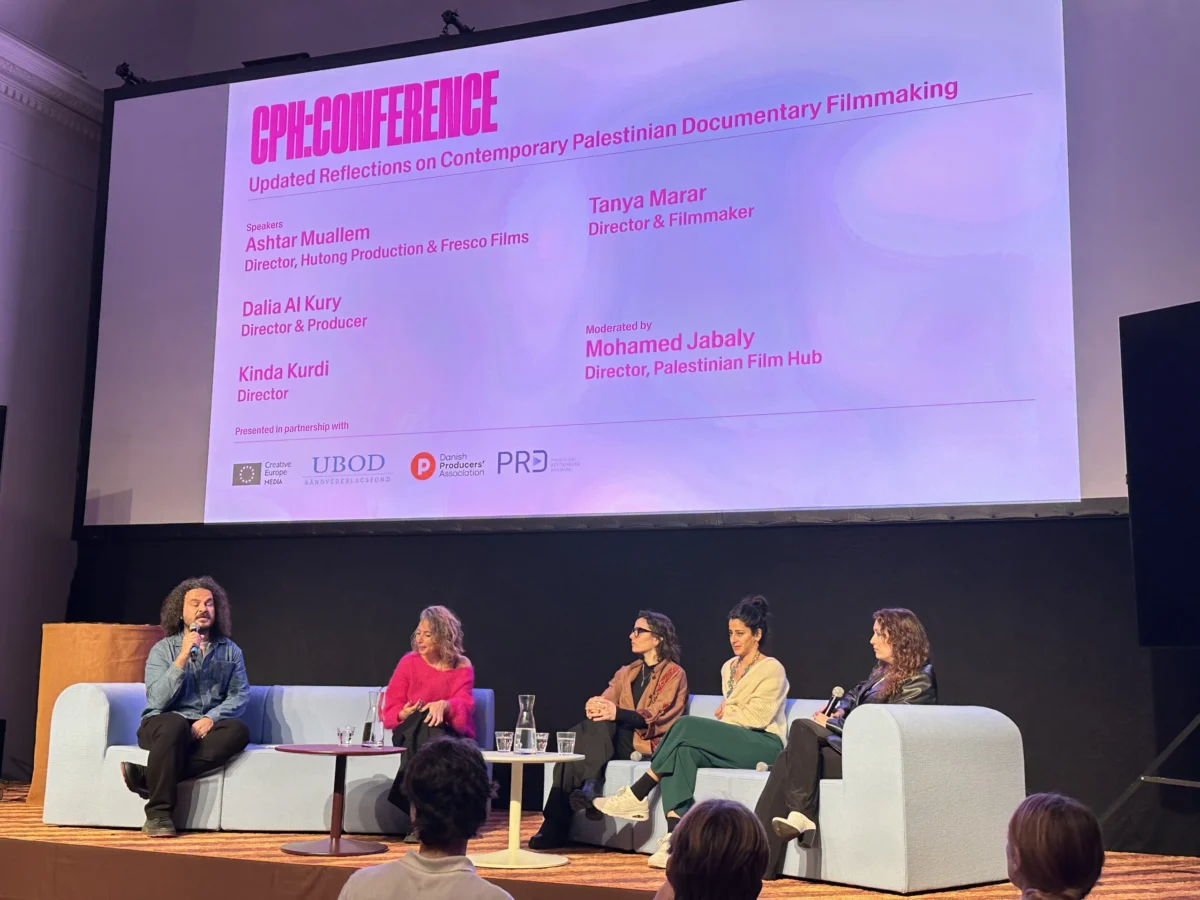
Copenhagen, Denmark – The industry conference of CPH:DOX, the Copenhagen International Documentary Film Festival, dedicated a significant portion of its Thursday afternoon agenda to Palestinian filmmakers, drawing the focused attention of attendees. This pivotal session at the 23rd edition of the esteemed festival underscored CPH:DOX’s commitment to fostering global dialogue and showcasing diverse, often underrepresented, perspectives. The CPH:Conference, an integral component of the festival, aimed to delve into "how their different approaches to historic Palestine and its people can create impact and empathy both for Palestinian viewers and other audiences." This initiative comes at a critical juncture, highlighting the indispensable role of documentary cinema in illuminating complex geopolitical realities and human experiences.
The Copenhagen International Documentary Film Festival: A Platform for Global Dialogue
CPH:DOX, established in 2003, has rapidly grown into one of the world’s leading documentary film festivals, renowned for its innovative programming, challenging subject matter, and a robust industry platform. Unlike many festivals that primarily focus on film screenings, CPH:DOX actively integrates a conference element, CPH:Conference, which serves as a vital forum for industry professionals, policymakers, and the public to engage with pressing global issues through the lens of documentary filmmaking. The festival’s mission extends beyond mere exhibition; it seeks to push the boundaries of documentary form, stimulate debate, and facilitate the production and distribution of socially relevant films. Its 23rd edition, building on a legacy of showcasing courageous and thought-provoking cinema, continued this tradition by consciously centering voices from regions experiencing profound socio-political challenges. The decision to dedicate a high-profile session to Palestinian documentary projects in development reflects the festival’s ongoing commitment to amplifying narratives that are crucial for understanding contemporary global dynamics and fostering cross-cultural empathy. This particular focus aligns with the festival’s broader ethos of exploring the intersection of art, politics, and social justice, providing a unique space where creative expression meets urgent global concerns.
"Updated Reflections": Centering Palestinian Voices
The session, aptly titled "Updated Reflections on Contemporary Palestinian Documentary Filmmaking," brought together a distinguished panel of artists and filmmakers whose work navigates the intricate layers of Palestinian identity, history, and ongoing struggles. Moderated by Mohamed Jabaly, a celebrated Palestinian filmmaker, producer, and artist from Gaza, known for his film Life Is Beautiful, the discussion offered profound insights into the creative processes and thematic concerns animating current Palestinian documentary efforts. Jabaly’s presence as moderator, drawing from his own experiences as a filmmaker from a besieged territory, lent an additional layer of authenticity and depth to the proceedings, ensuring a nuanced and empathetic engagement with the panelists’ work.
The featured speakers represented a diverse range of artistic practices and geographical vantage points:
- Muallem Ashtar: A Jerusalemite multidisciplinary artist, performer, and creator whose work seamlessly blends circus, dance, and theater. She is the director of the short film Land of Denied Rituals 2025.
- Dalia Al Kury: A filmmaker whose innovative approach navigates cross-genre storytelling, pushing the boundaries of documentary narrative.
- Kinda Kurdi: The founder of K² Visual Media, a U.K.-based production company specializing in both long- and short-form documentary and animated content, demonstrating a versatile creative vision.
- Tanya Marar: A Jordanian-Palestinian-Bulgarian filmmaker residing in the U.K., whose powerful work consistently focuses on political struggles and the profound "narratives of oppression."
This curated selection of voices aimed to provide a comprehensive snapshot of the vibrancy and resilience of contemporary Palestinian documentary filmmaking, each artist bringing a unique perspective to the collective narrative.
A Legacy of Resistance: Contextualizing Palestinian Documentary Cinema
Palestinian documentary filmmaking has a rich and poignant history, deeply intertwined with the political fate of its people. Emerging forcefully in the wake of the 1967 Naksa and the subsequent occupation, Palestinian cinema quickly became a crucial tool for national self-expression, historical record-keeping, and a form of cultural resistance. Early Palestinian filmmakers, often working under immense duress and with limited resources, sought to counter dominant narratives, document the daily realities of occupation, preserve collective memory, and assert Palestinian identity against attempts at erasure. Films from this era frequently explored themes of displacement, exile, the right of return, and the resilience of a people struggling for self-determination.
Over the decades, Palestinian cinema has evolved, incorporating new aesthetic forms, narrative strategies, and technological advancements, yet its core mission remains largely consistent: to bear witness, challenge injustice, and humanize a people often reduced to political statistics. The current generation of filmmakers, represented at CPH:DOX, stands on the shoulders of these pioneers, continuing to adapt and innovate. They grapple with the legacy of historical trauma while simultaneously addressing contemporary challenges, often employing innovative cinematic techniques – from animation to cross-genre experimentation – to convey complex emotional and political truths. This historical context provides essential background for understanding the depth and urgency of the projects discussed at the CPH:Conference session.
Tanya Marar: Documenting Direct Action and Legal Complexities
Tanya Marar initiated her segment with a profoundly resonant observation, stating, "It’s really nice, actually, to see Palestinian filmmakers and films being the occupiers of a space." This statement, delivered from the stage to a room full of industry professionals, carried significant symbolic weight, subverting the language of occupation often associated with the Palestinian experience and reappropriating it to signify presence, visibility, and legitimate space within an international cultural institution. Her project, Rage & Resist, produced by Ike Rofe, delves into the controversial yet compelling world of Palestine Action, a U.K.-based activist group known for its direct action campaigns. Marar explained that the group "go[es] to the Israeli weapons manufacturers, and they smash [things] up, and they take matters into their own hands."
The film navigates a complex ethical and legal landscape. Marar revealed that in 2025, Palestine Action was designated a terrorist organization in the U.K. This future designation, as stated within the context of the film’s production and the legal environment Marar operates in, creates a unique challenge. "For legal reasons I cannot support them," she stated, highlighting the precarious position of a filmmaker documenting such a group. Despite these constraints, Marar has meticulously followed members of the group for approximately two and a half years, focusing on the two founders, Huda, an Iraqi Palestinian woman, and Richard, who is English, alongside several other key characters. Rage & Resist promises to offer an intimate, unfiltered look into the motivations, strategies, and personal sacrifices of individuals engaged in highly contentious forms of protest, while carefully treading the line of journalistic impartiality and legal compliance. The film’s potential impact lies in its capacity to provoke critical thought about the definitions of resistance, activism, and terrorism, particularly when viewed through the lens of those who feel compelled to take direct action against perceived injustices.
Dalia Al Kury: Confronting Trauma and Seeking Personal Justice
Dalia Al Kury presented her directorial project, Rehearsing for Justice, produced by Nefise Özkal Lorentzen and Ola Hunnes, which explores the raw, often unaddressed, emotional aftermath of conflict. Al Kury detailed the film’s audacious premise: "I staged a confrontation with an Israeli war criminal," portrayed by an actor, in a hotel in Jordan. This theatrical, yet deeply psychological, staging serves as a crucible for exploring profound questions about rage, trauma, and the elusive nature of justice. The central inquiry driving her film is, "Where is all this rage going to go?" She observed that as individuals navigate this "personal justice" experience, the emotions inevitably become "explosive."
Al Kury offered a poignant and insightful reflection on the Palestinian experience, stating, "We have been trying not to fall into victim modes, but we are victims." This statement encapsulates a critical tension: the desire to transcend victimhood while acknowledging the undeniable reality of suffering and injustice. Her film daringly confronts the ethical dilemma inherent in cycles of violence, posing a crucial question: "How do we kill fascism without becoming fascist ourselves?" This philosophical inquiry elevates Rehearsing for Justice beyond a mere documentation of events, transforming it into a profound meditation on the human capacity for violence and empathy, the ethics of resistance, and the complex path toward healing and accountability. The film’s cross-genre storytelling approach likely allows for a multifaceted exploration of these themes, blending documentary realism with the evocative power of staged performance to unlock deeper emotional truths. It speaks to a universal human struggle to break free from cycles of oppression without succumbing to the very forces one seeks to overcome.
Kinda Kurdi: Preserving History and Advocating for Change
Kinda Kurdi introduced her first feature documentary, The Last Mayor of Jerusalem, produced by Janay Boulos, which she described as "a story of survival and love." The film delves into the compelling narrative of Rawhi Al-Khatib, Jerusalem’s last Palestinian mayor before the 1967 war, a figure whose story embodies the broader Palestinian struggle for self-determination and identity in the city. Al-Khatib, a prominent nationalist, was deported by Israeli authorities in 1967, accused of being an "alleged national security threat." His expulsion symbolized the systematic dismantling of Palestinian political and civic infrastructure in Jerusalem and the ongoing efforts to alter the city’s demographic and cultural landscape.
Kurdi’s film uniquely blends animation with other footage to reconstruct Al-Khatib’s life and the turbulent political history of Jerusalem. This artistic choice allows for the visualization of historical events and emotional landscapes that might otherwise be inaccessible, bringing a vibrant and intimate quality to a historically significant narrative. The documentary aims not only to preserve a vital piece of Palestinian history but also to humanize the profound impact of political decisions on individual lives and collective memory. When asked about the key challenges facing Palestinian filmmakers, Kurdi emphasized the need for collective action: "The onus is on us to come together and bring these stories and push for changes." This statement underscores the belief that filmmaking is not merely an artistic endeavor but a potent form of advocacy, requiring solidarity and concerted effort to achieve its full impact. Her call to action highlights the collaborative spirit essential for Palestinian narratives to gain broader recognition and effect meaningful change.
Muallem Ashtar: Culture as a Bastion of Freedom
Muallem Ashtar presented her first feature documentary, Condemned to Dream, produced by Jiries Copti, which intimately explores the Ramallah theater, also known as Ashtar, a cultural institution run by the filmmaker’s parents. The theater is portrayed as "one of the few spaces of creativity and freedom for Palestinian youth," underscoring its vital role as a sanctuary and a platform for artistic expression in a restrictive environment. The film’s summary powerfully states: "As occupation erases identity and censors narratives, the film documents fragile beauty," affirming culture itself as a profound form of resistance.
Ashtar articulated this central theme to the Copenhagen audience, declaring, "Resistance has so many forms, and culture is one of them." This assertion highlights the often-underestimated power of art, theater, and creative expression to maintain identity, foster hope, and subtly challenge oppressive systems. In contexts where overt political action is suppressed, cultural initiatives become crucial battlegrounds for preserving heritage, nurturing critical thought, and sustaining a sense of community. The film likely showcases how the Ashtar theater provides not only artistic training but also a psychological space for Palestinian youth to dream, imagine, and connect, fostering resilience against the backdrop of occupation. When questioned about her challenges as a filmmaker, Ashtar revealed a struggle common to many Palestinian artists: "Not being censored" both in Palestine and in France, where she currently lives. This candid admission points to the dual pressures faced by Palestinian creatives, where narratives can be scrutinized or suppressed both internally by various authorities and externally by international gatekeepers, reflecting a broader struggle for narrative sovereignty.
The Moderator’s Perspective: Mohamed Jabaly
The session’s moderator, Mohamed Jabaly, brought a crucial perspective shaped by his own experiences as a filmmaker from Gaza. His critically acclaimed film Life Is Beautiful (also known as Ambulance), which documents life during the 2014 Gaza War, has garnered international recognition for its raw honesty and powerful humanistic approach. Jabaly’s ability to navigate the complexities of life and filmmaking under siege provided an empathetic and informed framework for the discussion. His moderation ensured that the nuanced artistic and political considerations presented by the panelists were understood within the broader context of Palestinian resilience and creativity. His role was not just to facilitate but to connect, drawing parallels between the individual experiences of the filmmakers and the collective narrative of a people striving for recognition and justice through art.
Broader Implications: Empathy, Advocacy, and the Power of Film
The CPH:DOX session on contemporary Palestinian documentary filmmaking carried profound implications, both for the documentary industry and for broader geopolitical discourse. By providing a platform for these voices, the festival reinforced the power of documentary film as a critical medium for fostering empathy, challenging dominant narratives, and serving as a historical record. In a global landscape often characterized by polarizing rhetoric and simplified portrayals, these films offer intimate, complex, and humanizing perspectives that are essential for deeper understanding.
The discussion also highlighted the unique challenges faced by Palestinian filmmakers:
- Censorship and Narrative Control: The constant struggle to tell their stories without external or internal censorship, as articulated by Muallem Ashtar.
- Legal and Political Obstacles: Navigating the legal repercussions of documenting sensitive political activism, as detailed by Tanya Marar, and the broader political climate that often restricts freedom of movement and expression.
- Funding and Distribution: The perennial difficulties in securing adequate funding and achieving international distribution for films that may be perceived as politically sensitive or niche, despite their universal human appeal.
- Mental and Emotional Toll: The immense psychological burden of constantly engaging with trauma and injustice, while maintaining an artistic and objective distance.
Kinda Kurdi’s call for collective action – "The onus is on us to come together and bring these stories and push for changes" – resonated as a powerful statement about the need for solidarity within the filmmaking community and among international audiences. It underscores the idea that supporting Palestinian cinema is not just about artistic patronage but about actively participating in a global conversation about human rights and justice.
Navigating Challenges and Seeking Recognition
Dalia Al Kury’s concluding remark, delivered just days after the international fanfare of the Oscars, served as a poignant and searing summation of the Palestinian experience: "We should win an Oscar for pretending that everything is normal." This statement, laden with irony and profound emotion, encapsulates the immense psychological burden and extraordinary resilience required to navigate daily life under occupation. It speaks to the unseen labor of maintaining a semblance of normalcy amidst profound injustice, constant uncertainty, and the persistent threat of violence. The "Oscar" she references is not for cinematic achievement in the conventional sense, but for the profound, often invisible, performance of endurance and survival. It is a plea for recognition of an emotional and psychological toll that frequently goes unacknowledged by the international community.
The CPH:DOX conference, by providing a dedicated space for these voices, performed a crucial service. It acknowledged the inherent value and urgent necessity of Palestinian narratives, not as political instruments, but as essential contributions to global human understanding. As these documentary projects move from development to completion, they promise to enrich the international cinematic landscape, offering vital perspectives that challenge, educate, and, ultimately, foster a deeper sense of shared humanity. The festival’s commitment ensures that the struggle for narrative sovereignty for Palestinian filmmakers continues to find fertile ground on the global stage, pushing for a future where their stories are not only heard but deeply understood and acted upon.