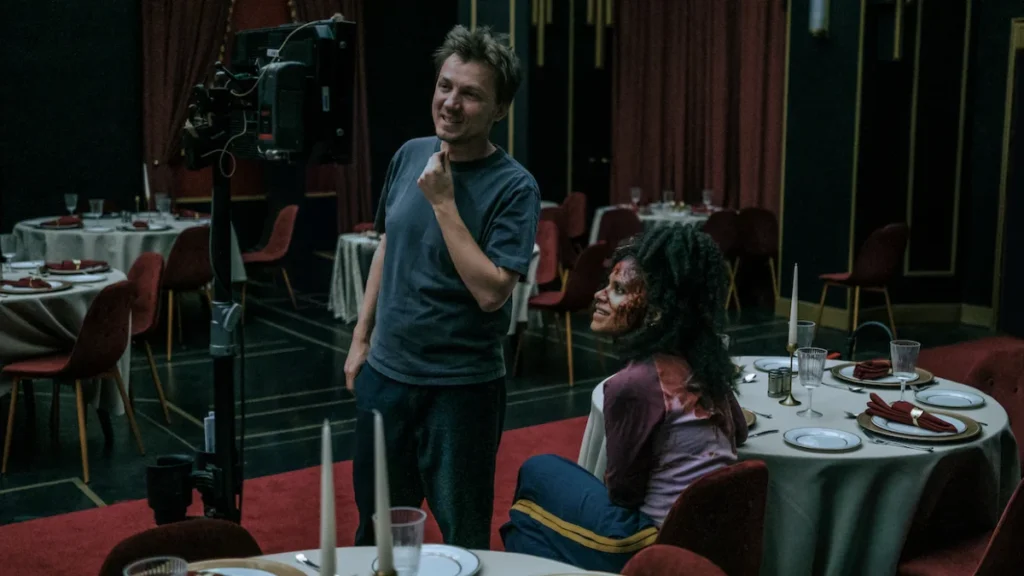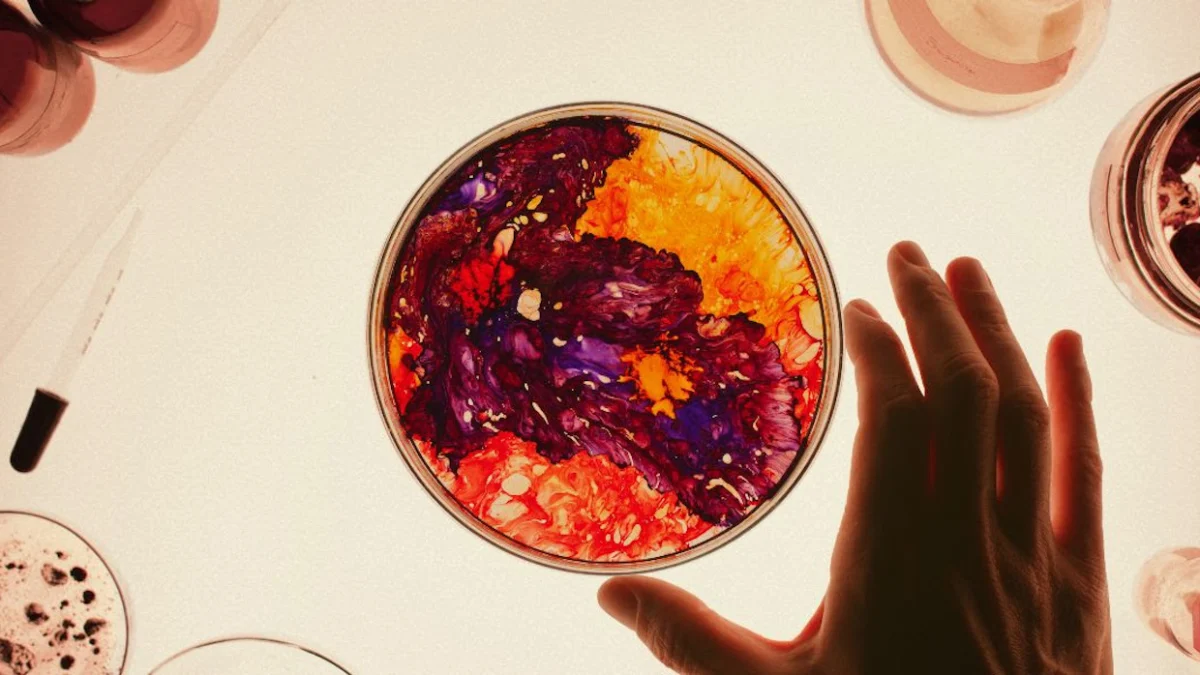
Australian filmmaker Josef Gatti’s feature-length debut, Phenomena, offers a profound and visually arresting exploration of the universe, paradoxically discovered not in the distant cosmos, but within the everyday scientific principles observable on Earth. Premiering at the esteemed True/False Film Fest, the documentary challenges conventional perceptions of scientific inquiry by transforming commonplace (and at times hazardous) experiments into a sublime cinematic experience. Gatti, guided by his physicist father, leverages high-tech camera equipment to capture molecular reactions in real-time, revealing the inherent beauty and complexity of fundamental scientific concepts.
The film delves into ten distinct experiments, each serving as a visual treatise on core mechanics such as light, matter, energy, waves, gravity, electromagnetism, nuclear energy, entropy, quantum energy, and the very essence of life. These subatomic reactions, often imperceptible to the naked eye, are rendered with staggering clarity and aesthetic grandeur. While the hypnotic visual stimuli, complemented by a rich sonic landscape featuring experimental composer Nils Frahm’s extensive catalogue and an original score by electronic outfit Rival Consoles, could easily be appreciated for their "trippy" qualities, Phenomena aims for a deeper resonance. In a contemporary world grappling with the pervasive influence of artificial intelligence, escalating geopolitical tensions, and increasing interpersonal alienation, Gatti’s film performs what can be seen as a quasi-radical act: it redirects human attention to the fundamental scientific marvels that underpin existence and allow life to flourish on this planet.
A Decade-Long Evolution: From Shorts to Feature
The journey to Phenomena has been a meticulous, decade-long endeavor, evolving through various iterations before its grand unveiling as a feature film. The project’s genesis dates back to 2016, initially manifesting as a series of three or four short films. These early pieces, described by Gatti as "musical, trippy visual shorts," laid the groundwork for the expansive vision that would eventually become Phenomena.
By 2019 and 2020, the concept had gained traction, with a version picked up by Australia’s public broadcaster, ABC, as a web series. This episodic format allowed Gatti to further refine his experimental techniques and narrative approach. Beyond traditional screens, the project also found a unique platform in immersive art installations, gracing museums, exhibitions, and galleries. These varied presentations provided Gatti with invaluable experience in adapting his vision for different audiences and contexts, consistently pushing the boundaries of how scientific phenomena could be perceived and appreciated.
Despite its diverse forms, Gatti asserts that the ultimate ambition was always to coalesce these disparate elements into a long-form feature. He explains that a "master plan" for the feature-length work was conceived relatively early, even envisioning the film’s ending years ago. The primary challenge, therefore, was not in conceptualizing the narrative arc but in the arduous process of condensation. After nearly ten years of relentless experimentation and idea generation, countless concepts ended up on the "cutting room floor." Gatti candidly describes this as the "hardest part," a painful culling of ideas to fit the ambitious scope into a cohesive 90-minute runtime. One notable segment that was largely excised, though a "flicker" remains in the film’s opening and closing, was the "Lichtenberg" experiment. This stunning but dangerous demonstration involved creating short circuits with high voltage electricity, generating intricate, tree-like patterns of burning electrical discharges. The inherent risks and technical complexities of such experiments underscore the meticulous planning and safety measures required throughout the production.
The Collaborative Spark: Father and Son in Science
A pivotal figure in the development of Phenomena is Josef Gatti’s father, a physics professor whose expertise proved indispensable, particularly in the project’s nascent stages. While Gatti playfully notes that his father’s attempts to instill a passion for science during his childhood were largely unsuccessful – Gatti gravitated towards film rather than computer science – his father’s guidance became critical once Gatti discovered his own profound connection to physics.
Gatti’s personal journey to appreciating science highlights a common trajectory: initially resisting academic pursuits, only to later find unexpected depth and beauty in them through a different lens. He realized that physics, far from being a dry academic subject, could be a source of profound wonder and artistic inspiration. This self-discovery brought him back to his father’s realm, but on his own terms.
The collaborative dynamic between father and son was one of essential mentorship. Gatti openly acknowledges that he "could not have kicked off the first few experiments without him." His father served as a crucial guide, offering both theoretical knowledge and practical advice for navigating the often-complex and potentially dangerous scientific setups. This partnership underscored the blend of scientific rigor and artistic vision that defines Phenomena, ensuring that the spectacular visuals were grounded in authentic scientific principles. While Gatti jokes about not giving his father "too much credit for the genesis" of his passion, he concedes that he "can’t imagine I ever would have started this without him," emphasizing the foundational role of his father’s expertise and support.
The Art of Scientific Experimentation: Weeks of Meticulous Preparation
The visual spectacle of Phenomena is the culmination of an extraordinarily meticulous and time-intensive production process. Each of the ten experiments featured in the film presented its own unique "mountain to climb," requiring weeks of dedicated preparation and experimentation before a single frame could be recorded. This intensive phase involved far more than simply setting up a camera; it demanded rigorous scientific method applied with an artist’s eye.
Gatti detailed the logistical complexities, explaining that many "pieces or ingredients" were not readily available off the shelf. This necessitated a protracted process of ordering specialized equipment and waiting for their arrival, or diligently sourcing particular chemicals that were essential for specific reactions. On average, Gatti estimates that it took at least two to three weeks to achieve the "first component" of an experiment. This initial success, however, was merely a stepping stone. From that point, another few weeks were dedicated to evolving the experiment, pushing its boundaries to create a visual sequence that was not only scientifically accurate but also cinematically compelling.

A key insight Gatti gained early on was the necessity for each experiment to possess an internal "arc." It was not sufficient for something interesting to simply happen; each mini-sequence needed to tell a concise visual story. This meant developing the experiments beyond a single reaction, allowing them to unfold with a beginning, middle, and end that could stand as a "mini short film" in its own right. Many abandoned experiments attest to this rigorous standard, failing to "eventuate a little story" despite their scientific merit. This artistic discipline, combined with scientific precision, is what elevates Phenomena beyond mere educational footage into a truly immersive and profound cinematic experience. The film’s ability to capture molecular reactions in real-time hints at advanced macro cinematography techniques, specialized lighting, and high-speed cameras capable of rendering the fleeting beauty of these microscopic phenomena visible to the human eye.
A Harmonious Soundscape: Orchestrating the "Trippy" Experience
The immersive quality of Phenomena is not solely attributed to its stunning visuals but is equally sculpted by its sophisticated sonic landscape. Josef Gatti’s long-standing practice of editing his shorts to his favorite music proved instrumental in shaping the film’s auditory identity. The choice of experimental composer Nils Frahm and electronic outfit Rival Consoles was deliberate, creating a harmonious blend that amplifies the film’s "trippy" and profound nature.
Nils Frahm, renowned for his unique blend of classical and contemporary synth music, emerged as a "perfect fit" for Gatti’s visual work. Frahm’s distinctive style, characterized by a free-flowing and structurally vague approach, often features extended tracks that provide ample sonic tapestry for the unfolding scientific marvels. Gatti and his team were fortunate to be granted "carte blanche" access to Frahm’s extensive catalog, allowing them to draw from approximately 10 to 15 years’ worth of his diverse compositions. This broad selection provided a rich palette of sounds, enabling Gatti to match the varying moods and intensities of each experiment with appropriate musical accompaniment, ensuring a dynamic and engaging auditory journey.
While Frahm’s compositions largely anchored the film’s core experimental sequences, Rival Consoles contributed an original score for specific moments, particularly the film’s opening and closing segments. These parts of the film required a distinct sonic approach, not solely driven by the "visual trippy nature of the storytelling." Rival Consoles’ original music was crucial in establishing "sonic consistency" and providing a cohesive framework that binds the entire feature together. The interplay between Frahm’s atmospheric, expansive pieces and Rival Consoles’ more structured, original compositions creates a layered soundscape that not only enhances the visual experience but also imbues it with an emotional depth, guiding the audience through moments of wonder, contemplation, and exhilaration. This careful curation of sound design underscores the film’s artistic integrity, ensuring that every element contributes to its overall impact.
Authenticity in the Age of AI: A Radical Stance
In an era increasingly dominated by artificial intelligence, particularly in creative fields, Phenomena stands as a powerful testament to the beauty and necessity of tangible reality. Josef Gatti’s firm stance against AI-generated imagery in his work serves as a "quasi-radical act," particularly within the filmmaking landscape. As Gatti articulates, having been deeply immersed in this project for years, he’s only recently "popped [his] head up to like see how things have changed." His conclusion is unequivocal: "I’m so uninterested in using AI in my work. I just don’t even think about it, to be honest. If you want my one-liner, I don’t really like it. I’m so drawn to the real world."
This perspective gains significant weight when considering the broader implications for cinema and visual arts. While AI tools are rapidly being integrated into various stages of film production, from pre-visualization to post-production effects, Gatti’s commitment to "real cinematography and practical techniques" for image generation sets Phenomena apart. He acknowledges that as a cinematographer, his work is often handed over to companies that utilize AI tools for integration, which he accepts as part of the industry’s evolution. However, the core act of creating images, the very essence of his artistic expression, must remain rooted in the physical world.
Gatti’s dedication to capturing "the craziest images you could possibly imagine" through entirely practical means is a direct counter-narrative to the rising tide of synthetic media. It champions the human ingenuity required to manipulate real-world elements and light to create stunning visuals, rather than generating them algorithmically. This commitment to authenticity resonates deeply in a time when distinguishing between real and digitally fabricated content is becoming increasingly challenging. Phenomena, by proudly showcasing every image as genuinely captured, not only educates and entertains but also subtly advocates for the enduring value of empirical observation and direct engagement with the physical universe. It encourages viewers to rediscover the inherent wonder in the world around them, a wonder that AI, by its very nature, can only simulate, not truly create or experience.
Reception and Future Horizons: Beyond the "Trippy" Label
Phenomena‘s immediate reception, particularly at its world premiere at the True/False Film Fest, highlights its unique appeal. The film is frequently described as "trippy," a descriptor Gatti himself embraces, even lightheartedly suggesting "good old classic weed" as an ideal substance for viewing. This playful suggestion, however, should not overshadow the film’s deeper intentions. The "trippy" nature is a vehicle for engagement, making complex scientific concepts accessible and captivating for a broad audience. The reviewer’s humorous comparison to "Baby Einstein for stoners (in a good way)" encapsulates this duality: a visually stimulating, educational experience that transcends traditional didactic approaches, inviting a more introspective and appreciative engagement with scientific principles.
The film’s ability to engage audiences on multiple levels—from purely aesthetic enjoyment to intellectual curiosity—is a testament to Gatti’s vision. In a world saturated with digital distractions and often detached from fundamental scientific literacy, Phenomena offers a refreshing re-engagement with the foundational elements of existence. It inspires a renewed sense of wonder about the mechanics of the universe that enable life and thriving on Earth. The True/False Film Fest, known for championing documentaries that push boundaries and provoke thought, provided an ideal platform for Phenomena to begin its journey, signaling its significance within the documentary landscape.
Looking ahead, Josef Gatti is clearly invigorated by the success and creative fulfillment of Phenomena. He describes the experience of making the film as exceptionally rewarding, surpassing even his dreams. This profound satisfaction has fueled his desire to "keep pushing what I’ve found further," continuing his exploration of "how the universe works through a trippy, psychedelic musical odyssey." Gatti hints at "a few more ideas up my sleeve already that are bursting to get out," suggesting that Phenomena is not merely a singular achievement but the beginning of an ongoing cinematic quest. His future projects are likely to build upon the innovative methodology and philosophical underpinnings established in his debut, further cementing his unique position at the intersection of science, art, and immersive storytelling. Phenomena thus stands as a vibrant beacon, reminding us that the greatest wonders are often found not in distant galaxies, but in the intricate dance of matter and energy unfolding all around us.