Dianne Wiest’s remarkable career in film is a testament to her versatility and profound ability to embody a wide spectrum of characters, from the subtly nuanced to the outrageously eccentric. Over several decades, she has graced the silver screen with performances that are both deeply human and arrestingly memorable. This retrospective delves into a selection of her notable film roles, exploring the breadth of her talent and her enduring impact on cinema.
A Career Defined by Nuance and Bold Choices
Dianne Wiest, a two-time Academy Award winner, has carved out a distinguished career by consistently choosing roles that allow her to explore complex emotional landscapes. Her filmography is a rich tapestry, showcasing her ability to deliver both comedic brilliance and profound dramatic weight. From her early supporting roles to her more prominent character-driven performances, Wiest has consistently elevated the material she is given.

Early Explorations and Defining Roles
Wiest’s cinematic journey began in the early 1980s, a period that saw her emerge as a distinctive voice in American cinema. Her early appearances often positioned her as the supportive best friend or a maternal figure, roles she infused with an understated grace and an uncanny ability to convey a wealth of unspoken emotion.
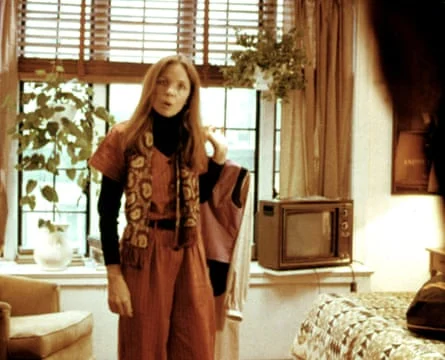
It’s My Turn (1980) marked Dianne Wiest’s official film debut. Directed by Claudia Weill, who had previously garnered critical acclaim for the independent comedy Girlfriends (1978), this studio production offered Wiest a smaller, yet significant, role. In the film, she portrays the chipper cousin to Jill Clayburgh’s character, a math professor grappling with romantic entanglements. Wiest’s presence, though brief, was notable for its warmth and sincerity. Her character dispenses pragmatic advice on relationships, famously stating, "If you’ve found the right person, make it work." This early role also provided her with the opportunity to share a scene with a young Michael Douglas at a wedding party, offering a glimpse of her nascent ability to hold her own alongside established stars. The film itself, while not as critically lauded as Weill’s earlier work, served as an important stepping stone for Wiest, introducing her to a wider audience and the studio system.
Falling in Love (1984) further solidified Wiest’s reputation as a reliable and affecting supporting actress. In this romantic drama, she plays Isabelle, the confidante to Meryl Streep’s character, Molly. Both women are navigating unhappy marriages, with Molly developing feelings for Robert De Niro’s character, Frank. Wiest’s performance as Isabelle is particularly crucial in advancing the plot, allowing the film to bypass a lengthy confession scene. Her character’s intuitive nature is highlighted when she asks Molly, "I haven’t seen you for weeks – who is it?" This seemingly simple question, delivered with antennae twitching, prompts Molly to reveal her feelings and flee in a panic, propelling the narrative forward. Wiest’s portrayal captures the essence of a perceptive friend, whose insights are vital to the unfolding drama.
The 1980s: Expanding Her Range
The latter half of the 1980s saw Wiest take on more diverse and challenging roles, demonstrating a growing confidence and versatility. Her collaborations with Woody Allen would prove particularly fruitful during this period.
Radio Days (1987), a nostalgic and evocative film by Woody Allen, cast Wiest as Aunt Bea. This film, structured as a series of interconnected vignettes, looks back with wistful affection at the golden age of radio. Wiest’s character embodies a sense of romantic longing, dreaming of love but facing recurring disappointment. A particularly poignant moment occurs when a suitor, unnerved by Orson Welles’s infamous War of the Worlds broadcast, flees mid-date, leaving Bea to walk home alone. When he later calls, Bea, crestfallen, instructs her companion to tell him, "Tell him I married a Martian," a line that encapsulates her resigned, yet still spirited, approach to her romantic misfortunes.
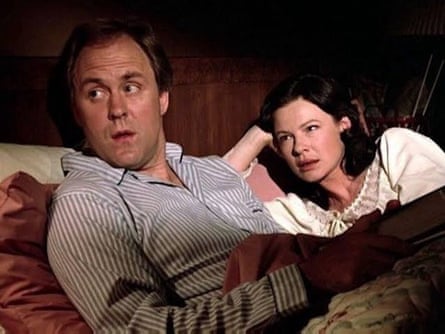
The Lost Boys (1987) offered Wiest a decidedly different, yet equally memorable, role. In Joel Schumacher’s cult classic, she plays the mother of two teenagers who move to a Californian beach town and become entangled with a gang of vampires. Wiest’s portrayal is characterized by a bright, breezy optimism, even as her sons face supernatural peril. Her character’s obliviousness to the true nature of the danger, particularly in a scene where she inadvertently dates the head bloodsucker, provides a unique blend of humor and underlying tension. The film is often remembered for its stylish portrayal of teenage angst and its memorable soundtrack, but Wiest’s performance as the well-meaning, slightly out-of-touch mother remains a key element of its charm. It also famously imparts the crucial piece of vampire lore: they cannot enter a home unless invited, a detail her character unknowingly navigates.
A Period of Critical Acclaim and Oscar Success
The late 1980s and 1990s were a period of significant professional achievement for Dianne Wiest, marked by critical accolades and her first Academy Award.
Parenthood (1989), directed by Ron Howard, is a sprawling ensemble comedy that explores the joys and challenges of raising children. Wiest delivers a standout performance as a single mother navigating the complexities of adolescence with her two children, one a surly son played by a young Joaquin Phoenix (then known as Leaf), and a rebellious daughter portrayed by Martha Plimpton. While the film’s portrayal of sexuality was considered somewhat retrograde by some critics at the time, Wiest’s performance imbues her character with a depth and resilience that transcends the script’s limitations. Her delivery of lines about men – "Ah sweetie, they say [they love you] … and then they come" – and her reactions to her daughter’s explicit photos, with a mix of shock and resigned humor ("Woah! Here’s something for my wallet"), showcase her exceptional comedic timing and her ability to find truth in even the most mundane situations. Woody Allen himself remarked that Wiest "dignifies" the film, a testament to her powerful presence.
Edward Scissorhands (1990) marked a pivotal collaboration with director Tim Burton. In this beloved modern fairy tale, Wiest plays Peg, an Avon lady who discovers the isolated, scissor-handed Edward (Johnny Depp) in his gothic mansion. Peg brings Edward into her suburban pastel-colored world, and Wiest’s portrayal is essential to the film’s unique charm. Her kindness and acceptance of Edward, particularly in the now-iconic scene where she gently applies makeup to his scarred face, is deeply moving. The line, "Blending is the secret…" has become a touchstone for its soothing quality. Her performance, alongside Alan Arkin as her husband, demonstrates that characters labeled as "nice" need not be bland. This role, along with others from this period, solidified her image as a maternal figure, a typecasting that she later noted became a "curse" despite her two Oscar wins, limiting her offers to "a nice mom and that’s it."
The critical and commercial success of Bullets Over Broadway (1994) led to Dianne Wiest’s second Academy Award for Best Supporting Actress. In this Woody Allen film, she plays Helen Sinclair, a flamboyant and notoriously difficult stage actress. Wiest fully embodies the character’s larger-than-life persona, delivering lines like, "My taste is superb. My eyes are exquisite," with a delicious blend of ego and vulnerability. Initially resistant to playing a dowdy housewife, Helen becomes entangled with the playwright-director (John Cusack) and struggles with her own insecurities and her alcoholism. While the character occasionally borders on caricature, Wiest imbues Helen with layers of pathos and nuance, making her a captivating figure. Her performance also provided a stark contrast to Jennifer Tilly’s portrayal of a less sophisticated moll, earning Tilly her own Oscar nomination.
Continued Excellence and Character Studies
Throughout the late 1990s and into the 21st century, Wiest continued to select roles that allowed her to delve into the complexities of her characters, often in films that offered critical depth and artistic merit.
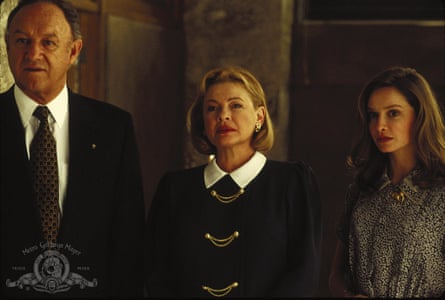
The Birdcage (1996) saw Wiest portray the wife of a Republican senator (Gene Hackman) who visits his daughter’s fiancé’s family. Unbeknownst to them, the fiancé’s parents are a flamboyant gay couple (Robin Williams and Nathan Lane), and the film hinges on their attempts to conceal their true lifestyle. Wiest’s character, initially presented as somewhat prim and proper, offers moments of subtle observation and dry wit. Her comment on the "interesting china" that "looks like young men playing leapfrog" hints at her keen eye for detail and her understated sense of humor. The film’s comedic climax, with Wiest and Hackman attempting to evade paparazzi in elaborate disguises, provides a final flourish of her comedic talent, with her transformation into a figure resembling a "Night Porter cosplayer" showcasing her willingness to embrace absurdity.
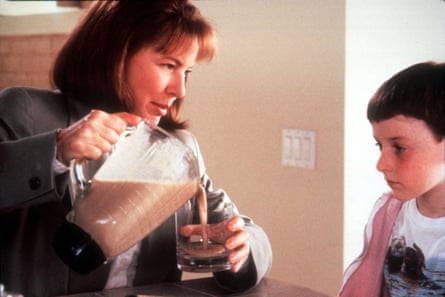
Practical Magic (1998) featured Wiest as one of two eccentric aunts who raise their orphaned nieces, played by Sandra Bullock and Nicole Kidman, into a family of witches. Wiest and Stockard Channing provided much of the film’s comedic relief, their characters boogying with midnight margaritas amidst a narrative that juggles themes of domestic abuse, murder, and resurrection. Despite the film’s often uneven tone, the chemistry between Wiest and Channing as the spirited aunts was a highlight, offering moments of genuine levity and warmth. The film’s enduring popularity has led to the announcement of a sequel, with the original four leads reportedly set to return.
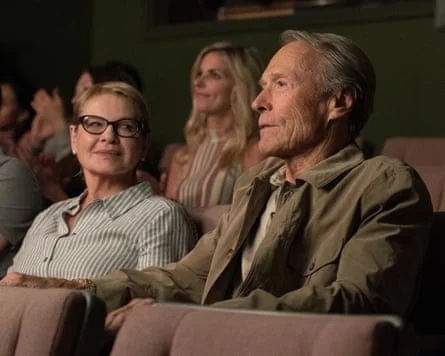
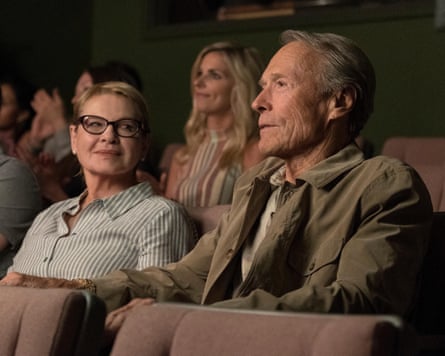
The Mule (2018) offered Wiest a return to dramatic roles, playing the patient ex-wife of Clint Eastwood’s character, Earl Stone, an elderly horticulturist turned drug mule. Her role, though limited in screen time, is crucial to the film’s emotional core. Wiest embodies a quiet dignity and a profound sense of regret, her character serving as a catalyst for Earl’s introspection on a life marked by selfishness. Her performance is described as "sublimely understated," with each regretful glance heightening the emotional stakes. The film’s exploration of terminal illness and familial estrangement resonates deeply, with Wiest’s presence adding significant emotional ballast. This role echoed her performance in Bright Lights, Big City (1988), where she played Michael J. Fox’s dying mother, showcasing her consistent ability to convey profound emotion in poignant, often brief, appearances.
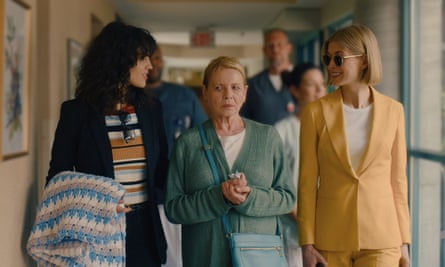
I Care a Lot (2020) presented Wiest in a more menacing, yet still sympathetic, role. As Jennifer Peterson, the target of a predatory guardianship scam artist played by Rosamund Pike, Wiest’s character proves to be far from an easy mark. Jennifer is revealed to be the mother of a dangerous gangster, and Wiest’s performance captures the terrifying transition from bewilderment to horror as she realizes the gravity of her situation. Her line, "I’m the worst mistake you ever made," delivered with chilling conviction, underscores the film’s dark humor and unexpected turns. The scene where she is removed from her home is particularly harrowing, with Wiest’s expressions charting a course through confusion, disbelief, and outright terror.
Later Career and Enduring Legacy
In her later career, Wiest has continued to deliver powerful performances, often in projects that allow her to explore themes of grief, aging, and the human condition.
Rabbit Hole (2010), directed by John Cameron Mitchell, centers on a couple (Nicole Kidman and Aaron Eckhart) grieving the loss of their son. Wiest portrays Kidman’s mother, a woman who has previously experienced profound loss. Her performance is marked by a quiet, profound wisdom as she speaks about the nature of grief: "Grief never disappears, she tells her daughter, but it changes. It turns into something you can crawl out from under and carry around like a brick in your pocket." Her delivery, barely above a whisper, imbues the dialogue with immense emotional weight, showcasing her ability to convey deep sorrow with subtle power.
Synecdoche, New York (2008), Charlie Kaufman’s ambitious and labyrinthine film, features Wiest in a late-career, yet critically significant, role. She appears in the final 15 minutes of the film as Millicent Weems, an actress who lobbies to play the lead role in Caden Cotard’s (Philip Seymour Hoffman) life-spanning play. Wiest’s performance provides an essential emotional anchor to the film’s cerebral narrative. Her character’s interaction with Cotard, culminating in her directing him and delivering the film’s final line, "Die," is both powerful and deeply moving. The scene of her sobbing as she watches a child skip in the street is particularly poignant, offering a moment of profound human connection amidst the film’s existential explorations. Her role in this unconventional masterpiece cemented her reputation for embracing challenging and artistically significant projects.
The Purple Rose of Cairo (1985) was Wiest’s first collaboration with Woody Allen, and it remains a standout film in her career. As Emma, a sex worker in Depression-era New York, Wiest brings a world-weary charm and a surprising openness to the role. Her character’s encounter with a fictional character (Jeff Daniels) who steps off the movie screen is a poignant exploration of escapism and longing. When the explorer explains why he must leave her, she sighs plaintively, "Are there any other guys like you out there?" This line, delivered with a mixture of hope and resignation, perfectly encapsulates the film’s bittersweet romance.
Independence Day (1983), a lesser-known early film, is notable for its stark portrayal of domestic abuse. Wiest plays a woman whose life is made hell by her abusive husband. Her performance is a masterclass in subtle agony, capturing the character’s hopeful smiles and her attempts to deflect her husband’s torment. The film’s melodramatic and explosive ending, while perhaps sensational, is made more believable by Wiest’s deeply observed performance. As Pauline Kael of The New Yorker noted, "You keep expecting [her performance] to turn into something trite, but pretty soon you’re forced to admit you’ve never seen anything like it." This early role demonstrated her capacity for profound emotional depth and her willingness to tackle challenging subject matter.
Dianne Wiest’s career is a remarkable testament to the power of nuanced performance and courageous character choices. Her ability to inhabit a vast array of roles, from the comically eccentric to the devastatingly human, has left an indelible mark on cinema. Her contributions continue to inspire and resonate, solidifying her position as one of the most respected and beloved actresses of her generation.