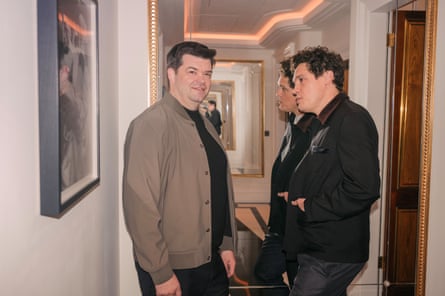
The journey of Phil Lord and Christopher Miller from aspiring filmmakers to a celebrated directorial duo is a testament to their unique creative synergy and unwavering commitment to their collaborative vision. Long before they became synonymous with blockbuster hits like The Lego Movie, the Jump Street franchise, the groundbreaking Spider-Verse films, and their latest ambitious project, Project Hail Mary, Lord and Miller faced a significant hurdle early in their careers: gaining official recognition as co-directors from the formidable Directors Guild of America (DGA). This body, which historically favors a singular directorial voice, expressed reservations about their dual-director approach.
The Directors Guild of America Hearing: A Crucible of Collaboration
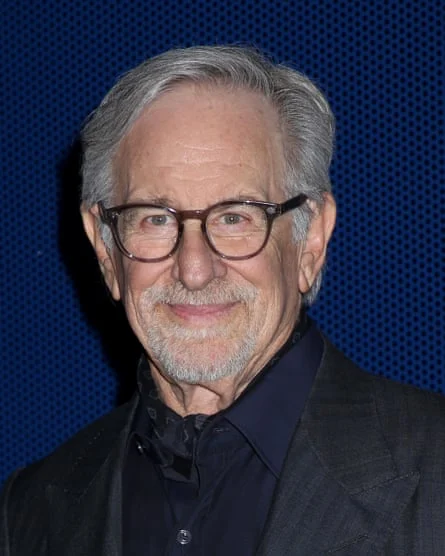
In their formative Hollywood years, Lord and Miller found themselves summoned before a panel at the Directors Guild of America. Their aim was simple: to secure the co-director credit that would define their professional partnership. However, as Miller recalled with a discernible widening of his eyes, the DGA’s established preference for "one set of hands on the steering wheel" presented a significant challenge. The approval process transformed into an intense interrogation, akin to a "Senate hearing," where esteemed peers like Steven Spielberg and Jon Favreau posed pointed questions.
"It was like a Senate hearing," Miller recounted, his expression reflecting the gravity of the memory. "Steven Spielberg and Jon Favreau and all these people asking questions like: ‘All right, but what happens if one of you gets sick? What are you gonna do?’ It was… interesting." The implication was clear: the DGA sought reassurance that their unconventional partnership could navigate the inherent complexities and potential disruptions of filmmaking. The very essence of their creative process was under scrutiny.

Fortunately, the wisdom of their peers prevailed. Spielberg and Favreau, recognizing the potential and the established rapport of the duo, ruled in their favor. This pivotal moment not only legitimized their co-directing status but also underscored the growing acceptance of collaborative creative models within the industry.
A Mind Meld Forged in Academia
Meeting Lord and Miller today, the verdict of their DGA hearing seems not just understandable but inevitable. Their professional lives are inextricably linked, operating on a wavelength that few can replicate. They don’t merely finish each other’s sentences; they complete each other’s ideas, a testament to a profound mind-meld forged during their undergraduate years at Dartmouth College. Lord, originally from Miami, and Miller, hailing from near Seattle, met as students, laying the foundation for a partnership that would redefine comedic and visually inventive filmmaking.
Their dynamic is characterized by a seamless exchange of creative energy. While Lord is quick to acknowledge "slight differences and areas of interest between us," as a directing unit, they function as a singular, cohesive entity. "Like any good partnership, every once in a while the polarities flip and one of us winds up compensating for the other," Miller explained. This constant, fluid interplay allows them to approach projects from multiple angles, enriching the final product with a depth and breadth that might elude a solo director.
A Signature Style: Visual Inventiveness and Tonal Dexterity
The synergy between Lord and Miller has consistently translated into a distinctive cinematic style. Their films are renowned for their surreal humor, audacious tonal shifts, and dazzling visual invention. Whether they are at the helm or overseeing projects through their prolific Lord Miller Productions banner, their unique imprint is immediately recognizable. Audiences are often drawn into a whirlwind of color and imagination within minutes of a film’s opening, a hallmark of their energetic storytelling.
Even within the constraints of the studio system, Lord and Miller have consistently pushed boundaries. Their animated Spider-Verse films, for instance, defied the conventional, often formulaic, aesthetic of superhero movies, opting instead for a kaleidoscopic, multidimensional visual experience. This willingness to experiment and subvert expectations was also evident in The Lego Movie, released nearly a decade before Greta Gerwig’s Barbie. In The Lego Movie, they masterfully wove consumer satire and quirky comedic skits into a narrative heavily reliant on product placement, transforming a potential corporate advertisement into a pointed social commentary. This ability to infuse mainstream entertainment with intellectual depth and subversive humor has become their trademark.
Project Hail Mary: A Deep-Space Adventure with Utopian Undertones
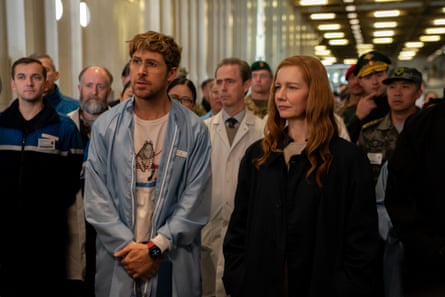
Lord and Miller’s latest endeavor, Project Hail Mary, represents another ambitious undertaking. Adapted from Andy Weir’s acclaimed hard science fiction novel, the film ventures into deep space against the backdrop of a looming climate crisis. Starring Ryan Gosling as Dr. Ryland Grace, a high school science teacher who awakens on a spaceship in a distant galaxy with amnesia, the narrative unfolds through flashbacks that reveal a desperate mission to save Earth from a sun-obscuring parasitic microbe.
Grace’s solitary journey, a one-way ticket to investigate a star immune to the cosmic threat, necessitates an extraordinary collaboration: he must connect with and work alongside an alien life form. Despite the inherently dire premise of a "space suicide mission," the film transcends its dark origins, blending the scientific rigor of The Martian (another Weir adaptation) with the sense of wonder found in Close Encounters of the Third Kind. However, it is the distinctive Lord and Miller formula, a potent mix of humor, heart, and visual flair, that truly elevates the material.
The film’s journey to the screen began when Ryan Gosling, having optioned the rights to Weir’s novel, sought out the directorial duo. He sent them the script, penned by The Martian screenwriter Drew Goddard. "The short answer is: no. That’s not common," Lord remarked with a laugh when asked about such a direct approach from a major star. Miller elaborated, "But we had known Ryan for over a decade. We’d occasionally have breakfast with him and talk about working together someday, so he made it happen." This pre-existing relationship and shared creative aspirations facilitated a smooth and enthusiastic collaboration.

Ryan Gosling and the Magic of Old-School Stardom
Upon reading the script, Lord and Miller found themselves readily agreeing to the project. "It was a pretty easy yes," Miller stated. They immediately envisioned Gosling in the lead role, recognizing his capacity to embody what Miller describes as "that big, old-school movie star stuff." They see Gosling as possessing a rare quality, akin to cinematic legends like Tom Hanks or Jimmy Stewart, capable of commanding the screen with both gravitas and relatability.
"You’ve seen him be funny in a movie," Lord observed. "You’ve seen him break your heart in a movie. This is a movie where he gets to deploy all of his talents." Gosling’s performance in Project Hail Mary is indeed a tour de force, particularly given that for significant portions of the film, his sole on-screen companion is an alien named Rocky. The challenge of creating a compelling and emotionally resonant relationship with a creature that communicates through chirps and lacks anthropomorphic features is immense.
Lord attributes much of the film’s success in this regard to Gosling’s "great magic trick." He explains, "like Warren Beatty or Robert Redford, he’s a handsome movie star who is able to elevate the other characters in the scene above him." This ability to enhance the performances of those around him, even an alien character, is crucial to the film’s emotional core. Furthermore, the film’s underlying ethos of collaborative problem-solving, where Grace and Rocky overcome vast differences in species and language, is a direct reflection of the "spirit of can-do collaboration" fostered on set.
A Utopian Message Smuggled into Blockbuster Cinema
Similar to The Lego Movie, which Lord and Miller themselves described as "an anti-totalitarian film for children," Project Hail Mary subtly embeds a utopian message within its mass-entertainment framework. "The idea that communication and empathy can help you solve what seem like impossible problems," Miller explained, serves as the film’s central theme. While not overtly radical, this notion holds a particular resonance in an era where international cooperation on critical issues like the climate crisis often appears unattainable.
"It might seem like wish-casting. But I don’t think it is," Lord asserted, underscoring their belief in the power of such ideals, even in the face of daunting challenges. This optimistic outlook extends to their views on artificial intelligence. Miller contrasts the collaborative spirit evident in Project Hail Mary, where VFX teams and puppeteers worked in tandem to create Rocky, with the perceived limitations of AI. He contends that AI can only "regurgitate the average of things that have come before it," lacking the capacity for the spontaneous creativity and "happy quirks and accidents" that define human artistry.
Examples of these happy accidents abound on the set of Project Hail Mary. Gosling’s insistence on wearing a particular jumper, inspired by a fox he encountered outside his London flat, or Sandra Hüller’s impromptu karaoke performance of Harry Styles’ "Sign of the Times" after the crew discovered her impressive singing voice, are testament to the organic, collaborative environment they cultivate. These moments, born from genuine human interaction and observation, are precisely what Lord and Miller believe AI cannot replicate.
Navigating Setbacks: Learning from Failure
Lord and Miller have openly discussed their experiences with failure, viewing setbacks not as endpoints but as crucial learning opportunities. In a 2017 screenwriting masterclass for BAFTA, they detailed numerous professional missteps and the valuable lessons derived from them. Their directorial debut, Cloudy With a Chance of Meatballs, involved a tumultuous production history, including being fired and rehired multiple times. Their early MTV animated series, Clone High (2002), a satirical take on historical figures as teenagers, faced cancellation after a protest in New Delhi, stemming from the depiction of a character inspired by Gandhi. (The show was later revived in 2023, with the controversial character removed.)
Perhaps the most high-profile setback was their dismissal from the Star Wars prequel, Solo, just three months after their BAFTA masterclass, due to creative differences. The film, which ultimately saw Ron Howard take over directing duties, incurred significant financial losses. Nearly a decade later, and with a string of global hits to their name, the question arises whether such an incident could happen again. While Lord and Miller acknowledge their increased leverage, they remain pragmatic.

"It can happen anywhere. It can happen to anybody," Miller stated, a note of caution in his voice. Lord added, "Talk to any filmmakers who are a generation ahead of us – they all have war stories." This shared understanding of the precarious nature of the film industry fosters a sense of solidarity among creatives.
The Power of Partnership: A Force Multiplier
The duo, both avid basketball fans, embrace a philosophy of "winning and learning," akin to the sports credo that emphasizes growth through every experience. "You get to be like: OK, I got some reps in. And now, on the next one, I’m going to bring that knowledge with me," Miller explained. Lord added, with a hint of steely resolve, "It becomes a chip on your shoulder that makes you play, aggressively." This resilient attitude, fueled by past challenges, propels their continued innovation.
Ultimately, the strength of their partnership provides an invaluable buffer against the inherent stresses of filmmaking. "It’s nice having a person with you in the foxhole," Miller reflected. "Whatever is coming down the pipe, you can look at each other and, if you both think it, then you’re like: OK, I feel confident in my point of view." This shared conviction and mutual support system is undoubtedly an ethos that even the most seasoned industry veterans, like Steven Spielberg and Jon Favreau, can readily appreciate and endorse. Their enduring collaboration serves as a compelling case study in the power of shared vision and synergistic creativity.