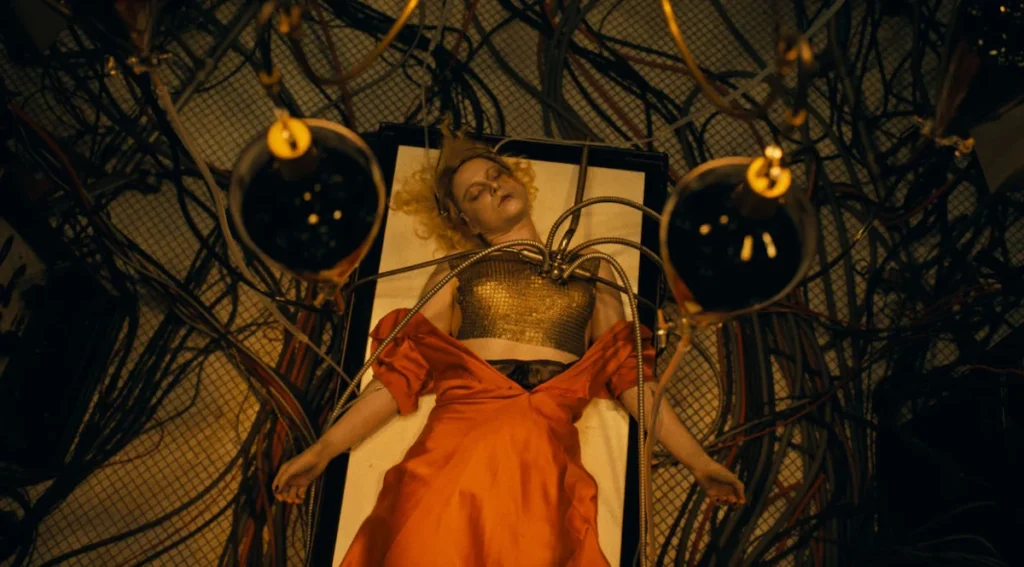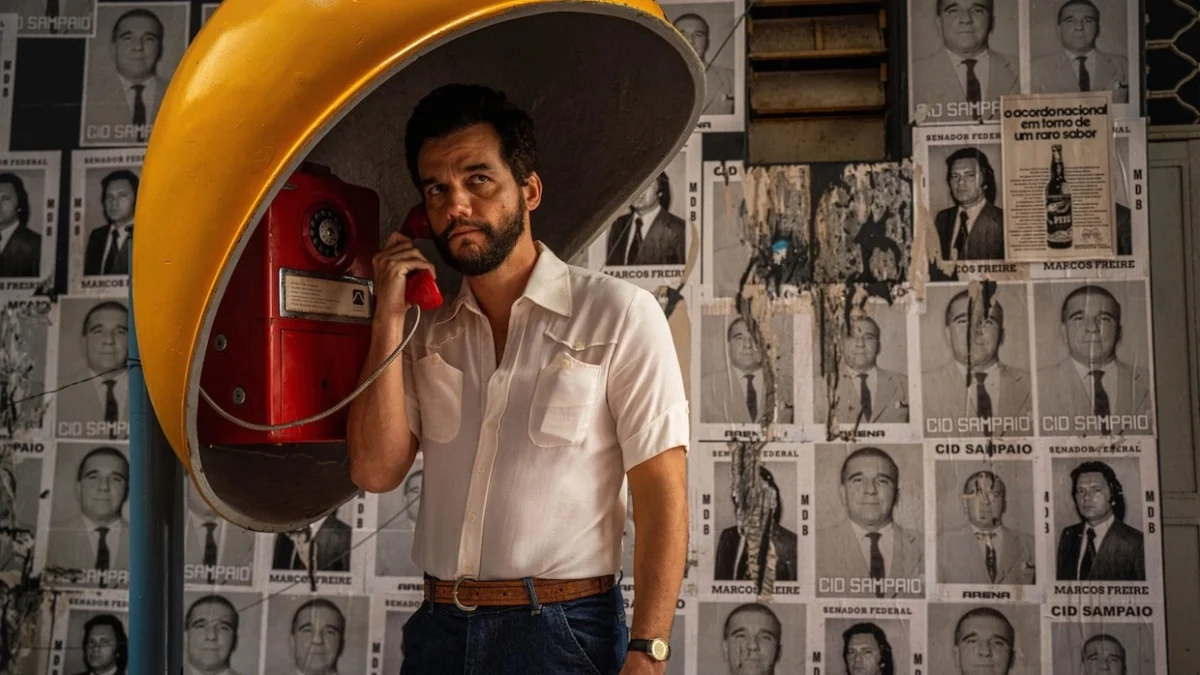
As the Oscar voting deadline loomed on Thursday, March 5, the Brazilian film The Secret Agent concluded a remarkable journey, vying for top honors in four major categories, including Best Picture. This unexpected recognition for a period drama steeped in the tumultuous era of Brazil’s military dictatorship (1964-1985) underscores its potent cultural and political resonance, both internationally and within its home country, where another critical election cycle is rapidly unfolding.
An Oscar Bid Amidst Domestic Turmoil
The Secret Agent (original title Agente Secreto), a compelling narrative set against the backdrop of a repressive authoritarian regime, has garnered significant critical acclaim, propelling it onto the global stage. Its nomination in categories such as Best Picture, Best Director (for Kleber Mendonça Filho), Best Original Screenplay, and Best International Feature Film represents a monumental achievement for Brazilian cinema, signaling a renewed international appreciation for the country’s cinematic output. The film’s success at the Brazilian box office, where it has reportedly outgrossed all other Best Picture Oscar contenders, further solidifies its impact, demonstrating a profound connection with domestic audiences. This commercial triumph, however, has not been without controversy, facing attempts by opposition figures to discredit its popularity through disinformation campaigns, a stark reminder of the "war of narratives" currently gripping Brazil.
Brazil’s Political Crossroads: A Nation Reflects
The film’s Oscar campaign coincides with a pivotal moment in Brazilian politics. In October, Brazilians will head to the polls for the first round of presidential elections, the first since the dramatic 2022 contest that saw the far-right populist Jair Bolsonaro defeated by the Workers’ Party candidate, Luiz Inácio Lula da Silva. Lula, affectionately known as "Lula," returned to the presidency after serving two prior terms at the beginning of the millennium (2003-2010). If he secures another victory, the 80-year-old statesman would make history as the country’s first four-term president.
This political landscape marks a significant shift from just a few years ago, when many observers feared for the future of Brazilian democracy. Bolsonaro’s four-year tenure (2019-2022) was characterized by a controversial blend of authoritarian rhetoric, attacks on democratic institutions, and a rollback of environmental protections and cultural funding. His rule culminated in an attempted coup in January 2023, following his electoral defeat, an event that led to his subsequent conviction and a 27-year prison sentence last year for inciting the uprising. The Secret Agent, by delving into Brazil’s dictatorial past, inadvertently offers a powerful lens through which to examine Bolsonaro’s rise and the ongoing challenges to the nation’s democratic fabric.
Echoes of the Past: The Military Dictatorship and Bolsonaro’s Legacy
The film is set during Brazil’s military dictatorship, a period spanning from 1964 to 1985, marked by severe human rights abuses, political repression, censorship, and widespread surveillance. This historical backdrop, though decades removed, resonates acutely with recent events. Writer-director Kleber Mendonça Filho, reflecting on the unexpected parallels, noted in a Zoom interview, "I thought I was writing a film about the seventies. The repetition in Brazil with the recent government that did not get a reelection… it really felt like they were trying to bring back the old times. These are old white men who wanted to relive their youthful years of the dictatorship. Millions of people did not see that coming." His deliberate avoidance of Bolsonaro’s name underscores the lingering sensitivities and the deep divisions within Brazilian society.
The factors that propelled Bolsonaro to power, rooted in a complex interplay of economic dissatisfaction, anti-establishment sentiment, and a yearning for perceived "order," have not entirely receded. Despite Lula being favored to win in October, the political climate remains volatile. Senator Flávio Bolsonaro, the incarcerated ex-president’s son and a candidate for the Liberal Party, launched his campaign in December with his father’s vocal endorsement. Recent polls indicate a tighter race than some might expect, with Flávio Bolsonaro reportedly trailing Lula by a mere eight percentage points. For many viewers, The Secret Agent thus functions not merely as a historical drama but as a timely cautionary tale, reflecting anxieties about potential democratic backsliding.
The Cultural Battleground: The Secret Agent Amidst Disinformation
The film’s intertwining with Brazil’s political narrative became particularly evident when President Lula publicly celebrated its success. This endorsement, while seen by supporters as a positive recognition of national artistic achievement, was seized upon by opposition elements. "There’s fake news out there saying that the cinemas are empty and that the numbers are completely false," Mendonça Filho recounted. "This is so absurd. These are official numbers coming from the national film agency verified by the press. It’s just a war of narratives." This tactic of discrediting official data and promoting alternative "facts" mirrors broader trends in political discourse, particularly during the Bolsonaro years.
Beyond box office numbers, The Secret Agent has become a genuine cultural phenomenon. During Brazil’s vibrant Carnival festivities, images and videos circulated showing numerous revelers dressed as their favorite characters from the movie. A vintage yellow t-shirt worn by star Wagner Moura in the film, a remnant of a 1978 carnival group from the era depicted, has emerged as a particularly potent symbol. This fashion choice, seemingly innocuous, carries profound anti-fascist undertones, highlighting the film’s contribution to the ongoing national conversation about historical memory and democratic values.
Rebuilding Brazilian Cinema: A Post-Bolsonaro Revival

The very existence and success of The Secret Agent are testaments to a significant change of fortune within Brazil’s cultural sector. During his presidency, Jair Bolsonaro significantly curtailed funding for Ancine, the country’s regulatory film body, effectively freezing support for national film productions. This period led to a dramatic decline in film output and widespread concern among artists and cultural workers about censorship and ideological interference.
The Secret Agent, shot in the wake of Walter Salles’s internationally acclaimed I’m Still Here (which won Best International Oscar last year, though the article implies it was The Secret Agent that followed I’m Still Here‘s win, it’s more accurate that I’m Still Here was released in 2022 and The Secret Agent is the new Oscar contender), marks a symbolic return to the freedom of expression enshrined in Brazil’s 1988 constitution, adopted after the end of the dictatorship.
Débora Butruce, curator and vice president of the Brazilian Association of Audiovisual Presentation, elaborates on this renaissance. "Things have become more stable and supportive for filmmakers since Lula came back into office," she stated. "After a period of budget cuts, stalled policies, and a pretty hostile attitude toward the cultural sector, there’s been a real effort to rebuild funding programs, get institutions working again, and reopen dialogue with filmmakers and the audiovisual sector in general. That shift hasn’t just improved working conditions, but it’s also reinforced the idea that cinema matters as part of Brazil’s culture and democratic life." This revitalization is crucial for a country with a rich cinematic tradition, where film often serves as a powerful medium for social commentary and cultural identity.
Expert Voices: Culture, Democracy, and the Power of Storytelling
The Secret Agent centers on Wagner Moura’s character, Armando, as he navigates a dangerous return to Recife while on the lam from oppressive government forces. Butruce sees the film as both a cautionary tale and a showcase of Brazil’s revitalized filmmaking potential. "It touches on themes like political memory and surveillance in a way that feels relevant and easy to connect with, especially given what’s going on in Brazil right now," she explained. "At the same time, the film’s high production quality shows how strong and resilient Brazil’s audiovisual industry has become, even in the face of challenges."
Despite attempts by propagandists to frame The Secret Agent as an advertisement for the incumbent government, Butruce believes such arguments hold little sway. "The film industry’s success is more likely to shape conversations about culture and democracy than to directly determine the election outcome," she asserted. "When the industry is thriving, winning awards, creating jobs, and getting international recognition it can be used as proof that investing in culture pays off." This perspective highlights the broader, long-term impact of cultural investment on national pride and democratic discourse, rather than its immediate electoral utility.
Silvia Cruz, founder of Vitrine Filmes and distributor of The Secret Agent, echoed this sentiment, emphasizing the film’s role in shaping national memory. "The question here is not whether the film will impact the elections," she posited, "but what kind of memory Brazil wants to leave for the future about this moment in time." This focus on historical legacy and collective identity transcends partisan politics, positioning the film as a crucial artifact in Brazil’s ongoing self-reflection.
Filmmaker’s Perspective: Art as Reflection, Not Propaganda
Mendonça Filho, while traveling internationally to promote his film, noted persistent inquiries about governmental influence, particularly regarding national funding and President Lula’s public support. "People ask, ‘Is your film an official government film?’ Absolutely not. So they say, ‘But Lula invited you to come to the presidential palace!’" he recounted. "He did, because this president is actually proud that there’s a Brazilian film doing well, much like an athlete who comes back with a gold medal." This clarification underscores the distinction between governmental appreciation for artistic achievement and direct political sponsorship, a nuanced point often lost in politically charged environments.
The filmmaker also made clear his own political boundaries. "Would I meet any president? No," he stated. "I would meet someone I find reasonable but for whom I never would have voted. I would never have met with Bolsonaro if he had invited us—but he never would have invited us, because he absolutely despises us." This candid admission highlights the deep ideological chasm that persists in Brazil and the personal convictions that often inform artistic choices, even when artists claim a non-political stance for their work.
Indeed, Mendonça Filho maintains a principled resistance to explicitly labeling his work as politically driven. "I just focus on telling a story," he said. "The tensions within it might be interpreted as political. I think it’s part of our job to discuss society and if you discuss society, you will inevitably discuss some form of politics." This perspective frames art as an organic reflection of societal realities, where political interpretations naturally emerge from the human condition rather than from a predetermined agenda.
Beyond the Ballot Box: The Enduring Message of The Secret Agent
While Mendonça Filho may shy away from overtly ideological interpretations, The Secret Agent undeniably asserts a vital survival tactic for life during oppressive times. "One thing I really learned from those years was the value of getting together with your friends—the people you love—and developing a kind of protection," he shared. "If everybody’s together, when you go through a tough moment sharing your thoughts and grievances, you get through it. That’s something that really is in the film."
This message of community, solidarity, and collective resilience against authoritarianism forms the enduring heart of The Secret Agent. As Brazil navigates its current political landscape, grappling with the shadows of its past and the uncertainties of its future, the film offers more than just entertainment or critical acclaim. It provides a mirror for national introspection, a framework for understanding historical cycles, and a hopeful testament to the power of human connection in safeguarding democratic ideals. Whether or not it secures an Oscar, The Secret Agent has already etched itself into Brazil’s cultural and political narrative, reminding a nation in flux of the profound importance of memory, vigilance, and the shared human spirit.