The Academy Awards are still three weeks away, but this is a vital week for the contenders as the final Oscar voting period rapidly approaches. The critical campaigning phase is drawing to a close, with the ultimate voting window for Academy members opening on February 26 and concluding on March 5. Sandwiched between these crucial dates are two highly anticipated precursor events: the Producer’s Guild Awards (PGA) on February 28 and the Actor Awards (formerly the Screen Actors Guild Awards, or SAG Awards) on March 1. Both ceremonies historically offer strong — though not entirely infallible — indicators of eventual Oscar triumphs, making their outcomes closely scrutinized by industry observers and awards enthusiasts alike.
The BAFTA Ceremony: A Vortex of Controversy and Prediction
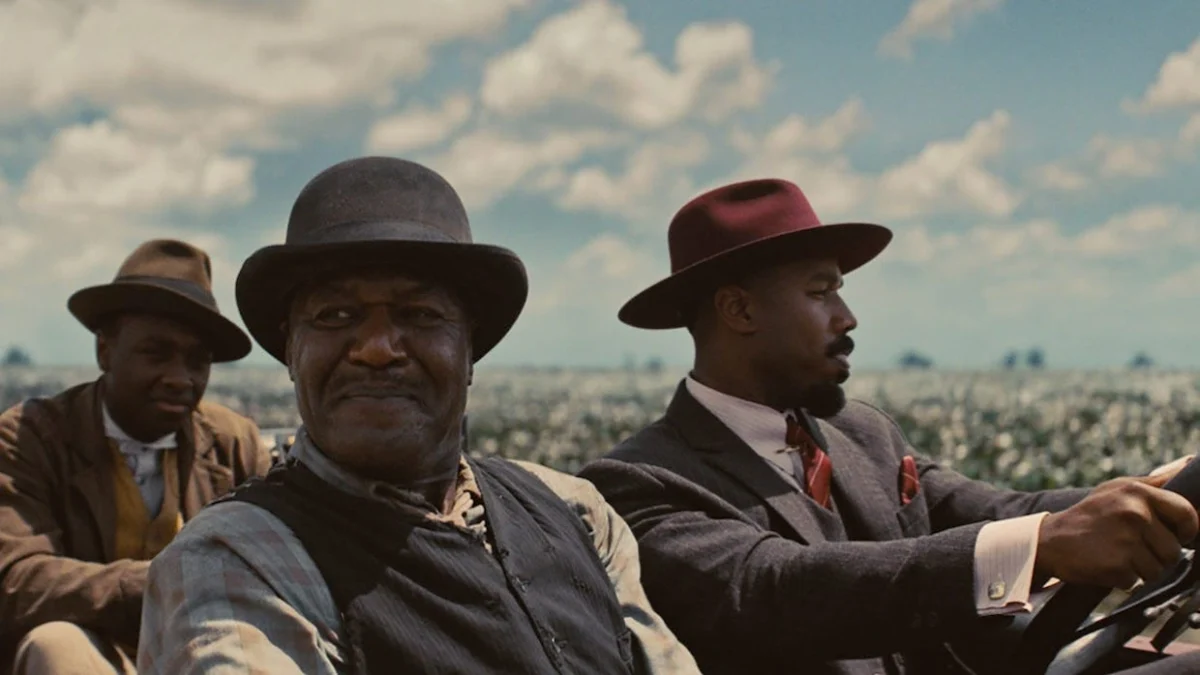
If Sunday’s British Academy Film Awards (BAFTAs) ceremony proved anything, it is that surprises and upsets are still very much possible in the late stages of awards season. However, the narrative emanating from the Royal Festival Hall in London was largely dominated not by the winners, but by a deeply unsettling incident that overshadowed the event and sparked widespread debate. The controversy involved John Davidson, the subject of the critically acclaimed narrative film I Swear, who, during the live presentation of an award, shouted a racial slur from the audience. This occurred while actors Michael B. Jordan and Delroy Lindo, co-stars of the film Sinners, were on stage presenting the first award of the night.
Davidson, a prominent figure in the U.K. as an advocate for Tourette syndrome awareness, was invited to the event to celebrate the film based on his own life story. At 16, he was the subject of the documentary John’s Not Mad, which brought his condition and advocacy into the public eye. His presence at the BAFTAs was intended to be a moment of recognition for his life and the impactful film it inspired. The immediate reaction in the hall was one of shock and discomfort, a palpable tension descending upon the usually celebratory atmosphere. Robert Aramayo, the lead actor in I Swear, had just picked up the award for Best Actor, a significant upset, besting a formidable lineup of Oscar nominees including Timothée Chalamet, Leonardo DiCaprio, Ethan Hawke, and Michael B. Jordan himself. The slur, uttered moments after Aramayo’s surprising victory, abruptly shifted the focus from cinematic achievement to a stark display of prejudice.
The BBC’s Broadcast and Public Outcry
The incident was naturally unsettling and profoundly unfortunate for all involved, particularly for Jordan and Lindo, who were presenting with professionalism and grace. The situation was further exacerbated when the BBC, the U.K.’s public service broadcaster, aired the segment in full during its two-hour-delayed broadcast of the ceremony. This decision ignited a firestorm of criticism, especially given another contentious editorial choice made by the BBC during the same broadcast: the cutting of director Akinola Davies Jr.’s acceptance speech for Outstanding Debut by a British Writer, Director, or Producer. Davies Jr., director of My Brother’s Shadow, had included the phrase “free Palestine” in his speech, which was subsequently edited out of the televised version. The perceived double standard – broadcasting an uncensored racial slur while censoring a political statement – led to widespread condemnation and accusations of hypocrisy directed at both BAFTA and the BBC.
BAFTA, in the wake of the incident, issued a public statement acknowledging the deeply regrettable nature of what occurred. While they did not explicitly identify John Davidson, their statement condemned the use of racist language and emphasized their commitment to fostering an inclusive and respectful environment. They also indicated a review of their live event protocols to prevent similar incidents in the future. The BBC, facing intense scrutiny, defended its editorial choices by citing a long-standing policy against broadcasting hate speech, which they argued the racial slur constituted, while also asserting their right to edit political statements that could be seen as divisive or violate broadcast impartiality guidelines. This explanation, however, did little to quell public anger, with many questioning the hierarchy of perceived offense and the consistency of application.
For Michael B. Jordan and Delroy Lindo, the incident was undoubtedly a distressing experience, transforming a moment of industry recognition into one of public confrontation with racial intolerance. While neither actor has issued a direct public statement specifically addressing the incident, sources close to them have indicated profound disappointment and a desire to focus on the positive aspects of their craft and the impact of their film. For John Davidson, whose life’s work has been dedicated to advocacy and understanding, the unintended consequences of his outburst are tragic, potentially undermining years of effort to destigmatize Tourette syndrome and bring awareness to neurological conditions. The incident serves as a stark reminder of the complexities inherent in live broadcasting and the profound impact of words, particularly in such a high-profile, globally televised setting.
Unpacking the BAFTA Winners: Shifting Sands for Oscar Hopefuls
Beyond the controversy, Sunday’s BAFTA awards still managed to throw a few significant wrenches into the meticulously calibrated awards-season machine, offering glimpses into potential Oscar shifts.
-
Best Actor Shockwave: The most surprising acting win was Robert Aramayo for Best Actor in I Swear. This unexpected victory over a field of highly decorated and Oscar-nominated actors like Timothée Chalamet, Leonardo DiCaprio, Ethan Hawke, and Michael B. Jordan suggests that the Best Actor Oscar race, often thought to be coalescing, might be more open than previously assumed. While BAFTA results don’t always directly translate to Oscar wins in acting categories, such an upset can inject uncertainty and highlight the potential for a dark horse contender to gain traction in the final voting push.
-
One Battle After Another‘s Dominance: Leading the BAFTA winners was One Battle After Another, which collected an impressive six prizes. These included the highly anticipated awards for Best Picture, Best Director, and Best Adapted Screenplay, reinforcing its strong frontrunner status for the top Oscar prize. The film also garnered two crucial craft prizes for Best Cinematography and Best Editing, categories that often align with Best Picture winners at the Academy Awards, signaling a broad appreciation for its technical prowess.

-
Sean Penn’s Surprise Supporting Actor Win: Another significant upset came in the Best Supporting Actor category, where Sean Penn won. Penn was notably absent from the ceremony, suggesting that even he might not have anticipated the win. This further complicates an already competitive category, especially considering the absence of Sentimental Value‘s Stellan Skarsgård from the upcoming Actor Awards nominations. Penn’s victory, particularly without his presence, underscores the unpredictable nature of this race and leaves the Oscar outcome in this category highly ambiguous.
-
Sinners‘ Ascendance: Following One Battle After Another‘s lead, Sinners secured three important victories, further cementing its position as a formidable contender across multiple categories.
- Wunmi Mosaku for Best Supporting Actress: Mosaku collected her second major prize of the season, having previously won the Gotham Award for Best Supporting Performance in December. Her BAFTA win for Best Supporting Actress is particularly significant as she triumphed over One Battle After Another‘s Teyana Taylor, who has been widely considered the Oscar frontrunner in this category. This win could signal a tightening of the race and introduce genuine competition where a "lock" was previously perceived.
- Ryan Coogler for Best Original Screenplay: In a historic moment, Ryan Coogler became the first Black winner in the Original Screenplay category at the BAFTAs. This recognition highlights the critical acclaim for his writing and underscores the film’s strength beyond its technical and acting merits. Such a groundbreaking win could resonate with Academy voters, particularly in a season that has seen renewed discussions around diversity and representation.
- Ludwig Göransson for Best Score: Göransson’s win for his evocative score further demonstrates the film’s widespread artistic appreciation, a strong indicator for potential Oscar success in the Best Original Score category.
-
Frankenstein‘s Craft Triumphs: The highly anticipated Frankenstein also garnered three awards, sweeping the craft categories for Best Costume Design, Best Makeup and Hairstyling, and Best Production Design. These wins are particularly strong indicators for the corresponding Oscars. Guillermo del Toro’s passion project, known for its intricate visual design and period detail, is now strongly positioned to collect these technical Oscars, showcasing the Academy’s potential appreciation for its immersive world-building.
-
Hamnet‘s British Film Win and Buckley’s "Lock": Hamnet took advantage of its home field advantage, winning the BAFTA for Best British Film. While it’s currently projected for a single Oscar win, that prediction remains significant: Jessie Buckley for her lead performance. At this point in the season, Buckley appears to be the only acting contender who seems to have her Oscar in a relatively secure position, a rare phenomenon in such a dynamic awards year.
The Road Ahead: PGA and Actor Awards as Final Precursors
The upcoming precursor awards will play a crucial role in shaping the final narrative for Oscar voters. However, their predictive power varies significantly.
-
The Actor Awards (formerly SAG): A Mixed Bag for Acting Categories: The Actor Awards may not bring as much clarity to the acting races as one might expect. The absence of Sentimental Value‘s Stellan Skarsgård from the supporting actor category (indeed, no non-English performances were nominated in any category) makes it difficult to gauge its impact on the Academy’s supporting race, particularly concerning whether Sean Penn might collect another trophy. Despite the massive membership overlap between SAG and the Academy — with actors constituting the largest voting bloc within the Academy — there have been too many discrepancies between the two awards bodies’ winners to make SAG a definitive Oscar bellwether. Last year, both A Complete Unknown‘s Timothée Chalamet and The Substance‘s Demi Moore won SAG Awards but ultimately lost their respective Oscars. The year before saw Killers of the Flower Moon‘s Lily Gladstone win the SAG Award for Best Actress, only for Poor Things‘ Emma Stone to claim the Oscar. These examples highlight the nuanced differences in voting preferences and global perspectives between the two bodies, especially when the Academy’s international membership comes into play.
-
The PGA Awards: The Best Picture Oracle: The Producer’s Guild Awards, however, are considerably more reliable when it comes to predicting the Best Picture outcome. Since 1989, when the Producers Guild presented Driving Miss Daisy with its top honor, the PGAs have predicted the Oscar Best Picture winner all but 10 times. Most recently, in 2020, the guild chose 1917 over the eventual Oscar winner Parasite, demonstrating its strong, though not absolute, correlation. The PGA’s predictive accuracy stems from its membership’s direct overlap with the Academy’s producer branch and its preferential ballot system, which closely mirrors the Academy’s Best Picture voting process. Of all the remaining ceremonies this season, the February 28 PGA Awards is arguably the most crucial in providing insight into cinema’s biggest honor of the year. A PGA win often signifies broad industry consensus and momentum, making it a critical barometer for the Best Picture race.
Broader Implications and the Unpredictable Oscar Race
Ultimately, the twists and turns in this year’s awards race are a refreshing development. A sense of genuine anticipation and uncertainty going into an Oscars ceremony makes for a far more exciting and engaging event for audiences and industry professionals alike. Despite its recent string of wins and apparent frontrunner status, there remains a sneaking suspicion that One Battle After Another might not be a shoo-in for Best Picture.
Sinners is hot on its heels, boasting a record-setting 16 Oscar nominations – a testament to the profound love and widespread support for the film across various branches of the Academy. This unprecedented number of nominations indicates a deep and broad appreciation that goes beyond a single faction, making it a formidable challenger. Furthermore, the BAFTA incident, while unfortunate, may inadvertently rally more support behind Sinners. Such moments of shared experience and public display of solidarity can galvanize voters, creating a ripple effect of empathy and renewed appreciation for the film and its stars.
This awards season has proven to be anything but conventional. The unexpected outcomes at the BAFTAs, coupled with the surrounding controversies, have reshaped the landscape, making the final stretch incredibly compelling. The game isn’t over until that final envelope is opened, a sentiment often echoed by contenders, but one that rings particularly true in this uniquely unpredictable and dynamic year.