The SXSW Film Festival, a crucial launchpad for independent cinema, recently unveiled a compelling new voice with "Sparks," the debut feature from director Fergus Campbell. Heralded by critics as embodying the very spirit of independent film festivals, this microbudget gem presents a poignant and stylistically unique exploration of adolescent alienation, escapism, and the search for identity in the stark landscapes of Northwest Nevada. At a lean 76 minutes, the film delivers a powerful narrative through meticulously crafted frames, earning accolades for its raw honesty and inventive cinematic approach.
The Genesis of a Cinematic Journey: Setting the Scene
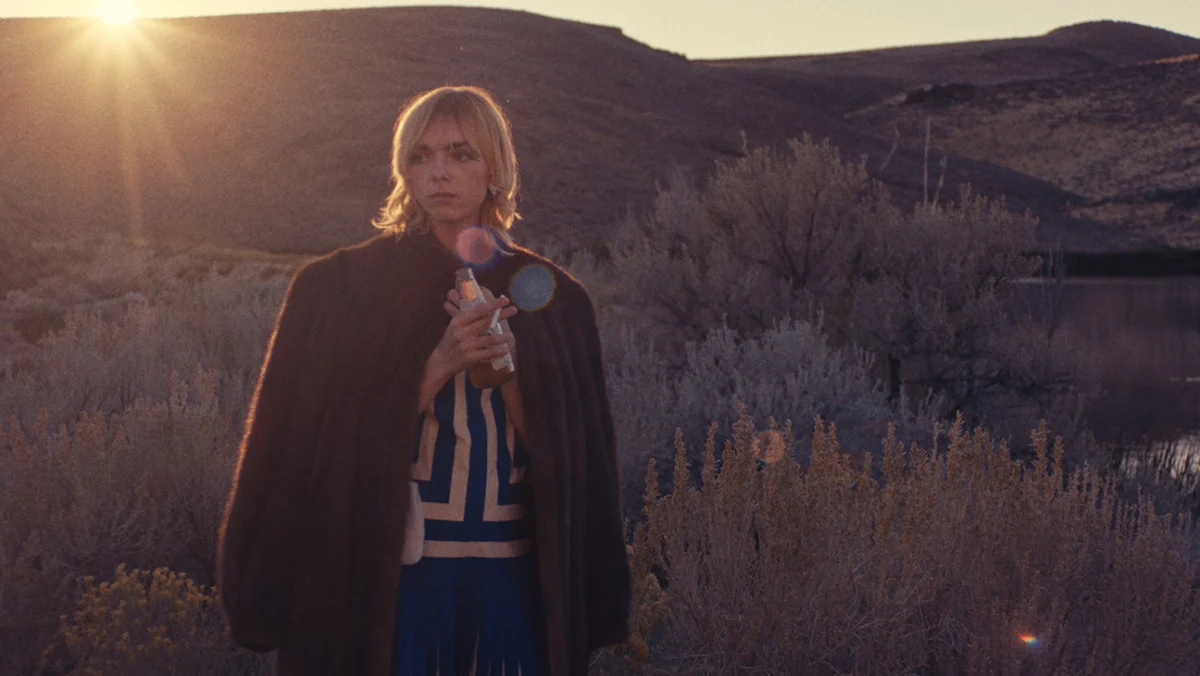
"Sparks" immediately immerses its audience in the disorienting reality of its protagonist, Cleo, portrayed with understated intensity by Elsie Fisher, known for her breakout role in Bo Burnham’s "Eighth Grade." The opening moments set a stark tone: in the hot, arid expanse of Northwest Nevada, a mother drops off her daughter in town, delivering an unwarranted dressing-down and an unsettling directive to not return home soon. Cleo, enduring this cruel reminder of her perceived place in the world, waits for her mother’s departure before a silent, futile burst of adolescent anger. This initial scene establishes a profound sense of abandonment that permeates Cleo’s journey throughout the film. Her mother’s absence becomes a defining feature, a void that shapes Cleo’s subsequent actions and internal struggles. Even when Cleo’s disappearance later in the narrative becomes a central point, the audience is never formally introduced to her mother, reinforcing the film’s thematic emphasis on self-reliance and a world where adult guidance is notably absent or intentionally obscured.
This deliberate omission of parental figures and the blurring of adult authority, likened by critics to the unintelligible voices of adults in "Peanuts" cartoons, is a conscious stylistic choice by Campbell. It immediately positions the viewer within Cleo’s subjective experience, emphasizing the isolation and self-sufficiency forced upon her and her peers. The film’s aesthetic further underscores this unique perspective, from its charming hand-painted opening title sequence to the intermittent intrusion of illustrations throughout the story. These elements are not mere stylistic flourishes but integral components that deepen the film’s emotional resonance and underscore its independent spirit, marking "Sparks" as precisely the kind of singular vision that film festivals like SXSW are designed to champion.
SXSW: A Beacon for Independent Voices
The SXSW Film Festival, an annual event held in Austin, Texas, has long distinguished itself as a vital platform for emerging talent and groundbreaking independent cinema. Established in 1994, the festival has grown exponentially, becoming a significant cultural event that converges film, music, and interactive media. Its Narrative Spotlight section, where "Sparks" premiered, is specifically curated to showcase feature films by established and emerging filmmakers that exemplify original storytelling and artistic innovation. For microbudget productions like "Sparks," a premiere at SXSW can be a transformative experience, offering invaluable exposure to industry professionals, critics, and a diverse audience that might otherwise overlook such niche productions.
Historically, SXSW has been instrumental in launching the careers of numerous directors and actors, and in bringing critically acclaimed independent films to wider attention. Past successes range from early works by figures like Lena Dunham and Barry Jenkins to recent Oscar-nominated features, solidifying its reputation as a trendsetter in independent film. In an increasingly crowded cinematic landscape dominated by studio blockbusters and streaming giants, festivals like SXSW provide a crucial counter-narrative, fostering a community where creative risk-taking is celebrated and diverse perspectives are prioritized. "Sparks" perfectly aligns with this ethos, demonstrating how compelling narratives and artistic integrity can thrive even with limited financial resources, making it a quintessential festival darling.
The Director’s Vision and Craftsmanship
Fergus Campbell’s debut as both director and writer is a testament to his clear artistic vision and meticulous craftsmanship. The film’s visual language, characterized by its bespoke hand-painted titles and intermittent illustrations, immediately sets it apart. These elements are not just decorative; they serve as windows into Cleo’s internal world, hinting at her artistic sensibilities and her yearning for a reality beyond her desolate surroundings. This blend of visual artistry with raw, grounded storytelling creates a unique texture that feels both intimate and expansive.
Campbell’s direction skillfully navigates the fine line between stylized presentation and naturalistic performances. Every frame of "Sparks" feels intentionally composed, a reflection of a filmmaker deeply invested in the aesthetic and emotional impact of his work. This commitment to craft is particularly impressive given the film’s microbudget status, underscoring the idea that artistic vision can often transcend financial limitations. The care evident in the film’s construction speaks to a profound love for the cinematic form, a quality that resonates strongly with festival audiences and critics who appreciate the art of filmmaking for its own sake. Campbell’s ability to create such a cohesive and engaging world with limited resources suggests a promising future for the director, marking him as a talent to watch in the independent film scene.
Narrative Threads: Escapism, Identity, and the Allure of Cinema
Cleo’s journey takes a pivotal turn when she discovers a book on Jean-Luc Godard, a chance encounter that ignites her imagination and offers a powerful escape route. Suddenly, her aspirations crystallize: she yearns for the fantasy of 1960s Paris, a place she romanticizes as the birthplace of a purer, more authentic form of cinema, untainted by American conventions. This fascination with the French New Wave becomes more than just an intellectual pursuit; it transforms into a deeply personal quest for a truer existence, a yearning to transcend her mundane, painful reality.
Her path soon converges with "The Crop," a rebellious group of teenagers who have carved out their own unique coping mechanism: they believe a local reservoir serves as a time portal. This concept, whether literal or metaphorical, becomes the central axis around which their lives revolve. Antoine, the group’s de facto leader, portrayed by Charlie Foster in a star-making performance, shares Cleo’s enchantment with 1960s Paris, albeit without her nuanced understanding of the French New Wave’s cinematic significance. His attraction to Cleo is immediate and intense, driven by a shared, albeit superficial, romanticism for a bygone era. This burgeoning connection, however, quickly creates a palpable tension within the group, driving a wedge between Antoine and his best friend and secret lover, Max, played with poignant vulnerability by Denny Mcauliffe.
The rest of "The Crop" provides a varied tapestry of adolescent personalities. There’s the brutally honest Max, the goofy Trip (Simon Downes Toney), the laid-back Kane (Thomas Deen Baker), and the soft-spoken Casazza (Julia D’Angelo). Crucially, it is Odette (Madison Hu), who harbors a secret affection for Cleo, who initially introduces her to "The Crop," thereby setting the film’s central narrative in motion. These characters, though drawn to the fantastical idea of time travel, largely remain grounded in their present, finding solace and community within their unconventional family unit. Their shared space, an empty parking lot where they party with beer acquired through fake IDs, becomes a microcosm of their chosen autonomy, a sanctuary away from the scrutiny and constraints of the adult world.
Queer Narratives and Contemporary Independent Cinema
"Sparks" boldly embraces a queer love triangle and features multiple scenes depicting same-sex relationships among the male members of "The Crop." This progressive portrayal of youth sexuality positions the film as a modern successor to the early works of Gregg Araki, specifically films like "Nowhere" and "Totally F***ed Up." Araki’s films, iconic for their portrayal of disaffected, sexually fluid youth navigating an often-nihilistic world, find a contemporary echo in Campbell’s vision. "Sparks" updates this sensibility for a new generation, reflecting a more open and diverse landscape of queer identity and relationships.
The film’s approach to sexuality is refreshingly non-sensationalized and integrated naturally into the fabric of the characters’ lives. This aligns with a growing trend in recent independent cinema, where queer narratives are becoming more nuanced and less defined by trauma or "otherness." Similar to Kate Beecroft’s "East of Wall" and Luke Gilford’s "National Anthem," "Sparks" masterfully blends classical rural American imagery with a more ethnically and socially diverse worldview. These films collectively breathe new life into American independent cinema by showcasing characters and relationships that reflect the complexity and diversity of contemporary youth culture, challenging traditional cinematic representations and pushing boundaries in authentic storytelling. The inclusion of such diverse perspectives is not merely an aesthetic choice but a crucial step in ensuring that independent cinema remains relevant and reflective of societal shifts.
Character Development and Ambiguity
Campbell’s script is notable for its intricate blend of stylized and naturalistic dialogue, which creates characters who feel "painfully real in their inconsistency." This authenticity is crucial to the film’s emotional impact, allowing the audience to connect deeply with the struggles and aspirations of the young cast. The dialogue often oscillates between profound philosophical musings and the raw, unpolished banter typical of teenagers, reflecting their intellectual curiosity alongside their emotional immaturity.
Elsie Fisher’s portrayal of Cleo is central to the film’s emotional core. Building on her acclaimed performance in "Eighth Grade," Fisher once again embodies a young woman struggling beneath a veneer of confidence. Cleo’s brave face and outward resolve mask a deep vulnerability, a common characteristic of adolescence where external bravado often conceals internal turmoil. Fisher masterfully conveys Cleo’s internal landscape, allowing the audience to witness her attempts to project an image of self-assurance, hoping that this perceived confidence will guide her toward a better future, or at least a different present.
Charlie Foster delivers a truly "star-making performance" as Antoine. His character is an idealistic "faux beatnik," charismatic yet profoundly naive, particularly in his inability to grasp that Cleo, the object of his intense affection, is as lost and clueless as he is. Foster imbuses Antoine with a captivating blend of passion, insecurity, and a desperate yearning for something more, making him a compelling, if sometimes frustrating, figure. His performance is a highlight, showcasing a young actor with considerable range and presence.
The film’s climax, involving Cleo’s disappearance, deliberately leaves a central question unanswered: did she genuinely time-travel through the reservoir, or is she experiencing a severe mental health crisis? Campbell’s decision to leave this ambiguity intact is a powerful artistic choice. It allows the narrative to resonate on multiple levels, inviting viewers to ponder the nature of reality, belief, and the fragility of the adolescent mind. This open-endedness also subtly acknowledges the increasing prevalence of mental health challenges among young people, framing escapist fantasies not just as whimsical dreams but potentially as manifestations of deeper psychological distress. The film doesn’t offer easy answers, mirroring the often-unresolved complexities of real-life experiences, particularly during the tumultuous period of adolescence.
The Broader Impact and Future of Independent Cinema
"Sparks," with its slim runtime and profound emotional depth, pulls the audience in tight and maintains its grip, every frame pulsating with teen angst and longing. Its success at SXSW is not merely a testament to Fergus Campbell’s talent but also a significant win for microbudget independent filmmaking. In an era dominated by large-scale productions, "Sparks" serves as a powerful reminder that compelling storytelling and artistic innovation do not necessitate vast resources. It demonstrates that passion, vision, and a commitment to authentic voices can yield extraordinarily impactful cinema.
The film’s critical reception, widely praising it as a quintessential indie festival showcase, underscores its potential to inspire a new generation of filmmakers. It encourages young artists to tell their own small, meaningful stories, to experiment with form, and to challenge conventional narratives, all outside the confines of the Hollywood machine. This encouragement is vital for the continued evolution and diversification of American independent cinema. The industry, from festival programmers to critics and distributors, has a crucial role in amplifying such voices, ensuring that films like "Sparks" reach the audiences they deserve.
The enthusiastic reception for "Sparks" at SXSW suggests a promising future for Fergus Campbell. Critics are already eagerly anticipating his next project, hopeful that he will continue to bring his unique vision and meticulous craft to new stories. "Sparks" is more than just a film; it is a declaration of artistic intent, a poignant reflection on youth, and a beacon for the enduring power of independent cinema. It is a film that deserves to be seen by every teenager who needs to feel understood, by every aspiring filmmaker who needs to feel inspired, and by every cinephile who yearns for genuine artistry on screen.