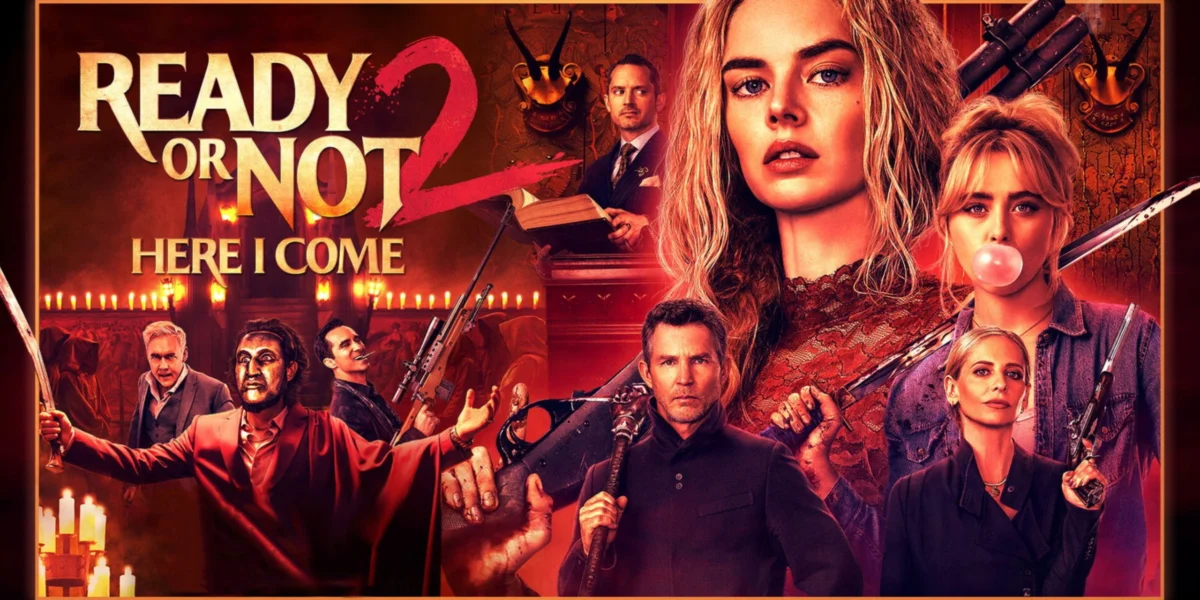
The cinematic landscape of 2026 has been marked by a resurgence of high-concept horror, a trend punctuated by the highly anticipated premiere of Ready Or Not 2: Here I Come at the South by Southwest (SXSW) Film & TV Festival. Following the critical and commercial success of the 2019 original, which revitalized the "deadly game" subgenre, the sequel arrived with significant expectations. The Next Best Picture podcast team, featuring Lauren LaMagna, Josh Parham, Dan Bayer, and Larry Fried, alongside host Matt Neglia, recently convened to provide an in-depth, spoiler-filled analysis of the film. Their discussion centers on the evolution of the protagonist, Grace, the expansion of the franchise’s lore, and the visceral technical execution that has become a hallmark of the directing duo Matt Bettinelli-Olpin and Tyler Gillett.
The Evolution of a Modern Horror Franchise
The journey to Ready Or Not 2: Here I Come began in 2019 when the first film, produced on a modest budget of approximately $6 million, earned over $57 million at the global box office. That film followed Grace (Samara Weaving) as she fought to survive a murderous game of hide-and-seek initiated by her new in-laws, the Le Domas family. The sequel, written by the returning duo of Guy Busick and R. Christopher Murphy, picks up years after the explosive conclusion of the first installment.
The narrative shifts from a struggle for individual survival to a broader conflict involving "elite families" and an ancient ritual intended to secure "ultimate power." In this entry, Grace is no longer the unsuspecting bride but a hardened survivor forced back into the fray to protect her estranged sister. This expansion of the scope suggests a transition from a contained thriller to a wider cinematic universe, a move often seen in successful horror properties like The Purge or Insidious.
Casting and Performance Dynamics
A significant portion of the Next Best Picture review focuses on the ensemble cast, which blends returning talent with established icons of the genre. Samara Weaving reprises her role as Grace, a performance that in 2019 was hailed as a star-making turn. Critics at SXSW noted that Weaving brings a seasoned, "final girl" gravitas to the sequel, reflecting the character’s trauma and growth.
Joining Weaving is Kathryn Newton, who plays Grace’s estranged sister. Newton, who has built a formidable reputation in the genre with roles in Freaky and Abigail, provides a necessary emotional anchor for the film’s high-stakes plot. However, the most discussed additions to the cast are Sarah Michelle Gellar and David Cronenberg. Gellar’s return to the horror-thriller space is treated as a major event for fans of the genre, given her legacy as Buffy Summers. Cronenberg, primarily known as a visionary director of "body horror," takes a rare on-screen role that adds a layer of prestige and eccentricity to the film’s villainous cabal. Elijah Wood and Shawn Hatosy round out the cast, with Wood continuing his trend of appearing in subversive, dark-edged independent cinema.
Production Background and Technical Execution
The directing team known as Radio Silence—Matt Bettinelli-Olpin and Tyler Gillett—has become one of the most reliable fixtures in modern horror. Since the release of the first Ready or Not, the duo directed the 2022 Scream and its 2023 sequel, Scream VI, as well as the vampire thriller Abigail. Their return to the Ready or Not universe signifies a "homecoming" of sorts, and the Next Best Picture panel highlights their signature blend of pitch-black humor and extreme gore.
According to early production reports, Ready Or Not 2: Here I Come sought to double the "blood budget" of its predecessor. The SXSW premiere confirmed this, with reviewers describing several "shocking moments" that utilize practical effects to maintain the visceral impact of the first film. The cinematography and production design have also been scaled up to reflect the move from a single mansion to multiple locations controlled by the shadowy elite families. This increased production value aligns with the film’s status as a cornerstone of Searchlight Pictures’ genre output for the mid-2020s.

Critical Reception and Festival Impact
The 2026 SXSW Film & TV Festival served as the ideal launching pad for the film. Historically, SXSW has been a barometer for genre films that balance mainstream appeal with an independent spirit. Early reviews from the festival have been generally positive, with a current consensus suggesting that the sequel successfully avoids the "sophomore slump" by leaning into its satirical elements.
Initial data from aggregate sites indicates that the film is tracking well with both critics and the "horror hound" demographic. While some critics have noted that the sequel loses some of the "lightning in a bottle" simplicity of the original’s hide-and-seek premise, most agree that the world-building and the chemistry between Weaving and Newton compensate for the increased complexity. The Next Best Picture team’s discussion delves into these nuances, questioning whether the shift toward a more expansive mythology helps or hinders the tension that made the first film a standout.
Thematic Analysis and Social Commentary
Like its predecessor, Ready Or Not 2: Here I Come utilizes the horror genre as a vehicle for social satire. The original film was a blunt instrument used to critique the "old money" aristocracy and the lengths to which the wealthy will go to preserve their status. The sequel broadens this critique to encompass the concept of "ultimate power" and the systemic nature of elite corruption.
The inclusion of multiple families participating in the ritual suggests a global network of influence, moving the commentary from familial dysfunction to institutional rot. The podcast panel explores how the film uses humor to alleviate the grimness of its themes, a balancing act that the writers Busick and Murphy have refined over their recent collaborations with Radio Silence. The "high-stakes ritual" at the heart of the film serves as a metaphor for the cutthroat nature of modern power structures, where survival is predicated on the exploitation of others.
Broader Implications for the Genre and Franchise
The release of Ready Or Not 2: Here I Come comes at a pivotal time for the horror genre. In the mid-2020s, audiences have shown a preference for "legacy sequels" and expanded universes that offer both familiarity and innovation. The success of this film could potentially lead to a third installment, completing a trilogy that follows Grace’s transformation from victim to hunter.
Industry analysts suggest that the film’s performance will be a key indicator of the viability of mid-budget horror in a theatrical market increasingly dominated by massive tentpoles. By leveraging a strong central performance and a distinct visual style, Ready Or Not 2: Here I Come demonstrates that there is still significant room for original (or semi-original) intellectual property to thrive. The Next Best Picture review concludes with a look toward the future, speculating on where the franchise can go now that the "rules" of the world have been so thoroughly disrupted.
Conclusion and Podcast Availability
The Next Best Picture podcast’s deep dive into Ready Or Not 2: Here I Come provides listeners with a comprehensive look at one of the year’s most significant genre releases. From the technical prowess of Radio Silence to the powerhouse performances of Samara Weaving and her co-stars, the film appears to have solidified its place as a worthy successor to the 2019 cult classic.
The full, spoiler-filled discussion is currently available to subscribers on Patreon, where the NBP team offers exclusive content for a nominal fee. This model has allowed the outlet to maintain its independent voice while providing high-quality film criticism. For the general public, a preview of the discussion is available on major podcast platforms, including Apple Podcasts and via the Evergreen Podcasts Network. As the film moves from its festival run to a wider theatrical release, the insights provided by the NBP panel offer a valuable framework for understanding the film’s place in the modern horror canon.