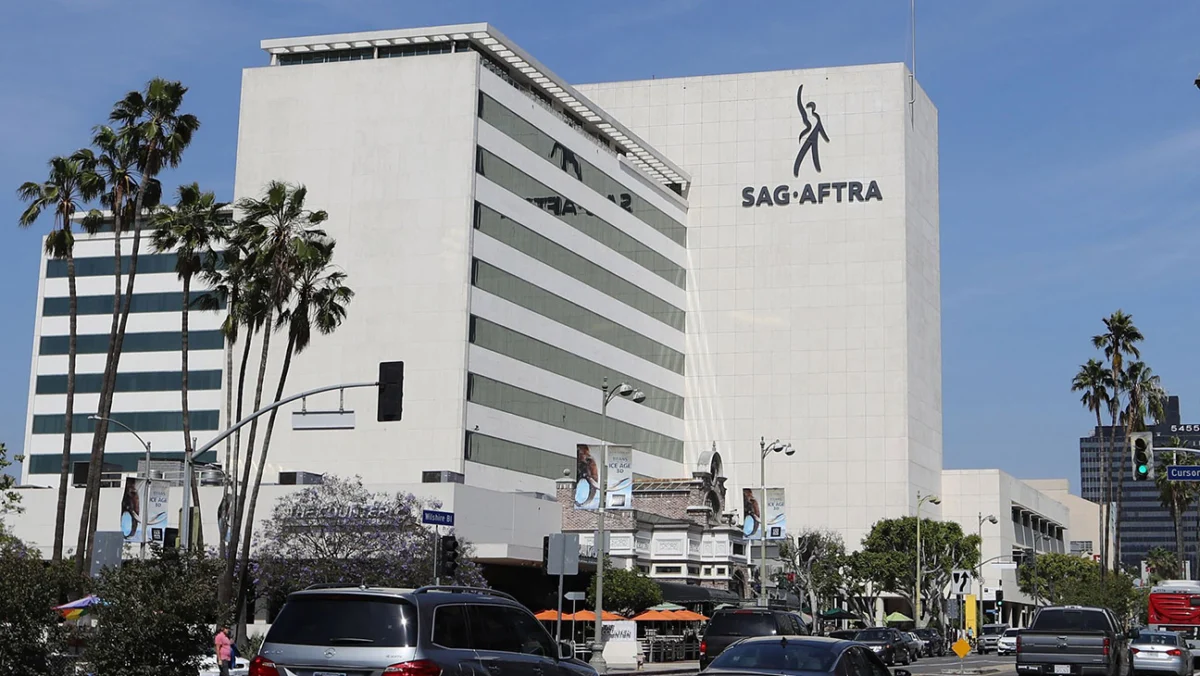
The labor landscape in Hollywood, already fraught with tension following a historic year of industry-wide strikes, faced a new internal development on Thursday as communications and marketing professionals at SAG-AFTRA announced their intention to unionize. Representing a critical wing of the performers’ union’s public-facing operations, the group has signaled its intent to join the National Organization of Legal Services Workers (NOLSW), a branch of the United Auto Workers (UAW) Local 2320. This move follows a broader trend of "unionizing the unions," where the administrative and creative staff who power labor organizations seek the same collective bargaining protections they help secure for their memberships.
According to the NOLSW, which already counts SAG-AFTRA’s field organizers among its ranks, a supermajority of the communications and marketing staff has signed union authorization cards. This specific bargaining unit is composed of approximately 16 individuals who perform a wide variety of high-stakes roles, including writers, social media strategists, magazine editors, audio and video producers, event planners, and publicists. These workers are responsible for the messaging that defines the public image of the world’s largest entertainment union, particularly during its high-profile contract negotiations and strike actions.
The decision to organize comes at a pivotal moment for SAG-AFTRA. The union is currently in a hiatus from negotiations with the Alliance of Motion Picture and Television Producers (AMPTP) regarding its next three-year film and television contract. With talks scheduled to resume later this spring, the staff’s push for recognition introduces a layer of internal administrative pressure that could influence the union’s operational capacity during a critical bargaining window.
The Core Demands: Economic Survival and AI Protections
Two primary catalysts are driving the unionization effort among the communications staff: the escalating cost of living in the Los Angeles metropolitan area and the existential threat posed by generative artificial intelligence (AI). These grievances mirror the very issues that drove 160,000 SAG-AFTRA members to the picket lines for 118 days in 2023.
In a statement provided to the press, the organizing committee highlighted the financial strain placed on staff members living in Southern California. "With the skyrocketing cost of living in Los Angeles, many of us are struggling to make ends meet with our current wages," the committee stated. This sentiment is backed by regional economic data. According to recent reports from the Bureau of Labor Statistics and various housing market analysts, the median rent for a one-bedroom apartment in Los Angeles remains among the highest in the nation, frequently exceeding $2,500 per month. When coupled with high inflationary pressure on consumer goods and transportation, mid-level professional wages often fall short of providing a sustainable middle-class lifestyle in the region.
Equally significant is the demand for "A.I. guardrails." The staff seeks a formal prohibition on the use of generative AI in member communications and public-facing content. The committee emphasized the importance of authenticity in the union’s voice, stating, "We want to ensure SAG-AFTRA members always get top-notch, human-made content from their union."
This demand is particularly resonant given SAG-AFTRA’s public stance against the encroachment of AI in the creative arts. During the 2023 strike, the union fought rigorously for protections against "digital doubles" and the unauthorized use of actors’ likenesses by studios. By demanding similar protections for their own work, the communications staff is seeking to codify the principle that human creativity is indispensable to the union’s mission, both on the screen and in the press office.
A Growing Pattern of Internal Labor Unrest
The move by SAG-AFTRA staffers is not an isolated incident but rather part of a burgeoning movement within the labor sector of the entertainment industry. The Writers Guild of America West (WGAW) is currently navigating a similar internal crisis. WGAW staff members, represented by their own union, have been on strike for several weeks, picketing the very organization that recently concluded its own historic strike against the AMPTP.
The irony of the WGAW staff strike is compounded by its location. Staffers have been picketing outside the building where negotiations are frequently held—a facility that is, notably, the SAG-AFTRA headquarters in Los Angeles. This strike has left the WGAW without full administrative and support staffing during a period of ongoing labor management, illustrating the potential disruptions that can occur when a union fails to reach an agreement with its own employees.
Rachel Thomas, President of the NOLSW, framed the SAG-AFTRA staff’s move as a natural extension of the union’s core values. "SAG-AFTRA’s award-winning Communications and Marketing staff create the messaging, media, audio and images that establish SAG-AFTRA as the world’s most powerful institution for improving the lives of media artists," Thomas said in an official statement. "NOLSW is proud to stand with this team as they seek the wages, working conditions and A.I. guardrails they deserve."
Timeline of Recent Labor Developments
To understand the context of this filing, it is necessary to look at the timeline of Hollywood’s labor upheaval over the past year:
- May 2023: The Writers Guild of America (WGA) begins a strike against the AMPTP after contract talks fail.
- July 2023: SAG-AFTRA joins the WGA on the picket lines, marking the first "double strike" in the industry since 1960.
- September 2023: The WGA reaches a tentative agreement with the AMPTP, ending its 148-day strike.
- November 2023: SAG-AFTRA reaches a deal with the AMPTP, concluding its 118-day strike with significant gains in streaming residuals and AI protections.
- Early 2024: WGA West staff members initiate their own strike against the Guild, seeking improved contract terms for administrative employees.
- March 2024: SAG-AFTRA enters a break in its current TV/Film contract negotiations with the AMPTP.
- March 26, 2024: SAG-AFTRA communications and marketing staff formally announce their intent to unionize and seek voluntary recognition.
Institutional Response and Next Steps
In response to the announcement, a spokesperson for SAG-AFTRA issued a measured statement acknowledging the receipt of the request. "We received the letter requesting recognition today and will respond once we have completed our review," the spokesperson said, adding that the organization "looks forward to talking with them."
The staff is currently seeking "voluntary recognition," a process where the employer agrees to recognize the union as the collective bargaining representative without requiring a formal election overseen by the National Labor Relations Board (NLRB). Voluntary recognition is often preferred by labor-aligned organizations to avoid the appearance of "union-busting" or being seen as antagonistic toward the very labor principles they advocate for in public.
However, the path to a contract can be arduous, as seen in the WGAW example. While SAG-AFTRA’s leadership has historically championed the rights of its members, the role of "management" in this context requires balancing the union’s operational budget—funded by member dues—with the demands of its workforce.
Broader Impact and Industry Implications
The unionization of SAG-AFTRA’s communications team could have several long-term implications for how labor organizations operate in Hollywood. First, it reinforces the standard that AI protections are a baseline requirement for any creative or communicative role in the 21st century. If the very people who wrote the press releases defending actors against AI are themselves protected from being replaced by algorithms, it sets a powerful precedent for the broader workforce.
Second, the timing of the filing provides the staffers with significant leverage. Because these 16 individuals manage the union’s social media, internal member communications, and press relations, their cooperation is vital during the upcoming resumption of talks with the AMPTP. A labor dispute within the union’s headquarters could complicate its ability to present a unified front against the studios.
Furthermore, this move highlights the professionalization of union staff. No longer viewed as merely "background support," these workers are increasingly identifying as skilled professionals whose contributions are essential to the success of the labor movement. By aligning with the UAW, a powerhouse in the American labor landscape that has recently seen a resurgence under leadership like Shawn Fain, the SAG-AFTRA staffers are plugging into a broader network of militant labor advocacy.
As Hollywood continues to stabilize following the "Hot Labor Summer" of 2023, the internal dynamics of its most powerful unions are coming under the microscope. The request for recognition by SAG-AFTRA’s communications team is a reminder that the fight for fair wages and technological safeguards is not just happening at the bargaining table with multi-billion-dollar studios—it is happening within the very halls of the organizations built to lead those fights. The outcome of these discussions will likely serve as a bellwether for other labor organizations facing similar internal organizing efforts across the country.