Robert Fox, a towering figure in the theatre and film industries whose five-decade career saw him championing groundbreaking productions and nurturing enduring creative partnerships, has died at the age of 73. His death marks the end of an era for a man who, born into one of Britain’s most storied theatrical dynasties, carved out a distinguished legacy through his sharp artistic vision and unwavering commitment to quality. Fox’s impact spanned from the intimate stages of London’s West End to the global phenomenon of Netflix, leaving an indelible mark on contemporary storytelling.
Hailing from the renowned Fox family, a lineage deeply entwined with the arts, Robert Fox’s own journey into the creative realm began in the early 1970s. He started as an apprentice stage manager at the iconic Royal Court Theatre in London, a crucible of new writing and theatrical innovation. It was within these formative years that he began forging the crucial creative relationships that would define his illustrious career, connecting with a constellation of Britain’s most celebrated actors and writers. His early experiences at the Royal Court instilled in him a deep appreciation for bold storytelling and a keen eye for talent, principles that guided his work throughout his life.
The Crown Jewel: A Royal Saga on a Global Scale
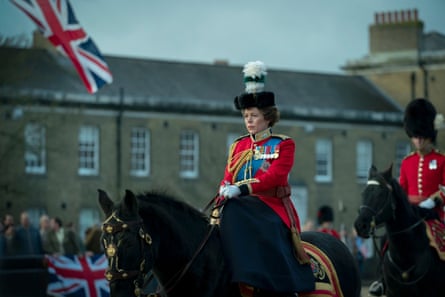
Fox’s most widely recognized achievement is his role as an executive producer on the critically acclaimed Netflix blockbuster series, The Crown (2016-2023). This ambitious undertaking, which chronicled the reign of Queen Elizabeth II, captivated audiences worldwide and garnered numerous awards, solidifying its place as a landmark television production. Alongside his British counterparts Stephen Daldry and Matthew Byam Shaw, Fox was instrumental in bringing Peter Morgan’s compelling narrative to life. The series’ immense success underscored Fox’s ability to translate complex historical narratives into engaging and universally appealing content.
The genesis of The Crown can be traced back to Fox’s earlier collaboration with Peter Morgan on the stage play The Audience (2013). Directed by Stephen Daldry and starring Helen Mirren as Queen Elizabeth II, the play offered a fictionalized yet deeply insightful exploration of the monarch’s weekly private audiences with a succession of Prime Ministers. Spanning from Winston Churchill to David Cameron, the play was celebrated for its witty conception, satirical edge, and the theatrical magic of its on-stage costume changes, which visually represented the passage of time and the shifting political landscape. Fox’s involvement in The Audience provided the crucial foundation and creative impetus for the subsequent television adaptation.

A Legacy Forged in Collaboration and Acclaim
Fox’s professional journey was marked by a series of fruitful and enduring collaborations with some of the most influential figures in theatre and film. His partnership with Peter Morgan, initiated with The Audience, had earlier yielded the acclaimed 2006 play Frost/Nixon. Based on the sensational 1977 television interviews, the production was directed by Michael Grandage and staged at the Donmar Warehouse before transferring to the West End’s Gielgud Theatre. Starring Michael Sheen as David Frost and Frank Langella as Richard Nixon, the play was a critical and commercial success. Fox’s astute decision to then take Frost/Nixon to Broadway further cemented his reputation as a producer with a global reach and an understanding of international theatrical markets.
This nexus of creativity extended to a distinguished group of artists including director/writer David Hare, director Richard Eyre, and legendary actors Maggie Smith, Rupert Everett, and Judi Dench. These enduring relationships speak to Fox’s talent for fostering an environment where artistic excellence could flourish. His work with these individuals produced some of the most memorable theatrical and cinematic experiences of recent decades.
Fox’s foray into film production began with the charming romantic comedy A Month By the Lake (1995). Written and directed by John Irvin, and based on a story by H.E. Bates, the film transported audiences to Lake Como in 1937, weaving a delightful tale of romantic entanglements. The cast featured his elder brother, Edward Fox, Vanessa Redgrave, his former mother-in-law, and Uma Thurman, showcasing his ability to assemble a stellar ensemble.
From Stage to Screen: A Diverse and Impactful Portfolio
Among his earliest stage triumphs was Julian Mitchell’s Another Country (1982). This compelling drama, set in a 1930s public school, explored themes of espionage and privilege, launching the careers of a cast of then-unknown actors, including Kenneth Branagh, Rupert Everett, and Colin Firth. The play’s success led to a co-produced film adaptation in 1984, further demonstrating Fox’s prescience in identifying and nurturing emerging talent.
A particularly poignant collaboration was with the legendary musician David Bowie. In 2015, Fox produced Lazarus, a musical that served as a conceptual continuation of Bowie’s role in Nicholas Roeg’s 1976 film The Man Who Fell to Earth. Premiering in New York just five weeks before Bowie’s death, the production featured songs by the iconic artist and was written by Enda Walsh, with direction by Ivo van Hove. Fox brought this extraordinary show to London in 2016, presenting it in a unique pop-up theatre at King’s Cross, a testament to his innovative spirit and his commitment to bringing ambitious artistic visions to life.
The Fox Family Legacy and Early Influences
Born in Cuckfield, West Sussex, Robert Fox was the third son of Robin Fox, a prominent agent and producer, and Angela Worthington. His elder brothers, Edward and James Fox, are distinguished actors, placing him firmly within a celebrated theatrical lineage. His maternal grandmother, "Glitters" Worthington, the daughter of playwright Frederick Lonsdale, was famously the inspiration for Noël Coward’s song "Mrs Worthington," a cautionary tale about maternal ambition in the theatre. This upbringing undoubtedly shaped Fox’s understanding and passion for the performing arts.
His education at Harrow School in the mid-1960s saw him make his stage debut at the Royal Court Theatre in the premiere of Christopher Hampton’s When Did You Last See My Mother (1966). Although he soon realized acting was not his calling, this early exposure to the stage profoundly influenced his future career path. He briefly worked as a runner in the film industry before returning to the Royal Court in 1971 as an assistant stage manager/director. In 1973, he joined the highly regarded and unconventional producer Michael White, a partnership that would prove pivotal.
A Producer’s Touch: From Smash Hits to Satire
Working with Michael White for seven years, Fox was instrumental in the success of numerous West End hits. These included the homegrown phenomenon The Rocky Horror Show (1973), a cult classic that continues to entertain audiences, and the London premieres of Broadway musicals A Chorus Line (1976) and Annie (1978). His time with White honed his skills in producing large-scale productions and navigating the complexities of the commercial theatre landscape.
In 1980, Fox established his own production company. The following year, he launched his independent venture with two daring and critically lauded West End productions: Mike Leigh’s Goose-Pimples at the Garrick, featuring a formidable cast including Antony Sher, Marion Bailey, and Jim Broadbent; and John Wells’ Anyone for Denis? at the Whitehall Theatre. The latter was a searing satirical commentary on the Thatcher era, with Angela Thorne brilliantly embodying Margaret Thatcher, and Robert’s brother Edward also appearing in the cast. Goose-Pimples was a successful transfer from the Hampstead Theatre, while Anyone for Denis? demonstrated Fox’s willingness to support politically charged and sharply observed work.
His early success continued with Another Country and a distinguished 1985 production of Chekhov’s The Seagull at the Queen’s Theatre (now the Sondheim). Directed by Charles Sturridge, the production boasted a remarkable cast, including Vanessa Redgrave as Arkadina and John Hurt as Trigorin. It was during this production that Fox fell in love with Natasha Richardson, who played Nina. Their subsequent marriage, though ultimately ending in divorce, highlighted the personal connections that often intertwined with his professional life.
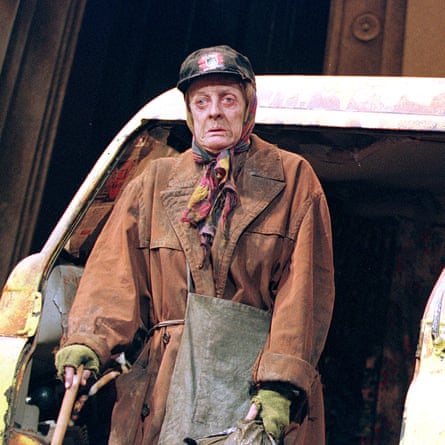
Fox’s influence extended to Broadway, where his connections with the powerful Shubert organization were strengthened by his involvement in the Abba composers’ and Tim Rice’s ambitious musical Chess (1986), directed by Trevor Nunn. He also produced Peter Shaffer’s Lettice and Lovage (1987), directed by Michael Blakemore and starring Maggie Smith and Margaret Tyzack. Both actresses went on to win Tony Awards for their performances, underscoring Fox’s ability to bring exceptional talent to the forefront on the international stage.
Enduring Partnerships and Cinematic Gems
Maggie Smith, a long-time family friend and a frequent collaborator, found a dedicated producer in Fox. He was her choice for productions such as The Importance of Being Earnest (1993) at the Aldwych, and Edward Albee’s Three Tall Women (1994) at Wyndham’s, as well as Albee’s A Delicate Balance (1997) at the Haymarket. While Smith reportedly expressed reservations about Nicholas Hytner’s direction of The Importance of Being Earnest, Fox’s enduring professional relationship with her highlighted his ability to manage diverse artistic temperaments and deliver successful outcomes.
Fox’s ability to foster deep artistic relationships was evident in his work with Judi Dench. He produced her in David Hare’s The Breath of Life (2002), alongside Maggie Smith, a play exploring complex relationships and infidelity. Dench also starred in two of Fox’s most critically acclaimed films, both directed by Richard Eyre: Iris (2001) and Notes on a Scandal (2006).
Iris offered a poignant portrayal of the life of writer Iris Murdoch, charting her descent into dementia, with Dench delivering a powerful performance as the older Murdoch, alongside Jim Broadbent as her husband John Bayley. Notes on a Scandal, adapted by Patrick Marber from Zoë Heller’s novel, saw Dench as a lonely schoolteacher whose life becomes entangled with a younger colleague (Cate Blanchett) and her affair with a student. Both films showcased Fox’s commitment to producing films with significant emotional depth and complex character studies.
His cinematic contributions extended to The Hours (2002), scripted by David Hare and directed by Stephen Daldry. This acclaimed film ingeniously wove together the lives of three women across different time periods, exploring themes of creativity, mental health, and mortality, and featuring stellar performances from Nicole Kidman, Meryl Streep, and Julianne Moore.
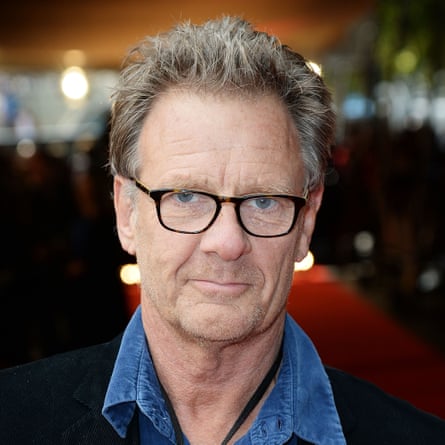
Another notable film production was The Happy Prince (2018), written, directed by, and starring Rupert Everett as Oscar Wilde in his final, defiant days. The film captured the wit and tragedy of Wilde’s life, concluding with a memorable and sardonic exchange about his impending death.
Fox’s final West End production was Martin McDonagh’s Hangmen (2015) at the Royal Court Theatre, a darkly comedic exploration of capital punishment in post-abolition Britain. His last Broadway co-production was Good Night, and Good Luck (2025), a revival of George Clooney’s acclaimed film, which saw Clooney himself star as broadcast journalist Ed Murrow confronting Senator Joe McCarthy during the 1950s Red Scare. This timely revival underscored Fox’s continued engagement with productions that reflect on historical moments with contemporary relevance.
Personal Life and Family
Robert Fox was married three times. His first marriage, from 1975 to 1990, was to casting director Celestia Sporborg, with whom he had three children: Sam, Louisa, and Chloe. His second marriage, from 1990 to 1994, was to actress Natasha Richardson. Their relationship began when Fox took a Young Vic production of Eugene O’Neill’s Anna Christie to New York in 1993, where Richardson met Liam Neeson. His third marriage, in 1996, was to journalist and Vogue editor Fiona Golfar, with whom he had two children, Joe and Molly.
His godfather was the esteemed actor Robert Morley, further attesting to his deep roots within the British acting community.
Robert Fox is survived by his wife Fiona Golfar, his children Sam, Louisa, Chloe, Joe, and Molly, his brothers Edward and James Fox, and eight grandchildren. His passing leaves a significant void in the world of theatre and film, but his enduring body of work, characterized by artistic integrity and a remarkable ability to bring compelling stories to life, will continue to resonate for generations to come.