Sarah Francis, the acclaimed Lebanese writer and director known for her distinctive cinematic voice in works such as "Birds of September" and "As Above, So Below," has once again captivated audiences and critics with her latest feature, "Dead Dog." This film, a poignant exploration of a fractured marriage set against the enduring socio-economic realities of Lebanon, made its highly anticipated world premiere at the International Film Festival Rotterdam (IFFR) in the prestigious Harbour section. Its subsequent journey across the global festival circuit, including significant stops at Sao Paulo, Sarajevo, and Cairo, culminated in notable accolades, affirming its artistic merit and thematic resonance.
The Filmmaker’s Distinctive Vision: Sarah Francis’s Cinematic Journey
Sarah Francis has steadily carved out a unique niche in contemporary Arab cinema through her commitment to intimate storytelling and a minimalist aesthetic. Her previous works, "Birds of September" (2013) and "As Above, So Below" (2018), garnered critical attention for their observational style, deep psychological insights, and often melancholic yet beautiful portrayal of human existence within specific Lebanese contexts. "Birds of September," for instance, explored themes of memory, displacement, and the passage of time through its meditative narrative, while "As Above, So Below" delved into existential questions with a similar artistic restraint. Francis’s films often foreground the subtle dynamics of human relationships, allowing emotions to unfold through understated performances and atmospheric cinematography rather than overt dramatic exposition. This consistent artistic approach has established her as a director who prioritizes mood, character introspection, and visual poetry, qualities that are clearly evident and further refined in "Dead Dog." Her choice to examine personal struggles often reflects broader societal undercurrents, making her work both deeply individual and universally relatable.
A Collaborative Tapestry: Production and Pan-Regional Support
The realization of "Dead Dog" stands as a testament to the increasingly robust and collaborative ecosystem supporting independent cinema in the Arab world. The project received crucial backing from key regional institutions, notably the Doha Film Institute (DFI) and the Red Sea Film Fund. The Doha Film Institute, established in 2010, has become a pivotal force in nurturing filmmaking talent from the Middle East and North Africa, offering development, production, and post-production grants, alongside educational initiatives. Its support has been instrumental in bringing numerous independent Arab films to international screens, fostering a new generation of filmmakers and diverse narratives. Similarly, the Red Sea Film Fund, launched more recently as part of the Red Sea International Film Festival in Saudi Arabia, has rapidly emerged as a significant financial and strategic partner for both established and emerging filmmakers in the region and Africa, aiming to stimulate film production and distribution.
These institutions play a vital role in counteracting the often challenging financial landscape for independent cinema, enabling projects with strong artistic visions but limited commercial viability to find funding. The collaboration between such entities underscores a growing pan-regional commitment to fostering diverse storytelling and cultural exchange through film. Produced by Lara Abou Saifan through Placeless Films, "Dead Dog" exemplifies this collaborative spirit, highlighting how cross-border partnerships are essential for the flourishing of contemporary Arab independent cinema, allowing filmmakers like Francis to maintain their artistic integrity while accessing necessary resources and wider distribution networks.
The Narrative Unfolds: A Deep Dive into Marital Fractures
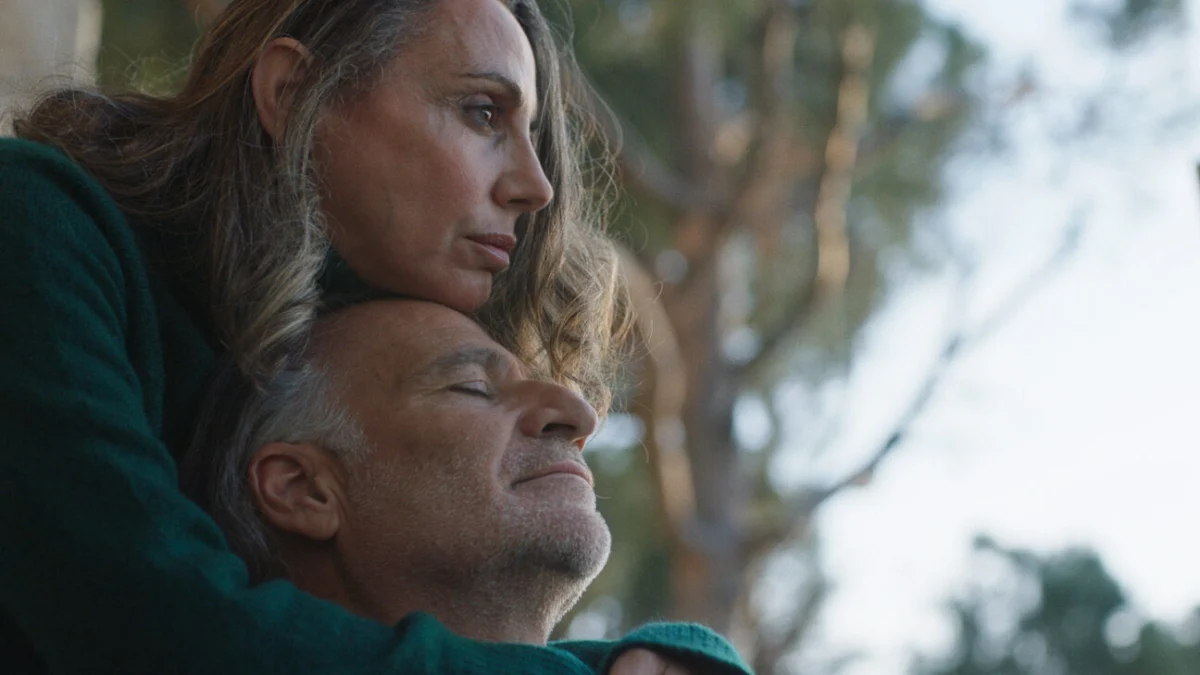
"Dead Dog" centers on a deeply intimate yet universally resonant story of a middle-aged couple, Aida and Walid, who reunite in a semi-abandoned family house nestled within the picturesque but melancholic Lebanese mountains. The film unfolds over a tense four-day period, meticulously peeling back layers of a relationship scarred by years of separation and unspoken grievances. Aida, who has established a life in Beirut, is confronted by the surprising news that her husband, Walid, who works abroad—a common reality for many Lebanese men due to economic pressures—has secretly returned to the ancestral home he inherited from his parents. Her decision to join him initiates a fragile and emotionally charged reunion, marked by hesitation, ambiguity, and the cautious navigation of a relationship’s remnants.
The narrative skillfully explores the profound fractures that have defined their marriage, particularly the insidious distance created by Lebanon’s long-standing reality of male emigration for work. This phenomenon, driven by a volatile economy and limited opportunities within the country, has deeply impacted family structures, often leading to prolonged separations, emotional strain, and a renegotiation of marital roles. Walid’s return, therefore, is not merely a personal decision but a reflection of a wider societal pattern, bringing with it the weight of years spent apart and the unaddressed emotional fatigue that has accumulated. Both Aida and Walid are portrayed concealing truths, cautiously probing the boundaries of their lingering affection and resentment.
Adding further complexity to their already strained dynamic is the unexpected presence of their dog, Punto. Far from being a mere pet, Punto becomes a powerful symbol within the narrative, embodying both the vestiges of their shared intimacy and a tool for subtle manipulation. The dog’s presence frequently triggers discussions, arguments, and moments of strained connection, highlighting how even seemingly innocuous elements can become focal points for deeper marital discord. Furthermore, the appearance of an angry relative injects an external pressure point, disrupting the couple’s isolated, tense bubble and adding another layer of societal scrutiny and familial obligation to their already fragile reunion. This multi-layered narrative, therefore, functions as both a profound character study and a subtle critique of the societal pressures that shape Lebanese family life.
A Journey of Acclaim: The Festival Circuit and Awards
"Dead Dog" embarked on a significant journey through the international film festival circuit, commencing with its world premiere at the International Film Festival Rotterdam (IFFR). IFFR is renowned globally for its commitment to showcasing independent, innovative, and experimental cinema, making its Harbour section an ideal platform for Francis’s nuanced and artistically bold work. The selection for IFFR immediately signaled the film’s international relevance and its distinct artistic voice.
Following its debut, the film continued its global tour, reaching diverse audiences and critical communities. Screenings at the Sao Paulo International Film Festival in Brazil, the Sarajevo Film Festival in Bosnia and Herzegovina, and the prestigious Cairo International Film Festival in Egypt further cemented its reputation. Each of these festivals offers unique cultural contexts and critical perspectives, allowing "Dead Dog" to resonate with a wide array of viewers.
The film’s festival run culminated in significant recognition at the Cairo International Film Festival (CIFF), one of the oldest and most prominent film festivals in the Arab world. At CIFF, "Dead Dog" was honored with the Saad Eldin Wahba Award for Best Arabic Film, a testament to its compelling narrative, artistic direction, and profound cultural relevance within the region. This award, named after the renowned Egyptian playwright and screenwriter, underscores the film’s achievement in capturing an authentic and impactful Arabic story. Additionally, the lead actress, Chirine Karameh, received the Best Actress award at the Next Generation Awards, an initiative within CIFF designed to recognize emerging talent and outstanding performances. Karameh’s accolade highlights the powerful and nuanced portrayal of Aida, central to the film’s emotional depth and its exploration of complex female experiences. The critical and award recognition at these prestigious festivals not only validates Sarah Francis’s artistic vision but also elevates "Dead Dog" as a significant contribution to contemporary Arab and world cinema.
Artistic Execution: Minimalism, Pacing, and Performance
Sarah Francis’s directorial approach in "Dead Dog" is characterized by a deliberate minimalism, crafting a work that largely unfolds as an intense stage play between its two protagonists. This choice foregrounds the dialogue and the unspoken tensions, allowing the performances to carry the bulk of the narrative weight. The cinematic value, while rooted in the intimate exchanges, is judiciously enhanced by occasional changes of setting, though the semi-abandoned family house remains the dominant and symbolically charged backdrop. This architectural setting, with its echoes of past life and present neglect, becomes almost a third character, silently observing the couple’s struggle.
The tension, palpable from the outset, is meticulously built as Aida and Walid cautiously attempt to reconnect without fully revealing the experiences and emotional baggage accumulated during their time apart. This initial facade of calmness gradually crumbles, giving way to a torrent of accusations and bitterness that intensifies the emotional landscape. However, Francis masterfully employs silences and a series of meditative shots, courtesy of the excellent cinematography by DP Mark Khalife, to periodically release this intensity. Khalife’s camera work is crucial in establishing the film’s atmospheric quality, capturing the subtle shifts in mood and the raw emotional states of the characters through contemplative framing and natural light.
The deliberate pacing, which emphasizes restraint, makes the moments where the rhythm breaks particularly impactful. These carefully chosen deviations from the film’s measured tempo are clearly intentional, designed to punctuate the narrative with emotional peaks and troughs. One such scene that emerges as particularly engaging is set in a restaurant. Here, alcohol loosens the inhibitions of both characters, especially Aida, who seems to momentarily rediscover her cheerfulness as she recalls what initially drew her to Walid, leading to a rare moment of shared laughter. This fleeting glimpse of their past connection serves as a poignant reminder of what was lost and what might still be salvaged. A later scene in bed hints at a possible physical reconnection, but ultimately, the long-standing issues and emotional scars outweigh the immediate desire, underscoring the deep-seated nature of their problems. The evident effort by both characters to reconnect, despite the bitterness, highlights the complex and often painful cycle of their relationship, a cycle that the film suggests will not be easily closed.
The success of this minimalist and meditative tone largely hinges on the exceptional performances of Chirine Karameh and Nida Wakim. They maintain a difficult sense of measure throughout the film, delivering performances that are deeply felt yet subtly expressed, preventing the narrative from veering into melodrama. Their chemistry remains consistently compelling, anchoring the emotional core of the story. Complementing this is the judicious use of music. The subtle inclusion of known pop and rock songs offers a much-needed flair, particularly effective because these musical interludes appear at unexpected moments, providing a contrasting emotional texture and a connection to a shared past, or perhaps a longed-for escape.
Broader Implications and Contribution to Arab Cinema
"Dead Dog" represents a significant contribution to contemporary Lebanese and Arab independent cinema, not only for its artistic merit but also for its thematic depth. The film’s exploration of marital estrangement and the silent toll of male emigration resonates profoundly within a region where economic migration is a pervasive reality, deeply impacting family structures and individual psyches. By focusing on the intimate unraveling of a relationship against this socio-economic backdrop, Francis provides a powerful and nuanced commentary on the human cost of broader societal challenges.
While some critical perspectives have noted a deliberate, at times slow, pace and a perceived lack of defining peaks, which could lead to moments of narrative tedium for some viewers, these elements are arguably integral to Francis’s artistic vision. The film’s commitment to a meditative and understated approach is a deliberate choice to immerse the audience in the psychological realism of Aida and Walid’s reunion, reflecting the slow, often agonizing process of confronting long-buried emotions. The strength of the acting, particularly the nuanced performances of Karameh and Wakim, and the surprising yet effective use of music, are critical factors that prevent the film from losing its grip on the viewer, even during its most restrained moments.
Ultimately, "Dead Dog" solidifies Sarah Francis’s position as a significant voice in world cinema. It challenges conventional narrative structures by prioritizing emotional authenticity and atmospheric storytelling over overt dramatic arcs. The film’s quiet power lies in its ability to illuminate the complexities of human relationships, the weight of history, and the subtle ways in which personal lives are shaped by larger societal forces. Its journey from Rotterdam to Cairo, culminating in critical accolades, underscores its universal appeal while firmly rooting its narrative in the specific, yet resonant, experiences of Lebanon. "Dead Dog" may require a patient audience, but it rewards that patience with a deeply felt, introspective, and memorable cinematic experience that prompts reflection on love, loss, and the enduring human capacity for both connection and estrangement.