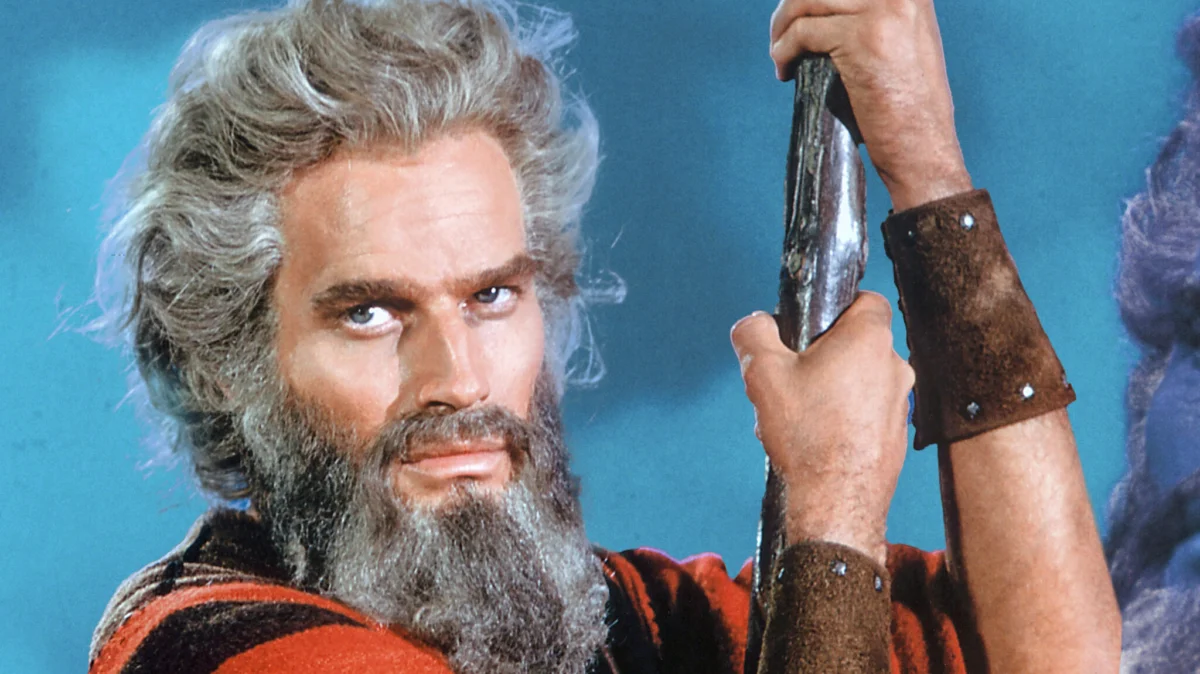
In a continuation of one of the longest-running traditions in American television history, Cecil B. DeMille’s 1956 cinematic masterpiece, The Ten Commandments, is set to return to the airwaves for the 2026 Easter and Passover season. For over half a century, the film has served as a seasonal cornerstone for the ABC television network, evolving from a standard movie broadcast into a perennial cultural event. This year, the broadcast landscape expands as UPtv, a network dedicated to uplifting and family-friendly programming, joins the tradition by scheduling the epic ahead of ABC’s flagship Saturday night presentation.
The 2026 television schedule for the film begins on Palm Sunday, March 29, with UPtv airing the film at 9/8c. The cable and satellite provider has also slated a secondary viewing for Good Friday, April 3, at 4/3c, catering to audiences seeking a mid-day observance of the biblical narrative. ABC will maintain its traditional "Holy Saturday" slot, broadcasting the nearly four-hour epic on April 4 at 7/6c. This multi-network availability underscores the enduring demand for the film, which remains a rare example of "appointment viewing" in an era dominated by on-demand streaming services.
The Genesis of a Television Tradition
The relationship between ABC and The Ten Commandments began on February 18, 1973. At the time, the transition of major Hollywood blockbusters to the small screen was a significant event, often commanding massive audiences. The initial broadcast was a ratings phenomenon, drawing approximately 24 million viewers. This success prompted the network to make the film an annual staple, specifically timing it to coincide with the overlapping holidays of Easter and Passover, given the film’s focus on the Exodus of the Israelites from Egypt.
For 53 years, the film has missed its annual appointment only once. In 1999, ABC executives opted to break the tradition, a decision that resulted in an unprecedented wave of viewer complaints and letters of protest. The backlash was so significant that the network reinstated the film the following year and has not deviated from the schedule since. The "1999 Gap" is often cited by television historians as a prime example of the power of audience sentiment and the importance of broadcast rituals in the American household.
A Cinematic Achievement of Unprecedented Scale
When Cecil B. DeMille set out to remake his own 1923 silent film of the same name, he intended to create the definitive biblical epic. Produced by Paramount Pictures in the high-definition VistaVision process, the 1956 version of The Ten Commandments was, at the time, the most expensive film ever made, with a budget exceeding $13 million—an astronomical sum in the mid-1950s.
The production was a feat of logistical engineering. Filmed on location in Egypt, Mount Sinai, and the Sinai Peninsula, the movie utilized over 14,000 extras and 15,000 animals. DeMille, known for his grandiosity and meticulous attention to detail, demanded authenticity in the costumes and sets, many of which were modeled after archaeological findings of the era. The film’s runtime, clocking in at 3 hours and 42 minutes, necessitates a nearly five-hour television block when accounting for modern commercial requirements, yet it consistently maintains high viewership levels throughout its duration.
The Iconic Casting of Heston and Brynner
The enduring legacy of the film is inextricably linked to its cast, led by Charlton Heston in his most defining role as Moses. Heston’s physical transformation from a prince of Egypt to the white-bearded deliverer of the Hebrews became the standard visual representation of the prophet for generations. Legend holds that DeMille chose Heston for the role because of his striking physical resemblance to Michelangelo’s statue of Moses.
Opposite Heston was Yul Brynner as Rameses II. Brynner’s performance provided a powerful, charismatic foil to Heston’s Moses, creating a dynamic of sibling rivalry and political conflict that elevated the film beyond a simple religious retelling. The supporting cast featured a "Who’s Who" of Golden Age Hollywood talent, including Yvonne De Carlo as Sephora, Edward G. Robinson as the villainous Dathan, Anne Baxter as Nefretiri, and Vincent Price as Baka. The interplay between these legendary actors, performing under DeMille’s theatrical direction, contributed to the film’s "larger-than-life" atmosphere that continues to resonate with modern audiences.
Technical Innovation and the Parting of the Red Sea
The Ten Commandments is perhaps most famous for its groundbreaking special effects, which earned the film an Academy Award. In an era before computer-generated imagery (CGI), the "Parting of the Red Sea" sequence was considered a miracle of cinematography. The effect was achieved by filming water being released from large tanks into a U-shaped channel, then playing the footage in reverse to simulate the water receding. This was combined with matte paintings and composite shots of the actors to create the illusion of a dry path between towering walls of water.
The film also utilized the VistaVision process, which used a horizontal camera feed to create a larger negative area, resulting in a finer-grained, more detailed image on the large screen. This high level of visual fidelity has allowed the film to age gracefully, making it an ideal candidate for high-definition and 4K restoration in the digital age. When broadcast today, the vibrant Technicolor palette and sharp detail of the original 35mm prints remain visually striking, even to viewers accustomed to modern digital effects.
The Strategic Role of UPtv and Cable Syndication
The inclusion of UPtv in the 2026 broadcast cycle represents a strategic move to capture the "uplifting entertainment" demographic. As a network that focuses on positive, family-centric content, UPtv’s decision to air The Ten Commandments on Palm Sunday and Good Friday aligns with its core mission. By scheduling the film earlier than ABC, UPtv provides an alternative for viewers who may have religious commitments on Saturday night or those who prefer to view the film multiple times during the Holy Week.
Industry analysts suggest that the dual-network presence of the film indicates its status as a "safe bet" for advertisers. Despite its length, the film’s demographic reach is broad, spanning multiple generations of families who view the broadcast as a shared experience. In the current fragmented media market, where audiences are split across hundreds of niche channels, a property that can aggregate millions of viewers simultaneously is increasingly valuable.
Cultural and Religious Implications
While The Ten Commandments is a product of Hollywood’s studio system, its annual broadcast has taken on a quasi-religious significance for many viewers. For Jewish families, the film’s depiction of the Exodus and the first Passover provides a visual companion to the Seder traditions. For Christian audiences, the film serves as a prelude to the Easter holiday, chronicling the foundational stories of the Old Testament.
The film’s themes of liberation, law, and the struggle against tyranny have ensured its relevance beyond its religious context. DeMille himself often spoke of the film as a political statement, framed against the backdrop of the Cold War. In his filmed prologue—which ABC often includes in the broadcast—DeMille explicitly states that the movie’s theme is whether men are to be ruled by God’s law or by the whims of a dictator, a sentiment that resonated deeply with 1950s audiences and continues to find echoes in contemporary political discourse.
The Future of the "Event Movie" on Linear Television
As the television industry moves toward a streaming-first model, the continued success of The Ten Commandments on ABC raises questions about the future of linear broadcasting. The film is one of the few remaining examples of "event television" that is not a live sporting event or an awards show. Its success suggests that there is still a significant audience for curated, communal viewing experiences.
The 2026 broadcast is expected to draw millions of viewers, potentially outperforming contemporary programming in its time slot. ABC’s commitment to the Saturday night window—a night typically reserved for lower-rated programming—demonstrates the network’s confidence in the film’s pulling power. The ritualistic nature of the broadcast ensures that, regardless of the availability of the film on Blu-ray or streaming platforms like Paramount+, a substantial portion of the public prefers to "watch it together" on network television.
Conclusion: A Monument of Media History
The Ten Commandments remains a singular phenomenon in the history of American media. From its origins as a high-stakes gamble by Cecil B. DeMille to its current status as a cherished television tradition, the film has bypassed the typical lifecycle of a motion picture. As it prepares for its 2026 airings on ABC and UPtv, it stands as a testament to the power of epic storytelling and the enduring nature of cultural rituals.
Whether viewed for its religious significance, its historical importance to cinema, or simply as a nostalgic family tradition, the film’s return to the airwaves marks the beginning of the spring season for millions. As the 1973 debut proved, and the 1999 omission confirmed, The Ten Commandments is more than just a movie; it is a permanent fixture of the American broadcast calendar, bridging the gap between the golden age of Hollywood and the modern digital era.