The Indonesian film industry continues its impressive ascent on the global stage, particularly within the horror genre, a trajectory marked by a new wave of visionary filmmakers. Directors such as Joko Anwar, Timo Tjahjanto, Hadrah Daeng Ratu, Bobby Prasetyo, and Awi Suryadi have consistently pushed creative boundaries, establishing Indonesia as a significant hub for genre cinema. Among these influential voices, Kimo Stamboel stands out, a veteran known for his uncompromising approach to terror. Stamboel now revisits the acclaimed cinematic universe of SimpleMan with Janur Ireng, a highly anticipated prequel to his box-office hit Sewu Dino, now available for audiences through EST N8.
Indonesia’s Ascendant Horror Landscape
Indonesia’s burgeoning horror scene has garnered international acclaim, transforming the country into a powerhouse of genre filmmaking. For decades, Indonesian horror was often characterized by B-movie aesthetics and local folklore, but a new generation of directors has elevated the craft, marrying traditional supernatural elements with sophisticated storytelling and production values. This resurgence is not merely a domestic phenomenon; Indonesian horror films are increasingly finding distribution and critical praise worldwide, captivating audiences with their unique blend of cultural specificity and universal fear. The success of films like Joko Anwar’s Satan’s Slaves (2017) and its sequel, as well as Timo Tjahjanto’s May the Devil Take You (2018), has demonstrated the genre’s commercial viability and artistic merit. These filmmakers, including Kimo Stamboel, are adept at crafting narratives that are deeply rooted in Indonesian mythology and spiritual beliefs while employing modern cinematic techniques to deliver genuinely unsettling experiences. This blend of the familiar and the fresh has proven to be a winning formula, distinguishing Indonesian horror from its regional and international counterparts.
The SimpleMan Phenomenon: From Viral Thread to Cinematic Universe
Janur Ireng is not merely a standalone film; it is a crucial expansion of the "SimpleMan universe," a compelling narrative world born from a series of viral Twitter threads by an anonymous writer known as SimpleMan. This unique origin story began with "KKN di Desa Penari" (Student Study Service in Penari Village) in 2019, an unsettling tale of college students encountering malevolent supernatural forces during a field trip. The thread rapidly gained immense traction, captivating millions with its intricate folklore and chilling details. Its unprecedented popularity led to a cinematic adaptation, KKN di Desa Penari (2022), which shattered box office records, becoming the highest-grossing Indonesian horror film of all time and one of the highest-grossing Indonesian films across all genres.
The success of KKN di Desa Penari paved the way for Sewu Dino (2023), another SimpleMan adaptation, which further solidified the universe’s cinematic potential. Sewu Dino, which translates to "A Thousand Days," delved into the terrifying practice of black magic and curses, continuing the trend of blending traditional Javanese mysticism with modern horror storytelling. Its commercial triumph underscored the audience’s appetite for intricate, culturally specific horror narratives that resonate deeply with local superstitions and fears. The decision to produce Janur Ireng as a prequel to Sewu Dino speaks volumes about the strategic vision of MD Pictures, the production house behind these adaptations. It reflects a clear intention to build a cohesive, expansive cinematic universe, capitalizing on the established lore and fan base while introducing new layers of complexity and terror. This approach mirrors the successful shared universes seen in Hollywood, but with a distinctly Indonesian flavor, proving that local stories can achieve massive commercial and cultural impact.
"Janur Ireng": A Deep Dive into the Narrative
Janur Ireng plunges audiences into a dark tale of familial strife, greed, and the catastrophic consequences of meddling with ancient, forbidden powers. The story centers on Sabdo (Marthino Lio) and Intan (Ratu Rafa), siblings whose lives are irrevocably altered after their father’s death and the destruction of their home by fire. A long-standing family belief dictates that should Sabdo and Intan ever unite, an unstoppable, malevolent power would be unleashed. This dire prophecy forms the ominous backdrop for their tragedy.
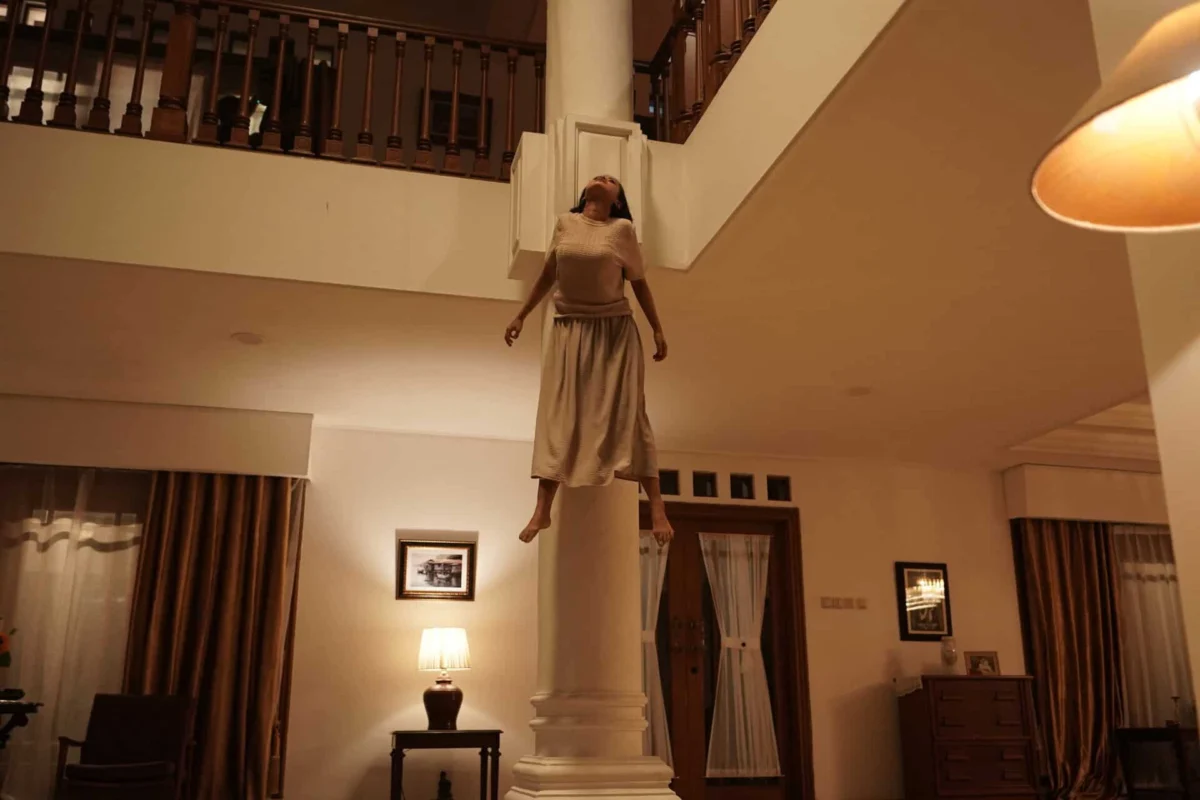
Their unscrupulous uncle, Arjo Kuncoro (Tora Sudiro), driven by insatiable greed, sees an opportunity in their vulnerability. Along with his equally manipulative wife, Lasmini (Masayu Anastasia), Arjo lures Sabdo and Intan to his opulent, yet sinister, plantation mansion under the guise of offering them sanctuary and a share of the family’s immense wealth. However, their true intentions quickly become horrifyingly clear: Sabdo and Intan are trapped, becoming pawns in Arjo’s dark schemes. Their only glimmer of hope, ironically, lies in "Janur Ireng," the deadliest black magic ever known in Java. This ancient, potent sorcery, while potentially their salvation, also represents the very force that threatens to consume them entirely, highlighting the desperate measures they must consider to survive. The narrative skillfully uses this family tragedy as a catalyst, dropping the protagonists into an environment defined by shadows, secrets, and the palpable presence of an ancient evil. The initial struggle for Sabdo and Intan to adapt to life with the menacing Arjo and Lasmini provides ample opportunity for atmospheric haunting scenes, blending classic Gothic suspense with fresh, modern horror sensibilities.
Kimo Stamboel’s Signature Style: Blending Gothic Atmosphere with Visceral Horror
Director Kimo Stamboel’s contribution to modern Indonesian horror is undeniable, and Janur Ireng serves as a formidable entry into his already impressive filmography. Stamboel, often associated with the "Mo Brothers" duo alongside Timo Tjahjanto, has consistently demonstrated a unique mastery of horror, moving beyond cheap jump scares to craft experiences that are both psychologically unsettling and graphically intense. Much like his acclaimed work on The Queen of Black Magic (2019), Janur Ireng showcases Stamboel’s signature "slow-burn-to-total-chaos" style. He meticulously builds tension, immersing viewers in a dread-filled atmosphere before unleashing a torrent of visceral, often grotesque, horror.
In Janur Ireng, Stamboel successfully bridges the gap between traditional Gothic atmosphere and the raw intensity of contemporary folk horror. The film’s visual language, crafted in collaboration with writer Khalid Koshogi, is a significant asset. Arjo’s plantation is not merely a setting but an extension of his occult dealings, imbued with a palpable sense of menace. The cinematography skillfully employs light and shadow, creating a visually rich environment that feels both classic and fresh. Arjo and Lasmini themselves possess a theatrical air, their over-the-top villainy perfectly complementing the film’s aesthetic. This "old-school" touch, involving spectral beings, long-forgotten rites, and a pervasive sense of the uncanny, is balanced by a modern sensibility regarding its subject matter and brutality. Fans of Stamboel’s previous collaborations, particularly with the Mo Brothers on films like Macabre (2009) and Killers (2014), will immediately recognize his signature flair for making the supernatural feel physically dangerous and painfully real. He doesn’t shy away from the grotesque, ensuring that the horror leaves a lasting, physical impression.
Crafting Terror: Visuals, Practical Effects, and Body Horror
Where Janur Ireng truly distinguishes itself is in its relentless exploration of body horror, a territory Stamboel previously navigated with chilling effectiveness in The Queen of Black Magic. While the initial horror implies a more standard haunting – such as an invisible force violently tossing Sabdo across a room – the film rapidly escalates into something far more macabre and physically disturbing. Stamboel understands that true terror often stems from the violation of the human form and the breakdown of physical integrity.
The film’s commitment to delivering truly unsettling sequences is evident throughout. A failed ritual, for instance, unleashes a demonic spirit that races through the house seeking gruesome retribution, a masterclass in sustained tension and escalating dread. This leads into a terrifying dream sequence where Intan finds herself trapped in a vast cornfield, pursued and attacked by a horrifying, floating severed torso. These moments are not merely shock value; they serve to emphasize the brutal, inescapable nature of the black magic at play. By the time the finale unfolds, Janur Ireng fully embraces its gruesome potential. The conclusion is a spectacular display of practical effects and unrelenting brutality, featuring ripped entrails, gouged eyes, and a frantic chase by a headless body. This climactic sequence firmly cements Janur Ireng as an immensely gruesome and bloody triumph, pushing the boundaries of what mainstream Indonesian horror is willing to depict. The film’s reliance on practical effects, wherever possible, adds a tangible, unsettling realism to these horrific visuals, making the body horror feel more impactful and less artificial than reliance on CGI alone might achieve.
Challenges and Considerations: Prequel Pitfalls and Narrative Ambiguity
Despite its many strengths, Janur Ireng is not entirely without its minor imperfections. The primary drawback lies in its narrative clarity, particularly for viewers who might approach it as a standalone experience. While the film excels at cultivating a rich Gothic ambiance, it offers somewhat limited exposition regarding the specific black magic rites Arjo is practicing or the full extent of his motivations. This ambiguity can leave some viewers feeling disoriented, struggling to grasp the precise internal logic of the occult dealings.
This narrative haziness largely stems from the film’s identity as a prequel to Sewu Dino. Prequels inherently face the challenge of providing context for an existing narrative without revealing too much or creating inconsistencies. In the case of Janur Ireng, certain plot elements and the deeper lore of the black magic may feel underserved, presumably because they are intended to be fully explored or resolved in Sewu Dino. This is a common pitfall in the burgeoning trend of "shared universe" horror, where the intricate lore is often distributed across multiple entries, sometimes at the expense of a single film’s complete narrative satisfaction. While it might deepen the experience for those who have seen Sewu Dino, it can create a sense of incompleteness for newcomers.
Furthermore, while the film largely impresses with its visual effects and practical horror, there are moments where some glaringly obvious CGI and jarring insert shots of a goat-headed demon briefly surface. While these instances are infrequent and not severe enough to derail the overall immersive experience, they stand in contrast to the film’s otherwise high production values and Stamboel’s generally meticulous approach to visuals. These minor flaws, however, are ultimately overshadowed by the film’s pervasive atmosphere, strong performances, and uncompromising horror sequences.
Industry Reactions and Broader Implications
The release of Janur Ireng is a significant event for the Indonesian film industry, particularly for MD Pictures, a leading production house. The strategic decision to expand the SimpleMan universe through prequels demonstrates a shrewd understanding of audience engagement and market demand. Inferred statements from MD Pictures executives would likely emphasize the company’s commitment to nurturing homegrown talent like Kimo Stamboel and leveraging popular IP to create compelling cinematic experiences that resonate both locally and internationally. The consistent box office success of the SimpleMan adaptations underscores the commercial viability of this approach, providing a template for other Indonesian studios looking to build their own interconnected film franchises.
From a critical perspective, Janur Ireng solidifies Kimo Stamboel’s reputation as a master of modern genre cinema. Industry analysts would likely laud his ability to maintain a distinct artistic voice within a commercial franchise, delivering his signature blend of atmospheric dread and visceral brutality while adhering to the established lore. His direction in Janur Ireng reinforces the idea that Indonesian horror is not merely mimicking Western trends but forging its own path, drawing from rich cultural traditions to create authentic and terrifying narratives. The film’s critical reception, even with its minor narrative issues, points to a broader acceptance of sophisticated, challenging horror that prioritizes genuine scares and thematic depth over simplistic jump scares.
The Future of the SimpleMan Universe and Indonesian Horror
With Janur Ireng now available, the future of the SimpleMan universe appears robust. The expansion through prequels and sequels suggests a long-term vision for the franchise, potentially exploring various facets of Javanese black magic and folklore introduced in SimpleMan’s viral stories. This strategy allows for a richer development of the lore, deeper character backstories, and the introduction of new threats and mysteries, keeping the audience invested. The success of this shared universe model in Indonesia could also inspire other local authors and filmmakers to explore similar multi-platform storytelling, further diversifying the country’s cinematic output.
For Kimo Stamboel, Janur Ireng reinforces his status as one of Indonesia’s most exciting and consistent horror directors. His willingness to push boundaries, both aesthetically and thematically, ensures that his films remain impactful and memorable. Fans of Asian folk horror, or those who appreciated the relentless pacing and body horror elements of The Queen of Black Magic, will undoubtedly find much to commend in this bloody, atmospheric descent into the occult. The film not only serves as a strong addition to his body of work but also as a testament to the dynamic and evolving landscape of Indonesian horror, a genre that continues to captivate audiences with its unique blend of cultural heritage and universal fear. The ongoing success of these films contributes significantly to positioning Indonesia as a global leader in the production of high-quality, culturally resonant horror cinema.
Ultimately, with plenty of quality factors on display, Janur Ireng proves that Kimo Stamboel remains one of the undisputed masters of modern genre cinema. While the flaws may nag at those who haven’t seen the preceding film, it remains a standout effort that sits comfortably alongside his best work, further cementing the SimpleMan universe as a significant cultural and cinematic phenomenon.