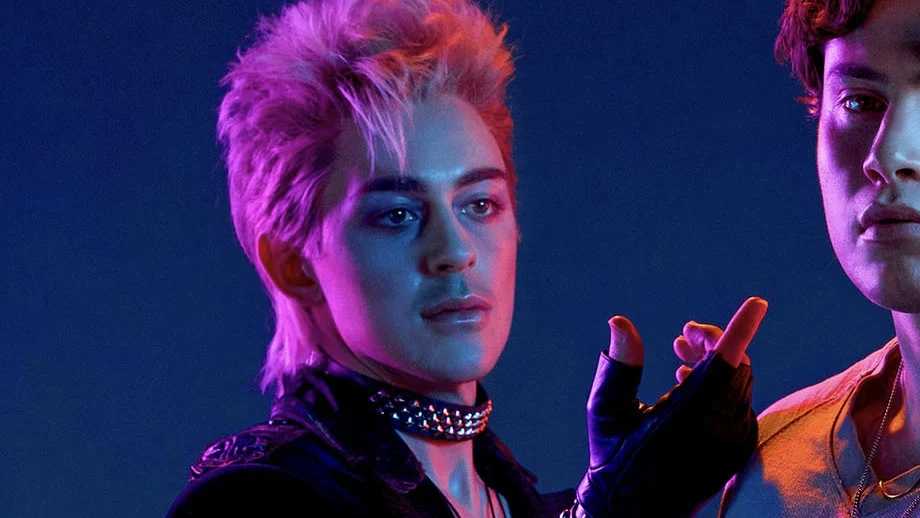
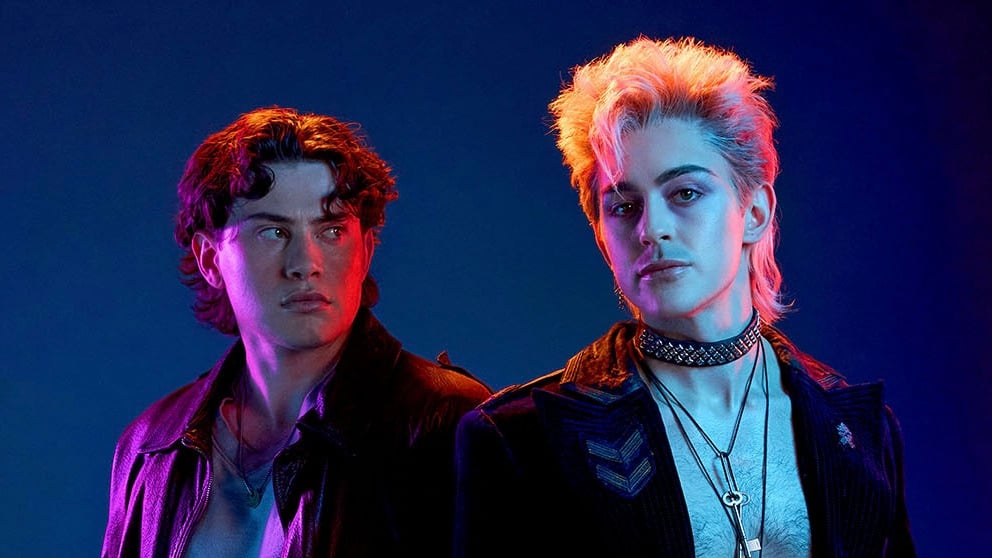
The iconic 1987 vampire film The Lost Boys has been reborn on the Broadway stage, and at its dark, alluring heart is Ali Louis Bourzgui, taking on the role of the charismatic and menacing David. This ambitious musical adaptation aims to capture the edgy, seductive spirit of the original while infusing it with a fresh, rock-and-roll energy. Bourzgui, an actor previously recognized for his compelling performances in The Who’s Tommy and Hadestown, is stepping into the leather boots of a character synonymous with 1980s vampire cool, a role originally immortalized by Kiefer Sutherland. The production, which began previews on Broadway at the Palace Theatre on March 27 with an official opening night set for April 26, represents a significant undertaking in adapting a beloved cult film for a new generation and a live theatrical audience.
Bourzgui’s journey to embodying David is a testament to his dedication and unique interpretation of the character. Initially, during his audition process, Bourzgui received a callback for the role of Michael, a part now played by LJ Benet, rather than the villainous David. However, Bourzgui’s conviction in his suitability for David was unwavering. “Day to day, I kind of have a sweeter demeanor and I play a lot of good guys,” Bourzgui shared in a video call, acknowledging a perceived dichotomy between his natural disposition and the dark allure of David. Yet, his internal compass pointed him towards the leader of the Santa Carla vampires. He recounted, “I genuinely asked and begged. I just had such an inclination and a draw to this guy.” This persistent pursuit underscores Bourzgui’s deep connection to the character and his vision for the role.
Intriguingly, Bourzgui had not seen The Lost Boys prior to his initial audition. It was during the callback period that he finally immersed himself in the cult classic. “I became immediately obsessed and was angry that I hadn’t seen it before then,” he admitted. This newfound appreciation for the film proved instrumental in shaping his portrayal. Rather than simply mimicking Sutherland’s iconic performance, Bourzgui sought to explore the underlying humanity and vulnerability within David, a common thread in his artistic approach. “It’s just more fun to me… to find the humanity in what could just be like a two-dimensional comic villain, you know? Finding the vulnerability in someone that you know at face value is seen as, like, a bad person,” he explained. This philosophy promises a David who is not merely a caricature of evil, but a complex, albeit dangerous, figure.
A Musical Evolution: From Film to Stage Rock Opera
The adaptation of The Lost Boys into a musical necessitates a significant departure from the film’s narrative and aesthetic, injecting a potent dose of 1980s rock music and expanding the thematic scope. One of the key innovations is the transformation of the titular Lost Boys into a formidable rock band. This element not only provides a natural platform for musical numbers but also allows for a deeper exploration of their collective identity and motivations. Bourzgui highlighted that the musical offers more fleshed-out perspectives for characters like Star, portrayed by Maria Wirries, and the other members of the vampire gang, moving beyond their initial archetypes in the film.
The musical’s sonic landscape is crafted by the California-based rock band The Rescues, whose music has previously graced the soundtracks of popular television shows such as Grey’s Anatomy and Pretty Little Liars. This choice of musical collaborators signals an intent to imbue the production with an authentic and resonant rock sensibility. Further bolstering the musical’s rock credentials is Tony-nominated music supervisor Ethan Popp. Popp boasts an impressive resume that includes bringing the thunderous drumming of Phil Collins to Broadway in Tarzan, celebrating the Queen of Rock ‘n’ Roll in Tina: The Tina Turner Musical, and encapsulating the spirit of 80s glam metal with Rock of Ages, which featured iconic bands like Whitesnake, Twisted Sister, Quiet Riot, Styx, and Poison. His expertise in translating the energy and impact of rock music to the theatrical stage is a significant asset to The Lost Boys Musical.
Crafting the Rock God Persona: Bourzgui’s Sonic and Stylistic Immersion
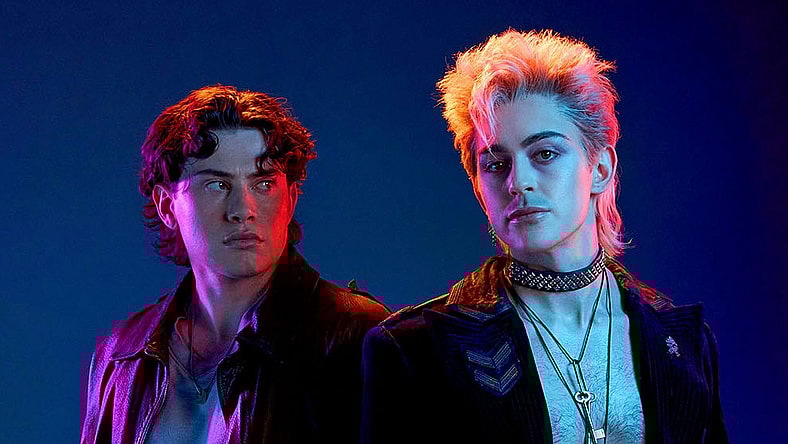
To fully embody the spirit of an 80s rock icon, Bourzgui has engaged in extensive musical exploration. His immersion in the music of the era is deeply intertwined with his understanding of David’s character. Bourzgui revealed that the original film’s David was often seen as an embodiment of Billy Idol’s rebellious persona. For the musical, this influence is amplified. “I think the original character of David was always based on Billy Idol. For the musical, we’re leaning into that even further,” Bourzgui stated. He further elaborated on the visual connection, noting, “Pretty much every single one of my costumes is based on a very specific Billy Idol look. I love them.” This meticulous attention to costume design, directly inspired by a rock legend, promises a visually striking and authentic portrayal.
Beyond the immediate influence of Billy Idol and his band Generation X, Bourzgui’s musical palate extends to other influential artists of the period and beyond. He has been listening to David Bowie, an artist who himself ventured into vampire lore in the 1980s horror film The Hunger. Bourzgui also draws inspiration from the soulful and often brooding sounds of The Doors and Van Morrison, noting that “a lot of David’s songs sort of lean into that world.” Adding a layer of complexity to his sonic inspiration, Bourzgui has also incorporated elements of 90s grunge, specifically mentioning Scott Weiland of Stone Temple Pilots. The enduring impact of the original film is not forgotten either, with Bourzgui admitting, “I’ve also been listening to the original soundtrack of the Lost Boys movie, so ‘Cry Little Sister’ is in my head every day.” This eclectic mix of musical influences aims to create a character who is not only a product of the 80s but also possesses a timeless, if dark, allure.
Delving into the Undead Mindset: Immortality and Trauma
Bourzgui’s preparation extends beyond musical and visual inspiration; he has made a concerted effort to inhabit the psychological space of an immortal being. This involved a deliberate shift in his listening habits, incorporating cello music alongside 80s rock. “I assume he grew up in the early 1900s. I’ve been listening to things that he might have heard before he got into the rock space,” he explained, aiming to connect with David’s historical consciousness. The challenge of portraying an immortal, particularly for an actor in his twenties, is significant. “If you’re playing someone that’s immortal, it’s a hard thing to tap into, especially if you’re someone in your 20s,” Bourzgui confessed.
His approach involves constructing a deeply dimensional character by contemplating David’s entire existence. “I’ve been trying to really make him a full, three-dimensional character – thinking about the entire life he’s lived up until this point, the pain he’s gone through, the trauma he holds, the reason he’s grasping on to life with all he’s got.” This introspective process suggests a portrayal that delves into the psychological toll of eternal life, the accumulated suffering, and the desperate fight for existence that defines David and his vampiric brethren. This nuanced understanding is crucial for a character who, despite his predatory nature, commands a certain level of fascination and, in some interpretations, even sympathy.
Thematic Resonance: Family, Belonging, and Authenticity
While The Lost Boys Musical promises a spectacle of 80s rock anthems and thrilling vampiric encounters, Bourzgui emphasizes that the production’s core lies in its exploration of profound human themes. The musical uses the contrasting dynamics of the Frog brothers’ tight-knit family and David’s surrogate vampire family as a lens to examine the nature of belonging. “We’re looking at two different families: How people can either force family, or become part of a family that is genuinely based on love, acceptance and wanting everyone around you to be their authentic selves,” Bourzgui elaborated. This thematic contrast highlights the difference between superficial affiliation and genuine connection, a powerful message resonating beyond the supernatural elements.
The production aims to distinguish between “real belonging and fake belonging,” a concept that can be interpreted in various ways, from the allure of a predatory group to the search for genuine community. Bourzgui’s assertion that the show offers “a little something for everybody” suggests a multifaceted experience that blends humor, horror, and heartfelt exploration of identity and connection. The musical’s success on Broadway will hinge not only on its ability to capture the nostalgic appeal of the original film but also on its capacity to resonate with contemporary audiences through its engaging music and universal themes. The initial reception of the previews and the anticipation for the official opening night on April 26 will provide early indicators of how this ambitious adaptation has revitalized a cinematic icon for the theatrical stage. The production’s strategic placement of previews before the official opening allows for fine-tuning and audience feedback, a common practice in Broadway development. The Palace Theatre, a historic venue, provides a grand setting for this vampiric rock opera, further amplifying the production’s ambitious scope.