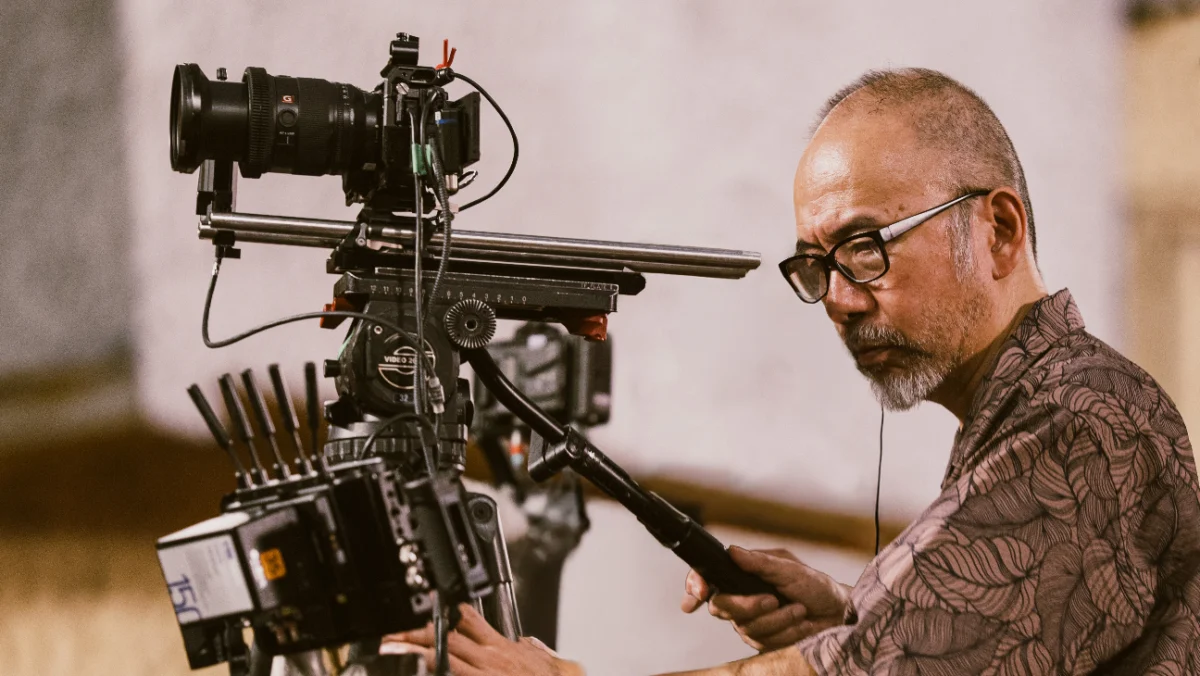
Shinya Tsukamoto, the visionary Japanese filmmaker renowned globally for his boundary-pushing, often visceral works like the cyberpunk body-horror classic Tetsuo: The Iron Man, is poised for a significant departure with the upcoming Japan release of his latest feature, Mr. Nelson, Did You Kill People? The English-language drama, based on the compelling true story of Allen Nelson, an African American Vietnam War veteran who transformed into a dedicated peace activist with profound ties to Japan, is slated to open in Japanese theaters this September. This strategic timing positions the film for a highly anticipated potential launch at the prestigious Venice Film Festival, where Tsukamoto has previously garnered critical acclaim.
A Pivotal Departure for an Iconoclast
For Tsukamoto, a director celebrated for his distinctive, often experimental style that blends industrial aesthetics with psychological depth, Mr. Nelson, Did You Kill People? represents a profound artistic evolution. Known for his intense, often disturbing explorations of the human psyche under duress, and frequently taking on multiple roles including writer, director, cinematographer, and editor, Tsukamoto embraces this multi-hyphenate approach again for this project. However, it marks his first primarily English-language feature, a significant undertaking that saw production span diverse international locations including the United States, Thailand, Vietnam, and Japan. This linguistic and geographical expansion underscores the universal themes of war, trauma, and reconciliation that the film seeks to address.
The transition from the frenetic, industrial nightmares of Tetsuo (1989), which catapulted him to international cult status, to the more grounded, albeit no less intense, narratives of war and its aftermath has been a gradual yet deliberate trajectory for Tsukamoto. His early works often delved into urban alienation and technological anxieties, but a growing focus on historical trauma, particularly concerning Japan’s wartime experiences, began to emerge in the latter half of his career. This new film, by shifting its focus to an American veteran’s experience, broadens his thematic scope while retaining his characteristic unflinching gaze at the psychological scars of conflict.
The Unfolding Narrative: A Veteran’s Odyssey
At the heart of Mr. Nelson, Did You Kill People? is the extraordinary life of Allen Nelson, a man whose journey encapsulates the complex legacy of the Vietnam War and the enduring struggle for peace. Nelson’s story begins in New York, where, like many young African American men of his era, he enlisted in the Marine Corps at the tender age of 18. His motivations were deeply rooted in the harsh realities of mid-20th century America: a desperate search for escape from systemic poverty and pervasive racial discrimination, promising a path to opportunity and equality that civilian life often denied. For many Black Americans, the military represented a paradoxical chance for upward mobility and a semblance of meritocracy, even as they served a nation still grappling with its own internal racial conflicts.
After rigorous training at Camp Hansen in Okinawa, a critical strategic hub for U.S. forces in Asia and a major staging ground for the Vietnam War, Nelson was deployed to Vietnam in 1966. His service placed him directly into the brutal and morally ambiguous landscape of guerrilla warfare. He participated in village raids, often targeting what were perceived as Viet Cong strongholds, but which inevitably involved civilians – men, women, and children. The inherent ambiguity of identifying the enemy in a civilian population, coupled with the extreme violence and psychological pressure of combat, left indelible marks on countless soldiers, including Nelson.
Upon his return home, Nelson, like a tragically large number of Vietnam veterans, found himself severely traumatized. The invisible wounds of war – Post-Traumatic Stress Disorder (PTSD), moral injury, and a profound sense of alienation – often manifested as homelessness and a struggle to reintegrate into a society that frequently misunderstood or outright rejected its returning servicemen. The challenges were often compounded for African American veterans, who returned not to parades and gratitude, but to a nation still deeply entrenched in racial strife, where the civil rights movement was in full swing but equality remained elusive. Many found themselves fighting a different kind of war on their home soil. Nelson’s long and arduous journey towards healing eventually led him to the care of the Veterans Affairs (VA) system, a crucial institution, albeit one that historically struggled to adequately address the complex mental health needs of returning soldiers.
From Okinawa to Anti-War Advocacy Across Japan

Nelson’s personal recovery became the crucible for a profound transformation. He dedicated the remainder of his life to anti-war advocacy, a mission that resonated deeply with his own experiences and took on a powerful, unexpected dimension in Japan. In 1996, nearly three decades after his deployment, Nelson returned to Okinawa, the very island where his military journey had begun. This return was not as a soldier, but as a messenger of peace.
Okinawa holds a unique and often fraught position in the history of U.S.-Japan relations. As the site of one of the bloodiest battles of World War II and subsequently home to a disproportionate share of U.S. military bases in Japan, the island has long been a focal point for anti-war sentiment and calls for demilitarization. Nelson’s presence and message there found fertile ground. Over the years, he delivered more than 1,200 lectures at schools and community halls across Japan, sharing his raw, unfiltered experiences of combat and trauma, and articulating a powerful plea for peace.
His message, delivered by an American veteran who had participated in the very conflicts that Japan, as a pacifist nation post-WWII, sought to avoid, was incredibly impactful. It offered a rare, first-hand account of the human cost of war from the perspective of a perpetrator, echoing Tsukamoto’s stated interest in "the wounds of those who perpetrated war." Nelson’s honesty about his past actions, his profound regret, and his subsequent dedication to peace provided a compelling narrative that transcended national boundaries. He became a living testament to the possibility of redemption and the universal imperative of preventing future conflicts. His commitment to peace activism in Japan was so profound that upon his death in 2009, he was buried in the country, a poignant symbol of the deep connection he forged and the enduring legacy he left behind.
Crafting the Vision: International Production and Stellar Cast
The ambitious scope of Mr. Nelson, Did You Kill People? necessitated an international production team and a diverse, talented cast. Tsukamoto’s decision to shoot across the United States, Thailand, Vietnam, and Japan speaks to the global implications of Nelson’s story and the filmmaker’s desire to capture the authentic landscapes that shaped his life. This multi-continental shoot undoubtedly presented significant logistical challenges but promises a rich, immersive cinematic experience.
Leading the ensemble is Broadway veteran Rodney Hicks, an original and closing cast member of the iconic musical Rent. Taking on his first major screen lead role as Allen Nelson, Hicks brings a depth of theatrical experience and emotional range to the complex portrayal of a man grappling with profound trauma and eventual transformation. His background in live performance suggests a powerful, nuanced interpretation of Nelson’s journey.
Joining Hicks is Oscar-, Emmy-, and Tony-winner Geoffrey Rush, who plays Dr. Daniels, a Veterans Affairs physician. Rush’s casting adds significant star power and gravitas to the film. His role as the medical professional who intervenes in Nelson’s "downward spiral" is crucial, representing the path to recovery and the often-overlooked support systems for veterans. The character of Dr. Daniels likely embodies the hope for healing amidst the wreckage of war. Tatyana Ali, widely recognized for her role in The Fresh Prince of Bel-Air, portrays Nelson’s wife, Linda, providing a vital perspective on the domestic impact of war trauma. Newcomer Mark Merphy rounds out the key cast, appearing in flashbacks as the young Nelson, offering glimpses into his formative experiences before and during his deployment.
Tsukamoto’s War Trilogy: A Shifting Lens on Trauma
Mr. Nelson, Did You Kill People? completes what Shinya Tsukamoto has described as an informal trilogy of 20th-century war films, a testament to his deepening engagement with the subject of conflict and its human cost. The series began with Fires on the Plain (2014), a harrowing adaptation of Shohei Ooka’s classic novel depicting a Japanese soldier’s brutal and dehumanizing experience in the Philippines during the final days of World War II. This film, a stark and uncompromising portrayal of survival and madness, competed in the main competition at the Venice Film Festival, solidifying Tsukamoto’s reputation beyond cult cinema.
The second installment, Shadow of Fire (2023), further explored the aftermath of war, set in Japan’s devastated black markets in the immediate post-World War II period. This film, which premiered in Venice’s Orizzonti section, won the NETPAC Award, recognizing its artistic merit and contribution to Asian cinema. Where these two preceding films meticulously examined the Japanese experience of wartime atrocity and its devastating aftermath, Mr. Nelson marks a pivotal shift. It turns the lens to the American side of the conflict, and, as Tsukamoto himself articulates, specifically to "the wounds of those who perpetrated war." This distinction is crucial, moving beyond the perspective of the victim to explore the psychological and moral toll on those who were actively involved in combat and the difficult path to reckoning with one’s actions.

The Genesis of a Seven-Year Project
The gestation of Mr. Nelson, Did You Kill People? has been a lengthy and deeply personal journey for Tsukamoto, tracing its roots back seven years to his intensive research for Fires on the Plain. It was during this period of immersing himself in the literature of war that he encountered the nonfiction account of Allen Nelson. "The most terrifying work of nonfiction I encountered was Mr. Nelson, Did You Kill People?" Tsukamoto recalls. "This book, in which he poured out his crimes and the life that followed without holding anything back, has stayed with me ever since and is deeply etched in my heart."
This statement underscores the profound impact Nelson’s candid memoir had on the filmmaker. Tsukamoto, known for his relentless pursuit of authenticity and psychological truth, found in Nelson’s story a raw, unflinching honesty that resonated with his artistic sensibilities. The book, detailing Nelson’s combat experiences, his subsequent trauma, and his eventual journey to peace, provided a compelling foundation for a film that seeks to confront the uncomfortable truths of war and the long shadow it casts. The seven-year development period suggests a meticulous and thoughtful process, allowing Tsukamoto to fully absorb Nelson’s narrative and translate its complexities into his unique cinematic language.
Echoes of Conflict: Relevance in a Fractured World
Tsukamoto emphasizes the contemporary relevance of Nelson’s story, stating that "having spent his entire life sharing his wartime experiences" is more essential now than ever, "in today’s world, where conflicts are raging in various places." This observation highlights the film’s potential to transcend its historical setting and offer timely insights into ongoing global conflicts. From Ukraine to Gaza, and numerous other regions, the world continues to grapple with the devastating consequences of armed conflict, the perpetuation of cycles of violence, and the enduring trauma inflicted upon combatants and civilians alike.
By focusing on "the wounds of those who perpetrated war," Tsukamoto delves into a less frequently explored but equally vital aspect of conflict: the moral injury and psychological burden carried by soldiers who participate in violence. This perspective encourages a more holistic understanding of war’s impact, fostering empathy and critical reflection on the systems and ideologies that compel individuals to commit acts they may later regret. The film’s release comes at a moment when global discourse increasingly calls for peace, reconciliation, and a deeper understanding of the human cost of conflict, making Nelson’s decades-long commitment to anti-war advocacy particularly resonant.
Festival Aspirations and Strategic Release
The film is produced and distributed in Japan by Kinoshita Group and its distribution arm Kino Films, signifying a strong domestic backing for Tsukamoto’s ambitious project. The announcement of the Japan release in September, alongside the mention of a "potential Venice Film Festival launch," points to a carefully orchestrated strategy to maximize the film’s international exposure and critical reception. The Venice Film Festival, one of the "Big Three" international film festivals alongside Cannes and Berlin, is renowned for premiering prestigious and artistically significant works, often serving as a launchpad for Oscar contenders and major art-house successes. Tsukamoto’s past successes at Venice with Fires on the Plain and Shadow of Fire make the prospect of a third consecutive Venice premiere a strong possibility, further solidifying his standing as a major international auteur.
Adding another layer of strategic significance, the announcement of the film’s details was meticulously timed to coincide with National Vietnam War Veterans Day on March 29. This deliberate choice underscores the film’s dedication to honoring veterans, acknowledging their sacrifices, and fostering dialogue about the enduring impact of the war. It also serves to connect the film’s narrative to a broader national conversation, ensuring that Allen Nelson’s story is situated within the larger historical and social context of the Vietnam War legacy.
Mr. Nelson, Did You Kill People? is poised to be more than just a cinematic event; it is a profound exploration of history, trauma, and the unwavering human spirit in the pursuit of peace. As Shinya Tsukamoto ventures into new linguistic and thematic territories, his unflinching gaze promises to deliver a powerful and timely message that resonates across cultures and generations, urging reflection on the universal scars of war and the enduring imperative for understanding and reconciliation.