The final night of the Glasgow Film Festival concluded with a vibrant flourish as Scottish actor James McAvoy premiered his directorial debut, "California Schemin’," a film that resonated deeply with its hometown audience. The festival, a cornerstone of Scotland’s cinematic calendar, celebrated its closing night by showcasing McAvoy’s ambitious foray into filmmaking across all three screens of the Glasgow Film Theatre, a testament to the film’s significance and the director’s burgeoning stature.
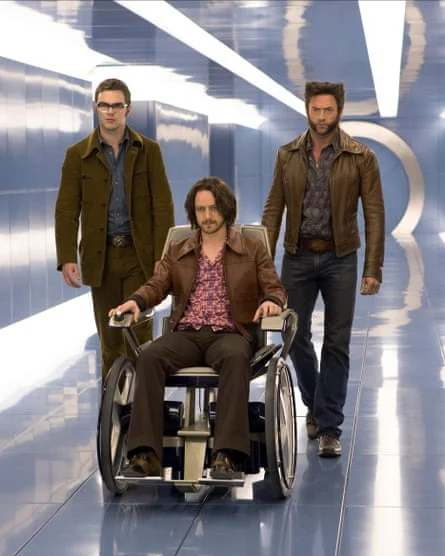
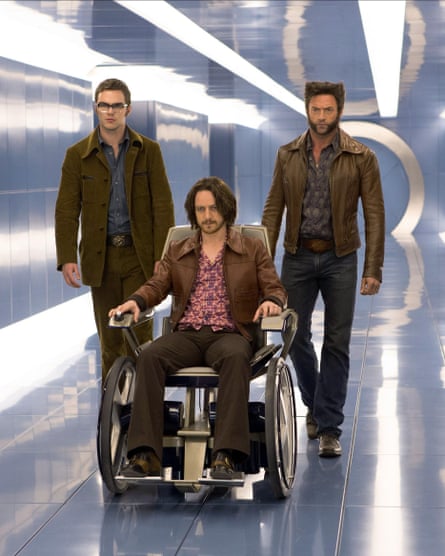
McAvoy, known for his chameleon-like performances on screen and stage, including his critically acclaimed turn as Cyrano de Bergerac in London’s West End and his iconic portrayal of Professor X in the blockbuster X-Men franchise, eschewed the typical directorial introduction. Instead, he embraced a more hands-on approach, engaging with audiences in each screening room. This direct interaction underscored his profound connection to the project and his earnest desire to share its message.
The film itself is a spirited narrative inspired by the true story of two ambitious young men from Dundee. Gavin Bain and Billy Boyd, driven by a desire to escape perceived limitations and armed with audacious ambition, concocted a daring scheme: they posed as Los Angeles rappers and managed to secure a recording contract with a major London label. McAvoy articulated his motivation for bringing this story to the screen, stating his intention to create a film "for people from the kind of council estate I grew up on." This declaration highlights a core theme of the film—an exploration of aspiration, identity, and the barriers faced by those from working-class backgrounds.
"California Schemin’" has been met with considerable enthusiasm from the home crowd, lauded as a fast-paced underdog tale. Its success is attributed to a compelling soundtrack and nuanced performances from its young leads, Séamus McLean Ross and Samuel Bottomley. They embody the real-life skateboarding and freestyling duo who, after facing dismissive talent scouts who caricatured them as "the rapping Proclaimers," decided to shed their Scottish accents and craft an entirely new persona.
Thematic Depth and Personal Connection
Beyond its entertaining premise, McAvoy’s direction elevates "California Schemin’" into a subtle examination of friendship, the constraints of circumstance, and the crucial question of who has the agency to tell their own stories. This thematic richness was a focal point of McAvoy’s discussions with the press in the days leading up to the premiere.
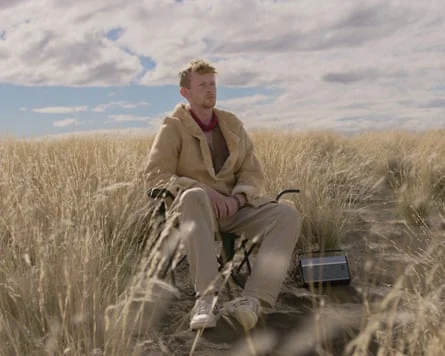
Speaking on a crisp spring morning, McAvoy, dressed in a thick cream jumper, reflected on the industry’s often narrow perceptions of authenticity, particularly within the hip-hop genre. He drew a parallel between the world of music and acting, where "voice" is paramount, yet often judged through a biased lens. He elaborated on how such prejudices can diminish individuals, reducing them to stereotypes rather than recognizing their full potential.
"It’s that thing that stops you being regarded as a person and makes you something smaller," McAvoy stated, referring to bias based on appearance, language, or accent. He candidly shared his own experiences: "With my accent, I’ve had that experience where I’m suddenly no longer a person with infinite possibilities and potential—I am ‘that Scottish person.’ I’m reduced to a noise that comes out of my mouth."

While acknowledging his position as a "white northern European male" and a "successful" figure, McAvoy was careful to frame his observations on bias within a broader context, recognizing that others have faced far more severe forms of prejudice.
A Career Defined by Diverse Roles
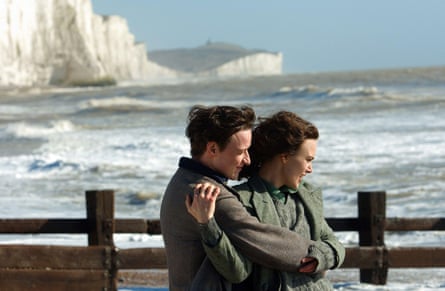
McAvoy’s career trajectory is marked by a consistent ability to inhabit a wide range of characters, earning him acclaim from prominent directors such as Joe Wright, M. Night Shyamalan, and Jamie Lloyd. His breakthrough role as Robbie in Joe Wright’s "Atonement" showcased his early dramatic prowess. He later captivated audiences with his multifaceted performance in Shyamalan’s "Split," portraying a character with multiple personalities, and delivered a visceral rendition of Macbeth under Jamie Lloyd’s direction.
His filmography also includes memorable turns as the faun Mr. Tumnus in "The Chronicles of Narnia," the complex Lord Asriel in the television adaptation of "His Dark Materials," and the antihero Bruce Robertson in the gritty adaptation of Irvine Welsh’s "Filth." Despite his extensive work, McAvoy noted that he has portrayed "four or five Scottish people in my entire 30-year career," a point that directly informs his motivation behind "California Schemin’."
Echoes of Past Prejudice
The film’s narrative of Bain and Boyd’s experience in 2002 resonates with McAvoy’s own encounters with accent-based prejudice. Nearly two decades after the events depicted in the film, McAvoy and fellow Scottish actor James McArdle faced criticism from The Sunday Times for their "whining Scottish accents" in a National Theatre production of "Peer Gynt." McAvoy’s strong reaction at the time, challenging the reviewer to a post-show discussion on the derogatory labeling of national accents, highlights the persistent issue of linguistic bias within the cultural landscape.
This persistent challenge faced by Scottish artists in gaining recognition for their authentic voices forms the thematic bedrock of "California Schemin’." The film illustrates how Bain and Boyd, after their initial rejection, decided to radically reinvent themselves. By 2003, they had transformed into the West Coast rap duo "Silibil N’ Brains." According to Bain’s memoir, they adopted American accents not only in their speech and rapping but even in their personal lives, fabricating a backstory of a sun-drenched Californian youth to satisfy skeptical industry figures.
The Deception and Its Unravelling
This elaborate charade proved effective. The London music scene, initially dismissive of their Scottish origins, was captivated by the lyrical prowess of this seemingly authentic American import. Silibil N’ Brains were swiftly signed by Jonathan Shalit, the manager credited with discovering Charlotte Church, and by early 2004, they had secured a deal with Sony UK.
However, the elaborate con was always destined to have a limited shelf life. Bain’s original plan, as later recounted, was to reveal their deception on "The Friday Night Show with Jonathan Ross," thereby challenging the industry’s assumptions: "We always had talent; why did we need to do this?" The film, however, chronicles the less neat and more emotionally complex unravelling of their partnership. As the narrative unfolds, McAvoy masterfully captures the growing tension between Bain’s desperate adherence to the lie and Boyd’s increasing alienation from it, making reconciliation increasingly difficult.
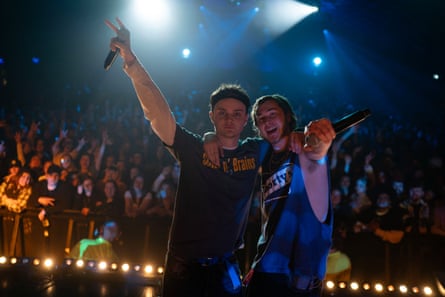
The film, loosely adapted from Gavin Bain’s memoir, features Samuel Bottomley and Séamus McLean Ross, son of Deacon Blue’s Ricky Ross and Lorraine McIntosh, in their leading roles. Lucy Halliday delivers a luminous performance as Mary, Billy’s girlfriend and the film’s moral compass. McAvoy’s sister, Joy McAvoy, also makes a cameo appearance. In real life, Bain and Boyd, while no longer working together, continue to create music. Boyd is married to Mary and they have three children.
The Power of Representation
For McAvoy, the parallel between Bain and Boyd’s experiences and his own career lies in the fundamental question of who controls the narrative. He observed the music label representatives’ dismissive attitude towards Scottish rappers, implying that artists with their accents were only suited for folk music or guitar bands. McAvoy recounted experiencing similar limitations: "These are the films that you can make in Scotland."
McAvoy had harboured ambitions to direct for some time. He acknowledges his fortunate position as a first-time director, having been presented with numerous scripts and opportunities. He is known for his meticulous approach to fairness and his awareness of the media’s tendency to oversimplify nuanced perspectives.
His frustration stems from a perceived lack of diverse storytelling within the Scottish film industry. He argued, "We make art because we need to see ourselves reflected, so that we can interrogate ourselves, laugh at ourselves, love ourselves, hate ourselves, examine the experience of being alive." He lamented that certain segments of society are consistently represented while others are overlooked, a situation he sees mirrored in Scotland, the north of England, Ireland, and Wales.
McAvoy has long advocated for greater investment in arts and education. He believes that a film like "California Schemin’," if set in a different locale like Boston, would likely feature established Hollywood stars in the lead roles. He pointed out that Scotland has a limited pool of actors—primarily those over 35, with a notable gender imbalance—who can secure funding for projects, especially those set within Scotland. This includes Gerry Butler, Ewan McGregor, Karen Gillan, himself, and Richard Madden, with Alan Cumming being a notable addition to the list. McAvoy questioned the absence of younger, bankable Scottish stars, despite Scotland’s strong tradition of acting schools.
The Struggle for a Thriving Industry
The film’s depiction of the protagonists plotting their escape from Dundee in front of a mural of Ewan McGregor as Mark Renton, the iconic character from "Trainspotting," serves as a poignant symbol. "Trainspotting" remains one of the few Scottish films to achieve significant global reach. McAvoy suggests that while Scotland produces talented actors, the lack of consistent film production within the country limits their opportunities. "You can train all the actors," he stated, "but then they don’t get to do anything in Scotland, because nothing’s getting made."
This scarcity is attributed to a lack of investment. While McAvoy sought funding in Hollywood, he acknowledged the efforts of Screen Scotland, which has recently petitioned the Scottish government for increased funding to bolster the nation’s film and television industry, aiming for a target of £1 billion within five years.
"You need an industry behind you," McAvoy emphasized. "And I’m not saying that we don’t make enough for me or we don’t make enough to compete with America. It’s not about that. I don’t think we make enough to be able to satisfy the cultural needs of the 6 million people that live in this country."
A Director’s Vision and Personal Reflections
McAvoy’s journey into directing was fueled by a desire to tell stories that reflected his own background and to challenge the prevailing narratives about working-class individuals. He articulated a vision for films that are both entertaining and adventurous, rather than solely focused on hardship. "California Schemin’" provided the perfect vehicle for this ambition, resonating with his personal experiences and frustrations.
The film captures the emotional core of leaving one’s home in pursuit of a dream. A scene where Bain stands beneath a dazzling neon sign, lamenting, "Don’t leave me here in Scotland," after a falling out with Boyd, evokes a sense of longing and recognition for many Scots who have sought opportunities abroad. McAvoy himself expressed a desire to "travel, get away and see the world," while clarifying that this stemmed from ambition rather than dissatisfaction with his upbringing.
He grew up in Drumchapel, a housing scheme in Glasgow, raised by his grandparents after his parents separated when he was seven. While acknowledging the "dicey" nature of the area in the 1980s, he spoke fondly of a "really good childhood" and a loving family environment. His passion for performance was ignited by teachers at his secondary school, a debt he has repaid through visits and by funding a bursary at the Royal Conservatoire of Scotland.
McAvoy’s early career included working as a trainee confectioner at a Sainsbury’s bakery, where he honed his scone-making skills. This unexpected experience resurfaced years later during a charity appearance on "The Great British Bake Off," where his expertise impressed judge Paul Hollywood. McAvoy humorously noted that his admission of prior baking experience was omitted from the final broadcast.
After graduating, McAvoy moved to London, quickly gaining recognition for his stage work and television roles. He met and later married actress Anne-Marie Duff, with whom he co-parented their son. In 2022, he confirmed his marriage to American producer and entrepreneur Lisa Liberati. The couple now reside in London with their son, with occasional stays in Philadelphia.
The Challenges of First-Time Directing
McAvoy candidly discussed the pressures of directing his first feature film. "Having a kid at 42 is definitely easier in some ways," he remarked. "I worry less. I’m a bit more philosophical. But it’s also harder, because you’re just older and tireder." He described waking in the early hours with the film occupying his thoughts, a testament to the intense demands of the directorial role. He contrasted this with the typical early stages of an acting career, which often involves extensive "working your socks off" in one’s twenties.
Despite the demanding nature of his directorial debut, McAvoy’s collaborators speak of his exceptional work ethic. His passion for storytelling, particularly Scottish narratives, remains evident. He expressed interest in exploring stories such as those of the Highland Clearances, further highlighting his commitment to bringing diverse Scottish histories to the screen.
Looking Ahead
The conversation with Billy Boyd, one of the individuals whose story inspired the film, offered further insight into McAvoy’s dedication. Boyd noted McAvoy’s immense pressure as a first-time director, stating, "This wasn’t just a star doing something on the side because he’s Scottish—he was trying to make this the best possible film he could." Boyd emphasized McAvoy’s genuine nature, suggesting that the actor sometimes seemed to forget his status as a Hollywood A-lister.
"California Schemin’" is now in UK and Irish cinemas from April 10th, offering audiences a compelling blend of humour, heart, and a timely exploration of ambition, identity, and the enduring power of storytelling. The film stands as a significant achievement for James McAvoy, marking his successful transition from acclaimed actor to a director with a clear and resonant vision.