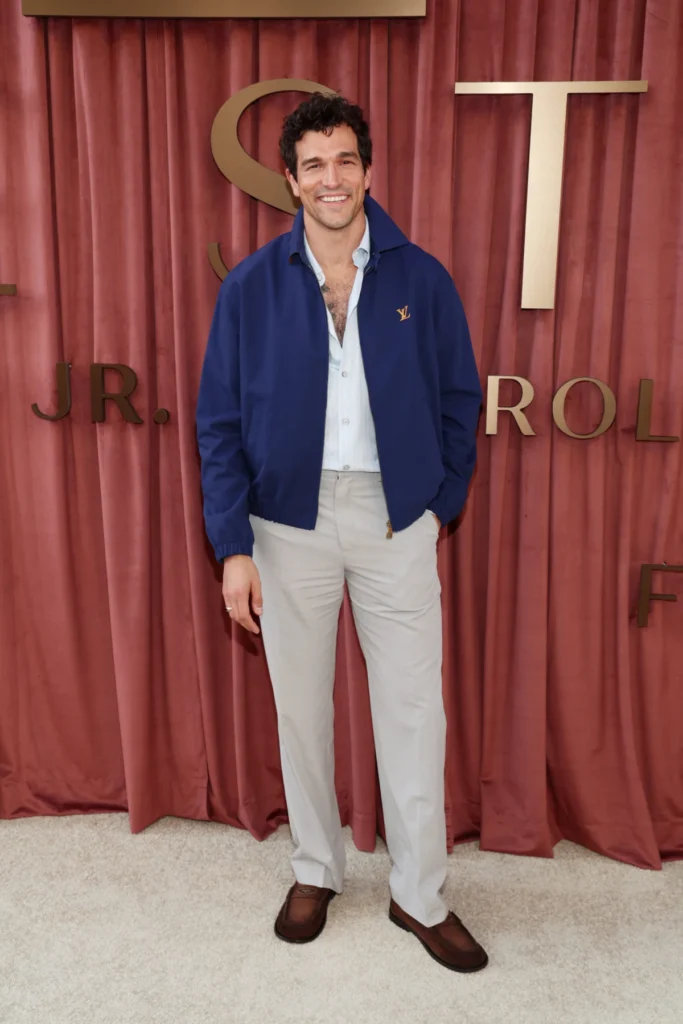
As Southland Tales, the polarizing second feature from director Richard Kelly, approaches its 20th anniversary, the film continues to captivate a dedicated cult following while prompting renewed discussions about its audacious vision and initial critical reception. Lou Taylor Pucci, who portrayed Private First Class Bart Bookman in the ensemble piece, recently offered candid reflections on the film during a Reddit AMA, shedding light on the production’s ambitious scope and the director’s unique approach. Pucci’s comments have invigorated interest in the movie, which famously flopped at the box office after a disastrous premiere at the Cannes Film Festival but has since garnered a reputation as a misunderstood, prophetic work.
The Genesis of a Post-Millennial Dystopia
Southland Tales emerged from the creative mind of Richard Kelly, a filmmaker who had captivated critics and audiences with his enigmatic and cerebral debut, Donnie Darko (2001). That film, a complex sci-fi psychological thriller, became a sleeper hit and a significant cult classic, launching the career of Jake Gyllenhaal and establishing Kelly as a visionary voice in independent cinema. The success of Donnie Darko afforded Kelly considerable creative freedom and a substantial budget for his follow-up, estimated at around $17 million. This financial backing allowed him to assemble an unexpectedly star-studded cast, including Dwayne Johnson (then still known primarily as "The Rock" and in the early stages of his acting transition), Seann William Scott, Sarah Michelle Gellar, Mandy Moore, and Justin Timberlake.
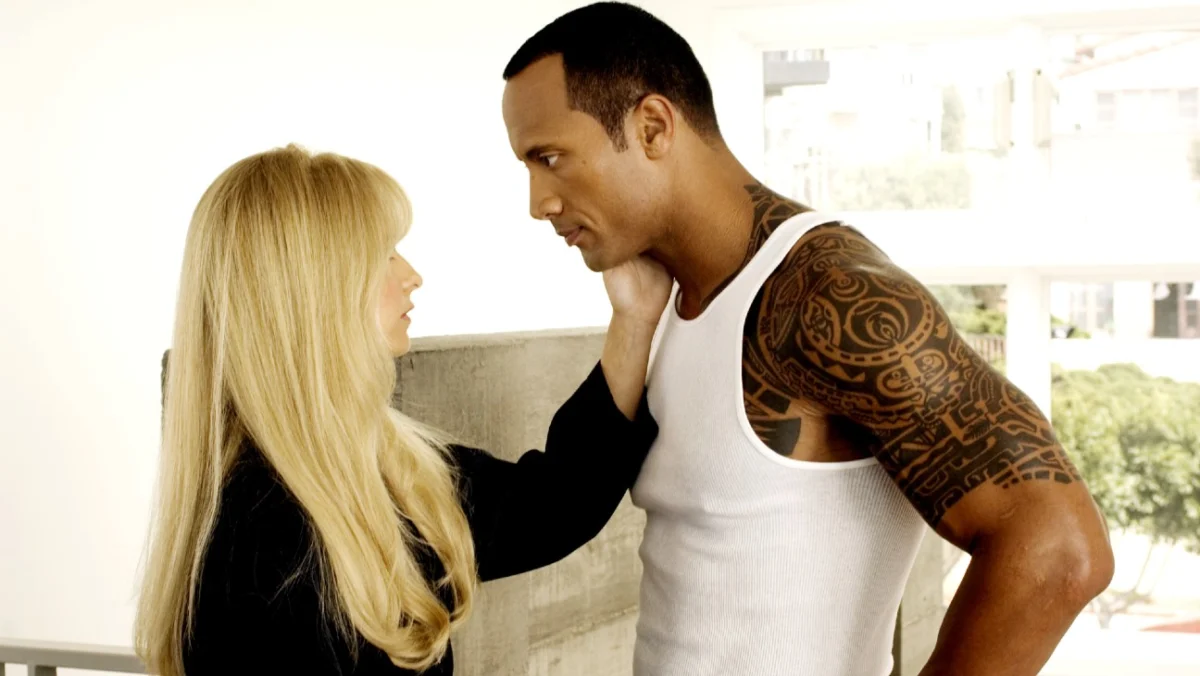
The film’s premise is set against a backdrop of a near-future Los Angeles in 2005, three years after a series of nuclear attacks devastate Texas, triggering a Third World War and a severe energy crisis. The U.S. government, under a newly elected conservative administration, responds by implementing extreme measures, including the PATRIOT Act and the creation of a powerful domestic surveillance agency. The narrative intertwines the lives of various characters: an amnesiac action film star, Boxer Santaros (Dwayne Johnson), who is developing a screenplay based on his own mysterious experiences; Krysta Now (Sarah Michelle Gellar), an adult film star and reality TV personality with political aspirations; and twin police officers, Roland and Ronald Taverner (Seann William Scott), one of whom has vanished. The plot delves into themes of political corruption, media manipulation, celebrity culture, existentialism, and the potential end of the world, all wrapped in a visually audacious and musically driven package.
An Evolving Script and a Leap of Faith
Pucci’s recent revelations highlight the dynamic and somewhat chaotic evolution of the Southland Tales script during its development. "The first script I got didn’t have time travel — or two Seann William Scotts," Pucci stated in his AMA, adding, "The third one did." This significant departure from the initial concept underscores Kelly’s willingness to experiment and reshape his narrative, even with major stars attached. Pucci elaborated on the cast’s collective trust in Kelly, a sentiment largely driven by the undeniable impact of Donnie Darko. "Nobody knew what was going on, but they all trusted Richard because of his success with Donnie Darko," Pucci explained. "They got The Rock and Sara Michelle Gellar in that movie, and literally all of us, because of [Donnie Darko]." This implicit faith in Kelly’s genius, despite a complex and shifting screenplay, speaks volumes about the cachet he had earned in Hollywood following his debut.
The involvement of such high-profile actors, particularly Dwayne Johnson, signaled a film with mainstream aspirations. Johnson, at that point, was carefully cultivating his acting career, and his participation in an esoteric, ambitious project like Southland Tales demonstrated a willingness to take risks beyond conventional action roles. Sarah Michelle Gellar, known for her roles in Buffy the Vampire Slayer and various horror films, also embraced a challenging part that diverged from her established persona. This collective buy-in from the cast underscores the magnetic pull of Kelly’s unique artistic vision, even if the final product proved to be a challenging cinematic experience for many.
The Infamous Cannes Premiere and Critical Immolation
The film’s journey took a dramatic turn when it premiered at the 2006 Cannes Film Festival, one of the most prestigious platforms for international cinema. Expectations were high for Kelly’s follow-up, especially given the success of Donnie Darko. However, the screening was met with an overwhelmingly negative reaction, including audible boos from the audience and a barrage of scathing reviews from critics. This reception sent shockwaves through the festival and significantly impacted the film’s trajectory.
In an interview with The Hollywood Reporter for the film’s 10th anniversary, Kelly reflected on the Cannes debacle, stating, "Southland Tales was a really aggressive, provocative film, even for Cannes. I think a lot of people were just never going to accept the film for what it was." This assessment highlights the film’s uncompromising nature and its deliberate departure from conventional storytelling. However, the critical consensus at the time painted a picture of an incoherent, self-indulgent mess. On Rotten Tomatoes, Southland Tales holds an aggregate score of just 39% based on critic reviews, with an average rating of 5.1/10. Metacritic, which assigns a weighted average score, gave it a 43 out of 100, indicating "mixed or average reviews." Critics often cited its sprawling, convoluted plot, dense philosophical musings, and disjointed narrative structure as major weaknesses.
Sarah Michelle Gellar herself famously shared her experience of the Cannes premiere, telling THR in 2023, "That movie was just batshit ambitious." She candidly admitted that she "fell asleep twice" during the screening, a stark illustration of the film’s challenging nature even for those involved in its creation. Following the Cannes setback, the film underwent significant re-editing, with approximately 20 minutes removed before its limited theatrical release in the United States in 2007. Despite these changes, its commercial performance remained dismal, grossing a mere $375,000 worldwide against its reported $17 million budget, making it a monumental box office failure.

Richard Kelly’s Prescience and the Film’s Enduring Themes
Despite its initial rejection, a core argument from its proponents, including Lou Taylor Pucci, is that Southland Tales was remarkably prescient. Pucci noted that "Richard’s view of a fascist America was quite prescient and worth a new viewing, if you all have time." This perspective suggests that the film, rather than being merely confusing, was ahead of its time in anticipating certain societal and political trends.
Released in the mid-2000s, Southland Tales explored a post-9/11 world grappling with heightened national security, government surveillance, political polarization, and the burgeoning influence of reality television and celebrity culture. Kelly depicted a society obsessed with media, where political narratives were easily manipulated, and individual freedoms were increasingly eroded in the name of security. These themes, considered outlandish or exaggerated by many critics at the time, have resonated with increasing force in the subsequent two decades. The rise of social media, the proliferation of "fake news," the blurring lines between entertainment and politics, and the persistent debates surrounding government oversight have lent a new layer of relevance to Kelly’s dystopian vision.
The film’s portrayal of a celebrity-driven political landscape, where public figures wield immense, often unearned, influence, feels particularly resonant in an era defined by reality TV stars entering politics and social media influencers shaping public discourse. Its satirical critique of consumerism, environmental decay, and the relentless pursuit of superficiality also aligns with contemporary concerns. While the narrative itself remains complex and open to interpretation, the thematic undercurrents now appear less like speculative fiction and more like an exaggerated reflection of unfolding realities.
The Unlikely Ascent to Cult Status
The trajectory of Southland Tales from critical and commercial flop to cult classic is not uncommon in cinema history, but it is particularly notable given the film’s scale and star power. Cult films often share characteristics such as initial misunderstanding, unconventional narratives, niche appeal, and a passionate, dedicated fanbase that discovers and champions the work over time. Southland Tales fits this mold perfectly.
The film’s unconventional structure, dense symbolism, and challenging themes, which alienated mainstream audiences and critics, are precisely what attracted a segment of viewers seeking alternative, thought-provoking cinema. The advent of DVD and later streaming platforms provided new avenues for the film to find its audience, allowing viewers to engage with it on their own terms, often through multiple viewings to unravel its layers. Online forums, fan communities, and film studies circles began to dissect and interpret the film, transforming its perceived flaws into points of fascination.
Moreover, the enduring legacy of Donnie Darko undoubtedly played a role in keeping Kelly’s work, including Southland Tales, in the cultural conversation. Fans of his debut were more willing to engage with his subsequent, more challenging projects, searching for similar depths and hidden meanings. The film’s unique aesthetic, memorable musical sequences (including Justin Timberlake’s lip-sync performance to The Killers’ "All These Things That I’ve Done"), and unforgettable character portrayals have contributed to its distinctive identity within the cult film canon.
Broader Implications and Kelly’s Legacy
The profound failure of Southland Tales at Cannes and the box office had significant implications for Richard Kelly’s directorial career. After such a high-profile misstep following a successful debut, securing funding and creative control for subsequent projects became increasingly difficult. Kelly’s only feature film directed since Southland Tales was The Box (2009), starring Cameron Diaz and James Marsden, which also received mixed reviews and modest box office returns. This career trajectory highlights the harsh realities of the film industry, where even immense talent can be sidelined by commercial failure, regardless of artistic ambition.
For the prominent cast members, Southland Tales remains a peculiar, often discussed, entry in their filmographies. While it did not derail the careers of established stars like Dwayne Johnson or Sarah Michelle Gellar, it stands out as a unique and unconventional choice. For actors like Lou Taylor Pucci, being part of such an ambitious and divisive project, despite its commercial outcome, contributes to a diverse and intriguing body of work.
As Southland Tales approaches its second decade, the conversation surrounding it continues to evolve. What was once dismissed as an incoherent mess is increasingly viewed by its admirers as a bold, if flawed, piece of art that dared to predict the anxieties of a rapidly changing world. The film serves as a potent reminder that cinematic success is not always measured by immediate critical acclaim or box office receipts, but sometimes by its enduring ability to provoke thought, spark debate, and resonate with new generations of viewers who find meaning in its unconventional narrative. Its journey from Cannes catastrophe to revered cult classic underscores the complex, often unpredictable, relationship between art, audience, and the passage of time.