In the latest installment of the bi-weekly series "Front Lines and Frontiers," which meticulously examines classic science fiction and fantasy literature, Alan Brown shifts his focus to the enduring sequels of Madeleine L’Engle’s beloved "A Wrinkle in Time." This review delves into "A Wind in the Door" and "A Swiftly Tilting Planet," offering an in-depth analysis of their narrative structures, thematic explorations, and their place within L’Engle’s celebrated "Time Quintet."
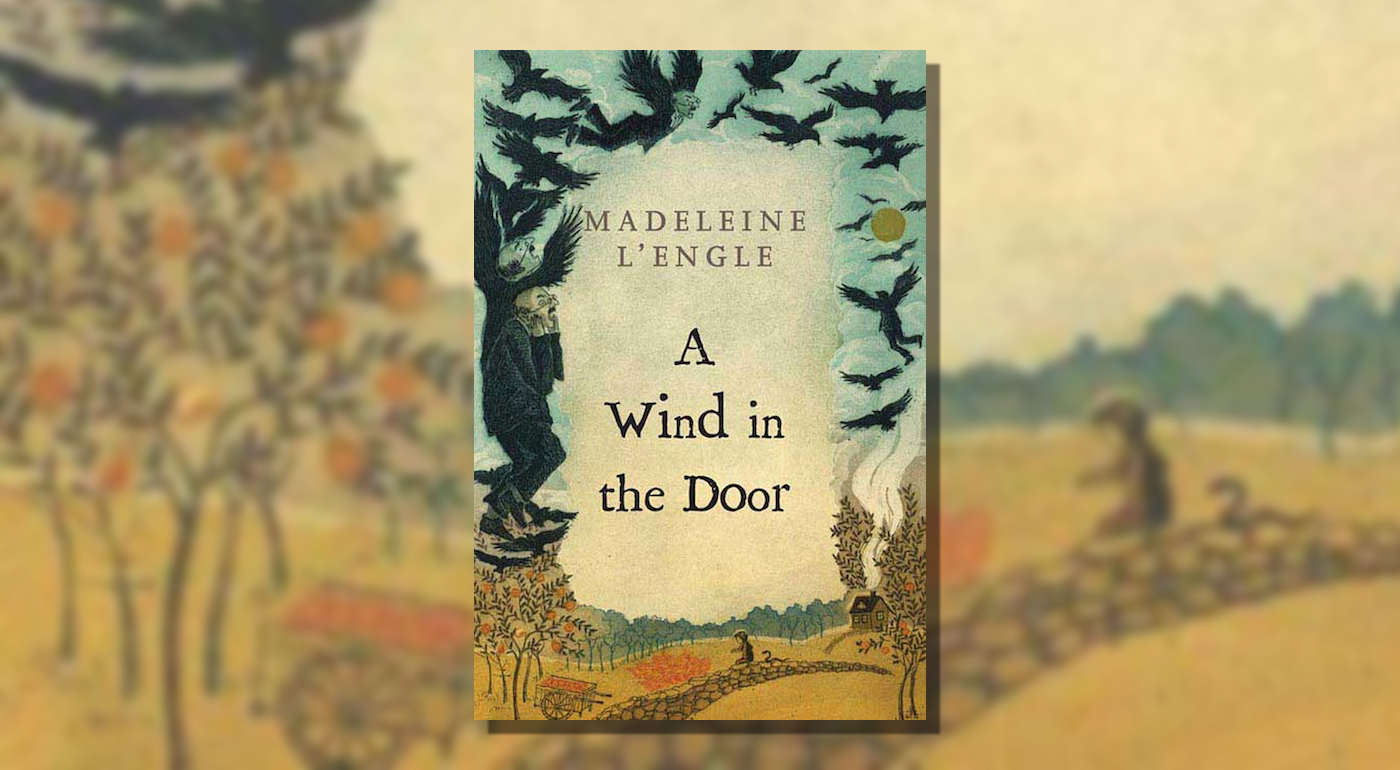
Madeleine L’Engle (1918-2007), an acclaimed American author, carved a unique niche in children’s literature with her masterful blend of science fiction, fantasy, and profound philosophical undertones. While she also penned plays, short stories, poetry, and works on Christian theology, her enduring legacy is intrinsically linked to the universe she established in "A Wrinkle in Time." Published in 1962, this groundbreaking novel introduced readers to the Murry family and their extraordinary cosmic journey, resonating with millions and earning widespread critical acclaim, including the prestigious Newbery Medal. L’Engle’s subsequent works, often set within this same narrative tapestry, continued to explore complex themes of good versus evil, the nature of consciousness, and the power of love and interconnectedness. The "Time Quintet," a series of five books originating from the success of "A Wrinkle in Time," comprises "A Wrinkle in Time," "A Wind in the Door," "A Swiftly Tilting Planet," "Many Waters," and "An Acceptable Time." The edition under review, published in 2007 by Square Fish, an imprint of Macmillan, features evocative cover illustrations by Taeeun Yoo, which function as intricate borders rather than full paintings, framing the textual adventures within.
The reviewer, Alan Brown, notes that his exploration of these sequels was prompted by a recent revisit to "A Wrinkle in Time," a book he had previously reviewed. The enjoyment derived from that retrospective led him to acquire a boxed set of L’Engle’s works, including the sequels he had never before encountered. This personal acquisition, a birthday gift from his wife, provided a tangible connection to the books, allowing for a more intimate engagement with L’Engle’s literary universe.
Examining Common Fantasy Tropes
Before dissecting the specific narratives of "A Wind in the Door" and "A Swiftly Tilting Planet," Brown dedicates a section to discussing common fantasy tropes that, in his view, can detract from a story’s impact. He identifies three particular tropes that he personally finds less engaging, yet acknowledges their central role in the books under review.
The Protagonist Under Deliberate Testing
The first trope Brown scrutinizes is the concept of a protagonist undergoing deliberately orchestrated tests. In "A Wind in the Door," Meg Murry is informed that she must face three trials to mend both universal damage and her younger brother’s deteriorating health. However, Brown points out a potential ambiguity: if these tests are shaped by her adversaries, it raises questions about the alignment of forces. This scenario, he suggests, echoes the biblical narrative of Job, where Satan appears to act under divine authority rather than as a true rival. A key criticism here is the lack of a clear, compelling reason for Meg’s specific selection for these trials in "A Wind in the Door," contrasting with the more personal and familial motivation in "A Wrinkle in Time," where rescuing her father was the driving force.
The Intrinsically Evil Other
The second trope that tests Brown’s patience is the depiction of an intrinsically evil antagonist, one whose malevolence stems from its very nature. He expresses a preference for narratives featuring well-developed protagonists and antagonists over those populated by simplistic, archetypal heroes and villains. While the forces of evil in "A Wrinkle in Time" remained somewhat undefined, these sequels introduce the "Echthroi," a name derived from the Greek word for "enemies," explicitly identified as the architects of evil. Brown argues that attributing malevolent actions to an external force can diminish the agency of the individuals perpetrating those acts. He posits that human emotions such as anger, greed, and selfishness are sufficient drivers of suffering, obviating the need for an external agent. Furthermore, labeling opponents as agents of pure evil, he contends, hinders understanding their motivations and complicates conflict resolution without resorting to violence. Despite this critique, Brown concedes that "A Wind in the Door" ultimately offers a strength by having Meg transcend such labels, moving towards understanding her opponents.
The Trope of Special Bloodlines
The third trope that tries Brown’s patience is the notion of special bloodlines. "A Swiftly Tilting Planet" plunges the reader into a world teetering on the brink of nuclear war, tasking Charles Wallace with a temporal journey to find a "Might Have Been"—a pivotal decision that could alter history and avert the conflict. The narrative reveals that the course of history hinges on specific past marriages. Historically, during eras of monarchy and aristocracy, bloodlines were often imbued with notions of inherent nobility or special qualities. While this concept has largely been discarded in contemporary society, the idea of certain bloodlines possessing inherent superiority persists in fiction. Brown emphasizes that while genetics influences biology, it is environment, upbringing, and education that shape an individual’s character, ethics, and behavior. He concludes that L’Engle’s storytelling prowess is such that she manages to maintain reader engagement even when employing these less favored narrative devices.
"A Wind in the Door": Navigating Inner and Outer Worlds
Set approximately one year after the events of "A Wrinkle in Time," "A Wind in the Door" finds Meg Murry exhibiting a more self-assured demeanor, though her characteristic impulsiveness and scrappiness remain. Her relationship with Calvin O’Keefe has deepened. The narrative opens with a seemingly mundane concern: Charles Wallace’s assertion of a "dragon" in the yard, which Meg initially dismisses. However, the more pressing issue is the escalating bullying Charles Wallace faces at school, where his advanced intellect and discussions of abstract concepts set him apart from his peers and even his educators. Meg’s attempt to address this with Principal Jenkins, a figure from her past, proves difficult, as he offers no immediate solution.
The supernatural intrusion begins subtly: Meg’s encounter with a figure resembling Mr. Jenkins in her yard, who vanishes with a terrifying scream. Later, while stargazing with Calvin, they witness what Charles Wallace described as dragons, but is revealed to be a single, multi-winged creature who introduces itself with the reassuring, albeit startling, phrase, "Do not be afraid." This entity is identified as Proginoskes, a cherubim, adhering to biblical descriptions of angels and cherubim, a portrayal distinct from common artistic and popular cultural interpretations. Progo, as he is affectionately nicknamed, is a quirky and abrasive character, quickly becoming a standout figure in the narrative.
Progo is soon joined by Blajeny, a colossal, dark-skinned "Teacher" tasked with guiding Meg to become a "Namer" through a series of three tests. Brown notes that Blajeny, despite his significant role, remains a somewhat underdeveloped character, serving primarily as a mysterious presence. Progo transports Meg to another planet, where she learns of the Echthroi’s destructive campaign across the universe, their "X-ing out" of everything from stars to microscopic life forms. This cosmic threat is corroborated by astronomical observations of macro-scale destruction, explaining Mr. Murry’s absence as he undertakes government scientific work.

The narrative then pivots back to Charles Wallace’s personal crisis. His health is failing, with Mrs. Murry suspecting an ailment involving invisible organelles within his mitochondria, termed "farandolae." Meg’s success in her tests becomes crucial for Charles Wallace’s survival. Brown observes a curious narrative choice: the characters do not seem to recall their transformative experiences in "A Wrinkle in Time." He speculates this might be an effort to enhance accessibility for new readers. However, he argues that the profound nature of their previous adventures makes their omission feel disconnected, particularly given Mr. Murry’s enhanced abilities, which seem underutilized in his new role consulting with the government.
Meg’s first test involves discerning the true Mr. Jenkins from three deceptive versions. Upon succeeding, she feels compelled to invite him to join their subsequent adventure, a request he surprisingly accepts, despite the evident dangers. Progo then escorts Meg, Calvin, and Mr. Jenkins to an alien world where they are transformed into microscopic entities to interact with the farandolae. There, they encounter Sporos, a silver, shrimp-like creature who is revealed to be a farandole himself. They are subsequently transported into Charles Wallace’s body, where the Echthroi are actively discouraging Sporos and his kin from undergoing a vital evolutionary transformation necessary for Charles Wallace’s health. Meg, Calvin, and Mr. Jenkins must persuade the farandolae to embrace their destiny. Meg learns to "kythe," a form of telepathic connection, and her growing understanding of Mr. Jenkins, recalling his past kindness to Calvin, becomes a pivotal element in overcoming this second test.
Meg’s final test involves interacting with the Echthroi, developing a rapport with them, and "naming" them—a process Brown admits he doesn’t fully grasp but interprets as love and understanding triumphing over hate. The narrative culminates in a reunion, Charles Wallace’s recovery, and Mr. Murry’s timely return, who reacts with remarkable acceptance. Brown praises L’Engle’s skill in grounding fantastical elements in ordinary life, finding these aspects of the book most compelling, while deeming the more fantastic elements less believable, despite their scientific veneer.
"A Swiftly Tilting Planet": A Temporal Gambit Against Annihilation
The novel "A Swiftly Tilting Planet" leaps forward a decade. Meg Murry is now married to Calvin O’Keefe and is pregnant with their first child. Calvin is abroad for an academic conference. On Thanksgiving, Meg is staying with her parents, occupying her childhood attic room. Charles Wallace is now a teenager. The family dynamic is further unsettled by the arrival of Calvin’s abrasive mother, Mrs. O’Keefe, who has accepted an invitation for dinner.
The family’s unease is amplified by the looming threat of nuclear war, instigated by a South American dictator named Mad Dog Branzillo, who leads the fictional nation of Vespugia. Mr. Murry receives a request for counsel from the President, a situation that elicits surprise from Mrs. O’Keefe, reflecting a potential reader sentiment about the Murry family’s extraordinary capabilities. Mrs. O’Keefe’s presence is explained by her conviction that Charles Wallace has a crucial role to play. She imparts a verse, taught by her Irish grandmother, which resembles Saint Patrick’s Breastplate, believing it will protect him.
Charles Wallace recites a portion of the verse at their stargazing rock, summoning Gaudior, a winged unicorn. He is tasked with traveling through history, experiencing it through the perspectives of various individuals, predominantly located near the Murry’s present-day home. By telepathically merging with these historical figures, Charles Wallace must identify the "Might-Have-Been"—a point where actions could be altered to avert the impending war. Gaudior warns of Echthroi attacks during their temporal excursions. Meg’s ability to kythe with Charles Wallace will serve as an anchor to the present. Brown finds this initial premise somewhat complex, with Meg linking to Charles Wallace, who in turn links to historical figures, but acknowledges its role in grounding the past adventures.
Charles Wallace’s historical journey begins with observing a boy riding a giant bird in a mythical past. Following an Echthroi attack, he witnesses an early Welsh immigrant to the New World who also knows the protective verse. The narrative traces the intermarriage of Welsh travelers with local inhabitants. Through these varied historical figures, the ancestors of the O’Keefe and Murry families are depicted navigating witch trials, surviving the Civil War, and facing other challenges. The story also reveals how some family members emigrated to Vespugia, establishing a lineage connection to the current dictator.
The temporal and spatial travels are fraught with peril. Gaudior and Charles Wallace survive a gripping sequence centered on the dangers posed by a wet rope, a relatable threat compared to abstract monsters or existential dangers. Throughout these adventures, Meg gathers information in the present to guide Charles Wallace. Brown admits to finding some of these segments tedious, with the historical figures appearing as clichés rather than fully developed characters. He reiterates his discomfort with narratives that promote the specialness of certain bloodlines. He finds a particular historical episode satisfying: the exploration of Mrs. O’Keefe’s past traumas, which renders her a more sympathetic character. As in other L’Engle works, Brown’s favorite elements remain the familial interactions and the grounding details of ordinary life.
Concluding Thoughts on L’Engle’s Enduring Appeal
Madeleine L’Engle’s works continue to be published and cherished for compelling reasons. Her profound gift for storytelling, delivered through elegant prose, imbues even the most fantastical elements with a sense of reality and lived experience. Her characters are compelling, and her narratives are suffused with positive messages that are conveyed without being overly didactic. Despite occasionally employing storytelling tropes that the reviewer finds less engaging, L’Engle’s mastery of her craft ensures that readers remain captivated, eagerly turning the pages.
The author extends an invitation to readers to share their own thoughts on "A Wind in the Door," "A Swiftly Tilting Planet," or other works by Madeleine L’Engle, fostering a continued dialogue about these significant contributions to the science fiction and fantasy canon.