Following the unprecedented global success of the 2023 debut, Universal Pictures and Illumination Entertainment have officially expanded their cinematic partnership with Nintendo through the release of The Super Mario Galaxy Movie. Directed by the returning duo of Aaron Horvath and Michael Jelenic and written by Matthew Fogel, the sequel represents a significant pivot in scope, transitioning from the terrestrial landscapes of the Mushroom Kingdom to the vast, multi-planetary reaches of deep space. Clocking in at 98 minutes, the film serves as both a direct continuation of the established narrative and a broader introduction to the "Nintendo Cinematic Universe," incorporating high-profile characters from other legacy franchises.
The production arrives at a pivotal moment for Nintendo, occurring shortly after the 40th anniversary of the Super Mario franchise. Since the character’s inception, the brand has evolved from a 2D side-scroller into a global cultural phenomenon, with the video game series alone selling over 430 million units worldwide. This cinematic sequel draws heavy inspiration from the 2007 Wii title Super Mario Galaxy, a game frequently cited by critics as one of the greatest of all time for its gravity-defying mechanics and orchestral score. The film attempts to translate that same sense of celestial wonder into a theatrical experience, prioritizing visual spectacle and technical innovation.
Narrative Structure and Plot Development
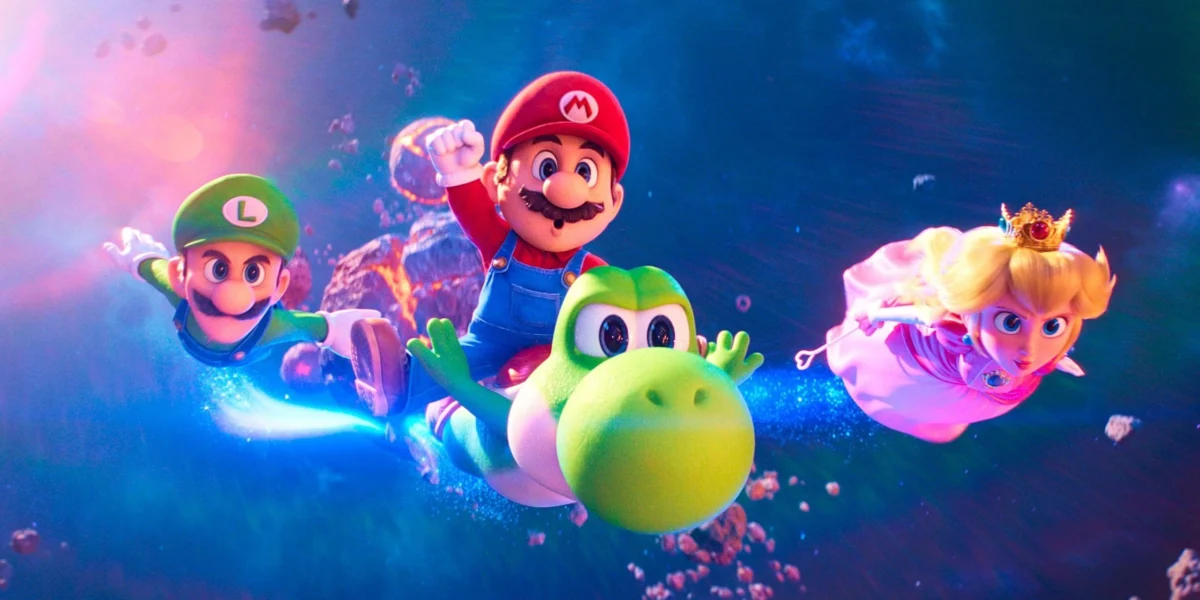
The story picks up with Mario (Chris Pratt) and Luigi (Charlie Day) having fully integrated into the Mushroom Kingdom as its primary protectors and residential plumbing experts. The brothers have established a sense of normalcy, occasionally dealing with minor disturbances such as clearing warp pipes of local fauna, including the introduction of an energetic green Yoshi (voiced by Donald Glover). While the primary antagonist of the first film, Bowser (Jack Black), remains in a shrunken, imprisoned state under the watchful eye of the Toad guards, the peace is short-lived.
The conflict shifts to a galactic scale with the emergence of Bowser Jr. (Benny Safdie), who assumes the role of the primary antagonist. Utilizing a magical paintbrush—a narrative tool familiar to fans of Super Mario Sunshine—Bowser Jr. orchestrates a campaign to liberate his father. To achieve this, he captures Princess Rosalina (Brie Larson), the ethereal protector of the cosmos who resides in the Comet Observatory. Rosalina’s capture threatens the stability of the galaxy, prompting Princess Peach (Anya Taylor-Joy) and Toad (Keegan-Michael Key) to launch a rescue mission. Mario and Luigi, joined by Yoshi, follow suit, leading to a journey across various planetary systems that challenge the physics and logic of their world.
Expansion of the Voice Cast and Character Dynamics
The Super Mario Galaxy Movie retains its core A-list ensemble while adding several high-profile actors to fill out its cosmic roster. Chris Pratt and Charlie Day reprise their roles as the Brooklyn-born brothers, with Pratt’s performance leaning into a more confident, seasoned version of the character. Anya Taylor-Joy’s Princess Peach continues to be portrayed as a proactive leader, a departure from the "damsel in distress" tropes of the early games.
The newcomers provide the film with fresh energy. Benny Safdie’s Bowser Jr. is characterized by a mix of youthful entitlement and genuine tactical menace, creating a compelling foil to Jack Black’s comedic yet formidable Bowser. Brie Larson provides a calm, stoic presence as Rosalina, serving as the emotional and mystical anchor of the film. Donald Glover’s Yoshi is portrayed with more personality and verbal capability than previous iterations, though he maintains the character’s signature charm.
One of the most discussed additions is Glen Powell as Fox McCloud, the protagonist of the Star Fox series. While his screen time is limited, his inclusion serves as a major crossover event. Powell’s Fox McCloud is depicted as a legendary ace pilot, assisting the Mario crew during a high-stakes aerial skirmish. This introduction suggests that Universal and Nintendo are looking toward an interconnected series of films, mirroring the structure of successful comic book film franchises.
Technical Execution and Animation Innovations
Illumination Entertainment has utilized its signature vibrant, high-contrast animation style to bring the cosmic settings to life. The film’s visual palette is notably more diverse than its predecessor, featuring bioluminescent flora, crystalline structures, and the shimmering "silver metallic liquid" produced by Bowser Jr.’s paintbrush. The physics-based animation required to simulate varying gravitational pulls on different planetoids represents a technical step forward for the studio.
A significant stylistic departure occurs during a sequence involving Fox McCloud. To recount the history of the Star Fox team, the filmmakers utilized a 2D, anime-inspired art style. This interlude has been noted by industry analysts as a "big visual swing" for Illumination, a studio traditionally known for its consistent, 3D-rendered aesthetic. This sequence not only pays homage to the Japanese origins of the source material but also demonstrates a willingness to experiment with diverse animation mediums within a single feature.
The auditory experience is led by composer Brian Tyler, who returned to adapt Koji Kondo’s original themes while incorporating the orchestral grandeur of Mahito Yokota’s Super Mario Galaxy score. Notably, the sequel reduces the frequency of licensed "needle drop" pop songs—a point of criticism in the first film—allowing the original compositions to drive the emotional and rhythmic pace of the action.
Chronology of the Nintendo-Illumination Partnership
The development of this sequel followed a rapid timeline fueled by the commercial success of the first installment:
- January 2018: Nintendo and Illumination officially announce a partnership to produce a Super Mario film, with Shigeru Miyamoto and Chris Meledandri serving as producers.
- April 2023: The Super Mario Bros. Movie premieres, breaking multiple records, including the biggest opening weekend for an animated film at $377 million. It eventually grossed over $1.36 billion.
- June 2023: Following the box office returns, Nintendo executives suggest that "various" projects are in development, hinting at a cinematic universe.
- Early 2024: Production on the "Galaxy" sequel is fast-tracked, with the voice cast returning to the recording booth.
- Present Day: The release of The Super Mario Galaxy Movie marks the second major pillar in the partnership, with a The Legend of Zelda live-action film also in development at Sony Pictures.
Industry Impact and Commercial Implications
The release of this sequel is expected to have a significant impact on the animation industry and Nintendo’s bottom line. The first film was credited with driving a surge in Nintendo Switch hardware sales and renewed interest in the Mario Kart 8 Deluxe and Super Mario Odyssey software titles. Market analysts predict that The Super Mario Galaxy Movie will serve as a primary marketing vehicle for upcoming Nintendo hardware and theme park expansions, specifically the "Super Nintendo World" areas at Universal Studios locations in Hollywood, Orlando, and Japan.
From a strategic standpoint, the inclusion of Fox McCloud signals Nintendo’s intent to monetize its broader intellectual property library. By testing the character in a supporting role, the company can gauge audience interest for a standalone Star Fox film or other spin-offs involving characters like Samus Aran (Metroid) or Link (The Legend of Zelda).
Critical Analysis and Thematic Depth
While the film has been praised for its technical prowess and entertainment value, some critical discourse has focused on the simplicity of its narrative. The writing by Matthew Fogel remains focused on accessibility and nostalgia, often bypassing deeper character development or thematic complexity. The film touches on themes of overcoming fear and the importance of fraternal bonds, particularly as Mario navigates his burgeoning feelings for Princess Peach and his responsibility toward Luigi. However, these elements are often secondary to the film’s kinetic action sequences.
Critics have noted that the film appears "risk-averse" in its storytelling, prioritizing a faithful recreation of game mechanics over a challenging script. This approach, while commercially safe, has led to calls for the franchise to "level up" in future installments by exploring the emotional stakes of its characters more thoroughly. Nevertheless, the consensus among industry observers is that the film successfully delivers the "escapist joy" required of a tentpole family feature.
Conclusion
The Super Mario Galaxy Movie solidifies the partnership between Nintendo and Universal as a dominant force in modern cinema. By blending high-fidelity animation with a deep reverence for four decades of gaming history, the film caters to multiple generations of fans. While the narrative remains straightforward, the introduction of new characters and visual styles suggests a maturing franchise that is beginning to explore the full potential of its vast universe. As the film continues its theatrical run, it stands as a testament to the enduring power of the Mario brand and the increasing viability of video game adaptations in the global marketplace.