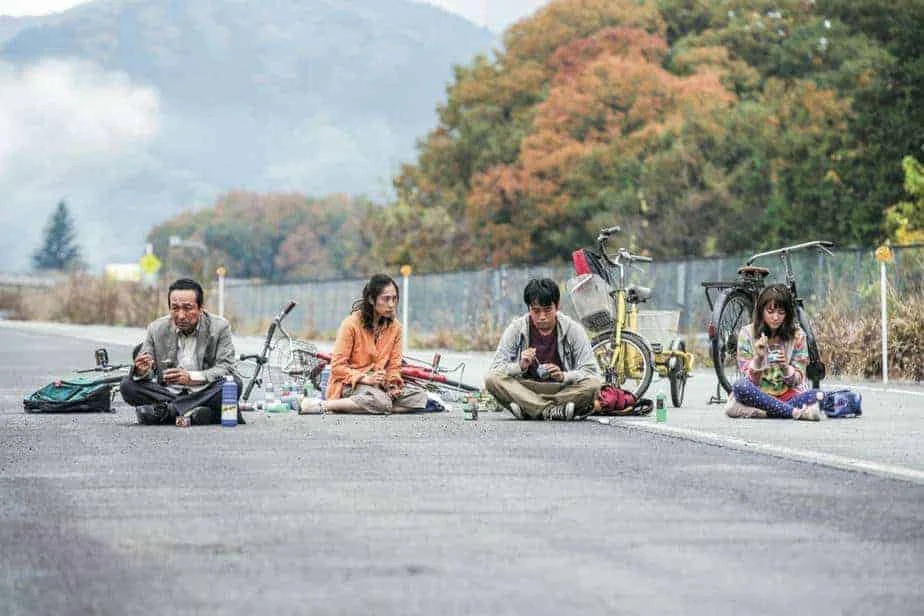
Shinobu Yaguchi’s critically acclaimed film, "Survival Family," delves into the profound societal and personal disruptions that would inevitably follow a sudden, inexplicable global blackout. The narrative, lauded with the Audience Award at the Asian Pop-up festival, meticulously chronicles the harrowing yet heartwarming journey of a typical urban family of four forced to confront their technological dependency and rediscover the fundamental bonds that tie them together when modern conveniences vanish. Blending the intimate soul of independent drama with the expansive scope of a big-budget disaster film, "Survival Family" offers a unique and highly engaging cinematic experience that resonates deeply with contemporary anxieties about infrastructure vulnerability and the human spirit’s capacity for adaptation.
The Premise: A World Without Power and Its Immediate Aftermath
The film masterfully establishes its central conceit: a sudden, inexplicable, and seemingly indefinite nationwide power outage. This isn’t merely a localized incident but a comprehensive collapse of all electrical systems, plunging a technologically advanced society into instant disarray. In the initial hours and days depicted, the immediate implications are catastrophic. Transportation grinds to a halt as trains stop mid-track and traffic lights cease functioning, leading to widespread gridlock and confusion. Communication networks collapse, rendering smartphones, the ubiquitous tools of modern life, useless relics. Financial systems, entirely reliant on digital infrastructure, become inoperable, transforming paper currency into mere decorative items and credit cards into worthless plastic.
This scenario, while fictional, taps into very real contemporary concerns regarding the fragility of critical infrastructure. Experts consistently warn about the potential for widespread blackouts due to natural disasters, cyberattacks, or even solar flares. A 2019 report by Lloyd’s of London, for instance, estimated that a major cyberattack on the U.S. power grid could cost the economy hundreds of billions of dollars and leave tens of millions without power for weeks. "Survival Family" visually translates these theoretical risks into a tangible, lived experience, demonstrating how quickly societal order can erode when the invisible network of electricity, upon which everything from food supply chains to medical services depends, is severed. The film effectively portrays the swift transition from mild inconvenience to desperate survival, highlighting humanity’s inherent reliance on the very systems it has created.
The Suzuki Family’s Odyssey: A Journey of Rediscovery and Adaptation
At the heart of this grand narrative is the Suzuki family: father Yoshiyuki, mother Mitsue, and their two children, Kenji and Yui. Initially portrayed as a quintessential modern Japanese family, they are deeply immersed in their individual digital worlds, often disconnected from each other despite sharing the same home. Yoshiyuki is a salaryman engrossed in his work and finances, Mitsue is a diligent homemaker with a penchant for domestic order, and the children are absorbed in their smartphones and personal interests. Their initial reaction to the blackout is one of annoyance and disbelief, a testament to how deeply ingrained technological comfort has become.
As the days turn into weeks with no end in sight to the power outage, the family is forced to abandon their comfortable Tokyo apartment. Their journey begins as a desperate search for water, food, and, eventually, a rumored destination in Kagoshima where electricity is supposedly still available. This southward trek becomes the chronological backbone of the film, a sprawling odyssey across a transformed Japan. They encounter countless other citizens, all equally desperate, creating scenes of crowded, littered streets that vividly convey the scale of the societal collapse. These interactions range from tense standoffs over resources to moments of unexpected camaraderie and mutual aid, painting a complex picture of human behavior under extreme duress.
The narrative meticulously follows their progress, highlighting key challenges: finding potable water, bartering for food, navigating treacherous roads on bicycles, dealing with harsh weather, and confronting both human opportunism and genuine kindness. Each obstacle forces the family to adapt, to learn forgotten skills, and, most importantly, to rely on each other. The film eschews overly dramatic, action-packed sequences, opting instead for a grounded portrayal of persistent, everyday struggles, making their journey feel remarkably authentic and relatable. This grounded approach ensures that the audience remains invested in the family’s plight, cheering them on through every small victory and empathizing with every setback.
Shifting Roles and Redefining Value Within the Family Unit
One of the most compelling aspects of "Survival Family" is its insightful exploration of how traditional family roles are shattered and redefined in the face of crisis. The societal collapse strips away the superficial markers of success and purpose that defined the family members’ pre-blackout lives, forcing them to confront their intrinsic worth and capabilities.
Yoshiyuki, the patriarch, initially embodies the traditional "breadwinner" role, deriving his self-worth from his professional achievements and financial contributions. In a world without currency, jobs, or infrastructure, his corporate skills become entirely obsolete. He struggles profoundly with this loss of identity and purpose, often making impractical decisions rooted in his old mindset. His arc is one of profound personal challenge and humbling transformation. The film poignantly captures his internal battle to find new validity within his family, learning to contribute through physical labor, ingenuity, and emotional support rather than financial provision. His struggle to adapt, to shed his pride, and to embrace a more fundamental form of fatherhood is a powerful emotional anchor for the audience, eliciting empathy and a desire to see him succeed.
Conversely, Mitsue, the mother, initially appears to be the more conventional figure, focused on domesticity. However, as the crisis deepens, her previously undervalued skills come to the forefront. Her social etiquette, resourcefulness in managing household supplies, and keen bartering abilities become crucial for the family’s survival. She emerges as a pragmatic and resilient leader, navigating difficult negotiations for food and shelter with an unwavering determination. Her quiet strength and practical intelligence prove indispensable, challenging traditional gender roles and highlighting the diverse forms of leadership that emerge in times of crisis.
The children, Kenji and Yui, also undergo significant development. Kenji, initially a moody teenager glued to his headphones, learns to contribute physically, helping with tasks like sourcing water or setting up camp. Yui, the younger sister, transforms from a somewhat pampered child into a more observant and resilient member of the group, often offering surprising insights or displaying unexpected courage. Through these evolving dynamics, the film argues that true family strength lies not in predefined roles but in the collective ability to adapt, support, and redefine individual contributions based on immediate needs. The crisis, therefore, becomes a crucible, forging a stronger, more authentic family bond.
Crafting a Post-Apocalyptic Landscape: Cinematic Excellence
Shinobu Yaguchi’s directorial prowess is evident in every frame of "Survival Family," particularly in his meticulous world-building and visual storytelling. The sheer amount of work involved in creating a believable landscape without any source of power imbues the production with a sense of awe and wonder.

Visual Storytelling: The Art of the Blackout
The cinematography and production design are pivotal in establishing the film’s immersive atmosphere. Familiar urban environments, usually bustling with activity and illuminated by electric light, are rendered eerily silent and dark. Landmarks become haunting silhouettes, and streets are transformed into rivers of abandoned vehicles and discarded belongings. This commitment to detail makes for a surreal experience, as viewers witness once-vibrant locations in a state of complete desolation. The contrast between the pre-blackout world (briefly glimpsed or implied) and the post-blackout reality is stark, amplifying the sense of loss and disruption.
Furthermore, the inclusion of a vast number of extras wandering the littered streets and abandoned highways gives the movie an impressive epic scale. These background figures are not just static set dressing; they contribute to the pervasive atmosphere of desperation, confusion, and the sheer volume of humanity impacted by the catastrophe. This visual density underscores the societal scope of the event while simultaneously allowing the narrative to remain intimately focused on the Suzuki family. Yaguchi’s perfectionist eye for world-building is apparent in how seamlessly these elements work in tandem, creating a believable and expansive yet deeply personal story.
The camera’s focus consistently demonstrates an awareness of the importance of the backdrop. It masterfully oscillates between closer shots of the family, emphasizing their emotional states and interpersonal dynamics, and wide perspective shots that capture the chaotic world they find themselves in. This visual strategy effectively balances the intimate human drama with the broader societal collapse, allowing the audience to appreciate both the micro and macro aspects of the unfolding crisis. Whether depicting the family making their way through crowded towns or sprawling, untamed fields and forests, the cinematography ensures that the environment is always an active character in their struggle.
Yaguchi’s Signature Blend: Humor and Heart
Shinobu Yaguchi is renowned for his ability to craft heartwarming dramas infused with comedic elements, as seen in his earlier successes like "Waterboys" (2001) and "Swing Girls" (2004). "Survival Family" continues this tradition, expertly sprinkling moments of humor amidst the dire circumstances. This comedic relief is never gratuitous; instead, it serves to humanize the characters, alleviate tension, and make their struggles more relatable. The humor often arises from the characters’ attempts to grapple with absurd situations or their own ingrained habits from a bygone era, providing much-needed levity in a story that could otherwise be relentlessly bleak.
This blend of genres — heartwarming drama, big-budget disaster, and subtle comedy — is a hallmark of Yaguchi’s style. He demonstrates a rare talent for balancing these disparate elements in a seamless and engaging manner, embodying the best of both cinematic experiences. The film’s ability to evoke genuine laughter while simultaneously exploring profound themes of survival and family resilience is a testament to his directorial vision and narrative skill.
Critical Acclaim and Broader Implications
"Survival Family" emerged as a significant success, garnering critical praise and resonating strongly with audiences, as evidenced by its Audience Award win at the Asian Pop-up festival. Critics lauded its unique approach to the disaster genre, its strong character development, and its impeccable technical execution.
The Relevance of Disaster Cinema in the 21st Century
In an era increasingly marked by anxieties over climate change, pandemics, and technological vulnerabilities, disaster films hold a particular resonance. "Survival Family" stands out in this genre by moving beyond mere spectacle and destruction to focus intently on the human element and societal commentary. Unlike many Hollywood disaster blockbusters that prioritize special effects and heroic acts, Yaguchi’s film emphasizes the mundane yet profound challenges of everyday survival and the psychological impact of losing fundamental societal structures.
The film serves as a subtle yet potent commentary on humanity’s increasing dependence on technology and the potential consequences of its sudden withdrawal. It implicitly asks audiences to consider their own preparedness and adaptability in a similar scenario. By grounding the narrative in the experience of a single, relatable family, it makes the overwhelming concept of societal collapse feel intimate and personal, prompting introspection rather than just awe. It contributes to the disaster genre by proving that compelling narratives can emerge from the quiet struggle for existence rather than just explosions and dramatic rescues.
Enduring Themes: Family, Resilience, and Adaptation
Ultimately, "Survival Family" is a powerful celebration of the strength and importance of family. It presents family not as an idealized, perfect unit, but as a dynamic entity capable of fracturing, healing, and transforming under pressure. The crisis forces the Suzukis to strip away their superficial distractions and rediscover a deeper, more authentic connection with one another. They learn to communicate, to cooperate, and to appreciate each other’s unique strengths and weaknesses.
The film’s central message revolves around human resilience and the remarkable capacity for adaptation. It suggests that even in the face of unimaginable adversity, the human spirit, particularly when supported by strong familial bonds, can find ways to survive, innovate, and even thrive. While acting as a cautionary tale about technological over-reliance, it simultaneously offers an optimistic portrayal of the human ability to overcome immense challenges through ingenuity, cooperation, and a rediscovered sense of community and family.
In conclusion, "Survival Family" stands as a testament to Shinobu Yaguchi’s directorial vision and the power of compelling storytelling. It is a meticulously crafted film that seamlessly blends genres, offering both a competent family drama and a well-constructed disaster flick infused with humor. Backed by great casting choices that establish a profound sense of realism and history for the family unit, and underpinned by superb cinematography and world-building, the film delivers a highly enjoyable and thought-provoking experience. Its enduring appeal lies in its ability to prompt reflection on our modern dependencies while simultaneously reaffirming the timeless importance of human connection and the indomitable spirit of family in the face of adversity.