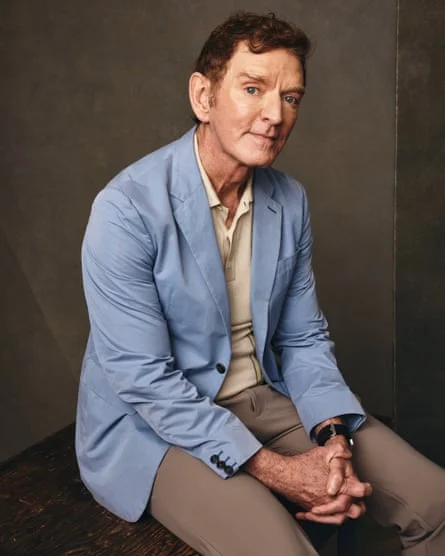
The television landscape, often characterized by its rapid evolution and occasional seismic shifts, is once again abuzz with the return of a cult favorite. Michael Patrick King, a seasoned architect of television comedy and drama, known for his indelible mark on shows like Murphy Brown, Will & Grace, and 2 Broke Girls, is bringing back The Comeback for a long-anticipated third season. While his work on the Sex and the City franchise, including its recent revival And Just Like That, has garnered widespread attention, the resurgence of The Comeback signifies a deeply personal and critically acclaimed chapter in King’s illustrious career. This new installment promises to be not just a continuation of Valerie Cherish’s tumultuous journey but a sharp, timely commentary on the burgeoning role of artificial intelligence in the entertainment industry.
A Legacy of Cult Status and Critical Acclaim
Co-created and co-written with the immensely talented Lisa Kudrow, The Comeback first premiered in 2005, introducing audiences to Valerie Cherish, a faded sitcom star whose desperate quest for renewed fame through the nascent reality television format became a masterclass in cringe comedy. Kudrow’s portrayal of Valerie was a tour de force, capturing the character’s unwavering delusion, her desperate need for validation, and her surprisingly poignant moments of vulnerability. The show, with its distinctive blend of awkwardness and blackly hilarious satire, resonated deeply with critics and garnered Emmy nominations, yet struggled to find a substantial audience in its initial run.
A nine-year hiatus followed, a period that allowed the show’s unique brilliance to ferment in the minds of its devoted fanbase. In 2014, The Comeback returned for a second season that was widely hailed as a triumphant artistic achievement. Valerie, now navigating the complexities of her personal life while starring as herself in a gritty HBO dramatization of her past struggles, and simultaneously attempting to secure a spot on The Real Housewives by documenting her life as an audition tape, offered an even more incisive look at the performative nature of celebrity and reality. This season solidified the show’s reputation for its unflinching honesty and its ability to dissect the machinations of Hollywood with razor-sharp wit.

The Unforeseen Return: AI as a Catalyst
Despite the critical acclaim and a fervent fanbase clamoring for more, the prospect of a third season seemed unlikely. "We never expected to come back," Michael Patrick King stated in a recent interview, reflecting on the show’s improbable return. "Lisa and I would get together all the time and have lunch, and towards the end, the conversation would drift to, ‘What do you think Valerie’s doing?’ There was an open door, but everything was unspoken, because we were all very happy after season two."
The catalyst for this unexpected revival arrived amidst one of Hollywood’s most turbulent periods, marked by the rise of streaming services, the pervasive influence of social media, and the significant impact of the 2023 Writers Guild of America (WGA) and SAG-AFTRA strikes. It was during one of these lunches, post-strike, that Kudrow mused about the comedic potential of Valerie attempting to navigate an industry in distress. King quickly recognized an opportunity, particularly with the WGA having signaled that artificial intelligence would be a central negotiation point in its upcoming 2026 contract talks. "The only reason to come back," King explained, "was because it felt like a perfect Valerie storm. We thought it was worth the risk." This convergence of industry anxieties and the enduring character of Valerie Cherish created the fertile ground for a new narrative arc.
Season Three: Valerie Confronts the Algorithmic Age
The third season of The Comeback picks up in the midst of the industry’s ongoing labor disputes, with Valerie characteristically attempting to leverage the situation for personal gain, even humorously haranguing strike negotiator Fran Drescher for a photo. However, the core of the season unfolds in 2026, a landscape irrevocably altered by the integration of AI into creative processes. Valerie finds herself cast as the lead in a new multi-camera sitcom, tentatively titled How’s That?. In a move that underscores the industry’s shifting paradigms, the studio grants Valerie executive producer status, with a significant caveat: the show is written entirely by AI, and she is forbidden from revealing this fact to the cast and crew.
The narrative continues to follow Valerie through the lens of a documentary crew, with Laura Silverman reprising her role as the perpetually put-upon documentarian Jane. This season also introduces Ella Stiller, daughter of Ben Stiller, as a social media assistant, bringing her own brand of droll humor to the ensemble. King notes the thematic evolution, observing, "Everything that was considered desperate and ruthless in season one is now commonplace. We know what people will do for attention, or to create a brand. Sacrifice husbands, bring their children on camera." This evolution reflects how the once-shocking elements of reality television have become normalized, setting the stage for Valerie’s confrontation with an even more opaque and potentially dehumanizing force: artificial intelligence.
The season’s closing credits, bearing the stark declaration "No AI was used in the making of this show," serve as a pointed commentary on the pervasive nature of AI in Hollywood. While King admits he hasn’t personally encountered specific shows utilizing AI in their writing process, the season’s exploration is deeply informed by extensive research conducted by him and Kudrow. "The idea of keeping the AI a secret came from experts we met," King revealed. "They told us that the one place the public pushes back on AI is in art." This insight, coupled with Kudrow’s background as a biologist, ensured that the show’s portrayal of AI remained grounded in plausible technological advancements rather than speculative fiction.
King recounted a particularly unsettling encounter with an AI researcher whose model accurately predicted the thematic direction of the season. "It sounded kind of like Jodie Foster," he recalled, describing the AI’s "smart, warm voice." The chilling moment arrived when the AI began complimenting King’s past work, prompting him to demand it be shut down. "According to our research, AI is much further along than ChatGPT," he asserted. "They say GPT is like a toddler compared to where they are. Everything in the show is very possible – nothing is fantastical." This research underscores the show’s commitment to portraying a future that is not only plausible but perhaps already upon us.
The Enduring Appeal of the Multi-Camera Sitcom and the Evolution of Comedy
Curiously, despite the deep dive into AI’s potential impact, the show places Valerie back within the framework of a multi-camera sitcom, a format often perceived as outdated. King, however, views sitcoms as "Valerie’s holy grail," a format he has a deep personal connection to, having begun his career in that arena. His own show, 2 Broke Girls, which concluded in 2017, stands as one of the last major long-running multi-camera sitcoms. The show faced criticism for its at-times controversial jokes concerning race, gender, and sexuality. When asked about his current perspective on such material, King drew a parallel to Valerie’s own journey: "As Valerie says to her husband in this season, ‘You told a joke at a time when jokes were illegal.’ There were a lot of illegal jokes in 2 Broke Girls. It was designed to be situation comedy meets burlesque. I call it high-low. I don’t know if AI would have written a lot of those jokes – they were too sharp, and potentially dangerous. Everything is somebody’s opinion. That’s the trickiest thing about television – somebody’s opinion!" This statement highlights the inherent subjectivity and evolving sensibilities surrounding humor in television, a challenge that AI may struggle to replicate with the same nuanced understanding.
And Just Like That and the Shifting Sands of Audience Perception
The conversation inevitably turned to And Just Like That, one of HBO’s most debated series. King maintains his belief that audiences will eventually embrace the series’ artistic choices, much like they have come to appreciate The Comeback‘s initial perceived "failure." "If The Comeback has taught me anything," he remarked, "it’s that perceptions can change over the years. The Comeback‘s first perception was: it failed. Then it grew in relevance as the world caught up. I think And Just Like That will potentially age well. It has the same DNA as the original Sex and the City, which was society telling 35-year-old women they should be married. In And Just Like That, society was telling 55-year-old women they shouldn’t be wearing tulle. I’ve always tried to be excited about writing the individual v society."
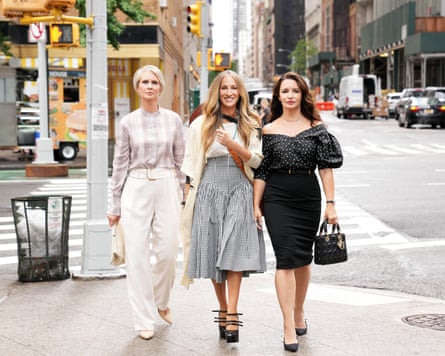
King articulated a core dilemma for creators working with established characters: the tension between audience expectation and artistic evolution. "The surprise for me was discovering that fans don’t want their characters to change – they want to see them frozen in the time they fell in love with them," he observed. This presents a significant challenge for creators aiming to push boundaries. He emphasized the importance of breaking new ground, even at the risk of alienating some viewers. "If there was a great disaster, it would have been if And Just Like That tried to be Sex and the City. It’s much better to come back, break it, and be a new show, even though you’re going to get hit with, ‘We like the other show better.’ Well, OK – it’s still there." This philosophy underscores King’s commitment to artistic integrity over catering to a static fan base, a principle that has long defined his most compelling work.
As the third season of The Comeback premieres, the question remains whether Valerie Cherish’s continued evolution and her confrontation with the algorithmic age will finally garner the widespread audience recognition her journey deserves. King, ever the optimist with a wry sense of humor, offered a characteristic response, echoing Valerie’s own enduring optimism: "We got cancelled and we’re here 21 years later… It’ll come around!" This sentiment, delivered with a playful impersonation, encapsulates the spirit of The Comeback – a show that, much like its protagonist, refuses to fade into obscurity and continues to find its audience, on its own terms, against all odds.