The Enduring Legacy of Mary Shelley and the Genesis of the Female Monster
The genesis of the "zombie story" or, more accurately, the modern monster narrative, finds its roots firmly entwined with feminine authorship, a historical detail that underpins much of the thematic exploration in “The Bride!”. It was in 1818 that a then-teenage Mary Shelley, daughter of the pioneering feminist philosopher Mary Wollstonecraft and political radical William Godwin, penned Frankenstein; or, The Modern Prometheus. Born from a ghost story challenge during a gloomy summer in Switzerland, Shelley’s novel transcended mere horror, becoming a profound meditation on creation, abandonment, societal prejudice, and the responsibilities of the creator. Scholars widely interpret Frankenstein through a feminist lens, highlighting Shelley’s own maternal anguish and her observations on women’s roles in a patriarchal society, subtly embedding these anxieties into the Creature’s rejection and subsequent quest for companionship. The Creature’s unfulfilled desire for a female companion, a bride, thus became a poignant symbol of the alienated woman, perpetually seeking belonging and agency in a world that fears and rejects her.
This foundational text established a cultural lodestar heavy with feminine and feminist valences. Decades later, this interpretation found its most iconic cinematic expression in James Whale’s 1935 masterpiece, Bride of Frankenstein. In a mere five minutes of screen time, Elsa Lanchester’s portrayal of the resurrected female creature—her electric hair, piercing gaze, and primal scream of rejection—birthed a timeless icon. Her visceral reaction to Frankenstein’s monster, an embodiment of refusal and nascent self-preservation, resonated deeply, creating a lasting impression of the "Bride" as a figure of raw, untamed feminine energy. This brief, powerful sequence solidified the Bride not merely as a monstrous creation but as a symbol of rebellion, a rictus rebel daughter refusing to be an object, cementing her place in the feminine cultural imagination. Gyllenhaal’s “The Bride!” consciously enters this rich historical dialogue, explicitly attempting to make these historical affinities comprehensible and contemporary.
A Resurgence of Female Monstrosity: A Contemporary Timeline
The current cinematic landscape reflects a notable micro-revival of interest in the undead and monstrous, particularly through a female lens, preceding and coinciding with Gyllenhaal’s film. This trend suggests a broader cultural appetite for re-examining classic narratives and exploring themes of female agency, body autonomy, and societal otherness through the supernatural.
- 2021: Jess Zimmerman’s academic and pop-cultural study, Women and Other Monsters: Building a New Storytelling for Our Time, provided a critical framework for understanding the growing fascination with female villainy and monstrosity, succinctly stating, "Women and monsters have a lot in common… They are both outcasts; alienated, derided and feared by society. They are biological freaks with bodies that transgress and fluctuate, and they are both threats to male power." This sentiment captures the intellectual underpinning of many recent cinematic endeavors.
- 2023: The Academy Awards saw Yorgos Lanthimos’s Poor Things sweep four Oscars, including Best Actress for Emma Stone. This self-consciously feminist take on the coming-of-age elements of the Frankenstein tale follows Bella Baxter, a young woman resurrected with the brain of an infant, on a journey of self-discovery and sexual liberation. Its success highlighted a mainstream hunger for sophisticated, visually distinctive narratives centered on female autonomy and the grotesque.
- 2023: Zelda Williams directed Lisa Frankenstein, penned by Diablo Cody, offering a pop-punk, teen-angst-laden rom-com. The film channels Shelley’s gothic independence into a modern quest for a boyfriend who truly understands her, subverting suburban orthodoxy with a quirky, undead twist.
- 2024: Guillermo del Toro, a master of gothic horror and monster narratives, announced his big-budget remake of Frankenstein, with early details suggesting a focus on the novel’s central female character, Lady Elizabeth Harlander (reportedly Mia Goth). Del Toro’s previous work, often imbued with a sense of tragic beauty and empathy for the monstrous, promises a nuanced exploration of Shelley’s themes, particularly regarding the marginalized.
- Early 2025 (Limited Release): Grace Glowicki’s Dead Lover is set to flip Shelley’s script entirely. This madcap, raunchily gothic tale features a smelly gravedigger attempting to revive the only man she ever truly loved, reversing the traditional roles of creator and created, and foregrounding female desire.
- Summer 2025: Tina Romero, daughter of the legendary George A. Romero, rejuvenated her father’s zombie franchise with Queens of the Dead. This film injects a comic, queer sensibility into the zombie genre, with glittery undead creatures attacking a Bushwick club, further diversifying the monstrous feminine narrative.
- 2025 (Release of "The Bride!"): Maggie Gyllenhaal’s film becomes the latest and perhaps most overt entry in this lineage, directly addressing the legacy of Bride of Frankenstein and the broader cultural conversation around female monstrosity.
While varying in quality and specific political aims, each of these films, like Gyllenhaal’s “The Bride!”, endeavors to foreground stories of outsider feminine agency. Glowicki’s Gravedigger is a horny bisexual genius hellbent on getting what she wants; Lisa Frankenstein seeks a life unconstrained by suffocating suburban norms; and Poor Things‘ Bella Baxter embodies radical self-creation. Even del Toro’s Shelley adaptation, with its reported focus on Lady Elizabeth as a politically active bug enthusiast with an affinity for Victor’s despised progeny, hints at a deeper engagement with the novel’s female characters. This collective body of work signals a significant cultural shift, moving beyond passive monstrous women to active, complex, and often rebellious figures who challenge established power structures.
Maggie Gyllenhaal’s Ambitious Vision and Narrative Challenges
Maggie Gyllenhaal’s stated inspiration for “The Bride!” stems directly from her frustration with Elsa Lanchester’s iconic, yet ultimately silent, portrayal in James Whale’s 1935 film. Gyllenhaal, known for her nuanced performances and her critically acclaimed directorial debut The Lost Daughter, aimed to provide a direct corrective: to give the Bride a voice, agency, and a fully realized journey. At the film’s U.S. premiere, Gyllenhaal articulated her broader intent, telling the audience, "There’s a little monster in all of us," suggesting a desire to connect the monstrous feminine with universal experiences of otherness and power.
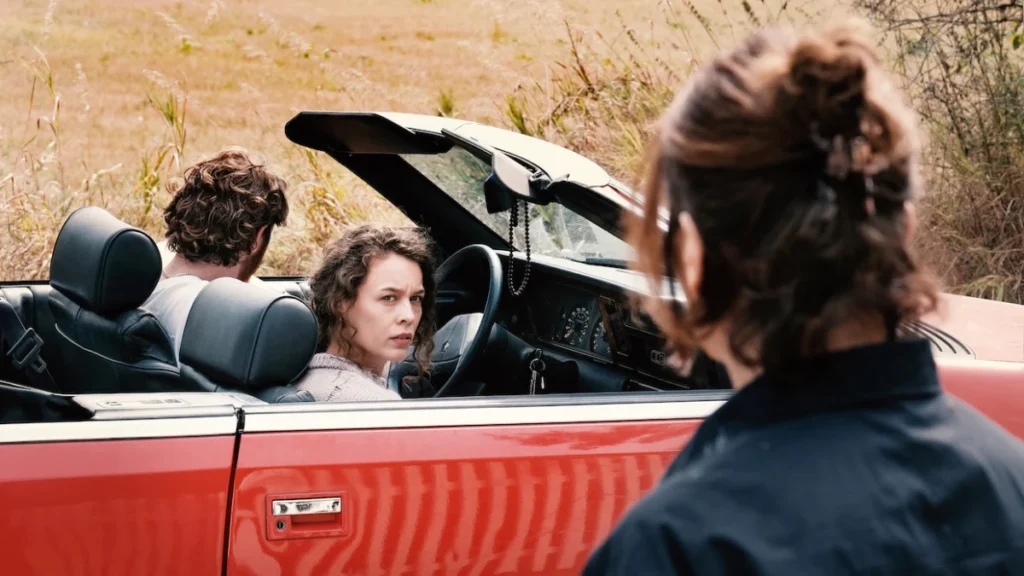
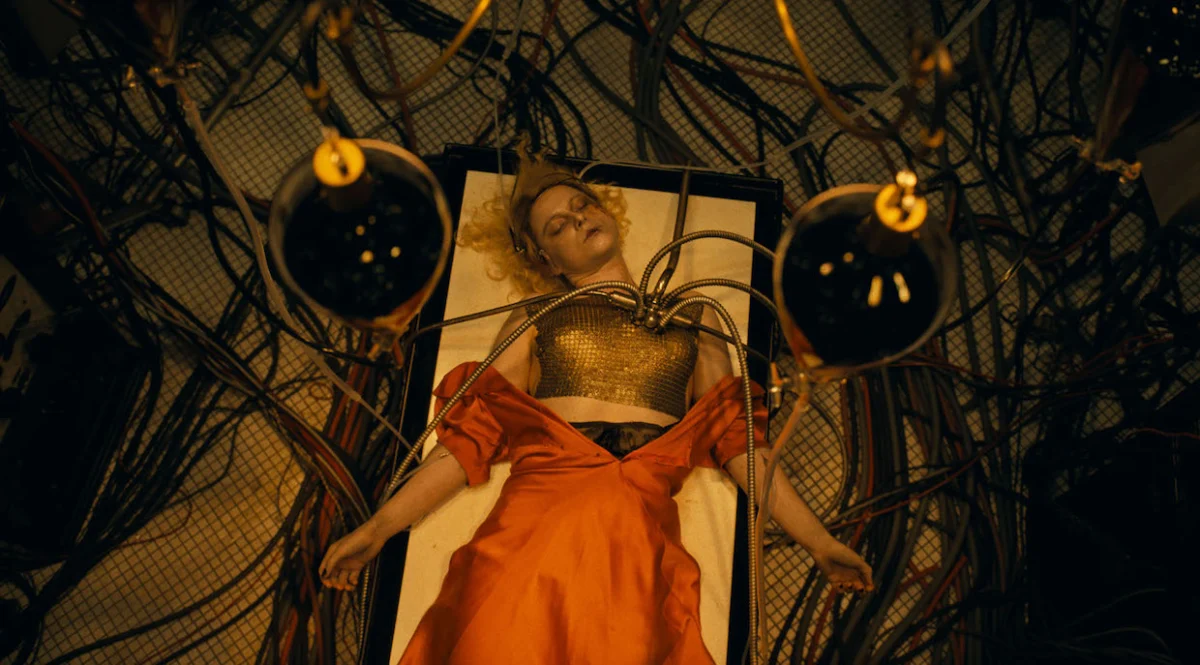
The film positions itself as a genre-blending ’30s period piece, envisioning a Bonnie & Clyde-style narrative infused with the gothic and the grotesque. Gyllenhaal’s ambition is evident from the opening passages, where Mary Shelley herself (Jessie Buckley) speaks to the audience from the void, a meta-textual nod to the original Bride of Frankenstein script that intended a similar framing device. Shelley then possesses the body of Ida (also Buckley), a rowdy mob moll swiftly murdered for knowing too much. Ida is subsequently revived by a mad scientist (Annette Bening), at the behest of Frankenstein’s Monster (Christian Bale), thus initiating the central premise.
However, it is this very ambition that, according to critical consensus, becomes the film’s most significant hurdle. In its two-hour and seven-minute runtime, “The Bride!” attempts to weave together an astonishing array of narrative threads, often tripping over itself in the process. The film juggles:

- A Poor Things-style tale of feminine self-discovery through zombification and amnesia.
- A metatextual authorial ghost story, with Shelley inhabiting Ida.
- An outsider romance between the Bride and the Monster.
- A subplot involving a beloved musical actor (Jake Gyllenhaal), seemingly disconnected from the main narrative.
- A half-baked gangland drama, characteristic of its 1930s setting.
- A Coens-esque detective story, complete with a subplot about Penélope Cruz achieving "Girlboss" empowerment as a female cop.
- A zany, anachronistic Riot Grrrl revolution narrative, reminiscent of Times Square (1980).
The sheer volume of these subplots, coupled with a frantic pace, leads to excruciating underdevelopment. The possession plot, for instance, vanishes for long stretches, its cartoonish, Jack Sparrow-esque affect adopted by Buckley distracting from other narrative elements. The stylish Riot Grrrls feel like fragments from an earlier, perhaps longer, draft, their potential for narrative potency quickly dissipating. This narrative muddle has already inspired "Frankenstein’s Movie jokes" among critics, echoing Victor Frankenstein’s lament: "I had worked hard for nearly two years… I had desired it with an ardor that far exceeded moderation; but now that I had finished, the beauty of the dream vanished." The film, while undeniably good-hearted and occasionally enjoyable, struggles to maintain a consistent tone or narrative focus, leading to a sprawling, uneven experience.
Thematic Disconnect: Agency, Feminism, and the Undead
At its core, “The Bride!” aspires to be a powerful feminist statement, a punk rock anthem for the monstrous feminine. The film directly gestures towards the themes outlined by Jess Zimmerman, acknowledging the shared outcast status of women and monsters. Yet, critics argue that its execution often undercuts its own feminist aims. While the film’s vibe occasionally achieves a punk rock aesthetic, its feminism is perceived by some as more akin to "Katy Perry" than a truly radical, systemic critique. The most potent subplots involving women’s resistance—the Riot Grrrls, the murdered mob gals—are often the quickest to fall away, replaced with shallower or more simplified narratives. The Bride’s poignant cry of "Me too!" highlights the film’s explicit intention to connect with contemporary feminist discourse, but this directness sometimes feels less earned and more stated.
The complexity of agency for zombie characters is a crucial element that “The Bride!” struggles to fully grasp. Unlike ghosts or vampires, whose sense of self often remains after death, zombies, particularly in the context of Frankenstein’s creations, are often resurrected against their will or built whole cloth, primarily to please a male protagonist. Their subsequent resistance—their rotting, untameable, self-made, and sometimes riotously happy existence—becomes doubly tragic and satisfying. Their very state of being speaks to systemic misogyny, making their triumph profoundly poignant. From Frankenhooker (1990) to Return of the Living Dead III (1993) to Life After Beth (2014), female zombie characters often challenge the control exerted over their bodies and identities. While “The Bride!” gestures towards these ideas, particularly through Ida’s transformation, the narrative’s convoluted nature means these profound thematic explorations often get lost in translation, diluted by the sheer volume of competing storylines. The film, in its attempt to provide an empowering tale of feminine self-discovery, often prioritizes a scattershot approach over a focused, nuanced examination of agency.
Production Design, Performances, and Broader Implications
Despite its narrative shortcomings, “The Bride!” benefits from several strong elements. The film’s jubilant character design for the Bride, featuring a torrent of ink splattering from her mouth, visually reflects the raucously enthusiastic narrative overflow that, paradoxically, also makes the film frequently engaging despite its flaws. Jessie Buckley, pulling double duty as Mary Shelley and Ida/the Bride, delivers a performance that, while at times cartoonish, anchors the film with a raw, visceral energy. Christian Bale’s portrayal of Frankenstein’s Monster provides a genuinely endearing counterpart, forming a compelling, if underdeveloped, screen pair with Buckley. The chemistry between them, despite the chaotic backdrop, manages to evoke a sense of outsider romance.
The production design is widely praised as inventive and distinct, immersing the audience in its stylized 1930s gothic world. The cinematography and score, notably borrowed whole cloth from Joker (one of the film’s more obvious analogues, particularly its upcoming sequel Joker: Folie à Deux), are sleek and contribute significantly to the film’s unique aesthetic. These technical strengths, however, highlight the missed opportunities in the narrative. The film, as critics lament, is a "misbegotten melange of mismatched generic parts and visible narrative sutures," a zombie romance never fully allowed to breathe, either in life or after it.
In its ambition to fuse elements of Poor Things, Bonnie & Clyde, and Joker: Folie à Deux, “The Bride!” only definitively improves upon the latter, a tragically low bar. Yet, like many messy sophomore features driven by creative ambition run violently amok, it possesses an undeniable cult potential. Its very flaws—its overstuffed plot, its uneven tone, its visible narrative sutures—might, in time, endear it to audiences who appreciate audacious, if imperfect, cinematic experiments. The film’s mall-goth heart is clearly in the right place, demonstrating a genuine desire to explore and celebrate the monstrous feminine.
Ultimately, “The Bride!” stands as a testament to the enduring power and adaptability of Mary Shelley’s original creation. It underscores the persistent cultural fascination with the Frankenstein mythos and its continued relevance in contemporary discussions about identity, creation, and societal roles, particularly for women. While Gyllenhaal’s interpretation may stumble in its execution, its audacious attempt to give voice and agency to the long-silent Bride contributes to the ongoing, vibrant dialogue surrounding female monsters in cinema. It serves as a reminder that even in failure, ambition can spark conversation and inspire further exploration, solidifying the idea that the zombie story, in its myriad forms, will forever belong to women.